
Haifa
Things to do in Haifa
Every site here that is worth building time around, each one with a page of its own covering what it is, what survives, when it opens and what it costs.
Sites covered
11
each with its own page
Ticketed
11
0 free to walk into
Sourced figures
89
each with its year and source
Citations
135
opened and checked
Haifa is not one attraction. It is 11 of them, and they do not reward the same amount of time or the same time of day. This page is the index: what each one is in a sentence, how long it takes, and what it costs, so that the choosing happens here and the reading happens on the page for whichever you pick.
Every site below has been checked against its operator's own published information. Where a site charges admission, the price on its page is the operator's published price with the year it was taken. Where it sits inside a larger park, its page says which ticket covers it.
3 sites
Churches, synagogues and holy places
Chris Yunker from St. Louis, United States / CC BY-SA 2.0 · Wikimedia Commons
Religious site
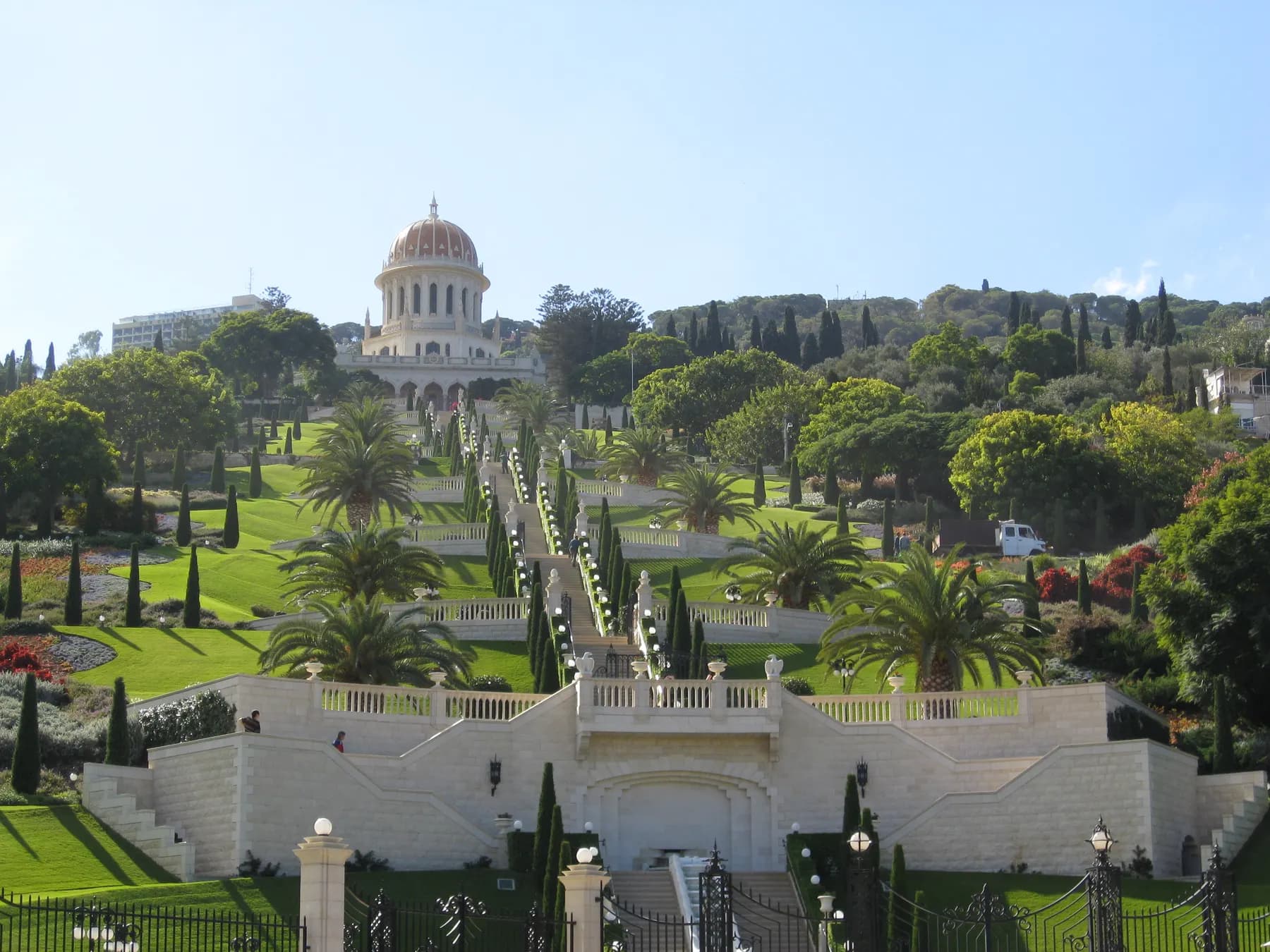
Bahai Gardens and the Shrine of the Bab
Nineteen terraces climb 225 vertical metres of Mount Carmel around a shrine whose stone core was built to receive a body that had been hidden for most of a century.
- Time:
- about 30 minutes at any one viewpoint, about 90 minutes to take in the top and the bottom of the axis with the journey between them, and 50 minutes for the guided tour itself
- Entry:
- free of charge
4.7 on Google, 13,101 ratings
מיכל פריימן / CC BY 2.5 · Wikimedia Commons
Religious site
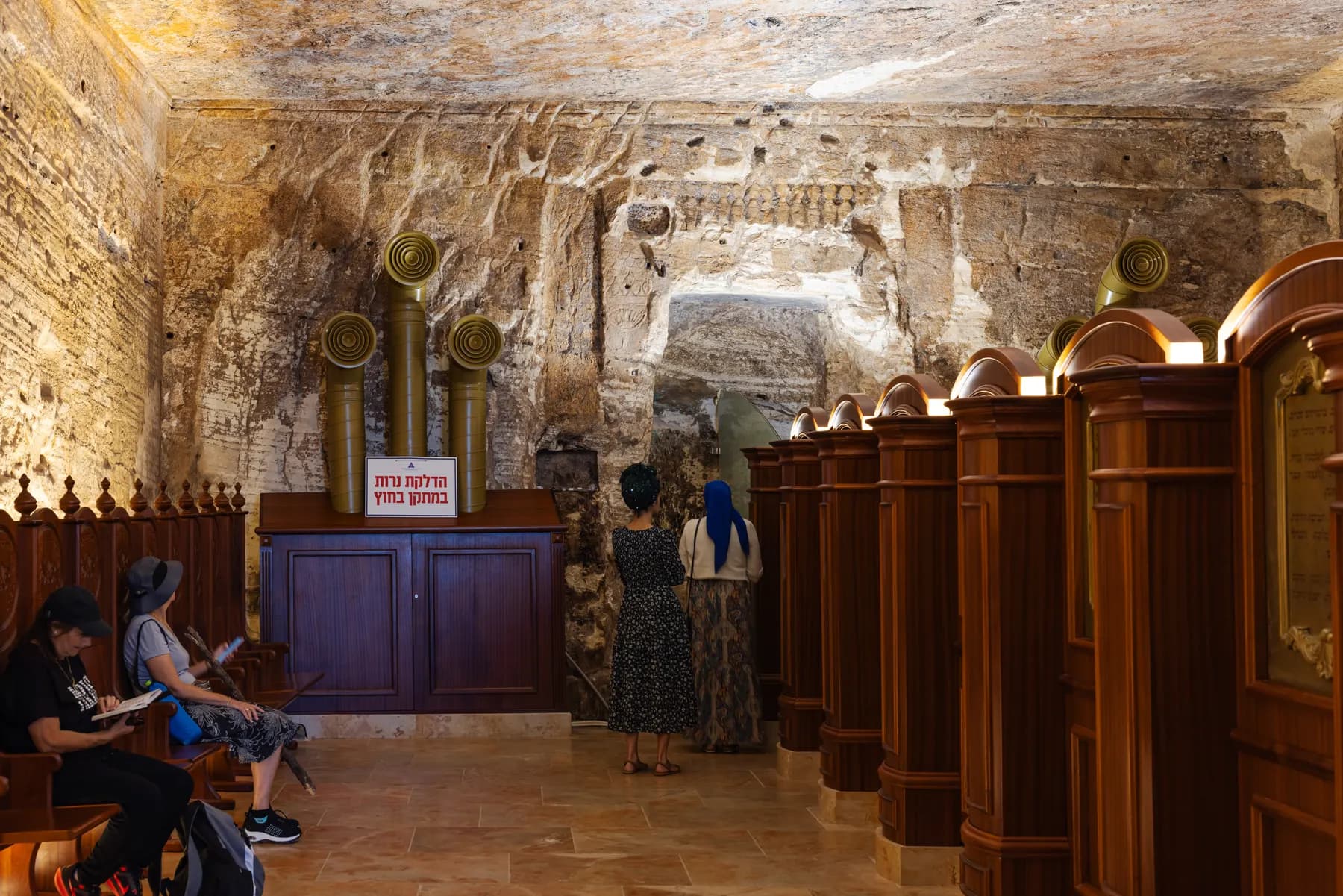
Elijah's Cave
A rock chamber at road level under Cape Carmel, measured by the Israel Antiquities Authority at 13.5 by 8.7 metres, whose walls carry about 150 graffiti in Greek, Latin, Hebrew and Arabic left by pilgrims of four religions.
- Time:
- About 30 to 45 minutes for the cave itself, or half a day taken together with Stella Maris, the cable car and the Bat Galim seafront
- Entry:
- Free. The operator publishes no price, and the Haifa tourism association files the cave under free attractions in the city.
זאב שטיין / CC BY 2.5 · Wikimedia Commons
Religious site
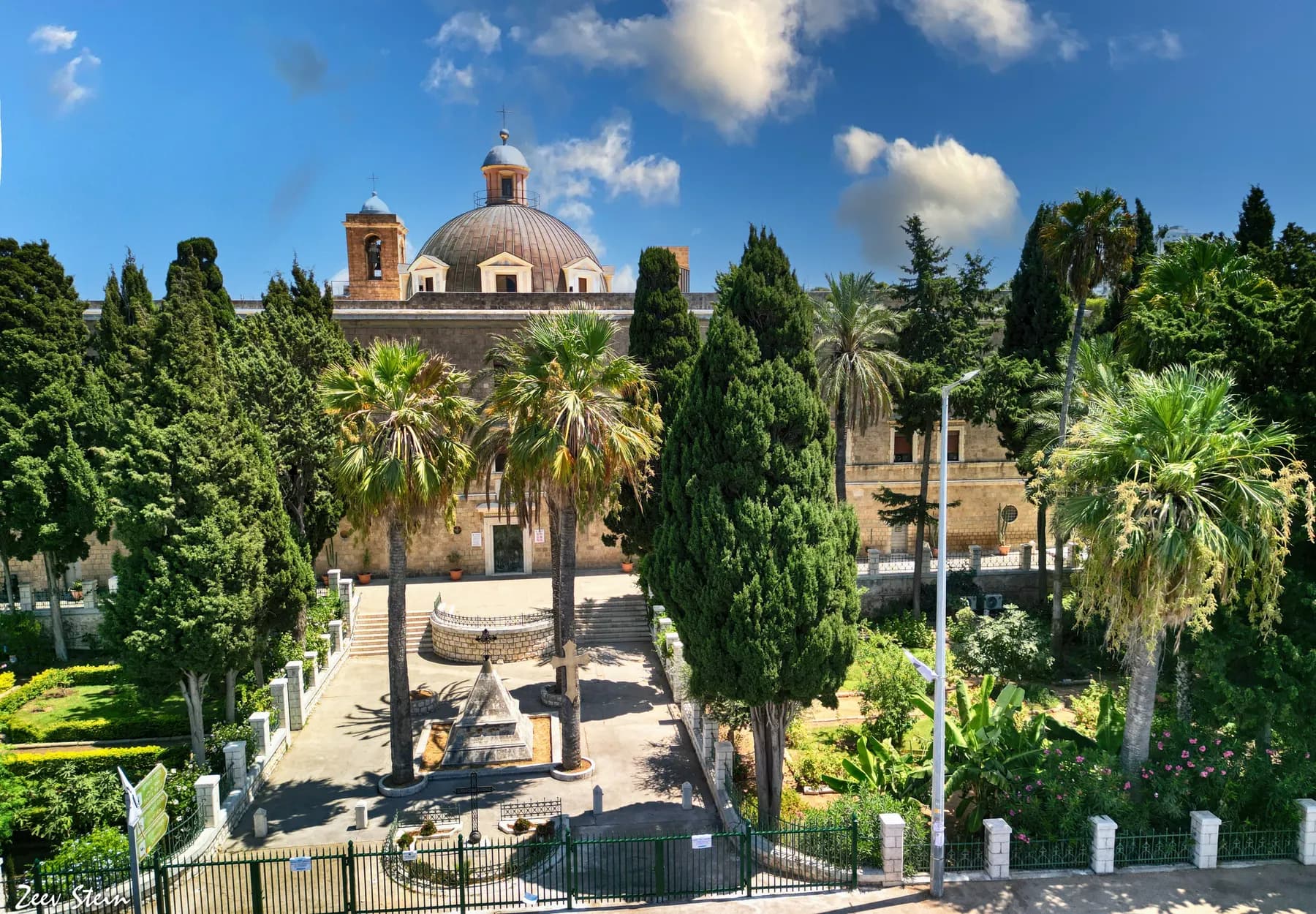
Stella Maris Carmelite Monastery
The mother house of the Discalced Carmelites stands on the seaward end of Mount Carmel over a grotto associated with Elijah, under a dome painted by the Maltese friar Luigi Poggi between 1924 and 1928.
- Time:
- about 45 minutes for the church and the grotto, or about 90 minutes taking in the pyramid, the terrace and the lighthouse forecourt across the road
- Entry:
- The Discalced Carmelites publish opening hours and no admission charge, describing the church as open to the public every day
4.6 on Google, 3,940 ratings
3 sites
Museums and collections
Museum
Clandestine Immigration and Naval Museum
A Ministry of Defence museum built around Af Al Pi Chen, a Royal Navy tank landing craft that sailed from Italy in September 1947 with 434 Holocaust survivors aboard and was boarded before she reached the coast.
- Time:
- about 90 minutes, or close to two hours if you go inside both the submarine and the missile boat
- Entry:
- ₪20
Museum
Hecht Museum
A free archaeology and art museum inside the University of Haifa's main building, built around the hull timbers of a merchant ship that sank off Ma'agan Michael in the late fifth century BCE.
- Time:
- about 90 minutes for the archaeology halls and the ship, or two hours taking in the art wing
- Entry:
- Free. The museum states that admission to the Hecht Museum is without charge, and the University of Haifa says the same
4.6 on Google, 1,851 ratings
Oshri Reicher (אושרי רייכר) / CC BY 2.5 · Wikimedia Commons
Museum
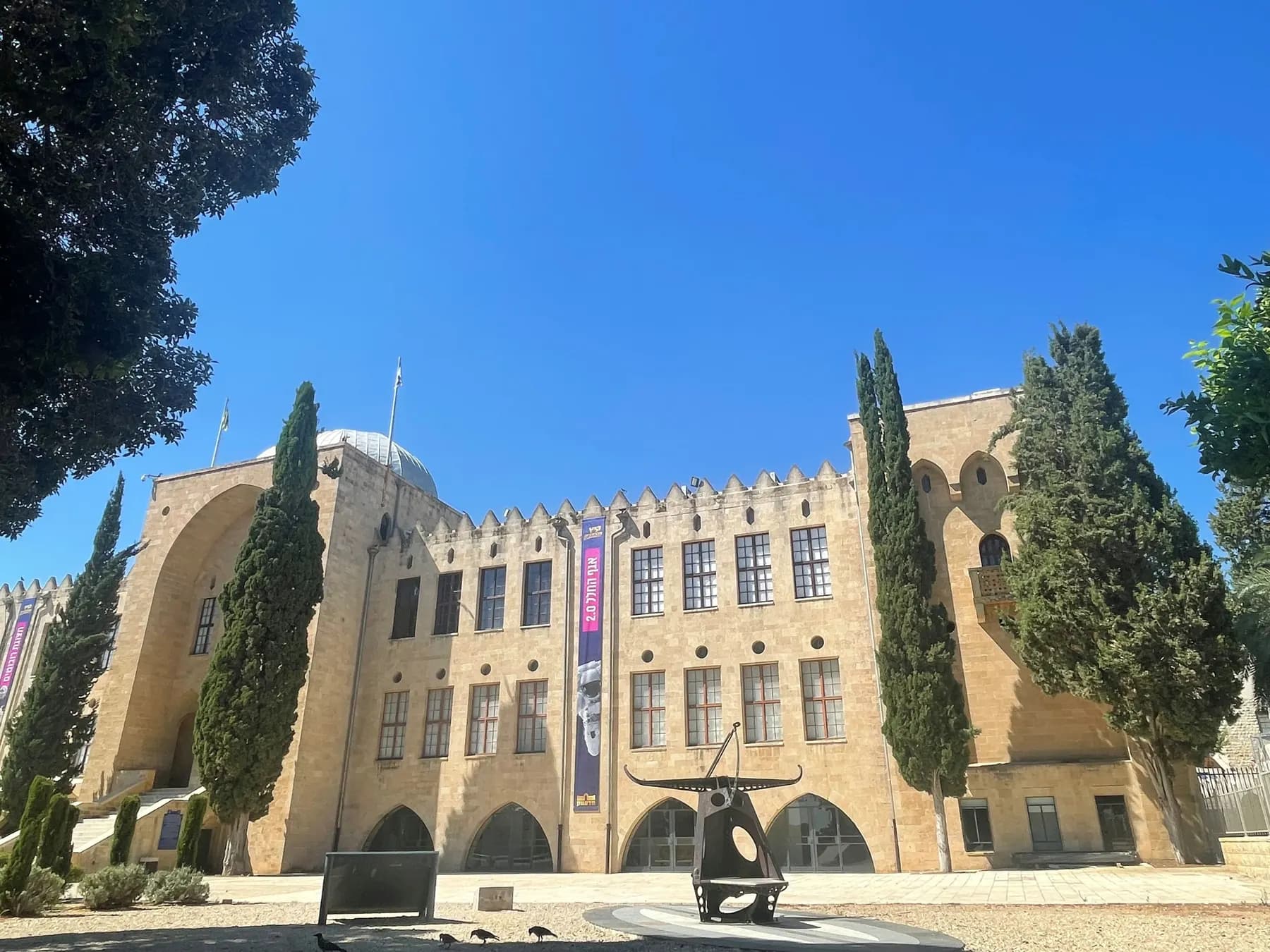
MadaTech, the Israel National Museum of Science
Israel's national science museum works out of the building the Technion was born in, a domed block in Hadar whose cornerstone was laid on 11 April 1912, and most of its exhibitions sit in rooms that were lecture halls.
- Time:
- about three hours
- Entry:
- 89 NIS
4.6 on Google, 9,428 ratings
2 sites
Quarters and streets worth walking
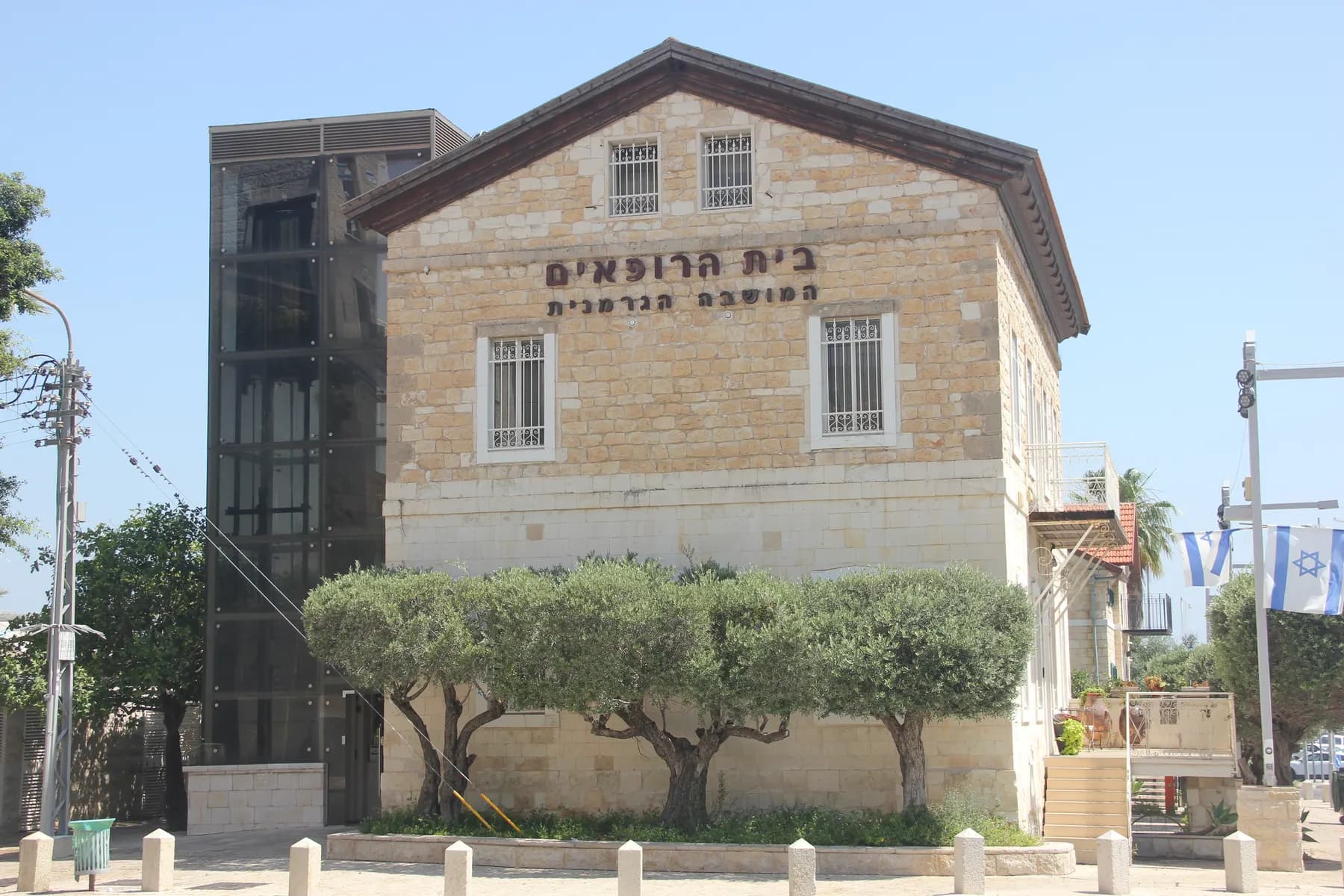
אושרי רייכר / CC BY 2.5 · Wikimedia Commons
Neighbourhood
German Colony
A German Templer settlement of 1868 whose main street was laid out 30 metres wide, pointing from the anchorage straight up Mount Carmel at ground that was then the colony's vineyards and is now the Bahai terraces.
- Time:
- About 90 minutes for the boulevard, its inscriptions and the two side lanes; half a day if the city museum and the gardens above are included
- Entry:
- Free
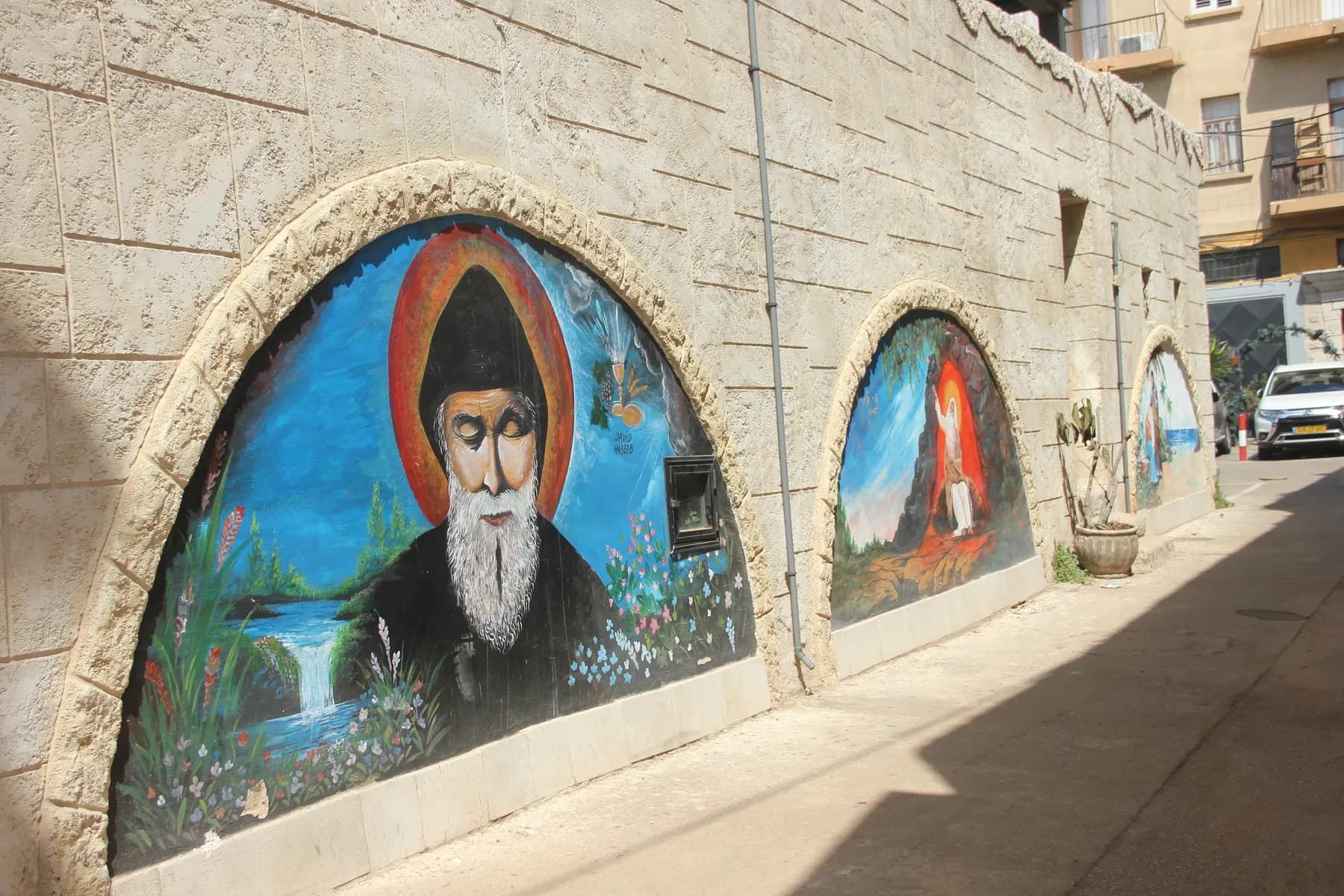
אושרי רייכר / CC BY 2.5 · Wikimedia Commons
Neighbourhood
Wadi Nisnas
More than 50,000 Arabs lived in Haifa before the 1948 war and about 3,000 stayed; they were concentrated into this one valley, whose lanes have carried a permanent open-air art exhibition since the 1990s.
- Time:
- about 90 minutes for the market and the art route at a walking pace, or half a day with Beit Hagefen's gallery, a long lunch and the German Colony added
- Entry:
- Free. Wadi Nisnas is public street, not a ticketed attraction, and the Museum Without Walls is in the open air
1 site
Viewpoints
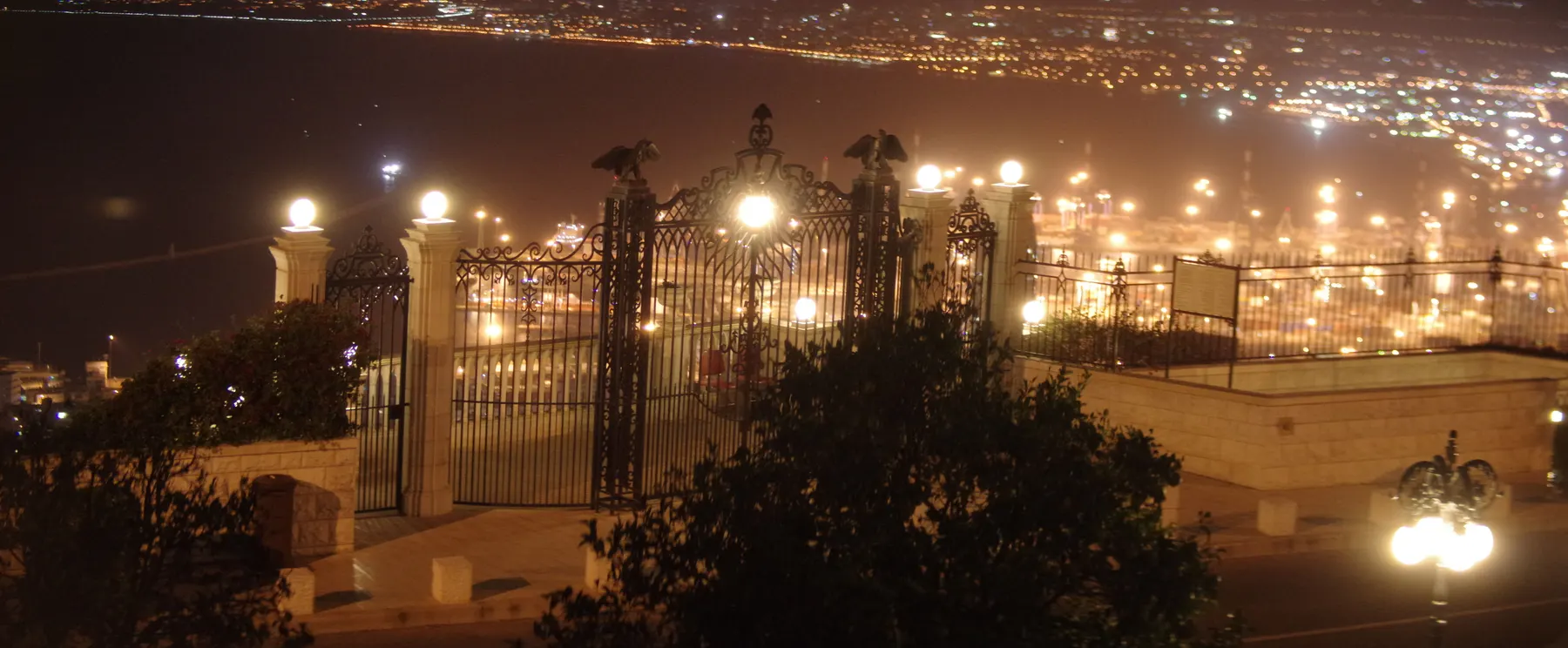
אהוד הלפרין / CC BY-SA 4.0 · Wikimedia Commons
Viewpoint
Louis Promenade
A 400-metre clifftop walk on Yefe Nof Street, given to Haifa in 1992 by Paul and May Goldschmidt in memory of their son Louis, and built by the man who was principal contractor of the Bahai gardens on the slope below it.
- Time:
- about 45 minutes, or 90 with the Bahai balcony opposite
- Entry:
- Free. The Haifa tourism association carries it under the city's free attractions.
1 site
The water
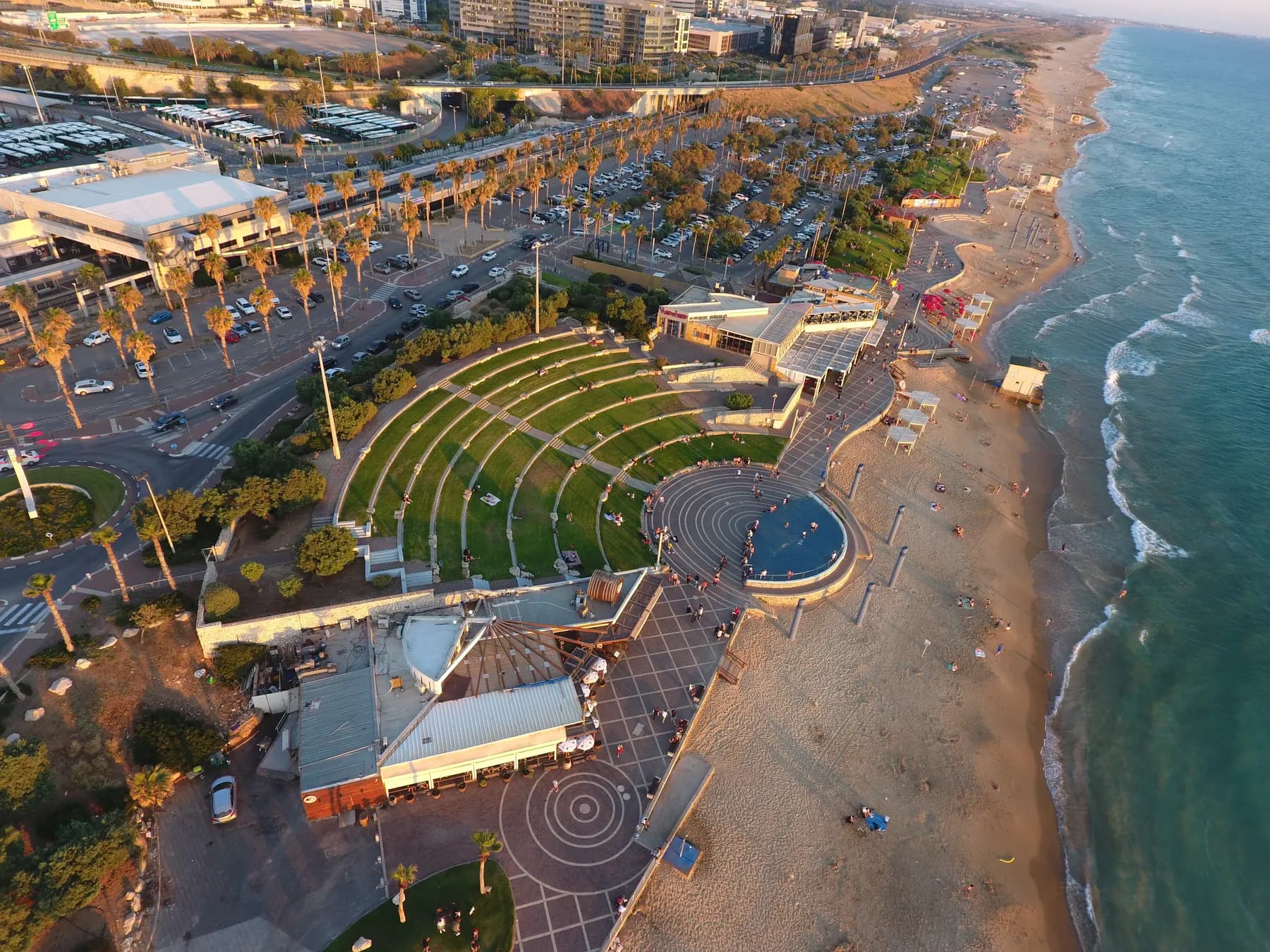
Gal Ben-David / CC BY-SA 4.0 · Wikimedia Commons
Beach
Dado Beach
Haifa's busiest free beach was built by the municipality and opened in the summer of 1979, and it is named for David Elazar, the chief of staff the Agranat Commission blamed for the Yom Kippur War.
- Time:
- about 2 hours for the promenade and a swim, or a half day with children
- Entry:
- Free
1 site
Things to do rather than see
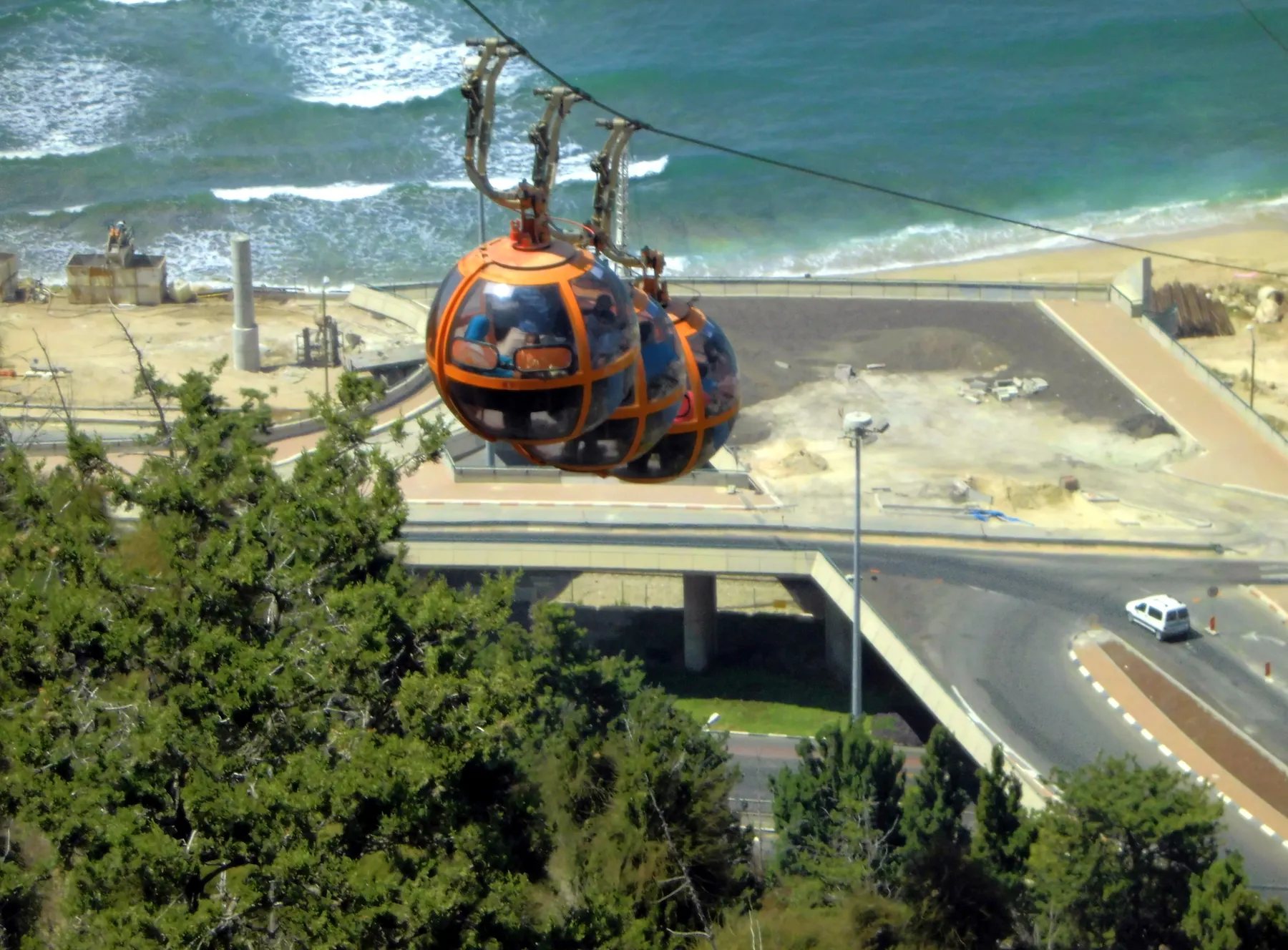
Orenshani7 / CC BY-SA 3.0 · Wikimedia Commons
Activity
Haifa Cable Car
Six spherical cabins have been running the 355 metres from the Bat Galim promenade up to Stella Maris since 1986, three in each direction, and Haifa still calls them Gurel's eggs.
- Time:
- about five minutes in the cabin each way, and 60 to 90 minutes for a return ride with a look at Stella Maris and the bay lookout at the top
- Entry:
- ₪35
Planning the rest of it
Seeing the sites is one part of a day here. These cover the others.
Sources and further reading
Every link below was opened and checked when this page was written. Official statements are marked as such: they are the subject's own account, not an independent one.
- OfficialBahá'í Gardens, Bahá'í World Centreganbahai.org.ilVisit us Haifa
The three self-guided entrances at 61 Yefe Nof, 80 Hatzionut and 21 Hagefen, all daily 09:00 to 17:00 and all free of charge and described as viewpoints only; the shrine closure from 9 August to 5 September 2026; closure on Bahai holy days and Yom Kippur; the dress rule; the bans on food, other beverages, gum, smoking, weapons and animals; and the Upper Terraces tour, 50 minutes, Tuesday to Sunday by reservation, up to 19 people, 750 stairs, starting at 45 Yefe Nof with a different finishing point
- OfficialBahá'í Gardens, Bahá'í World Centreganbahai.org.ilFrequently Asked Questions
The gardens 1 km long and 400 m wide with 225 m of vertical rise; approximately 1,700 steps; about 450 plant species; roughly 90 local workers and 50 Bahai volunteers from more than a dozen countries; the dome's some 12,000 glazed tiles with a very thin layer of gold leaf; the World Centre buildings, car parks and shelters dug into the mountain; donations accepted only from Bahais; no private events; about 650 volunteers from about 75 countries and no Israeli Bahai community
- OfficialBahá'í Gardens, Bahá'í World Centreganbahai.org.ilDesign Features of the Terraces, with an interview with the architect Fariborz Sahba
Sahba chosen in 1987; the eighteen terraces for the Letters of the Living and the numerical value of hai; the concave terraces hollowed into the mountain to cover 225 metres with minimal structure; local Galilee stone with some work executed in Italy on computerised equipment; and the statement that the stone and metal decoration has no religious meaning, the balustrades echoing the drum windows
- OfficialBahá'í Gardens, Bahá'í World Centreganbahai.org.ilEnvironmental Stewardship
The computerised irrigation running hundreds of valves; the Technion weather forecast used to project evapotranspiration; night watering at the roots and early-morning overhead irrigation; brackish and polluted water from licensed wells; rye grass dried out over summer and ground covers on the slopes against erosion; and the closed circulating system per terrace whose daily top-up is less than one person's consumption
- OfficialBahá'í Gardens, Bahá'í World Centreganbahai.org.ilA Brief History
The Bab born in Shiraz in 1819 and declaring himself at twenty-four; his teachings against holy war and for the equality of women; execution in a public square in Tabriz on 9 July 1850 before some ten thousand spectators; the remains hidden for fifty years before being brought to the Holy Land; and Bahaullah's exile to Akko and death on 29 May 1892
- OfficialBahá'í Gardens, Bahá'í World Centreganbahai.org.ilReopening of the Shrine of the Báb, Haifa
Press release: the construction project began in late July 2024 and the shrine and surrounding gardens reopened on Sunday 1 December 2024, with the shrine daily 09:00 to 12:00 and the gardens 09:00 to 17:00 at 80 Hatzionut; approach paths repaved in Jerusalem Red Limestone and the plaza enlarged in Galil Gold Limestone, for accessibility; and the 2008 UNESCO listing for outstanding universal value
- OfficialBahá'í Gardens, Bahá'í World Centreganbahai.org.ilAccessibility in the Holy Bahá'í Gardens
The recommended accessible guided route from 103 Hatzionut Avenue, about 10 m of moderate slope and 50 m of flat paved path to a viewing terrace, group size capped at 15 and 10 business days' notice; guides trained for lip-reading; ornament explorable by touch; service animals permitted; and the Visitor Information Centre's accessible auditorium and toilet
- OfficialBahá'í Gardens, Bahá'í World Centreganbahai.org.ilAbbas Effendi, 'Abdu'l-Bahá
Abdu'l-Baha born 1844, appointed successor in 1892, head of the community for 29 years, died in 1921; and the funeral in Haifa at which ten thousand mourners, described as more than a quarter of the city's population, escorted the coffin from Haparsim Street up Mount Carmel to the Shrine of the Bab
- OfficialBahá'í International Community (bahai.org)bahai.orgThe Shrine of the Báb
Bahaullah pointing out the spot by the cypresses in 1891; Abdu'l-Baha buying the land and raising a six-roomed mausoleum; the remains hidden for six decades before being laid to rest on 21 March 1909; Maxwell's superstructure designed in the early 1940s and completed in October 1953; and the decision to complete the nineteen terraces, built from 1990 and inaugurated in 2001
- OfficialBahá'í World News Servicenews.bahai.orgReshaping God's holy mountain to create a vision of peace and beauty for all humanity
Written in November 2000: Sahba as architect, some US$250 million contributed by the Bahai community over the decade, about 200,000 square metres of land, the gardens extending almost a kilometre up Mount Carmel, and the arrangement of nineteen terraces as nine above the shrine, nine below and one on its level
- OfficialBahá'í World News Servicenews.bahai.orgWith a dramatic flourish, Baha'is unveil majestic garden terraces on Mount Carmel
The inauguration of 22 May 2001: more than 3,000 Bahais from over 180 countries, more than 650 dignitaries from Israel and the diplomatic corps and at least 100 media representatives in a temporary 4,000-seat amphitheatre, and the terraces opening to the public on 4 June
- OfficialBahá'í World News Servicenews.bahai.orgBeauty of restored Shrine set to dazzle visitors and pilgrims
The restoration of the interior and exterior of the original 1909 structure, begun in 2008 and finished in April 2011; nearly 12,000 new gilded tiles in more than 120 shapes and sizes produced by a Portuguese firm; about 80,000 working hours on earthquake resistance using concrete, steel and carbon fibre; and over 50,000 hours of stonework by volunteers from 15 countries
- OfficialIsrael Ministry of Defencemod.gov.ilמוזיאון ההעפלה וחיל הים בחיפה
the operator's own page: opening hours, the four admission tiers in shekels, the address and the instruction to come down the Ma'ale HaDakar steps
- OfficialIsrael Ministry of Defence museums unitmuseums.mod.gov.ilנגישות: מוזיאון ההעפלה וחיל הים
the published accessibility statement: the platform lift to the ship and quay, the inaccessible submarine and missile boat, the induction loop, and the parking arrangement at HaHagana 65
- OfficialIsrael Ministry of Defence museums unitmuseums.mod.gov.ilאוניית המעפילים אף על פי כן
the museum's own account of the ship: 141 blockade runners with this the only survivor, the cutting into four sections, Yosef Almog's restoration from 1966, the Kronstro registration, the sailing from the Gaeta coast and the Flotilla 11 service
- OfficialIsrael Ministry of Defence museums unitmuseums.mod.gov.ilאודות מוזיאון ההעפלה וחיל הים
the vessels visitors may enter, the library and archive, the memorial wall for the ships that sank, the INS Eilat monument, and the National Maritime Museum listed as a neighbouring site
- OfficialHaifa Municipalityhaifa.muni.ilמוזיאון ההעפלה חיל הים
the municipality's competing hours: 10:00 to 16:00 Sunday to Thursday, Friday for booked groups of thirty or more, Saturday closed, and a different telephone number
- ReportingThe Times of Israeltimesofisrael.comBahai gardens most visited site in Israel
Reporting of 6 February 2012: 900,000 visitors in 2011 and more than seven million over the decade since the terraces opened, numbers roughly doubling between 2006 and 2011, the 2008 UNESCO inscription, and the Haifa mayor Yona Yahav on the daily tours
- ReferenceWikipediaen.wikipedia.orgShrine of the Báb
The six-room mausoleum of local stone and the burial on 21 March 1909; Abdu'l-Baha's interment in November 1921 and the three rooms added in 1929; Maxwell as architect with the dome engineered by Professor H. Neumann of the Technion; the first threshold stone in 1949; the octagon and eighteen-windowed drum; the Rose Baveno granite colonnade and Chiampo stone arches; and the 8 July 2008 World Heritage inscription
- ReferenceCouncil for Conservation of Heritage Sites in Israelshimur.orgClandestine Immigration and Naval Museum in Haifa
a third set of published hours, the guiding languages, and the statement that the museum belongs to the Ministry of Defence museums unit
- ReferenceWikipediaen.wikipedia.orgHMS LCT 147
the build at Thornaby-on-Tees, the launch of 23 September 1941, the 1943 conversion to a landing craft rocket, and the 434 passengers who sailed from Formia on 17 September 1947
- ReferenceHebrew Wikipediahe.wikipedia.orgמוזיאון ההעפלה וחיל הים
the 1951 municipal decision to build the museum around the Exodus, the bunks and audiovisual show, the Patria hull section, the reconstructed Cyprus camp interiors, the computerised route map and the Karine A container
- ReferenceWikipediaen.wikipedia.orgClandestine Immigration and Naval Museum
the 1969 opening, the dedication to David HaCohen, the competing attribution of the founding to a Colonel Yoske Coral, and the unconfirmed claim that USS Liberty material is held here
- ReferenceWikipediaen.wikipedia.orgPatria disaster
the planned deportation to Mauritius, the two-kilogram Haganah charge of 25 November 1940, the sinking in under sixteen minutes, the 267 dead and the 1957 disclosure
Things to do in Haifa: common questions
How many days do you need in Haifa?+
There are 11 sites here with a page of their own, and giving each the time its own page suggests comes to more than one day. Most visitors pick three or four and treat the rest as a return trip. The per-site pages each carry a "how long to give it" figure, which is the number to add up.
What does it cost to see Haifa?+
11 of the 11 sites listed here charge admission and 0 do not. Every ticketed one has its published price on its own page, with the operator's page linked beside it. Israel's national parks also sell a multi-site pass, which pays for itself at roughly the third park.
Are these sites open on Shabbat and holidays?+
Most national parks and museums keep shortened Friday hours and either close on Saturday or open late. Each page carries the hours as the operator publishes them, and the operator's own page is linked, which is the only version that will be current on the day you go.
Where do the opening hours and prices on these pages come from?+
From the operator: the Israel Nature and Parks Authority, the museum, the municipality or the site's own management, whichever publishes them. Each figure links the page it was taken from. Ratings and review counts, where a page shows them, come from a dated snapshot of Google Maps and are labelled as such rather than presented as current.
Which one is worth it if you only see one thing in Haifa?+
Bahai Gardens and the Shrine of the Bab is the one this guide would keep. Nineteen terraces climb 225 vertical metres of Mount Carmel around a shrine whose stone core was built to receive a body that had been hidden for most of a century.
Is there anything worth seeing that is not on this list?+
Plenty, and that is deliberate. A site earns a page here when a visitor could reasonably spend half an hour there, when there is enough documented substance to write a real page about it, and when the operator publishes something a visitor can plan against. Things that fail those tests are covered on the Haifa overview instead of padded out into pages of their own.