Museum · Haifa
MadaTech, the Israel National Museum of Science
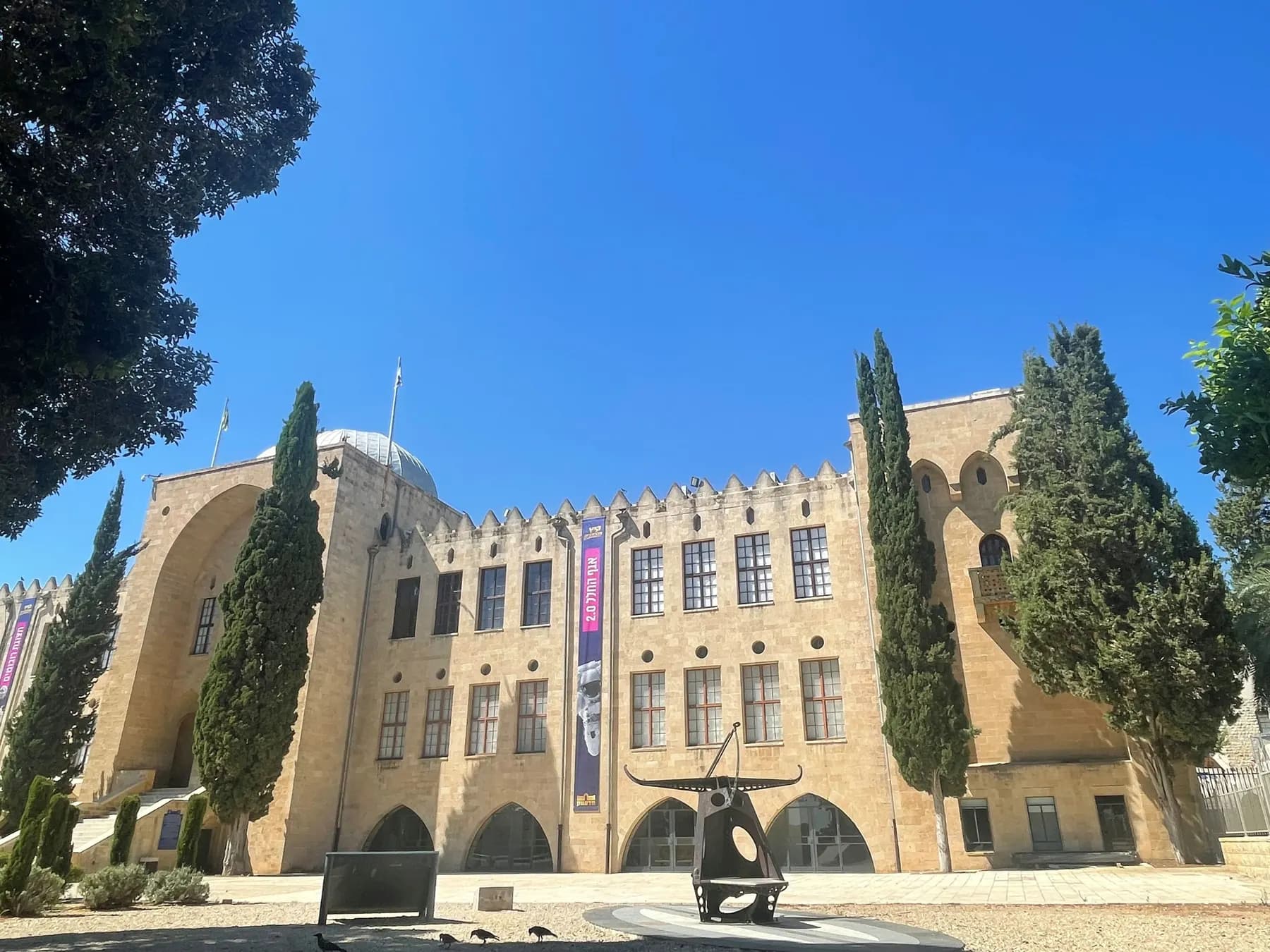
Israel's national science museum works out of the building the Technion was born in, a domed block in Hadar whose cornerstone was laid on 11 April 1912, and most of its exhibitions sit in rooms that were lecture halls.
Oshri Reicher (אושרי רייכר) / CC BY 2.5 · Wikimedia Commons
Cornerstone laid
11 April 1912
for the Technikum's main building, thirteen years before its opening ceremony
First classes
December 1924
evening classes on 14 December; the formal opening followed on 9 February 1925
Exhibitions
more than 20
the museum's own count in 2026, one ticket for all of them
Historic collection
about 6,000 items
sorted by volunteers into 17 categories; only part of it is on show
In short
- How long to give it
- about three hours
- Sunday to Thursday
- 09:30-17:45
- Adult or child over 5, at the box office
- 89 NIS
מדעטק
MadaTech is Israel's national museum of science, technology and space, and it occupies the building the Technion started in: Alexander Baerwald's domed block on the slope of Hadar, whose cornerstone went down on 11 April 1912. The museum dates itself to 1983, when a first public exhibition opened in the institute's old workshop under the name Technoda. Almost everything a visitor handles here is in a room that used to be a lecture hall, a drawing office or a laboratory.
It is a hands-on museum rather than a collection behind glass. More than twenty exhibitions are spread across the historic building, the former workshop opposite and a science park of about four dunams in the yard between them, and one ticket covers the lot. The subjects run from optics and waves to green energy, Leonardo da Vinci, the solar system, Israeli satellites and an Enigma machine. The museum's own figure for an average visit is about three hours.
The history is not decoration. The building spent the First World War as a German army disinfection plant, a slaughterhouse, an Ottoman hospital and then a British military hospital, was auctioned off in 1915 and bought back in 1920, and did not hold a lesson until December 1924. One lecture room has been left more or less as it was, down to the holes in the desks where the inkwells sat, and the palm Albert Einstein planted on his 1923 visit still stands in front of the door.
The building
A dome, a full-height arch and merlons above Hadar
The German Jewish architect Alexander Baerwald was asked for first plans in October 1909 and given the detailed design in August 1910. What he produced is symmetrical, three storeys high and built as five masses: a tall central block carrying a dome, with the main entrance set under an arch that rises the whole height of the building, and two long wings ending in blocks that step slightly forward of the facade. The building stood alone on the hillside when it went up, and was sited to be seen from the lower city and the port.
Baerwald was working to an explicit idea, that an architecture for the country should join European form to Eastern elements. Hebrew Wikipedia's account of the building calls the result one of the two most important works in the Eretz Israel style, an early phase of the eclectic architecture of the period, the other being the Herzliya Gymnasium in Tel Aviv, which was demolished. The European half of that is the symmetrical composition and the square windows; the local half is the pointed arches, the stone cladding, the merlons along the parapet, the dome, and a climate strategy of high rooms with small octagonal vents above the windows to let hot air out.
Baerwald did not only draw it. He settled in Haifa, became a professor, and headed the first faculty to open in the building, architecture. He died in Haifa in 1930. The second structure he planned on the same plot was meant as a secondary school and became the Reali School, which is still the neighbour and still runs the paid car park MadaTech visitors use at weekends.
1907-1925
Twelve years from cornerstone to first lesson
The institute was the project of the Hilfsverein der deutschen Juden, the Berlin relief society known in Hebrew as Ezra. Its director Paul Nathan toured Palestine in the autumn of 1907 and came back proposing a technical college. Haifa was chosen over Jerusalem and Jaffa because the Ottoman government was making it a railway junction and planning to enlarge the port, and because its small Jewish community was less politically fixed than the alternatives. A plot of 46 dunams in a neighbourhood then called Mirawan, later Hadar HaCarmel, was bought from Arab and Templer owners and registered in August 1910.
Permission to build took two years and three separate permits. There were no skilled construction workers locally and they were brought from Jerusalem and Germany; most of the materials and all of the machinery came from Germany; and the well on the site defeated the local crews until a German engineer with the right equipment reached groundwater at 100 metres. The man supervising the work for the institution was Shmaryahu Levin, whose name is now on the street the entrance stands on. The cornerstone went down on 11 April 1912 and the main building was largely finished in 1913.
Then it stopped. The row over the language of instruction put the project at the centre of a public fight and the budget ran out with it. On 17 July 1914 the board met in Berlin for the last time and Ezra, the principal creditor, proposed selling the whole thing at auction. Two weeks later the war began. The Technikum association's assets were auctioned on 15 March 1915 and Ezra duly bought the land and the buildings for 225,000 marks. In 1917 the German army took the site for a disinfection plant and a slaughterhouse, the Ottoman army turned the main building into a hospital, and after the British took Haifa in October 1918 they used it as a military hospital too.
The Zionist Organisation bought the place from Ezra on 6 February 1920 and spent five years repairing it, replacing stolen machinery and hiring staff. Einstein came in 1923, planted his palm and agreed to head the institution's committee. The first evening classes were held on 14 December 1924, entrance examinations two days after that, and the formal opening fell on Tu BiShvat, 9 February 1925, thirteen years after the cornerstone. The site then ran to 46 dunams and seven buildings, with teaching concentrated in one of them, six teachers and sixteen students in two departments, architecture and civil engineering.
1953-2006
How a university building became a museum, and what it was called first
The Technion began moving up the hill to Neve Sha'anan in the early 1950s. By 1965 the Faculty of Architecture was the only one still in Hadar. In the early 1980s a group of Technion professors converted two old classrooms into a place to show science to children, and in 1983 a first public exhibition opened in the workshop building under the name Technoda. A donation from the Recanati family in 1985 turned the operation into Israel's national science museum.
Accounts of when the building actually changed hands do not agree. The museum's own timeline puts the Technion's departure and the handover in 1984. Hebrew Wikipedia's article on the museum says the building passed to it in 1986, having served all faculties from 1925 to 1965 and the architects alone from 1965 to 1985. The difference is a year or two of overlap rather than a real dispute, but it is there in print.
The present name is younger than the museum. In 2006 it ran a public competition to find one, and MadaTech won: mada, science, joined to tech. The institution it inherited the building from had been through the same exercise. On Chaim Nachman Bialik's proposal, accepted in September 1924, the college was spelled in Hebrew with a tav rather than a tet, from the Hebrew word tekhen, on the argument that the Greek root had come from the Hebrew one in the first place. The spelling was settled as Technion only in 1945.
Conservation
What is original, what was taken off, and the classroom nobody redecorated
When the museum took the building over, later additions that had spoiled the elevations were removed and the rest was restored to Baerwald's original drawings. The Council for Conservation of Heritage Sites in Israel gave the museum a citation for that work. What a visitor sees from the plaza in front, which is named after Shlomo Kaplansky, is therefore closer to 1913 than the building was for much of the twentieth century.
The most literal survival inside is the historic classroom, kept close to what it was. The original furniture is still in place. There is a small hole in each wooden desk, which is where a student set an inkwell, and some of the chairs carry names that their occupants carved into them. The walls now hold a photographic exhibition of the Technion between the 1920s and the 1950s, with QR codes that open the same images on a phone.
Everything else is a museum fit-out inside old rooms, and it shows in the plan. Most of the permanent exhibitions take up a single former classroom each, which is why the historic building reads as a warren of small rooms rather than as open galleries; the newer displays are the ones that knocked two or three rooms together. The touring exhibitions, the innovation centre, the education wing's classrooms and laboratories and the Wanger family fab lab are all in the second building, the old workshop, whose main space is named Einstein Hall.
Inside now
Enigma, a Nobel medal and a spacecraft called Sababylon 5
The Enigma room is built around a machine that Britain gave the Israeli army and that was partly converted to Hebrew, shown alongside interactive stations that let a visitor work the cipher and an account of Alan Turing's part in breaking it. The museum puts the chance of decoding a single letter unaided at one in 150,738,274,937,250 for the machine in its simple form, and far longer odds for the more complicated version on display.
The Nobel gallery is named for Aaron Ciechanover, who was born in Haifa and studied and taught at the Technion in this building before sharing the 2004 Nobel Prize in Chemistry with Avram Hershko and Irwin Rose for the ubiquitin system. The museum says he gave it the original award, and the medal, 18 carat gold with a line from Virgil on the back, is shown with the diploma and with his 1982 doctoral thesis. The museum's page dates his decision to 2003, a year before the prize was announced, so the object is more reliable than the date attached to it.
The newest wing is space, opened on 2 August 2025. It includes a projection hall built as a spacecraft called Sababylon 5, recommended from age five and with an adult for children up to ten, and an exhibition of Israeli space hardware put together with Israel Aerospace Industries, Rafael, Astroscale, SpacePharma, the Technion and the Israel Space Agency, among others. A guest exhibition from the American Museum of Natural History in New York shows visualisations built from James Webb, Hubble and Gaia observations. On Saturdays and school holidays the journey to space runs in timed groups rather than continuously, so it is worth doing early.
- The yellow wave: a room lit only in monochromatic yellow until a switch on the wall brings the other colours back
- The music room: a laser harp played by cutting the beams, and a vibrating plate that draws patterns in sand at different frequencies
- The innovation centre: three displays and an immersive hall that simulates a journey through the human body
The yard
Five courtyards, a fighter jet and a great deal of water
The yard between the two main buildings reopened at Hanukkah in 2011 as a science park of about four dunams. It is divided into five courtyards, one each for Archimedes, Leonardo da Vinci, Bernoulli, Newton and Pythagoras, and the exhibits in each were built around what that person worked out. There is an amphitheatre for about 400 people with a computer-controlled fountain laid out as a compass rose at its centre.
Archimedes gets a lever long enough to lift a sibling, a screw pump to turn by hand, and the array of mirrors he is supposed to have aimed at enemy sails, which the museum labels honestly as a system that may never have worked in practice. The da Vinci courtyard is the ideal city: dams, locks, pumps and paddle wheels built from his drawings, with the flow of water under visitor control. Pythagoras gets three outsized xylophones, in bells, wood and pipe, and a wheel that demonstrates his theorem using liquid.
The exhibit most people photograph is in the Bernoulli courtyard and is there because it would not go through a door: a real Israeli Kfir fighter, which the museum says many visitors have come to treat as its symbol. The park is also the part of the site where eating is allowed and where the water play is.
What to look for
Things not to walk past at MadaTech, the Israel National Museum of Science
The details that repay knowing about before you are standing in front of them.
The historic classroom
The one room left as it was, with its original desks, the small holes where inkwells stood and chairs carrying names that students carved into them. Photographs of the Technion from the 1920s to the 1950s hang on the walls.
The Enigma machine
A machine Britain gave the Israeli army, partly converted to Hebrew, with stations that let visitors run the cipher themselves and an account of how the code was broken.
Ciechanover's Nobel medal
The 18 carat gold medal and diploma of the 2004 chemistry prize, given to the museum by a laureate who studied in this same building, displayed beside his 1982 doctoral thesis.
The Kfir in the Bernoulli courtyard
A retired Israeli fighter parked in the science park because it would not fit indoors. The museum says visitors have adopted it as the emblem of the place, and it is included in the ticket.
Einstein's palm
The palm Albert Einstein planted in front of the building on his 1923 visit is still standing. He agreed to head the institution's committee on the same trip.
Sababylon 5
The projection hall in the space wing, built as a spacecraft. Recommended from age five, with an adult for children up to ten. The museum states that the capsule is not suitable for wheelchair users.
The long view
MadaTech, the Israel National Museum of Science, in order
1907
Paul Nathan of the Berlin relief society Ezra tours Palestine and comes back proposing a technical college.
August 1910
A plot of 46 dunams in what becomes Hadar HaCarmel is registered, bought from Arab and Templer owners.
11 April 1912
The cornerstone of the main building is laid, to Alexander Baerwald's design.
1913
The main building is largely complete and the school beside it opens. The target for teaching is April 1914.
October 1913
The board picks German as the language of instruction, and reverses itself in favour of Hebrew in February 1914.
15 March 1915
The Technikum association's assets are auctioned. Ezra buys the land and buildings for 225,000 marks.
1917-1918
The site serves in turn as a German army disinfection plant and slaughterhouse, an Ottoman hospital and a British military hospital.
6 February 1920
The Zionist Organisation buys the site from Ezra and begins five years of repairs.
1923
Albert Einstein visits, plants a palm in front of the building and agrees to head the institution's committee.
14 December 1924
The first evening classes are held. The formal opening follows on 9 February 1925.
1953-1965
The Technion moves to Neve Sha'anan. By 1965 only the Faculty of Architecture is left in Hadar.
1983
A first public science exhibition opens in the old workshop under the name Technoda.
1984
The Technion completes its move and the historic building becomes the museum's permanent home.
1985
A Recanati family donation makes it Israel's national museum of science.
2006
A public naming competition produces the name MadaTech.
2011
The yard between the two buildings reopens at Hanukkah as a science park.
2 August 2025
The Recanati space wing opens, with the Sababylon 5 projection hall and an Israeli space industry exhibition.
Practical
Visiting MadaTech, the Israel National Museum of Science
Where
25 Dr Shmaryahu Levin Street, Hadar HaCarmel, Haifa
Opening hours
Admission
- Adult or child over 5, at the box office
- 89 NISsource
- Adult or child over 5, booked online
- 84 NISsource
- Family, at the box office
- 320 NISsource
- Child under 5
- Free, on presentation of a parent's ID, but a zero-price ticket must still be bookedsource
- Student, senior citizen, person with a disability or their companion
- 44.5 NIS, with valid IDsource
- New immigrant, first year after arrival
- 44.5 NIS, with the immigrant cardsource
- Senior citizen on Mondays
- 10 NIS, with a senior card, individuals onlysource
- Soldier in mandatory service
- Free, on presentation of a certificatesource
- Annual membership, individual
- 250 NISsource
Access
Good, and set out in detail by the museum. It states that all parts of the site are accessible to wheelchair users: lifts and wide corridors in the historic building, paths and ramps through the science park with an accessible picnic table and drinking fountains, and ramp access from the park to the robot display, the innovation centre and the space capsule area. There are induction loops at the box office, the shop and the cafeteria, and the museum recommends two navigation apps, RightHear and Markers AI, for blind and partially sighted visitors, downloaded before arrival. Four accessible bays sit in the museum car park, and direct accessible entry from that car park has to be arranged in advance with the accessibility coordinators, through the chat service at weekends and on holidays. The one exception the museum names is entry to the space capsule in the space wing, which it says is not suitable for wheelchair users. Note also that Hadar is steep and that the entrance is reached by a path from Shmaryahu Levin Street, not from the Balfour Street car park.
On site
- Two cafes, on the entrance floor and in the science park
- Open on Saturdays and school holidays
- Museum shop
- Free car park at 12 Balfour Street
- Outdoor science park with water play
- Picnic space in the garden outside the entrance
- Lifts and ramps
- Hearing induction loops
- Four accessible parking bays
- Pram parking at the early childhood centre
- Education wing, laboratories and a fab lab
Booking
Box office tickets are sold on a space-available basis, and the museum asks visitors to book online in advance, including anyone using a works committee, club or credit card benefit. Same-day online sales close two hours before the museum does. Tickets are timed for entry but there is no limit on how long you stay, and a booking can be changed or cancelled up to 48 hours before the visit. Children up to 16 must be accompanied by an adult.
Hours and prices are given as the operator publishes them and change without much notice, particularly around Shabbat and the festivals. Check the operator's own page before you travel for this.
Official page at madatech.org.il →What people wish they had known
- The free car park is at 12 Balfour Street, but there is no way into the museum from it. The entrance and the box offices are on the path up from 25 Shmaryahu Levin Street, on the other side of the building, so park with that walk in mind. The car park closes half an hour after the museum.
- Box office tickets are sold only if space is left. The museum asks everyone to book online first, including people holding a works committee or credit card benefit, and same-day online sales stop two hours before closing.
- Last entry is an hour before closing and the museum's own average visit is about three hours, so a late afternoon arrival buys much less than the closing time suggests.
- Eating is not allowed inside any of the buildings, including the touring exhibition hall and the innovation centre. There are two cafes, and the science park and the garden outside the main entrance are where food is permitted. The wristband given at the entrance lets visitors go out and come back.
- There is water play in the science park. A change of clothes and a towel for children is the museum's standing advice, and prams are not allowed into the early childhood centre or the Lego room, so a carrier is worth bringing.
- Navigation apps have been working only partially in Haifa. The museum advises setting the route in advance in Google Maps and following it rather than relying on live positioning.
The figures
MadaTech, the Israel National Museum of Science by the numbers
Each figure carries the year it belongs to and links the source it came from.
| Measure | Figure | As of | Source |
|---|---|---|---|
| Admission, adult at the box office | 89 NIS | 2026 | madatech.org.il |
| Admission, adult booked online | 84 NIS | 2026 | madatech.org.il |
| Concession admission | 44.5 NIS | 2026 | madatech.org.il |
| Average visit, the museum's own figure | about 3 hours | 2026 | madatech.org.il |
| Items in the historic collection | about 6,000 | 2026 | madatech.org.il |
| Categories the collection is sorted into | 17 | 2026 | madatech.org.il |
| Science park area | about 4 dunams | 2026 | he.wikipedia.org |
| School students a year | more than 100,000 | 2026 | he.wikipedia.org |
| Visitors a year | 300,000 to 400,000 | 2026 | en.wikipedia.org |
While you are here
The rest of Haifa
Everything else in this destination with a page of its own.
אושרי רייכר / CC BY 2.5 · Wikimedia Commons
Neighbourhood
Wadi Nisnas
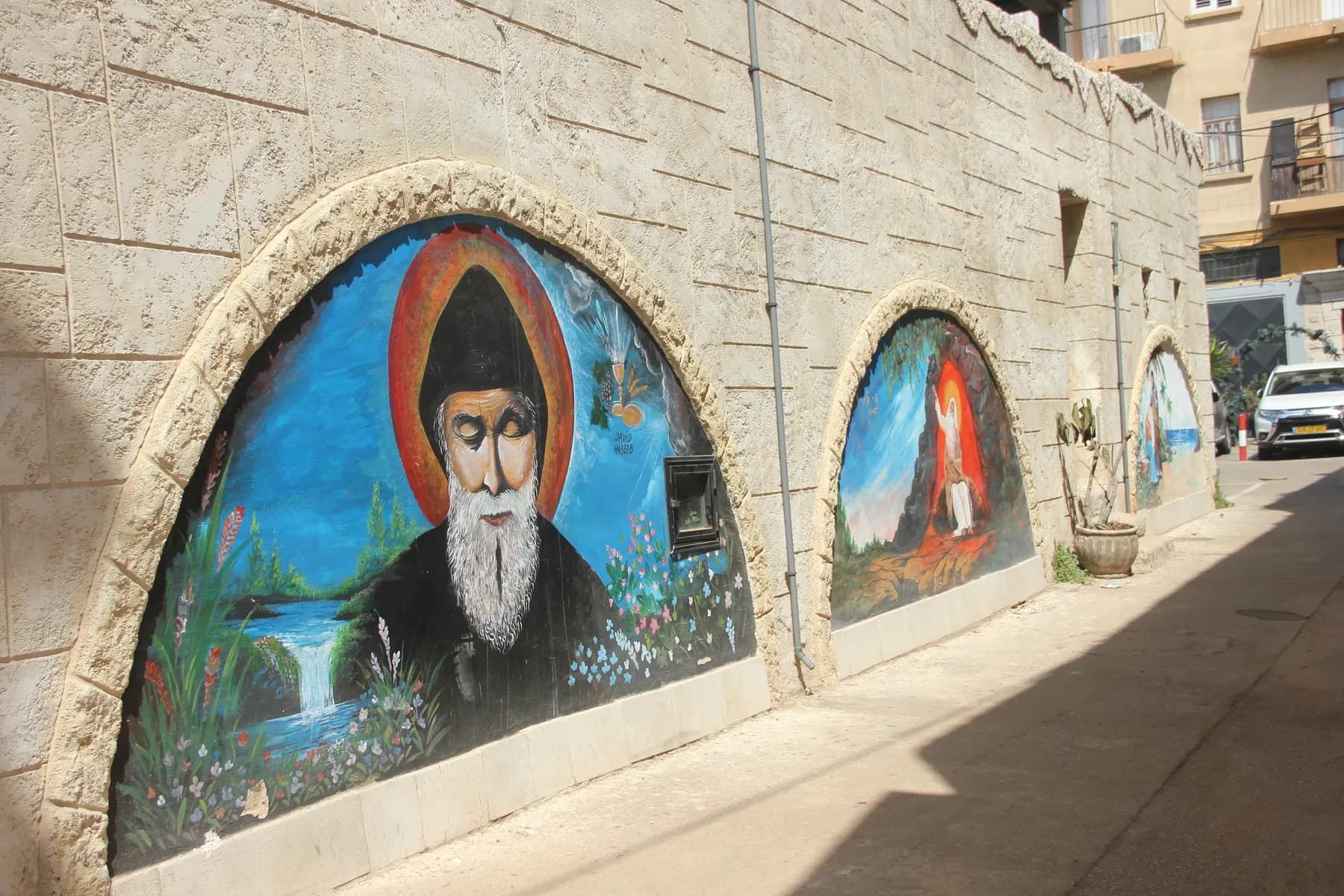
More than 50,000 Arabs lived in Haifa before the 1948 war and about 3,000 stayed; they were concentrated into this one valley, whose lanes have carried a permanent open-air art exhibition since the 1990s.
אושרי רייכר / CC BY 2.5 · Wikimedia Commons
Neighbourhood
German Colony
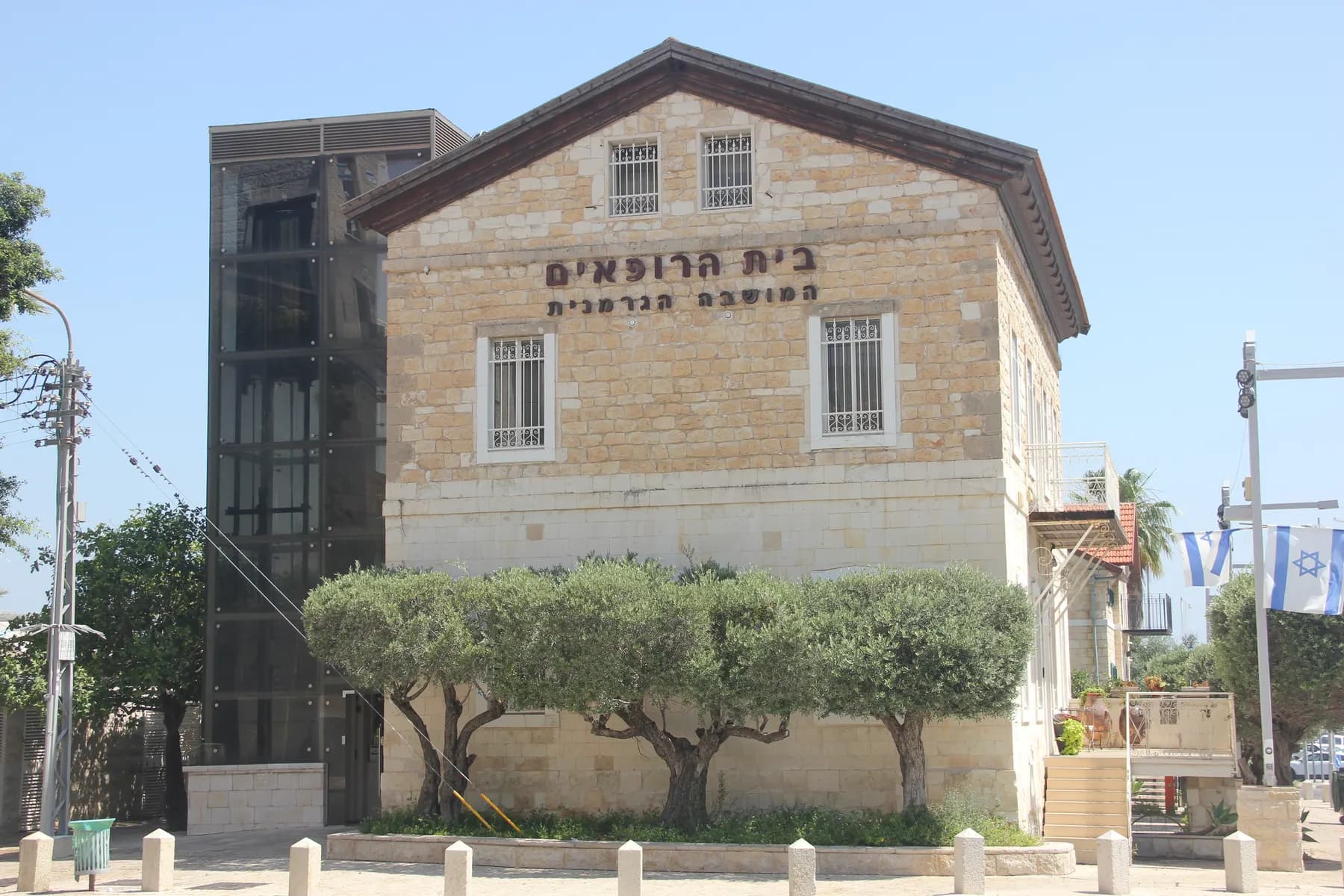
A German Templer settlement of 1868 whose main street was laid out 30 metres wide, pointing from the anchorage straight up Mount Carmel at ground that was then the colony's vineyards and is now the Bahai terraces.
Chris Yunker from St. Louis, United States / CC BY-SA 2.0 · Wikimedia Commons
Religious site
Bahai Gardens and the Shrine of the Bab
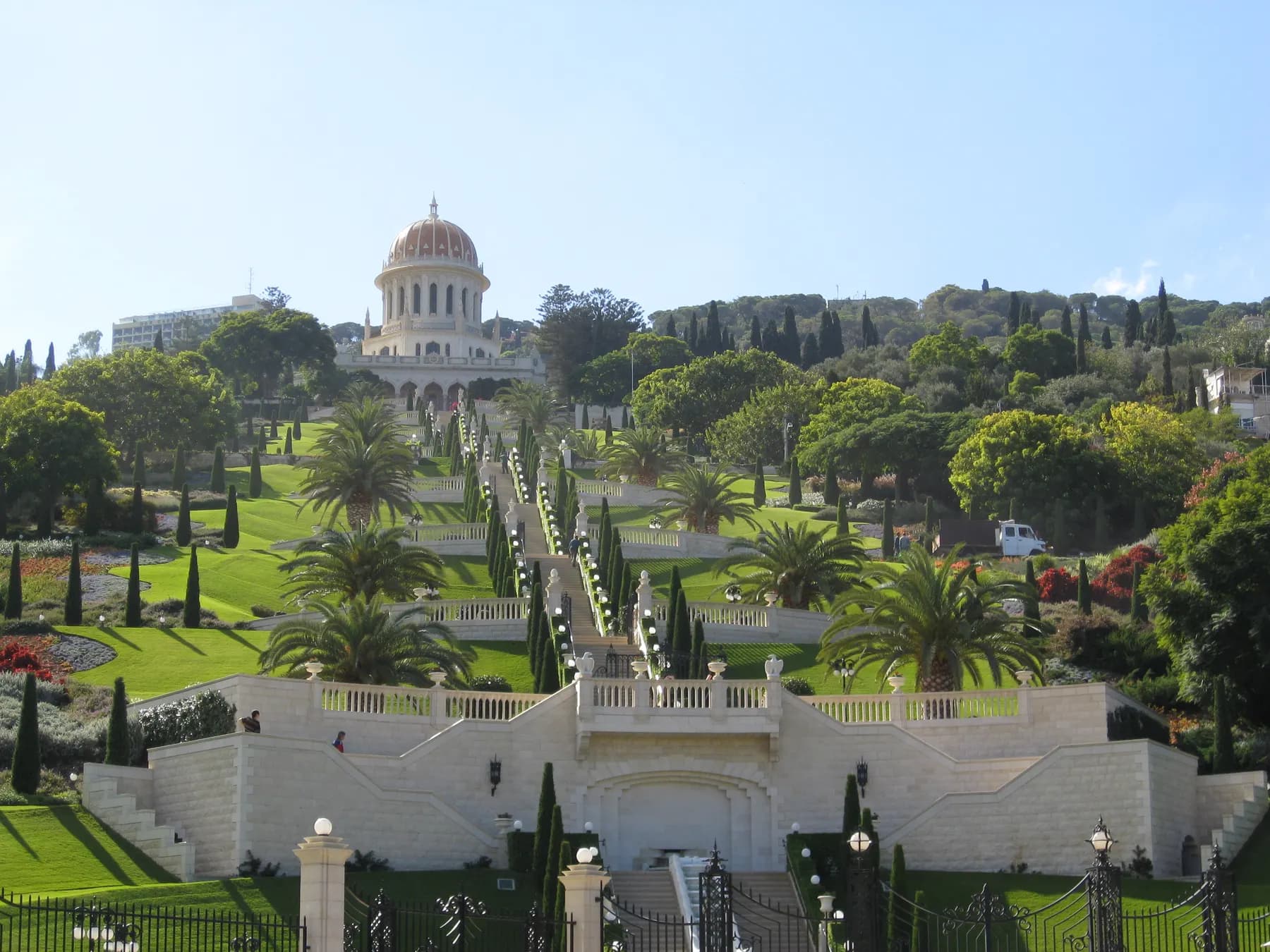
Nineteen terraces climb 225 vertical metres of Mount Carmel around a shrine whose stone core was built to receive a body that had been hidden for most of a century.
Sources and further reading
Every link below was opened and checked when this page was written. Official statements are marked as such: they are the subject's own account, not an independent one.
- OfficialMadaTech, the Israel National Museum of Science, Technology and Spacemadatech.org.ilMadaTech visitor information and opening hours
the museum's English page, source of the hours published for August 2026
- OfficialMadaTechmadatech.org.ilMadaTech's admission costs
every admission and membership figure quoted on this page, in shekels
- OfficialMadaTechmadatech.org.ilBefore you buy tickets, and before your visit
last entry, the three-hour average visit, the food rules, prams and the wristband
- OfficialMadaTechmadatech.org.ilAccessibility at MadaTech
lifts, ramps, induction loops, the navigation apps and the four accessible bays
- OfficialMadaTechmadatech.org.ilGetting here and parking
the Balfour Street car park, the Reali School car park, Metronit, bus and Carmelit routes
- OfficialMadaTechmadatech.org.ilAbout MadaTech, and its milestones
the museum's own chronology from 1983 to the present, and the Recanati endowment
- OfficialMadaTechmadatech.org.ilThe historic collection
about 6,000 items, roughly 20 volunteers and 17 categories
- OfficialMadaTechmadatech.org.ilThe historical classroom
the original furniture, the inkwell holes and the Bialik spelling of the college's name
- OfficialMadaTechmadatech.org.ilThe Nobel Gallery, named for Prof. Aaron Ciechanover
the donated medal and diploma, the 1982 thesis, and the date the museum gives for the gift
- OfficialMadaTechmadatech.org.ilThe Yaakov Recanati space wing
the 2 August 2025 opening, Sababylon 5, the industry partners and the guest exhibition
- OfficialMadaTechmadatech.org.ilThe science park at MadaTech
the five courtyards, the Archimedes mirrors, the xylophones and the Kfir fighter
- ReferenceHebrew Wikipediahe.wikipedia.orgThe old Technion building
the Ezra society, the land purchase, the 1915 auction, the wartime uses and the architecture
- ReferenceHebrew Wikipediahe.wikipedia.orgMadaTech
the Technoda name, the 2006 competition, the 1986 handover date and the science park
- ReferenceWikipediaen.wikipedia.orgIsrael National Museum of Science, Technology, and Space
the 1983 founding, Baerwald's 1912 start and the conflicting annual visitor figures
MadaTech, the Israel National Museum of Science: common questions
What is MadaTech?+
MadaTech is Israel's national museum of science, technology and space, in the Hadar neighbourhood of Haifa. It is a hands-on museum: more than twenty exhibitions across two buildings, a science park in the yard between them and a hall for touring exhibitions, all covered by one ticket. It occupies the building the Technion began in, whose cornerstone was laid in 1912.
How much does it cost to get in?+
The museum published 89 NIS at the box office for anyone over five, or 84 NIS booked online. Students, senior citizens, visitors with a disability and their companions pay 44.5 NIS, and a family ticket at the box office is 320 NIS. Children under five are free on presentation of a parent's ID, though a zero-price ticket still has to be booked. On Mondays senior citizens pay 10 NIS.
What are the opening hours, and is it open on Saturday?+
Yes, it opens on Saturday. For August 2026 the museum published 09:30 to 17:45 Sunday to Thursday and on Saturday, and 09:30 to 15:45 on Friday. Last entry is an hour before closing and the box offices shut at the same time. Special hours and closure dates are posted on the same page, so check it before travelling.
How long do you need?+
About three hours, which is the museum's own figure for an average visit. Tickets are timed for entry but there is no limit on how long you stay afterwards. With small children, and on a hot day when the water in the science park is running, plan for longer.
Is it only for children?+
No, though it is built with families in mind and children up to sixteen have to be with an adult. The historic classroom, the Enigma room, the Nobel gallery and the historic instrument collection are aimed at least as much at adults, and for many adult visitors the building itself is the reason to come.
Is there parking?+
Yes, and the museum's own car park is free, entered at 12 Balfour Street, on a space-available basis, closing half an hour after the museum. There is no entrance to the museum from it, so the walk is round to 25 Shmaryahu Levin Street. The Reali School car park opposite that entrance is paid, takes credit cards only, and is open to museum visitors on limited days that the museum lists. Street parking nearby is possible where the signs allow it.
Is it wheelchair accessible?+
Largely yes, and the museum publishes the detail. It states that all parts of the site are accessible to wheelchair users, with lifts and wide corridors in the historic building and paths and ramps through the science park, four accessible parking bays, induction loops at the box office, shop and cafeteria, and two navigation apps for blind and partially sighted visitors. The exception it names is the space capsule in the space wing, which it says is not suitable for wheelchair users. Direct accessible entry from the car park needs to be arranged in advance.
Can you eat there?+
Not inside the buildings. There are two cafes, one on the entrance floor and one in the science park, both open on Saturdays and during school holidays, and outside food is not allowed in the entrance cafe's seating. Eating is permitted in the science park and in the garden outside the main entrance, and the wristband given at the entrance lets visitors leave and return.
How do you get there without a car?+
The Metronit bus rapid transit stops at Beit HaKranot, a short walk away. From Merkaz HaShmona railway station, lines 18 and 36 run to the city hall and lines 28 and 37 to Balfour Street; from Bat Galim station, lines 28, 37 and 37a go to Balfour. The Carmelit funicular also works: board at Paris Square, get off at Masada and walk about ten minutes downhill.
What is left of the original Technion building?+
The shell and one room. Later additions that had spoiled the elevations were removed when the museum took the building over, and the rest was restored to Baerwald's original drawings, work for which the Council for Conservation of Heritage Sites in Israel gave the museum a citation. Inside, the historic classroom keeps its original furniture, with the holes in the desks where inkwells stood, and the palm Einstein planted in 1923 is still standing in front. Everything else is a museum fit-out inside old rooms.