
Museum · Haifa
Hecht Museum
A free archaeology and art museum inside the University of Haifa's main building, built around the hull timbers of a merchant ship that sank off Ma'agan Michael in the late fifth century BCE.
Opened
1984
around the private collection of Reuben Hecht, who ran the Dagon grain silos in Haifa port
The ship
about 2,400 years old
a merchantman of the late fifth century BCE, raised off Kibbutz Ma'agan Michael
Display space
about 3,500 sq m
archaeology and art, on the University of Haifa's own figure
Admission
free
as published by the museum in 2026; the Yekkes wing is charged separately
In short
- How long to give it
- about 90 minutes for the archaeology halls and the ship, or two hours taking in the art wing
- Sunday, Monday, Wednesday, Thursday
- 10:00 to 16:00
- General entry
- Free. The museum states that admission to the Hecht Museum is without charge, and the University of Haifa says the same
מוזיאון הכט
The Hecht Museum is a free archaeology and art museum inside the main building of the University of Haifa, at the top of the Carmel ridge on Abba Hushi Avenue. It opened in 1984 around the private collection of Reuben Hecht, who built and ran the Dagon grain silos in Haifa port and had spent some sixty years buying up the material culture of the Land of Israel. The university puts the display area at about 3,500 square metres, split between archaeology halls and an art wing.
The object most people come for stands in a hall of its own: a wooden merchant ship of the late fifth century BCE, found in shallow water off Kibbutz Ma'agan Michael in 1985. It is not a model and not a reconstruction. The wood is the wood that sank, dug out of the sand, soaked for seven years in heated polyethylene glycol and reassembled in a purpose-built wing in March 1999.
The other thing worth knowing before setting off is that most of what is here is not behind glass. That is deliberate, and the museum traces it to Hecht himself. In August 2024 the policy made international news when a small child pulled over a Bronze Age jar standing open near the entrance. The museum had it repaired, put it back in the same place a fortnight later, and said it would go on showing objects without barriers wherever it can.
The collector
A grain magnate's collection, and the campus he put it on
Reuben Hecht was born in Antwerp on 15 August 1909 into a wealthy, assimilated and anti-Zionist family whose shipping firm ran cargo boats on the Rhine, and moved to Basel when he was nine. He went the other way from his parents. In 1933 he was working under Ze'ev Jabotinsky at the Revisionist Zionist movement's Paris office; he settled in Mandatory Palestine in 1936; after independence he won a concession to build grain silos, founded the Dagon company and put up the Haifa silo and later the Ashdod one. He was a principal aide to Menachem Begin at the Camp David talks, and died in Haifa on 14 April 1993.
The collecting started early. By the Hebrew account of his life it began with a coin of the Hasmonean king Alexander Jannaeus that came into his hands in the 1920s while he was a student in Munich, which he said gave him a direct sense of the link between that period and his own. He bought for about sixty years, concentrating on the Canaanite period to the end of the Byzantine. Both the Hebrew and English accounts of the museum state his reasoning plainly: he held that archaeology was one of the important expressions of Zionism, and that the finds were proof of the connection between the Jewish people and the land.
The museum was the culmination of what he did for the university, alongside a chair in Zionism and history and the Herzl Institute. It is not a stand-alone building: it occupies level 1 of the Eshkol Tower, so a visitor walks in through a working campus.
The ship
The merchantman that sank in two metres of water
In the autumn of 1985 Ami Eshel, a member of Kibbutz Ma'agan Michael about 35 km down the coast from Haifa, was diving off the kibbutz when he saw stones of a kind that does not belong on this coast lying beside pieces of wood and pot sherds. He reported it to the Israel Antiquities Authority and the maritime studies centre at the University of Haifa. Accounts differ on the detail: the English record puts the wreck 75 metres offshore in 2 metres of water, the Hebrew one 70 metres offshore in 1.5 metres. Either way it had lain buried in the surf zone since the late fifth century BCE.
A University of Haifa team under the maritime archaeologist Elisha Linder took the permit in 1987, working with the Leon Recanati Institute for Maritime Studies and a hull specialist from the Institute of Nautical Archaeology at Texas A&M. The dig was miserable rather than glamorous. Sand kept sliding back into the trench, the water was murky, the site was small enough that no more than three pairs of divers could work at once, and of three seasons totalling 160 days only 32 were spent excavating.
What came up with the hull is the reason the display is interesting rather than merely old. Seventy pottery vessels, many complete: jugs, plates, lamps, a cooking pot, storage jars, decorated amphorae. Woodworking tools, a whetstone and a stock of spare treenails and tenons, which is to say a ship's carpenter's kit. Ornamental boxes, including a pair shaped like violins. Rope, a woven basket, and food remains of grape, fig, olive and barley that point to a summer sinking.
Where it was built is not settled. It was first taken for Phoenician, on the grounds that it sank at the height of Phoenician seafaring; later work on the pottery and the construction argued for Cyprus, perhaps tied to the Cypriot presence at nearby Dor; a University of Haifa master's thesis puts the origin in western Turkey. What the excavators did agree on is that the timber shows neither shipworm damage nor the wear of long service, which points to a vessel lost on or close to its first voyage.
- Discovered autumn 1985 by a kibbutz member, Ami Eshel
- Excavated 1988-1989 under Elisha Linder, University of Haifa
- Seventy pottery vessels, a carpenter's tool kit and a one-armed wooden anchor recovered
- Reassembled in a purpose-built wing at the museum in March 1999
Original or rebuilt
What in the ship hall is genuinely 2,400 years old
The timbers are original, and the effort that went into keeping them so is most of the story. Everything lifted from the sea went into fresh-water tanks and then into permanent tanks at the University of Haifa, where the wood was impregnated over seven years with heated polyethylene glycol to replace the water in its cells and stop it collapsing as it dried. That was finished in 1996. The wood seasoned until March 1999, when it was moved into a wing built for it and put back together by an international team. The anchor, the tools and a selection of the pottery are shown alongside it.
What is not there is the upper part of the vessel. Only the section buried deep enough to be sealed from oxygen and seawater survived, and it has not been speculatively rebuilt above that line. Published figures for the hull disagree: the University of Haifa and the Hebrew record give 13 metres by 4, the English record about 11 by 4. Laden weight is put at around 25 tonnes, roughly half of it cargo and ballast.
The construction is what shipbuilders come to see. She was built shell first: the planking was joined edge to edge with tenons pegged at intervals of about 13 centimetres and only then stiffened with frames, fastened with copper nails traced to ore from north-western Cyprus. Bow and stern planks were sewn together with rope. The keel is a single Aleppo pine timber, with a replaceable false keel of oak in three pieces beneath it to take the knocks. Carbon-14 dating and the pottery put the ship at the end of the fifth century BCE.
The anchor deserves its own minute. It is a one-armed oak anchor with the stock filled with a lead mineral, found off the starboard bow with rope still attached, and it was the first complete ancient wooden anchor of its type ever recovered: maritime archaeologists had argued in the 1970s that such anchors must have existed without being able to show one. Its wood matches the wood of the ship's tenons, which suggests the same carpenters made both. A full-size sailing replica, Ma'agan Michael II, was built later by a University of Haifa team and launched in Haifa Bay, on a date Wikipedia gives as 17 March 2017 in its text and December 2016 in a caption. It is not in the museum.
The art wing
Barbizon to the School of Paris, and eighteen painters killed in the Holocaust
The second half of the museum has nothing to do with archaeology, which surprises people who came for the ship. Hecht collected French painting of 1830 to 1930, the Barbizon school through Impressionism and Post-Impressionism to the School of Paris, alongside Jewish art of the mid-nineteenth to early twentieth century from the Netherlands, Germany and eastern Europe. The University of Haifa names Manet, Monet, Pissarro, Soutine, Modigliani and van Gogh; the English record adds Corot and Max Liebermann, and Modigliani's Portrait of Maude Abrantes of 1907.
The most affecting room is not the famous names. The Oscar Gez collection, given to the university in the late 1970s by the Gez family of Switzerland, gathers paintings and sculpture by eighteen Jewish artists whose working lives were ended by the Holocaust, and is hung together rather than dispersed.
Beyond the galleries is an auditorium of 380 upholstered seats on two levels, 180 in the stalls and 200 in the gallery, which the university describes as accessible to wheelchair users and which can be hired for lectures and concerts. On its stage stands a pipe organ assembled by Gideon Shamir from parts of older instruments that had served in churches around the country, described by the university as some 150 years old. Hecht bought it before the hall existed.
August 2024
The jar a small boy pulled over, and why it was not behind glass
In late August 2024 a family from northern Israel was walking through the entrance area when their youngest son tipped over a large Canaanite storage jar standing open on the floor, and it broke. The jar had been on display for 35 years, had been found complete in excavations in Samaria, and was dated by the museum to between 2200 and 1500 BC, most likely made to carry wine or oil. Sources differ on the child's age: the BBC and the Associated Press said four, Ynet five.
The museum's response is what made the story travel. The director, Inbal Rivlin, told Ynet that the decision not to put the jar in a case came from the founder, who had said that a museum is not a mausoleum and not a coffin but a living, dynamic place, and that this one is open free of charge to families with children. She invited the mother and child back for a guided visit, and the museum's conservator, Roee Shafir, filmed the repair. The Associated Press reported the jar back in its original position on 11 September 2024, and quoted Shafir saying the work was straightforward because every fragment came from one complete vessel.
The museum told the BBC it would carry on displaying items without barriers or glass walls whenever possible, and it has stuck to that. The corollary, which Rivlin put directly, is that families should brief children first: if a label does not say an object may be touched, it may not be. The museum also said it would 3D-print clay pieces to stand beside the real ones under signs saying these can be handled.
Right now
A new Yekkes wing, building work, and the open-air site down the road
In December 2025 Haaretz reported a new space at the museum given over to the heritage of German-speaking Jews, the community nicknamed the Yekkes, of whom about 60,000 reached Mandatory Palestine between Hitler's rise to power and the outbreak of the Second World War. The paper's reporter noted, as a surprise, how little of the display is about the Holocaust. This wing is the one exception to free entry: the museum's site states that admission to it is charged, though no figure is published.
The site also carries a standing notice that some wings are under renovation, and Rivlin told Ynet in 2024 that the museum was shut for works at that point and that a sculpture garden had recently been added outside. Neither the scope nor the end date is published, so anyone travelling for one particular hall should telephone 04-8240308 rather than assume.
One further thing belongs to the museum but is not in it. Derech Hadorot, the Way of the Generations, is an open-air site in Carmel Park just south of the university, conceived by Hecht in 1975 and run jointly with the park. Structures that faced destruction elsewhere were taken apart and re-erected along a signed path: dwellings and burial structures from Ramat Matred, Iron Age grain stores from a Negev fortress, olive presses from ancient Castra. The entrance is off Route 672, first left after the university, and it needs a car.
What to look for
Things not to walk past at Hecht Museum
The details that repay knowing about before you are standing in front of them.
The hull of the Ma'agan Michael ship
Original fifth-century BCE timber, not a replica, standing in a hall built for it in 1999. Look along the planking for the pegged tenons that held the shell together before a single frame went in.
The one-armed wooden anchor
Oak, with the stock filled with a lead mineral and rope still attached when it was lifted. It is the first complete ancient anchor of its type ever found, and the wood matches the ship's own tenons.
The ship's carpenter's tool kit
Woodworking tools, a whetstone and a stock of spare treenails and tenons came up with the wreck, which is as close as most visitors will get to the working contents of an ancient ship.
The Oscar Gez collection
Work by eighteen Jewish artists whose careers were ended by the Holocaust, given to the University of Haifa by a Swiss family in the late 1970s and hung together in the art wing.
The repaired Canaanite jar
Broken by a small child in August 2024 and back in its original spot by 11 September, still without a case. The museum dates it to between 2200 and 1500 BC.
The organ in the auditorium
A pipe organ built by Gideon Shamir out of parts of older instruments that had served in churches around the country. Worth a look if the 380-seat hall happens to be open.
The long view
Hecht Museum, in order
late 5th century BCE
A wooden merchant ship of about 25 tonnes laden weight sinks in shallow water off the coast at what is now Ma'agan Michael, apparently on or near its first voyage.
15 August 1909
Reuben Hecht is born in Antwerp. The family moves to Basel when he is nine, and he breaks with its anti-Zionist politics as a student.
1975
Hecht conceives Derech Hadorot, an open-air park of re-erected ancient structures in Carmel Park south of the university.
1984
The Reuben and Edith Hecht Museum opens on the University of Haifa campus, around a collection assembled over about sixty years.
autumn 1985
Ami Eshel, a member of Kibbutz Ma'agan Michael, finds the wreck while diving off the kibbutz and reports it to the Israel Antiquities Authority and the university.
1987-1989
A University of Haifa team under Elisha Linder receives the permit and excavates the ship across three seasons totalling 160 days, of which 32 are spent digging.
14 April 1993
Hecht dies in Haifa, aged 83.
1996
Seven years of impregnating the ship's timber with heated polyethylene glycol are completed at the university's conservation tanks.
March 1999
The seasoned timbers are moved into a purpose-built wing at the museum and reassembled by an international team.
17 March 2017
A full-size sailing replica, Ma'agan Michael II, is launched in Haifa Bay by the University of Haifa and the Israel Antiquities Authority, on the date given in Wikipedia's text.
August 2024
A small child pulls over a Bronze Age jar displayed without a case near the entrance. The museum invites the family back and has the jar repaired.
11 September 2024
The reassembled jar returns to its original position, still without glass.
December 2025
Haaretz reports a new wing at the museum devoted to the heritage of the Yekkes, the German-speaking Jewish immigrants of the 1930s.
Practical
Visiting Hecht Museum
Where
Hecht Museum, University of Haifa, main building (Eshkol Tower, level 1), 199 Abba Hushi Avenue, Haifa 3498838
What ticket you need
This is a university museum inside a working campus, not a free-standing visitor attraction. The address is the University of Haifa's main building at 199 Abba Hushi Avenue, high on the Carmel ridge, and the galleries are on level 1 of the Eshkol Tower, so the walk in is through the university. The open-air site the museum also runs, Derech Hadorot in Carmel Park, is a separate trip with its own entrance off Route 672.
Opening hours
- Sunday, Monday, Wednesday, Thursday
- 10:00 to 16:00source
- Tuesday
- 10:00 to 19:00, the one late evening of the weeksource
- Friday and festival eves
- 10:00 to 13:00source
- Saturday and festivals
- 10:00 to 14:00, which makes this one of the few things open in Haifa on Shabbatsource
- Building work
- The museum's site carries a standing notice that some wings are under renovation, with no end date givensource
Admission
- General entry
- Free. The museum states that admission to the Hecht Museum is without charge, and the University of Haifa says the samesource
- Yekkes wing
- Charged. The museum states that entry to the Yekkes wing is paid but publishes no price in shekelssource
- Groups and schools
- Groups by prior arrangement; school visits are charged. No rates are published, so groups have to write or telephonesource
Access
The museum is on level 1 of the university's main building, the Eshkol Tower, and is reached from inside the building rather than from a street door, so there is no climb from a car park to a hilltop entrance. The University of Haifa describes the museum's 380-seat auditorium as accessible to wheelchair users. Neither the museum nor the university publishes an accessibility statement for the galleries themselves, and with part of the building under renovation the routes may not be the usual ones, so a wheelchair user should telephone 04-8240308 before travelling rather than rely on this page.
On site
- Free entry
- Auditorium, 380 seats
- Pipe organ
- Sculpture garden
- Learning centre for school groups
- Campus food court
- University library alongside
- Children's library on campus
Booking
Nothing is booked for an ordinary visit and there is no ticket to buy at the door. Groups must be arranged in advance with the museum, on 04-8240308 or at hechtmus@univ.haifa.ac.il, and school parties are charged. The museum's English-language website was still described on the site itself as under construction in 2026, so email in English is more reliable than hunting for a booking form.
Hours and prices are given as the operator publishes them and change without much notice, particularly around Shabbat and the festivals. Check the operator's own page before you travel for this.
Official page at mushecht.haifa.ac.il →What people wish they had known
- Do not treat this as a Carmel Centre stop. The museum is on the university campus at the far south-eastern end of Abba Hushi Avenue, several kilometres past the hotels and the Louis Promenade, and the galleries are inside the main building on level 1 rather than behind their own front door.
- Tuesday is the long day, to 19:00. Every other weekday it shuts at 16:00, and on Friday at 13:00, which catches out anyone who plans the Bahai gardens first and the museum afterwards.
- It is open on Saturday, 10:00 to 14:00. That is unusual enough in Israel to be worth building a Shabbat around, since much of the rest of Haifa is shut.
- Free entry does not cover everything. The museum's own site says the Yekkes wing is charged and that school visits are charged, and no shekel figures are published for either, so ask at the desk rather than assume.
- Telephone before travelling for one specific thing. The museum has carried a notice about wings under renovation, and the ship hall, the art wing and the Yekkes wing are not all guaranteed to be open on the same day.
- Most of the objects have no glass in front of them, and that is on purpose. If you are bringing children, say so before you go in: anything not labelled as touchable is not to be touched.
The figures
Hecht Museum by the numbers
Each figure carries the year it belongs to and links the source it came from.
| Measure | Figure | As of | Source |
|---|---|---|---|
| Display area | about 3,500 sq m | 2026 | hr.haifa.ac.il |
| Length of the ship's surviving hull | 13 m, by the University of Haifa's figure | 2026 | hr.haifa.ac.il |
| Depth the wreck lay at | about 2 m | 2026 | hr.haifa.ac.il |
| Conservation of the timber in polyethylene glycol | 7 years, completed 1996 | 2026 | en.wikipedia.org |
| Days of the excavation actually spent digging | 32 of 160 | 2026 | en.wikipedia.org |
| Pottery vessels recovered from the wreck | 70 | 2026 | en.wikipedia.org |
| Seats in the auditorium | 380, being 180 in the stalls and 200 in the gallery | 2026 | hr.haifa.ac.il |
| Years the broken jar had been on display | 35 | 2024 | apnews.com |
While you are here
The rest of Haifa
Everything else in this destination with a page of its own.
אהוד הלפרין / CC BY-SA 4.0 · Wikimedia Commons
Viewpoint
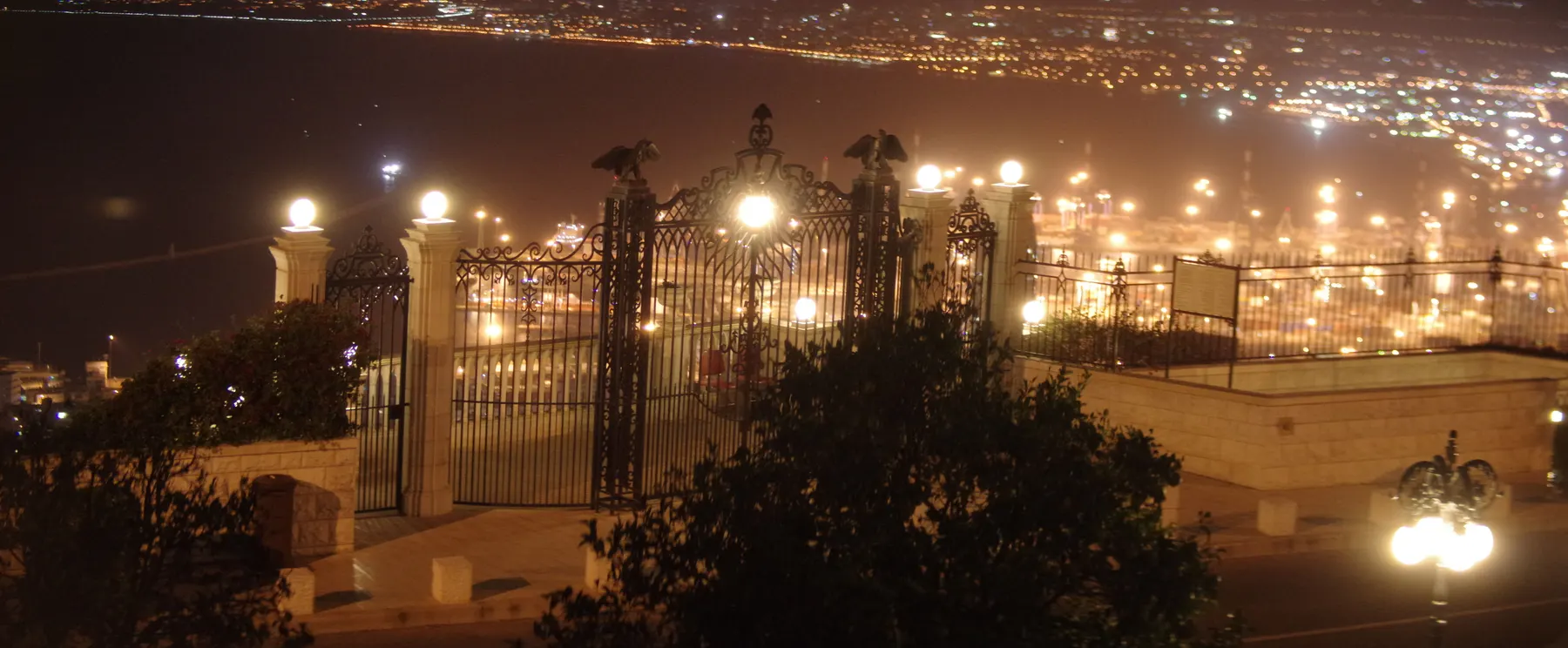
Louis Promenade
A 400-metre clifftop walk on Yefe Nof Street, given to Haifa in 1992 by Paul and May Goldschmidt in memory of their son Louis, and built by the man who was principal contractor of the Bahai gardens on the slope below it.
Gal Ben-David / CC BY-SA 4.0 · Wikimedia Commons
Beach
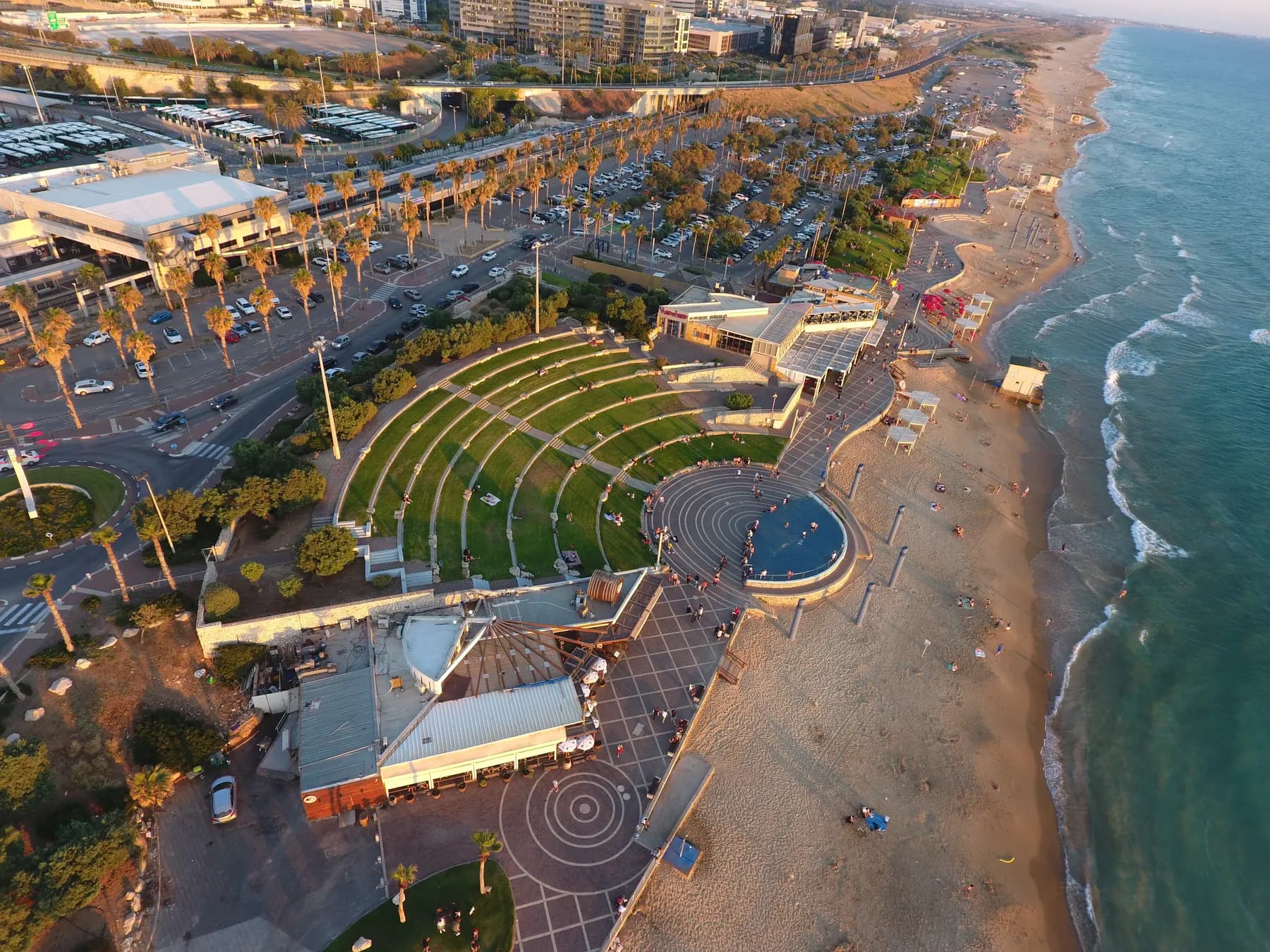
Dado Beach
Haifa's busiest free beach was built by the municipality and opened in the summer of 1979, and it is named for David Elazar, the chief of staff the Agranat Commission blamed for the Yom Kippur War.
Oshri Reicher (אושרי רייכר) / CC BY 2.5 · Wikimedia Commons
Museum
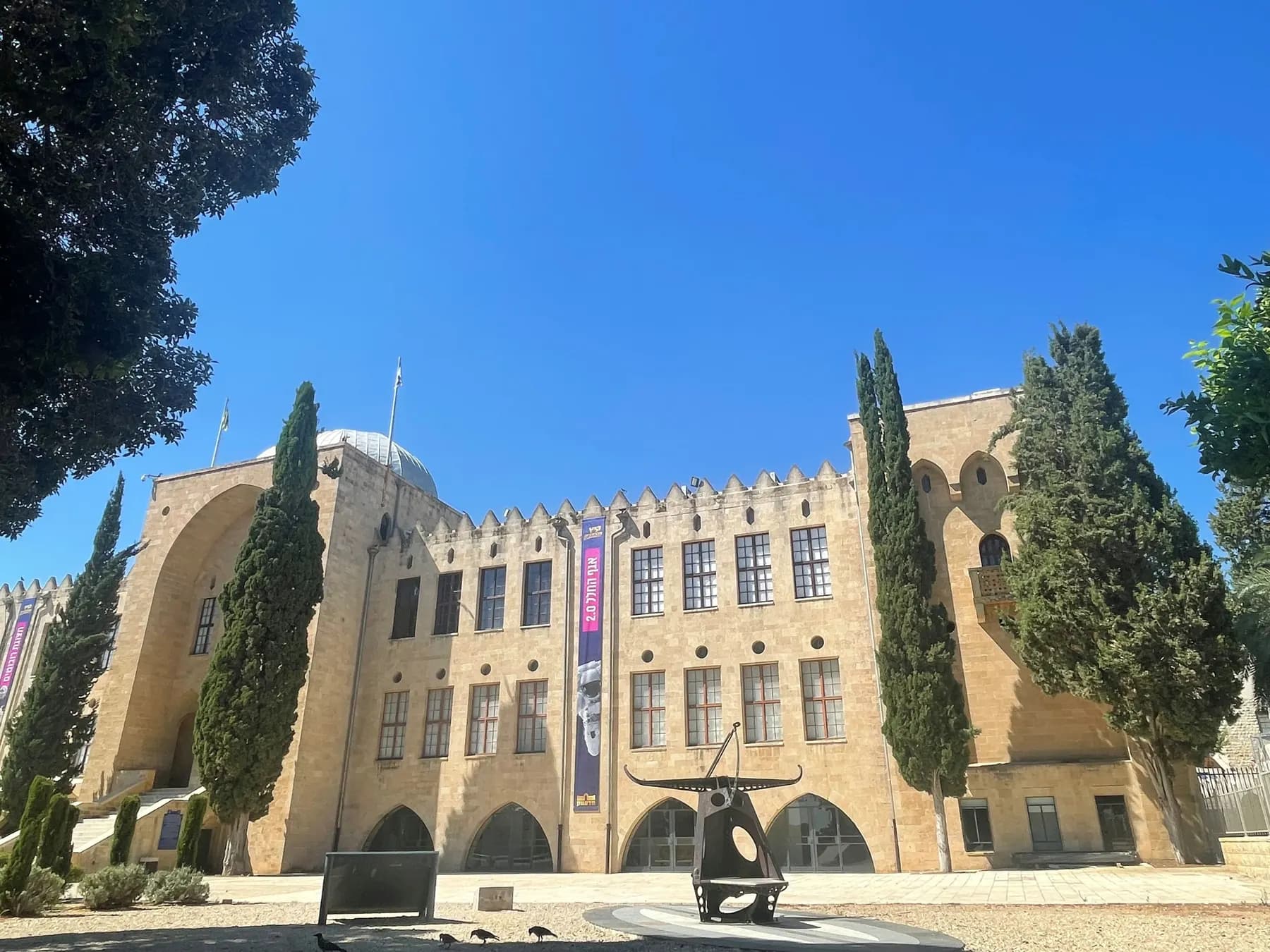
MadaTech, the Israel National Museum of Science
Israel's national science museum works out of the building the Technion was born in, a domed block in Hadar whose cornerstone was laid on 11 April 1912, and most of its exhibitions sit in rooms that were lecture halls.
Sources and further reading
Every link below was opened and checked when this page was written. Official statements are marked as such: they are the subject's own account, not an independent one.
- OfficialHecht Museum, University of Haifamushecht.haifa.ac.ilHecht Museum home page
Opening hours for every day of the week, the statement that entry is free, that the Yekkes wing and school visits are charged and that groups need prior arrangement, the notice that some wings are under renovation, the address at 199 Abba Hushi Avenue and the telephone number
- OfficialUniversity of Haifa, human resources divisionhr.haifa.ac.ilHecht Museum, University of Haifa
The university's own account: about 3,500 sq m of display, the 13 m ship found at about 2 m depth and conserved for about seven years, the painters named in the art wing, the 380-seat auditorium at 180 plus 200 with its rebuilt organ, free entry, the hours, the Eshkol Tower address and the Derech Hadorot site
- ReportingBBC Newsbbc.comBoy accidentally smashes 3,500-year-old jar on museum visit
27 August 2024. A four-year-old, the jar dated by the museum to between 2200 and 1500 BC, the father's account, Lihi Laszlo of the museum on the response, and the museum's statement that it displays items without barriers or glass walls whenever possible
- ReportingAssociated Pressapnews.comThe ancient jar smashed by a 4-year-old is back on display
12 September 2024. The jar back on display on 11 September, 35 years on show before the accident, director Inbal Rivlin on the no-glass policy, and conservator Roee Shafir on why the repair was straightforward
- ReportingYnetynet.co.ilהילד ששבר קנקן בן 3,500 שנה מוזמן לסיור במוזיאון
27 August 2024. Interview with the director, Inbal Rivlin: the jar found complete in excavations in Samaria and shown for 35 years, Hecht's line that a museum is not a mausoleum, the invitation to the family, the plan to 3D-print touchable clay pieces, and the museum then closed for works with a new sculpture garden
- ReportingHaaretzhaaretz.co.ilמוזיאון הייקים החדש מבקש לשבור את הסטיגמות של הקהילה
29 December 2025. A new space at the Hecht Museum devoted to German-speaking Jewish heritage, about 60,000 of whom reached Mandatory Palestine in the 1930s, and the reporter's observation that the treatment of the Holocaust is minimal. The body of the article is behind a paywall
- ReferenceWikipediaen.wikipedia.orgHecht Museum
Founding in 1984 by Reuben Hecht, sixty years of collecting, the range from Chalcolithic to Byzantine, the named painters including Corot and Liebermann, the Michmanim journal and the 2024 jar incident
- ReferenceHebrew Wikipediahe.wikipedia.orgמוזיאון הכט
The permanent displays in detail, the Oscar Gez collection of eighteen artists killed in the Holocaust, the Herzl Institute and the Hecht chair, and Derech Hadorot with the structures moved to it from Ramat Matred, a Negev fortress and Castra
- ReferenceWikipediaen.wikipedia.orgMa'agan Michael Ship
Discovery by Ami Eshel in autumn 1985, the 1987 permit to Elisha Linder's team, 160 days against 32 spent digging, the seventy pottery vessels and the tool kit, the Aleppo pine hull and oak false keel, the one-armed anchor, the seven-year polyethylene glycol treatment and the March 1999 move to the museum
- ReferenceHebrew Wikipediahe.wikipedia.orgהספינה העתיקה ממעגן מיכאל
The 1988-1989 excavation by the Leon Recanati Institute under Elisha Linder, the 13 by 4 metre hull and 25 tonne laden weight, shell-first construction with tenons at 13 cm, the single Aleppo pine keel and three-part oak false keel, carbon-14 dating, and the suggestion of a western Turkish origin
- ReferenceWikipediaen.wikipedia.orgReuben Hecht
Born Antwerp 15 August 1909, died 14 April 1993, the Neptun Rhenania family firm, the move to Basel at nine, working under Jabotinsky in Paris in 1933, the Dagon silo concession in Haifa and Ashdod, and his role as an aide to Menachem Begin at Camp David
- ReferenceHebrew Wikipediahe.wikipedia.orgראובן הכט
The anti-Zionist family background, the coin of Alexander Jannaeus that started his interest while he was a student in Munich, his arrival in the country in 1936 and the founding of Dagon in 1950
Hecht Museum: common questions
Is the Hecht Museum free?+
Yes. The museum's own site states that entry to the Hecht Museum is without charge, and the University of Haifa says the same. The one exception the museum names is the Yekkes wing, which it says is paid, without publishing a price. School groups are also charged and groups of any kind have to be arranged in advance.
What are the opening hours?+
Sunday, Monday, Wednesday and Thursday 10:00 to 16:00, Tuesday 10:00 to 19:00, Friday and festival eves 10:00 to 13:00, and Saturday and festivals 10:00 to 14:00, as published by the museum in 2026. Tuesday is the only late evening. The museum also carries a standing notice that some of its wings are under renovation.
Is it open on Shabbat?+
Yes, 10:00 to 14:00 on Saturday, which is why it turns up on so many Haifa Shabbat itineraries. Note that public transport in Haifa is thinner on Saturday than on weekdays, so getting up to the campus takes more planning than the museum's own hours suggest.
Is the Ma'agan Michael ship real or a reconstruction?+
The hull on display is the original timber. It was raised from the seabed off Kibbutz Ma'agan Michael, impregnated over seven years with heated polyethylene glycol at the University of Haifa, seasoned, and then reassembled in a wing built for it in March 1999. Only the buried part of the ship survived, and the missing upper works have not been invented. A separate full-size sailing replica, Ma'agan Michael II, was built later and is not in the museum.
How long do you need there?+
About 90 minutes covers the archaeology halls and the ship at a reasonable pace, and two hours is a fair allowance if the art wing is open. It is not a half-day museum. If you are coming up specially, pair it with something else on the ridge rather than building a day around it.
How do you get in, and is there a separate museum entrance?+
You walk in through the university. The address is 199 Abba Hushi Avenue and the museum occupies level 1 of the main building, the Eshkol Tower, so the approach is across a working campus rather than up to a visitor centre. The campus also has a food court and the university library, which makes waiting for opening time less bleak than it sounds.
Is it worth it if you are not interested in archaeology?+
Probably, because roughly half the museum is a picture gallery. Hecht collected French painting from the Barbizon school through Impressionism to the School of Paris, and the University of Haifa's own listing names Manet, Monet, Pissarro, Soutine, Modigliani and van Gogh. The Oscar Gez collection of work by eighteen Jewish artists killed in the Holocaust is in the same wing.
Is it good for children?+
It is set up for them more than most archaeology museums, because most objects are shown without glass and the museum runs a learning centre with school programmes. That openness is also its risk: in August 2024 a small child pulled over a Bronze Age jar standing loose near the entrance. The museum invited the family back rather than pursuing them, and said it would print clay pieces that children are allowed to handle, but it asks parents to brief children first.
Can a wheelchair user visit?+
The galleries are inside the university's main building on level 1, so there is no hill climb or stepped forecourt to negotiate at the door, and the university describes the museum's auditorium as accessible to wheelchair users. Neither the museum nor the university publishes an accessibility statement for the galleries, and part of the building has been under renovation, so telephone 04-8240308 first.
What is the Yekkes wing?+
It is a space at the museum devoted to the heritage of German-speaking Jews, the community nicknamed the Yekkes, roughly 60,000 of whom reached Mandatory Palestine between Hitler's rise to power and the outbreak of the Second World War. Haaretz reported on it in December 2025 and remarked that the display says surprisingly little about the Holocaust. It is the one part of the museum the operator says is ticketed.