
The Negev
Things to do in The Negev
Every site here that is worth building time around, each one with a page of its own covering what it is, what survives, when it opens and what it costs.
Sites covered
11
each with its own page
Ticketed
11
0 free to walk into
Sourced figures
88
each with its year and source
Citations
125
opened and checked
The Negev is not one attraction. It is 11 of them, and they do not reward the same amount of time or the same time of day. This page is the index: what each one is in a sentence, how long it takes, and what it costs, so that the choosing happens here and the reading happens on the page for whichever you pick.
Every site below has been checked against its operator's own published information. Where a site charges admission, the price on its page is the operator's published price with the year it was taken. Where it sits inside a larger park, its page says which ticket covers it.
5 sites
The ruins and excavations
ישראל פרקר / CC BY 2.5 · Wikimedia Commons
Archaeological site
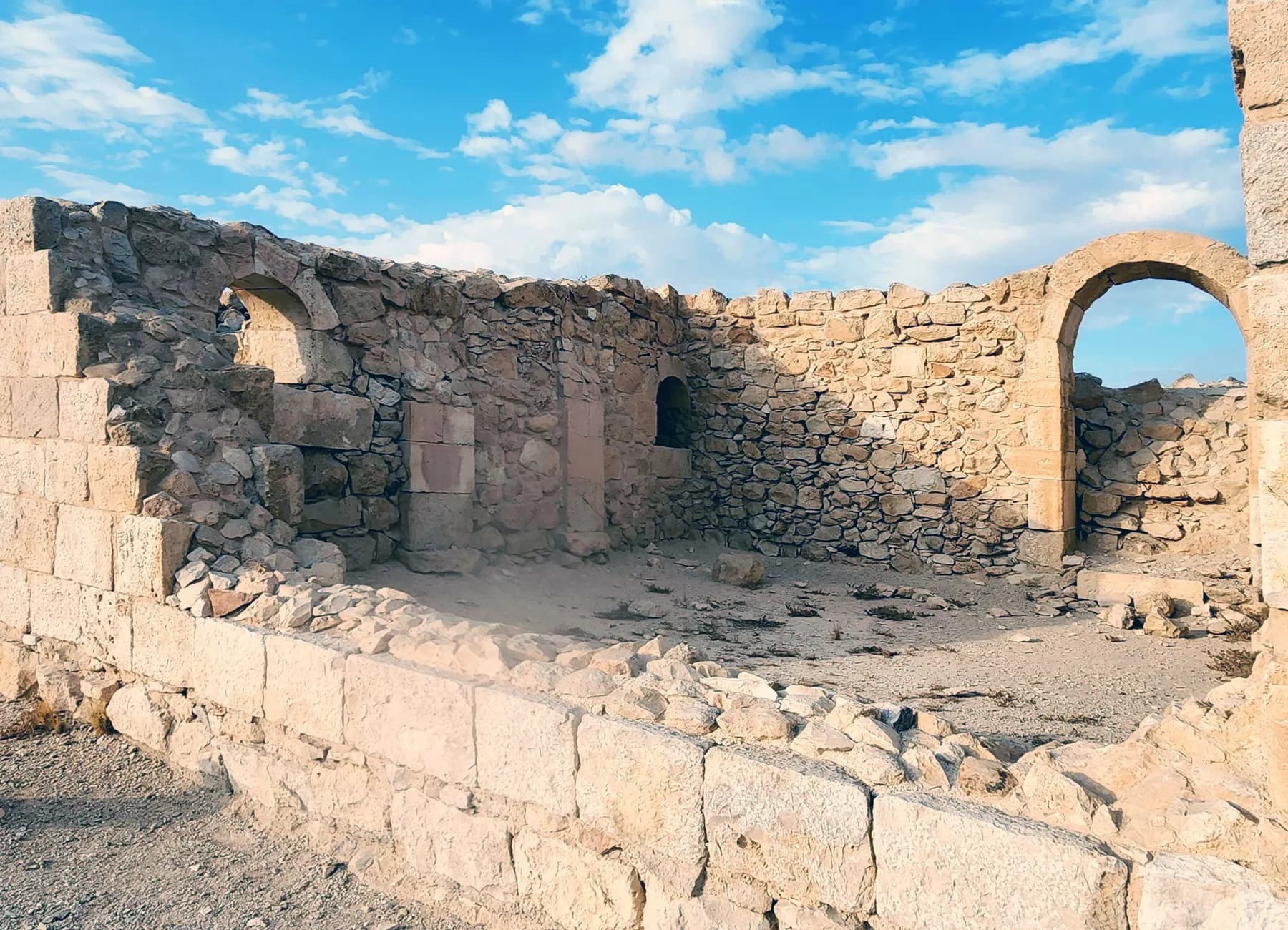
Avdat National Park
Avdat was station number 62 on the Incense Route, and the caravan road that brought frankincense from Arabia towards the port of Gaza can still be picked out climbing to it from the southeast.
- Time:
- about 90 minutes for the short route from the upper car park, two hours for the medium route ending at the bathhouse, and about three hours for the long route from the lower car park
- Entry:
- ₪31
Deror avi / CC BY-SA 3.0 · Wikimedia Commons
Archaeological site
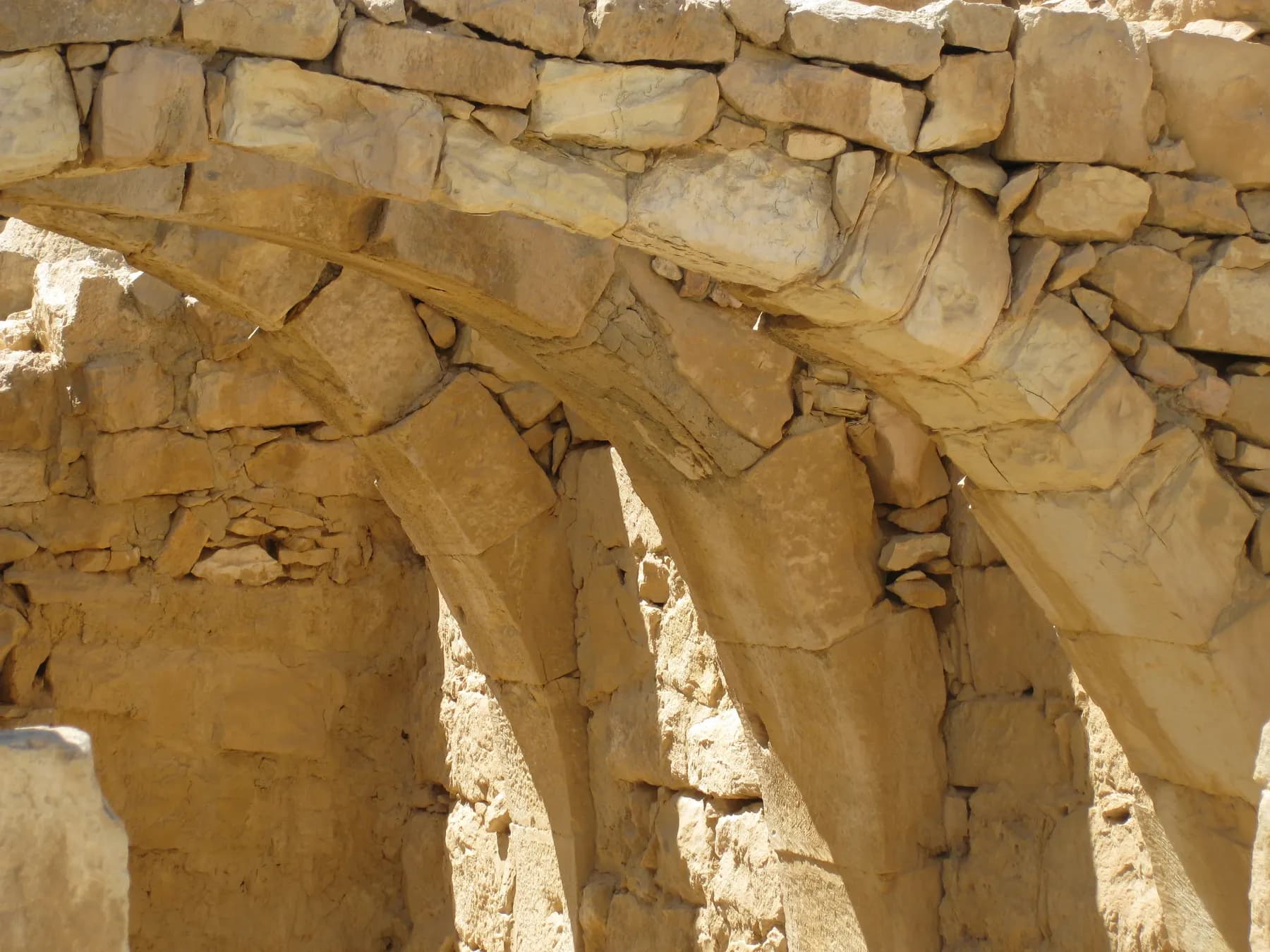
Mamshit National Park
Mamshit is the most compact of the four Negev desert cities in the UNESCO Incense Route inscription: about four hectares of Nabataean, Roman and Byzantine town inside a national park of 142.
- Time:
- about 90 minutes for the antiquities, and around two and a half hours with the marked path down to the dams in Wadi Mamshit
- Entry:
- ₪24
ישראל פרקר / CC BY 2.5 · Wikimedia Commons
Archaeological site
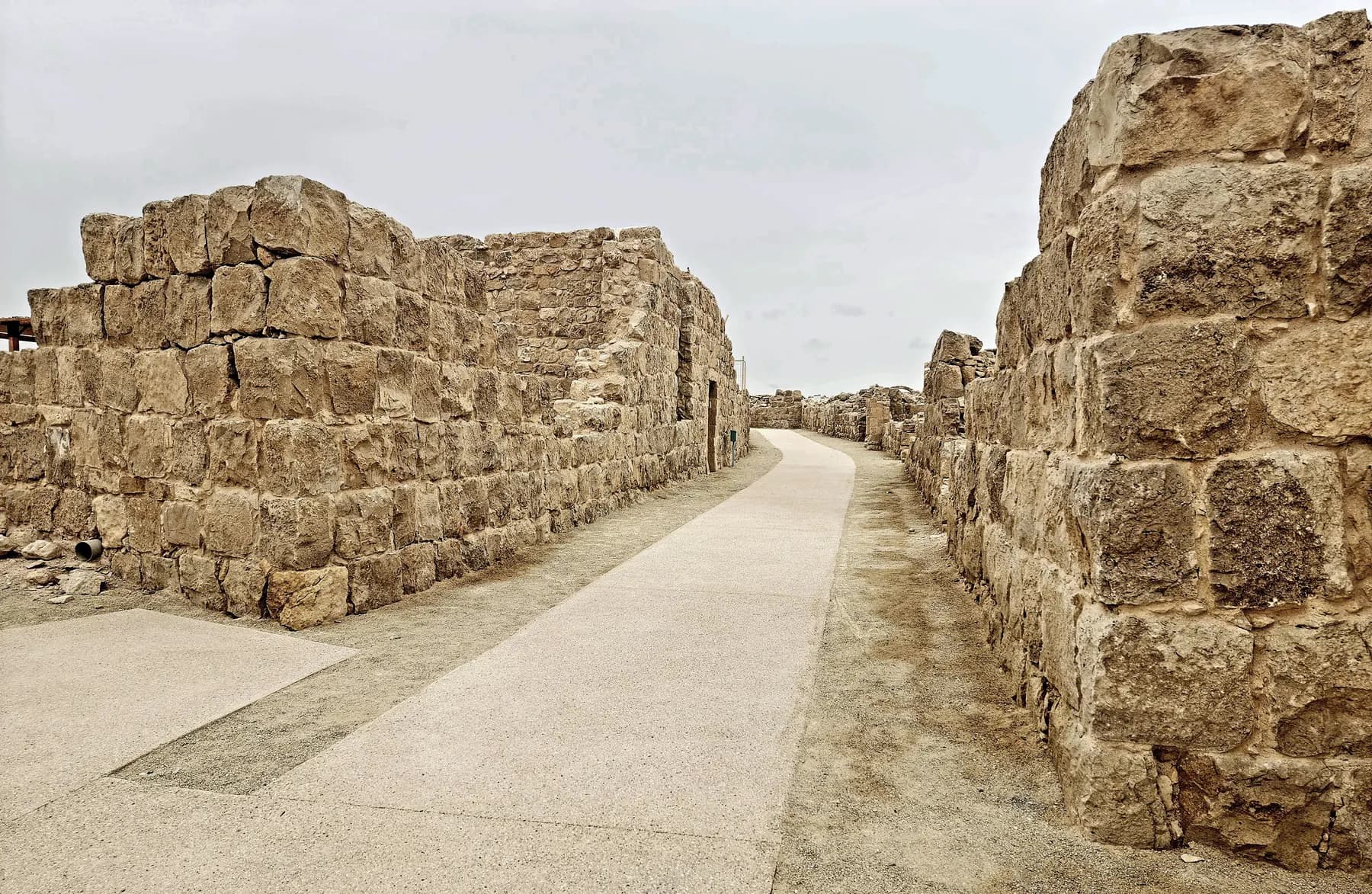
Shivta National Park
Nobody sacked Shivta: a University of Haifa survey recorded 21 doorways deliberately blocked with stone in 16 of its houses, which is why the streets and churches are still standing.
- Time:
- about 90 minutes for the town itself, or two and a half hours if the reconstructed orchard and a columbarium are added
- Entry:
- No charge published by the operator
זאב שטיין / CC BY 2.5 · Wikimedia Commons
Archaeological site
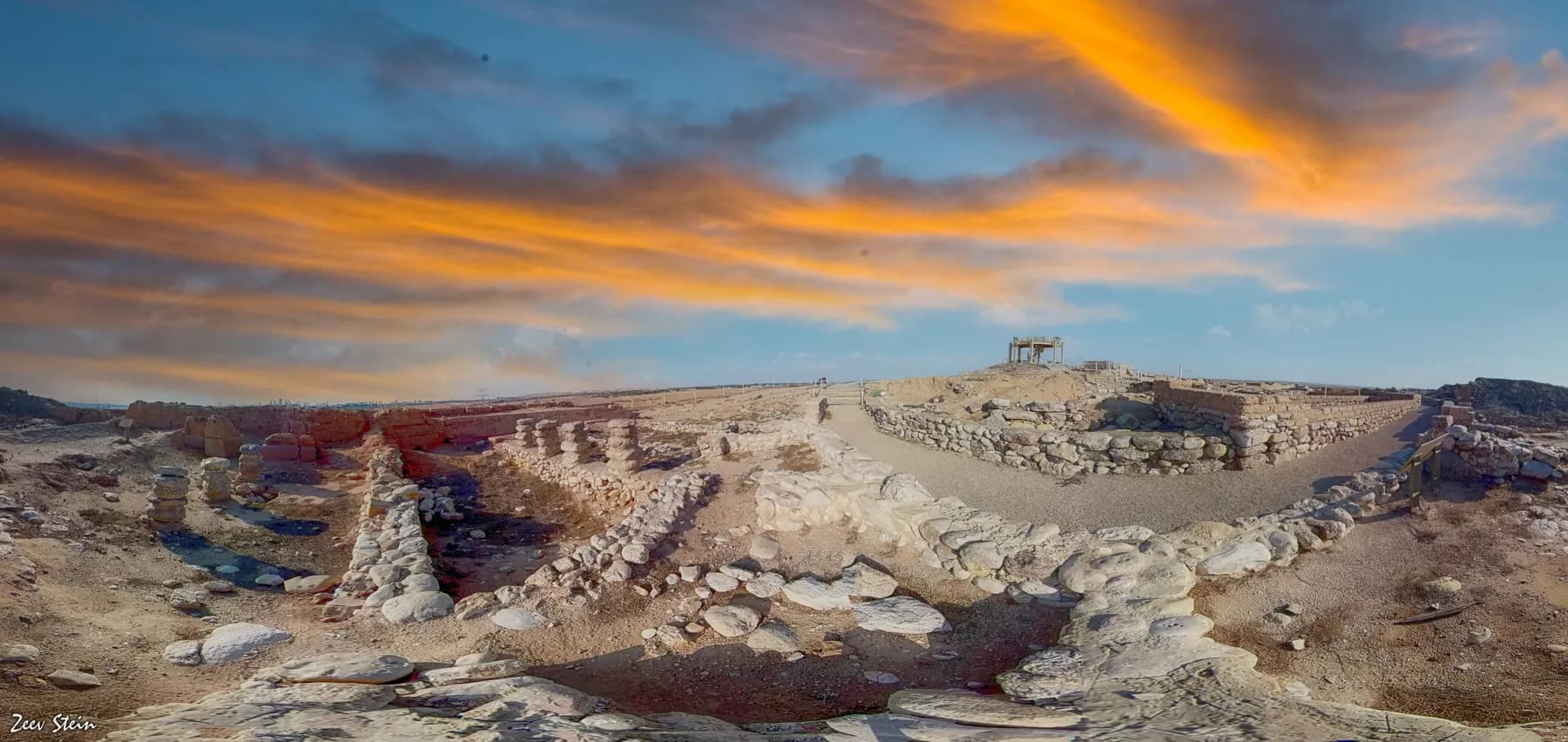
Tel Be'er Sheva National Park
The stones of a four-horned altar were found here buried inside a storehouse wall, and the well beside the town gate goes down 69 metres to the water table.
- Time:
- about 90 minutes, against the one hour the parks authority allows for its own route
- Entry:
- ₪16
טלי אראל / CC BY-SA 4.0 · Wikimedia Commons
Archaeological site
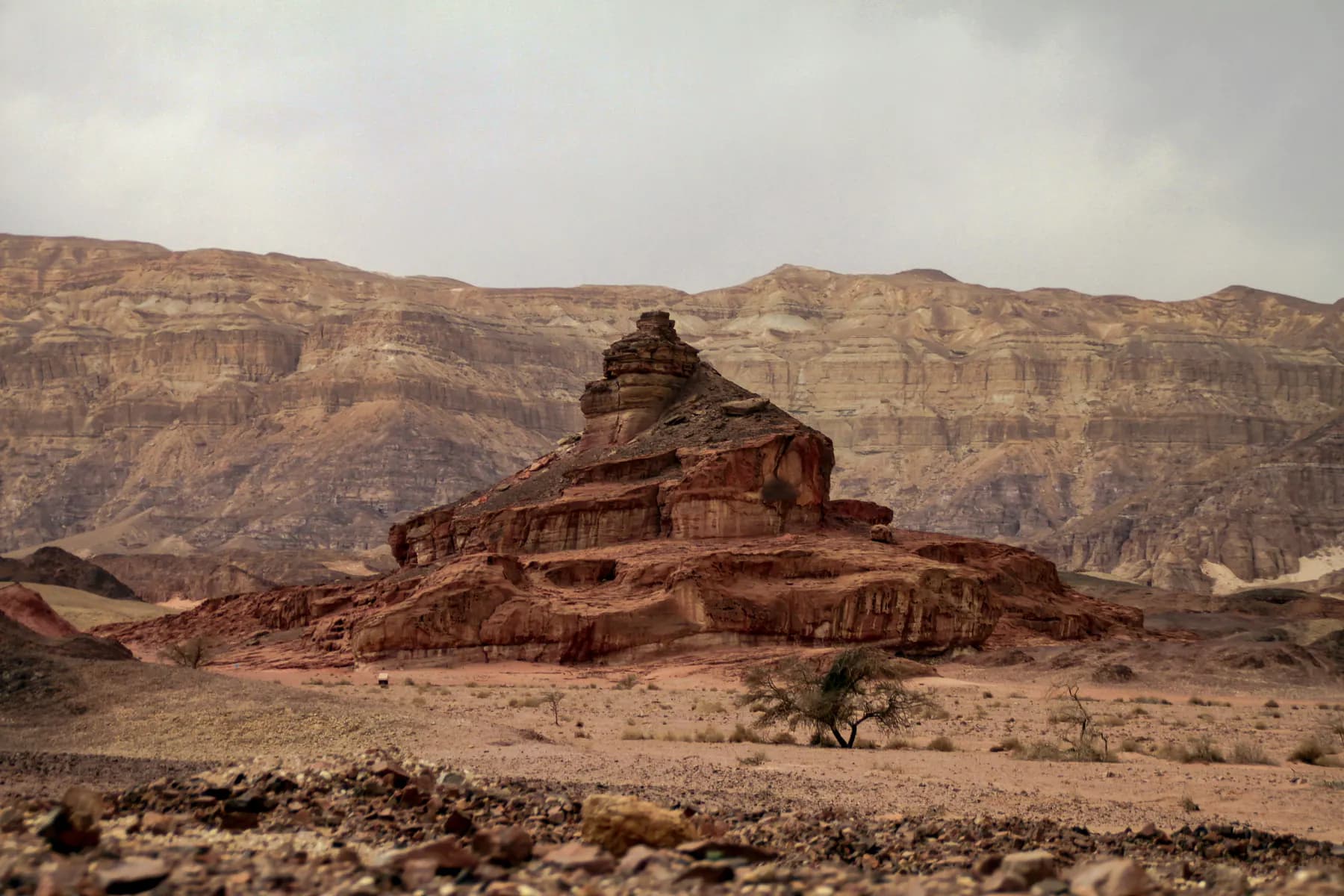
Timna Park
Beno Rothenberg's Arabah Expedition dug an Egyptian temple to the goddess Hathor out of the sand at the foot of Solomon's Pillars in 1969, and the mines around it have been redated twice since.
- Time:
- about 3 to 4 hours for the main sites by car, or a full day with one of the canyon trails
- Entry:
- ₪49 per person, payable from age 3
3 sites
Museums and collections
Abrahams Well / CC BY-SA 3.0 · Wikimedia Commons
Museum
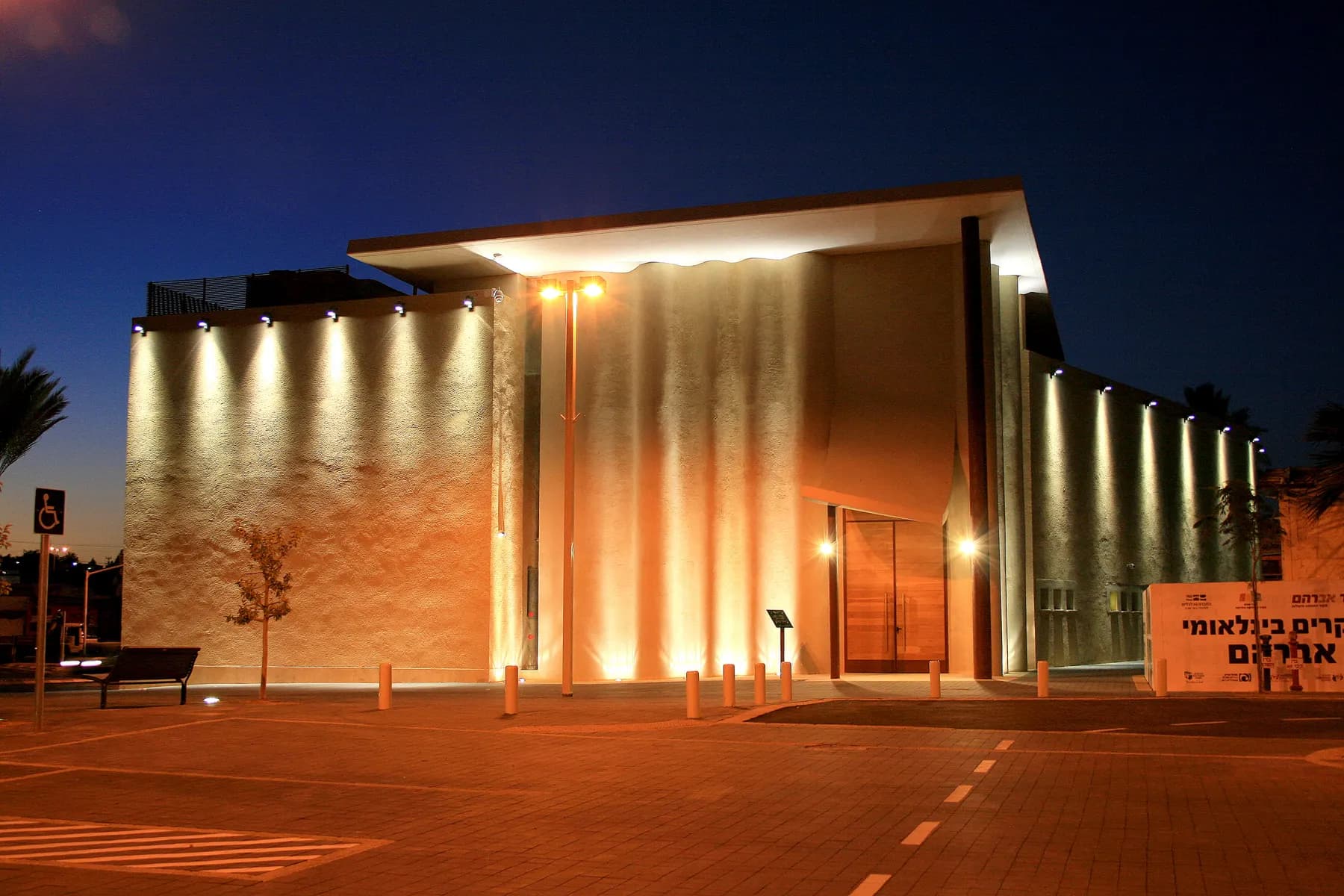
Abraham's Well International Visitor Centre
The shaft is 13.5 metres deep, and the inscribed stone Claude Conder found fifteen courses down inside it is dated 505 AH, which is the twelfth century CE.
- Time:
- about an hour, which is the slot the operator sells and the length it gives for the guided route
- Entry:
- 0 to ₪34
DYKT Mohigan / CC BY 2.0 · Wikimedia Commons
Museum
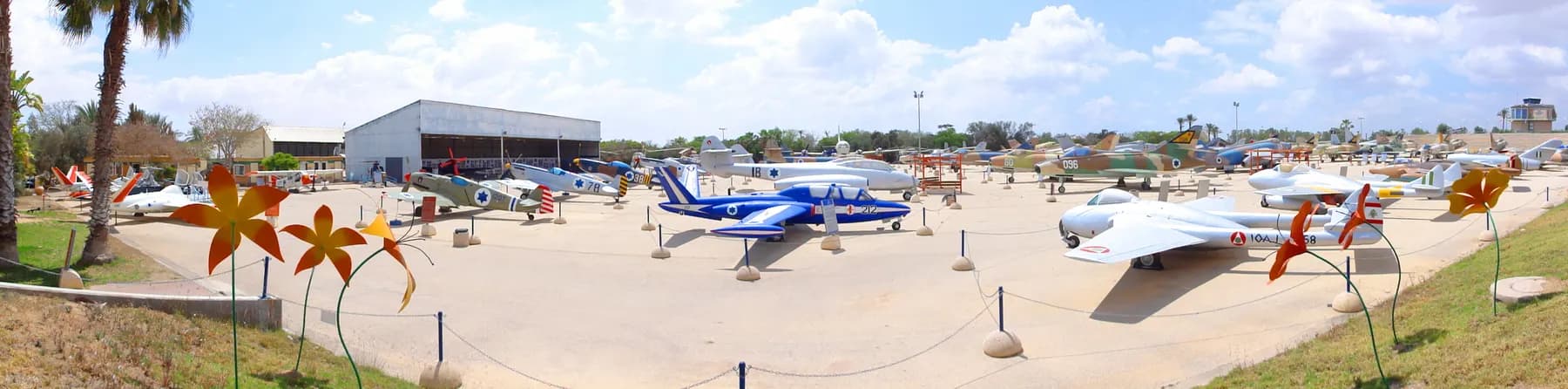
Israeli Air Force Museum, Hatzerim
The air force parks its retired and captured aircraft on an open concrete apron beside its own flight school west of Beersheba, from a Czech-built Messerschmitt copy of 1948 to the F-16 that struck the Osirak reactor in 1981.
- Time:
- about 90 minutes on the apron, or two to three hours with a guided tour and the indoor exhibitions
- Entry:
- ₪30 on the last figure an independent visitor guide publishes; the guide carries no date and the figure predates the three-year closure
Museum
Ben-Gurion's Desert Home and Tomb
David and Paula Ben-Gurion moved into a Swedish prefabricated hut at Kibbutz Sde Boker on 14 December 1953, and his will asked that it be left exactly as he died in it twenty years later.
- Time:
- About 90 minutes at the hut, plus half an hour at the graves and ten minutes of driving between them
- Entry:
- ₪25
2 sites
Parks, reserves and the landscape
רחל וייסלר / CC BY 2.5 · Wikimedia Commons
Nature reserve
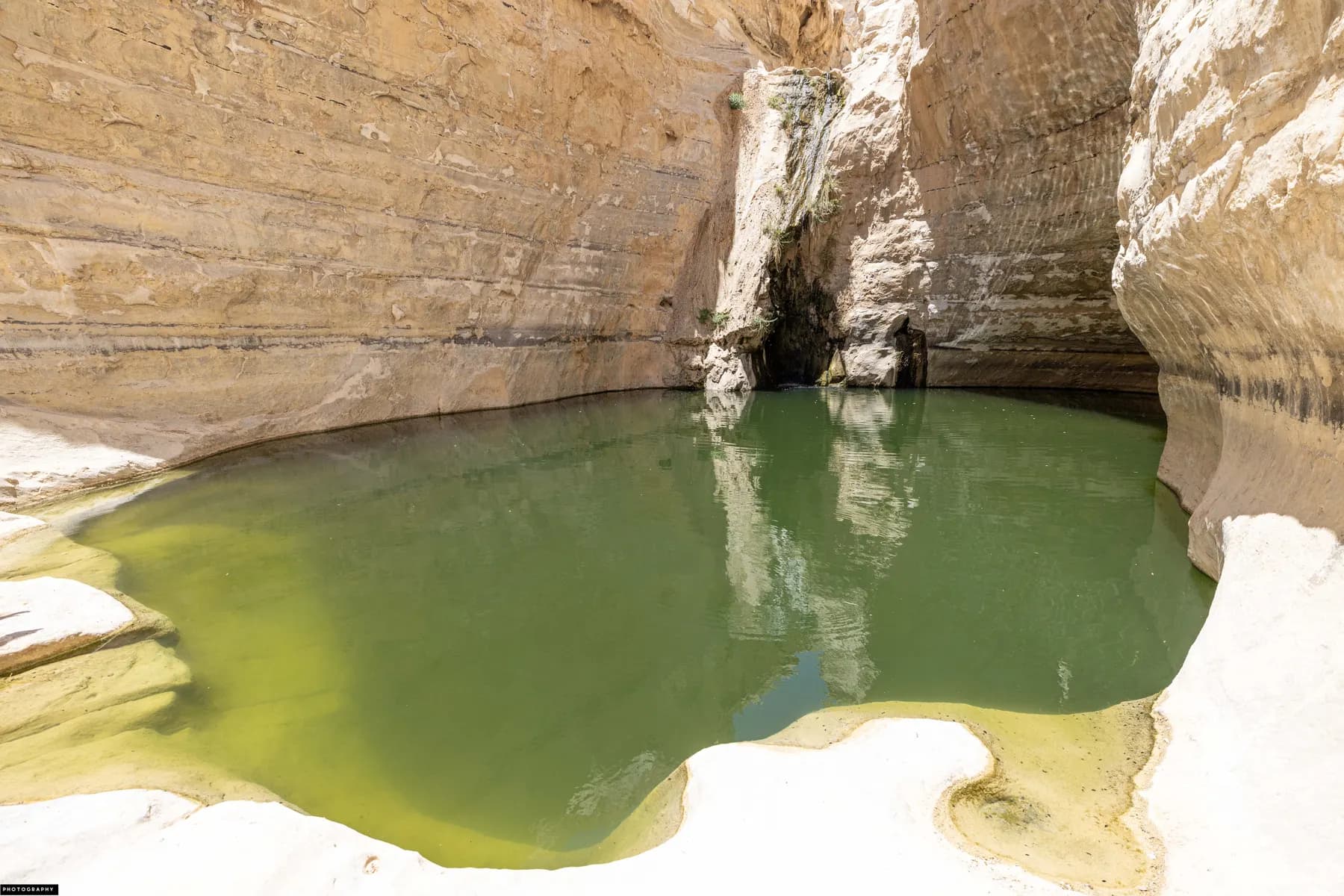
Ein Avdat National Park
Three springs keep water running all year at the bottom of a white chalk canyon that was cleared, laid out and opened to the public in 1961 as a seventy-fifth birthday present for David Ben-Gurion.
- Time:
- about 90 minutes for the short walk to the spring and back, or about two and a half hours for the one-way climb to the upper car park
- Entry:
- ₪31
4.6 on Google, 7,607 ratings
Orhat / CC BY-SA 4.0 · Wikimedia Commons
Nature reserve
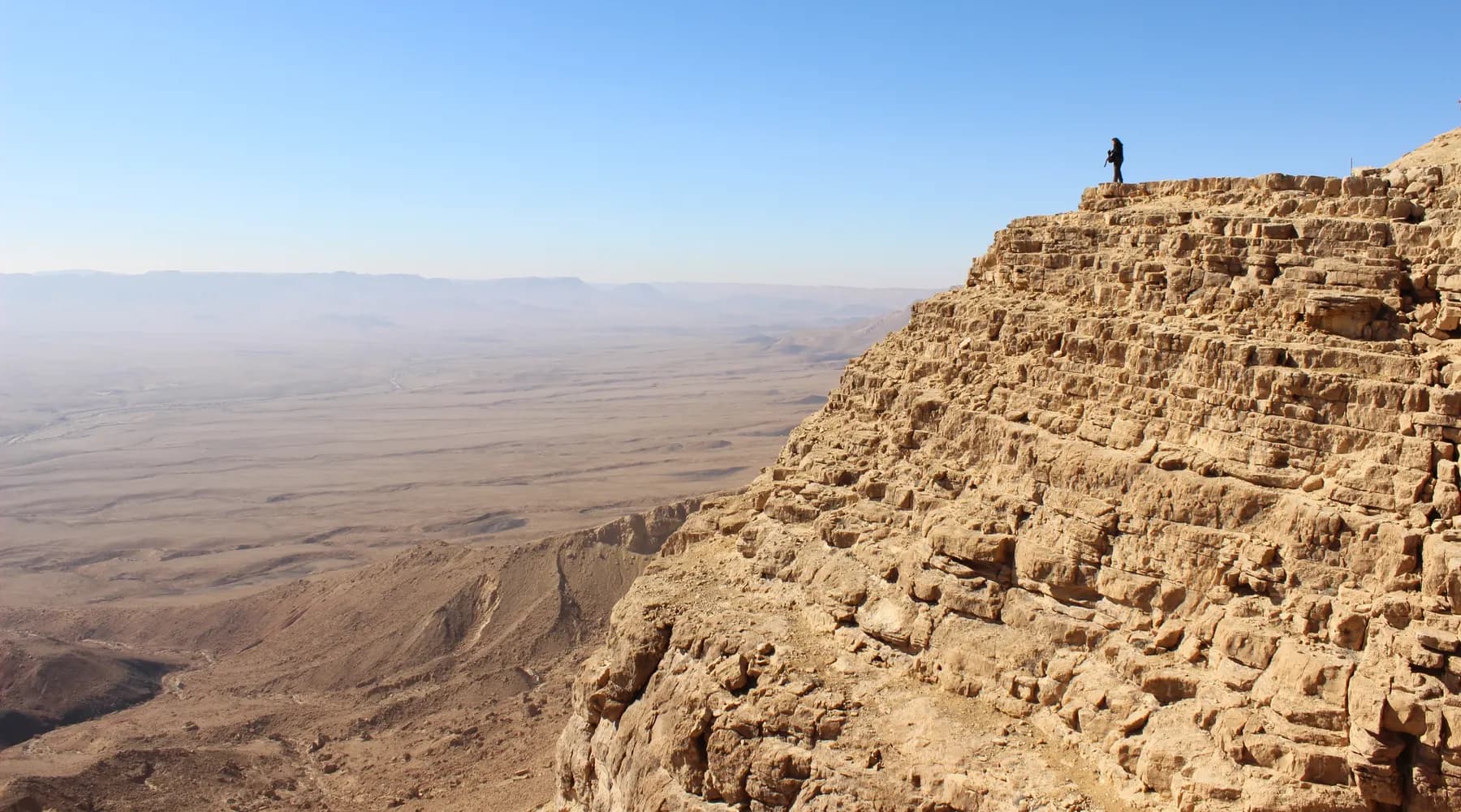
Makhtesh Ramon (Ramon Crater)
The floor of the makhtesh was quarried for clay and quartz before it was protected, and the parks authority's scenic road across the eastern half runs over ground it had to rehabilitate.
- Time:
- About 90 minutes for the visitor centre and the promenade, or a full day if you drive down and take in the Ramon Colors route, the Carpentry and Ein Saharonim
- Entry:
- ₪31
4.8 on Google, 59 ratings
1 site
Things to do rather than see
Activity
Stargazing in the Ramon Crater
The Israel Nature and Parks Authority won the International Dark Sky Park title for the Ramon Crater in September 2017 after three years of assessment, and the research observatory five kilometres west of the town logs about 170 nights a year with no cloud at all.
- Time:
- About two hours at a viewpoint, of which the first 40 minutes go on the eyes adjusting. A guided session runs three to five hours, and the August meteor night runs five and a half.
- Entry:
- Free. The crater is not gated and the viewpoints carry no charge
Planning the rest of it
Seeing the sites is one part of a day here. These cover the others.
Sources and further reading
Every link below was opened and checked when this page was written. Official statements are marked as such: they are the subject's own account, not an independent one.
- OfficialKivunim, the Beer Sheva Company for Culture and Leisurekivunim7.co.ilמרכז מבקרים באר אברהם (Abraham's Well Visitor Centre)
The operator's own page: opening hours of one-hour tours by prior arrangement only, telephone 08-6234613 and a WhatsApp line, tours in Hebrew and English, the statement that the building is fully accessible, the guided audiovisual route ending at the well, the Peace Mosaic of about 105 square metres led by David Wakstein, and the events programme
- OfficialKivunim Beer Sheva, Smarticket ticketing systemkivunimb7.smarticket.co.ilסיור בבאר אברהם בעברית (Abraham's Well tour), booking page
The published ticket range of 0 to ₪34, the one-hour slot length, the scheduled Hebrew departures at 15:00 to 16:00, the instruction to call *8305 to schedule an English tour, the tent-shaped building and its accessibility, and the description of the audiovisual passage of biblical verses ending with the well revealed
- OfficialVisit BR7, Beer Sheva municipal tourismvisitbr7.co.ilמרכז מבקרים בינלאומי באר אברהם
The municipal tourism listing: address at Derech Hevron 2 in the Old City, telephone 08-6234613, the three-dimensional presentation about Abraham, and the framing of the site as a heritage attraction rather than a museum collection
- OfficialIsrael Ministry of Defencemod.gov.ilהטובים לתוכן: מכרז לעיצוב תוכן מוזיאון חיל האוויר
the ministry's own tender for the content design of the renewed museum: built on the present site, most exhibits into five display halls beside seven experiential spaces, conceived as a national air force heritage centre
- ReportingYnetynet.co.ilכנפיים שבורות: חיל האוויר נפרד מעשרות מטוסים ומסוקים ישנים
Udi Etzion, 13 February 2022: the decision to scrap 20 aircraft, the Entebbe Boeing 707 number 008 among them, the closure for refurbishment, the airworthy aircraft moved onto the base, and the IDF spokesperson's response
- ReportingYnetynet.co.ilללא מטוס הקרב הראשון: מוזיאון חיל האוויר נפתח מחדש
Udi Etzion, 6 May 2022: the reopened apron, the painted and partly roofed walking route, the locked Fouga and Stratocruiser, the repainting in a scheme never worn, and the 707's nose section behind the fence
- ReportingYnetynet.co.ilירוקת, לכלוך, הזנחה וחוסר השקעה: כך משמרים את היסטוריית התעופה הישראלית
Ilana Curiel and Itay Blumenthal, 16 October 2016: the yard behind the display fence, Yaakov Turner on the Phantoms saved by donation, curator Avi Moshe-Segal on the cost of restoration, and Danny Shalom on irreversible damage
- ReportingWallanews.walla.co.ilאחרי שלוש שנים: מוזיאון חיל האוויר נפתח עם מטוס הקרב שתקף באיראן
Amir Bohbot, 21 April 2026: three years closed through the war, the reopening on 22 April 2026 under security restrictions, and the F-16I Sufa from the strikes on Iran placed at the centre of the display
- ReferenceCouncil for Conservation of Heritage Sites in Israelshimur.orgמרכז מבקרים באר אברהם, heritage site record
The careful phrasing that the site is built around ancient wells at the edge of the Old City, one of which an early tradition connects to Abraham; hours of 10:00 to 16:00 by prior arrangement; tours in Hebrew and English; the site listed as accessible; and the statement that the audiovisual displays are not operated on Shabbat
- ReferenceEdward Robinson, via the Internet Archivearchive.orgBiblical Researches in Palestine, Mount Sinai and Arabia Petraea: a journal of travels in the year 1838
Robinson's own account of reaching the wells in 1838: two deep wells on the northern bank of Wady es-Seba', the larger 12.5 feet across and 44.5 feet deep with 16 feet cut in solid rock, the second 5 feet across and 42 feet deep, the stone troughs, the curb stones worn by ropes, no dwellings visible, and the ruins on the hills to the north matched against Eusebius and Jerome
- ReferenceClaude Reignier Conder, via the Internet Archivearchive.orgTent Work in Palestine: a record of discovery and adventure, vol. 2
Conder's survey account: the principal well 12 feet 3 inches across and over 45 feet deep lined to 28 feet, a second well 300 yards west, a dry third to the east, nine and five stone troughs, the judgement that the masonry is not very ancient, the stone inscribed 505 AH fifteen courses down, the hundred-odd rope channels, the Tell of Seb'a two and a half miles east, and the fourth-century town foundations near the wells
- ReferenceHebrew Wikipediahe.wikipedia.orgבאר אברהם
The well at 13.5 metres deep with about 5 metres cut in rock and a diameter of 3.75 metres, lined with dressed stone to the bottom and fed by groundwater percolating through the loess; a second well apparently sunk later; the visitor centre opened in October 2013 to a design by Eli Armon on the foundations of the ancient well courtyard, imitating a tent, in desert colours with copper for the Middle Bronze Age; the hall for about 150; and the 1948 handover and municipal paving and walling
- ReferenceEnglish Wikipediaen.wikipedia.orgAbraham's Well
The location at 2 Hebron Road, the Genesis 21:25 and 26:25 references, the statement that a local sheikh built a house above the well in 1897, and the transcribed passages from Robinson and Conder used to check the Internet Archive originals
- ReferenceEncyclopaedia Britannicabritannica.comBeersheba
The covenant between Abraham and Abimelech of Gerar, the derivation of the name from the Hebrew for a well and for an oath or seven, Ottoman town planning and development around 1900 with the town remaining a watering station and Bedouin trading centre, the British capture in 1917 and the Israeli capture in October 1948
- ReferenceEnglish Wikipediaen.wikipedia.orgTel Be'er Sheva
The identification of Tel Sheva with the biblical town of Beer-sheba, its inscription by UNESCO in 2005 as part of the Biblical Tels with Megiddo and Hazor, the two biblical wells at Beersheba in Genesis, and the note that Abraham's Well in the modern city dates to at least the twelfth century CE
- ReferenceHebrew Wikipediahe.wikipedia.orgאלי ארמון
Independent confirmation of the architect: Eli Armon, born 1955, Technion graduate in architecture and town planning in 1984, city engineer of Beersheba between 1989 and 1992, founder of his own practice in 1993, and designer of Abraham's Well alongside Beer Sheva Central and Wolfson railway stations
- ReferenceAvnei Moreshet, Hamoreshetmakom.hamoreshet.org.ilבאר אברהם / באר שבע, heritage capsule 5317
The visitor centre's floor area of 750 square metres, the three-dimensional film about Abraham, the 1112 inscription, the site facilities of car park, toilets, kiosk, drinking water tap and shade, the accessibility answer and the note that the site is ticketed
- ReferenceWikipediaen.wikipedia.orgIsraeli Air Force Museum
the itemised list of aircraft on display, the 1985 cornerstone and 1991 opening, the exhibits on the 669 rescue unit, and the Passover and Independence Day displays of active aircraft
- ReferenceHebrew Wikipediahe.wikipedia.orgמוזיאון חיל האוויר
the cornerstone of 16 July 1985, the criticism from Israeli aviation enthusiasts of paint schemes the aircraft never wore and of neglected exhibits, the 2015 Stearman fire, and the 2016 architecture competition won by Schwartz Besnosoff
- ReferenceWikipediaen.wikipedia.orgYaakov Turner
born 27 February 1935, enlisted 1953, squadron commander and Phantom pilot, retired as brigadier general in 1985 and founded the museum, police commissioner 1990 to 1993, mayor of Beersheba 1998 to 2008, died 27 October 2024
- ReferenceWikipediaen.wikipedia.orgNetz 107
the first F-16 to land in Israel on 2 July 1980, Amos Yadlin's strike on Osirak on 7 June 1981, the seven Syrian aircraft downed in 1982 including one shared, and the 2015 retirement to the museum
- ReferenceWikipediaen.wikipedia.orgOperation Diamond
the Mossad operation from mid-1963, Munir Redfa's landing on 16 August 1966, the renumbering to 007, and Danny Shapira's test flights against Israeli fighters
- ReferenceWikipediaen.wikipedia.orgEntebbe raid
the raid of 3 July 1976, and the two Boeing 707s that followed the Hercules transports, one fitted as a hospital and the other circling Entebbe with the operation's commander aboard
- ReferenceWikipediaen.wikipedia.orgHatzerim Airbase
declared operational on 3 October 1966, the first Israeli Air Force base built from the ground up, six kilometres west of Beersheba, home to the flight academy and the aerobatic team with the museum adjacent
Things to do in The Negev: common questions
How many days do you need in The Negev?+
There are 11 sites here with a page of their own, and giving each the time its own page suggests comes to more than one day. Most visitors pick three or four and treat the rest as a return trip. The per-site pages each carry a "how long to give it" figure, which is the number to add up.
What does it cost to see The Negev?+
11 of the 11 sites listed here charge admission and 0 do not. Every ticketed one has its published price on its own page, with the operator's page linked beside it. Israel's national parks also sell a multi-site pass, which pays for itself at roughly the third park.
Are these sites open on Shabbat and holidays?+
Most national parks and museums keep shortened Friday hours and either close on Saturday or open late. Each page carries the hours as the operator publishes them, and the operator's own page is linked, which is the only version that will be current on the day you go.
Where do the opening hours and prices on these pages come from?+
From the operator: the Israel Nature and Parks Authority, the museum, the municipality or the site's own management, whichever publishes them. Each figure links the page it was taken from. Ratings and review counts, where a page shows them, come from a dated snapshot of Google Maps and are labelled as such rather than presented as current.
Which one is worth it if you only see one thing in The Negev?+
Abraham's Well International Visitor Centre is the one this guide would keep. The shaft is 13.5 metres deep, and the inscribed stone Claude Conder found fifteen courses down inside it is dated 505 AH, which is the twelfth century CE.
Is there anything worth seeing that is not on this list?+
Plenty, and that is deliberate. A site earns a page here when a visitor could reasonably spend half an hour there, when there is enough documented substance to write a real page about it, and when the operator publishes something a visitor can plan against. Things that fail those tests are covered on the The Negev overview instead of padded out into pages of their own.