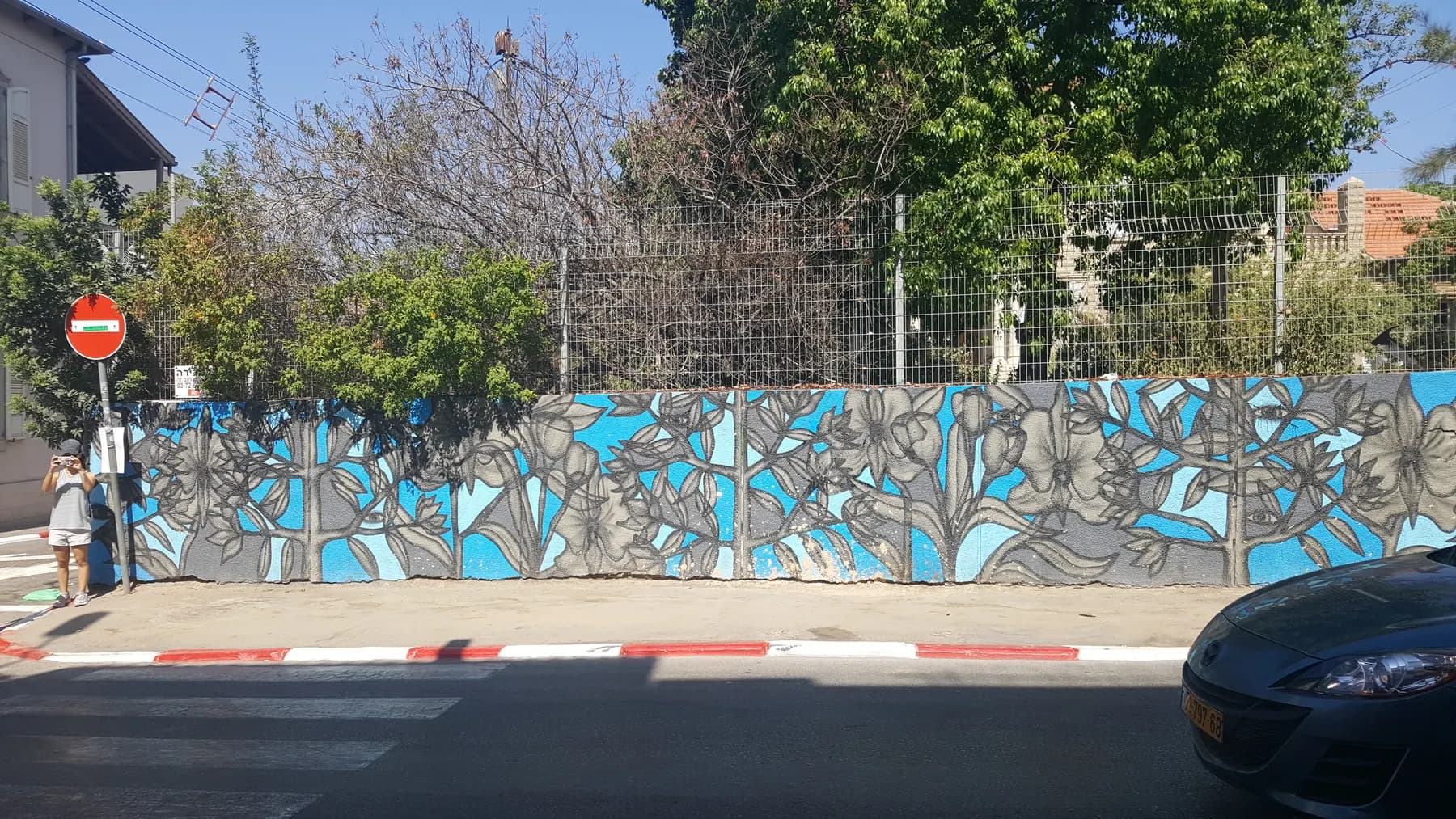
Neighbourhood · Tel Aviv
Florentin
A 353-dunam grid laid out on an orchard in 1927 by Jews from Salonica, built with workshops on the ground floor and flats above, and still arranged that way.
Ovedc / CC BY-SA 4.0 · Wikimedia Commons
Laid out
1927
on a wide orchard, then inside the municipal boundary of Jaffa
Area
353 dunams
about 0.35 sq km, bounded by four streets and nothing else
Residents
7,620
2012 count, roughly double the figure of the neglected years
Lehi Museum admission
₪20 adult
the one ticketed door in the neighbourhood; ₪15 concessions
In short
- How long to give it
- about 90 minutes on foot, or half a day with Levinsky Market and the Lehi Museum added
- The neighbourhood itself
- Open street at all hours; no gate and no closing time
- The neighbourhood, the murals and Levinsky Market
- Free. There is nothing to book and nothing to buy a ticket for
פלורנטין
Florentin is a small grid of narrow streets in the south of Tel Aviv, laid out in 1927 on an orchard that then lay inside the municipal boundary of Jaffa, and built from the start to put light industry on the ground floor and homes above it. That single planning decision explains most of what a visitor sees. The blocks are three and four storeys, the streets between them are too narrow for the traffic they carry, and at pavement level the doors are carpentry shops, upholsterers, fabric wholesalers and metal workshops rather than lobbies. The neighbourhood covers 353 dunams, about a third of a square kilometre.
Who it is named after is worth getting right, because two versions circulate. Hebrew and English reference works both give the name as Shlomo Florentin, rendered Solomon in English, a builder from Salonica who developed the ground with his partner David Abarbanel. The David Florentin of a good deal of English-language writing appears to be those two men fused into one. The dating is unsettled too: Hebrew sources put the founding at 1927, while English sources have the land bought in 1924 and Ottoman land law holding up construction until 1933.
What Florentin is now is a night quarter and a street-art quarter grafted onto a working one, and the joins show. The municipality declared an urban renewal project here in 1991 that ran to the end of the decade; a television series called Florentin, broadcast between 1997 and 2001, put the name into general circulation; rents were low, artists arrived, and the walls filled up. There is no gate, no ticket and nothing to book. The one door you pay to go through is the Lehi Museum, where the underground commander Avraham Stern was shot dead by a British police officer in 1942.
1927
A bourgeois quarter, built in Jaffa, that revolted against Jaffa
The land came out of a catastrophe in Greece. The great fire of Thessaloniki in 1917 destroyed the city's Jewish quarter along with some 12,000 homes, and in 1921 Jews in Salonica founded the Salonika-Palestine Investment Company to build commercial ties with the Jewish settlements in Palestine. In 1924 the company sent an envoy to buy ground in Jaffa, south of Herzl Street and near the Jaffa to Jerusalem railway. The Hebrew account dates the founding to 1927 and credits David Abarbanel and the contractor Shlomo Florentin; the English account says Ottoman land law held building up until 1933.
The plan itself is unambiguous. Florentin was drawn as a bourgeois quarter mixing craft businesses, small industry and commerce with residential blocks of three and four storeys on narrow streets. In 1933 the Jaffa municipality permitted shops and light industry on the ground floors of the new buildings, which gave the arriving immigrants an income and fixed the neighbourhood's character for the next ninety years. The first residents were Jews from Greece, Poland, North Africa, Bulgaria, Turkey and Bukhara, and they were not wealthy.
Because Florentin lay inside Jaffa, its children were schooled in Tel Aviv institutions while its rates went to a municipality that did not serve it. In 1936, during the Arab revolt, that arrangement broke down: residents refused to pay and set up a committee of their own to provide street cleaning and welfare. The quarter was annexed to Tel Aviv shortly after Jaffa fell in the 1948 war, so a neighbourhood built in the 1920s only joined Tel Aviv in its third decade.
- East: HaAliya Street. West: Elifelet Street
- North: Jaffa Road. South: Derech Shlomo, the old Salame Road
- Three and four storeys, workshops at street level, flats above
- Inside Jaffa until 1948, then annexed to Tel Aviv
Melacha
The workshop district, and the pieces of it that have gone
The working half of Florentin lies in the west and south of the grid, around Abarbanel and the lanes off it, and it is a genuine trade district rather than a preserved one. Furniture, upholstery, timber, fabric and hardware are sold wholesale by Jewish and Arab merchants, and the day runs the reverse of a visitor's: shutters up early, goods out onto the pavement, much of it closing by mid-afternoon. One lane there is Simtat HaMasor, the alley of the saw, which is about as literal as a street name gets.
That trade has been shrinking since the late 1960s, when the original residents began to move out and small commerce and manufacturing moved further in. The clothing and furniture businesses declined again through the renewal years of the 1990s as cafes, galleries, artists' studios and designer shops took the frontages. Rising values reached back into the old tenancies: several landlords sued long-standing residents holding flats under key-money agreements, and some families left as a result.
Two losses are worth knowing about because visitors look for them. Shuk HaAliya, at the corner of HaAliya and Wolfson streets, was a Bauhaus market building of 1938; the municipality demolished most of it on 6 April 2012 and a residential compound called Florentin Village went up on the site, part of the exterior listed for preservation. Gan Druyanov, the garden at the western edge, was built over by the Druyanov school in 2016, and Elifelet Garden replaced it after a residents' campaign.
What survives from the first years is domestic and religious rather than monumental. The Ahavat Hesed synagogue at 54 Abarbanel Street still carries the building style of the quarter's earliest phase; it was founded by the neighbourhood's rabbi, Yitzhak Yedidia Frankel.
Walls
How the walls filled up, and why the artists left
Florentin is the centre of street art in Tel Aviv, and the sequence by which it became one is well documented. Garages, blank end walls and half-derelict buildings gave a first generation of painters a free surface in the late 1990s and early 2000s: Klone, who began painting in 1999 at sixteen, Know Hope, Zero Cents, Foma (Anna Mirkin) and Adi Sand among them. Dede came later, and a second wave arrived around 2008. A good deal of the work is text rather than image: Hebrew poetry, religious passages, and arguments between painters carried out on the same wall.
The best-known single piece is the 27 Club mural at 3 Haim Ben Atar Street, painted in 2014 by John Kiss, formerly Jonathan Kis-Lev, with Itai Froumin and Roman Kozhokin. It is about three metres by ten and shows Brian Jones, Jimi Hendrix, Janis Joplin, Jim Morrison, Jean-Michel Basquiat, Kurt Cobain and Amy Winehouse, each of whom died at twenty-seven. A mural on Washington Boulevard of the assassination of Yitzhak Rabin is the other fixture on the tour circuit, though published accounts of when it was painted do not agree.
The commercial turn is usually dated to 2014, when the American site Thrillist named Florentin the second most hipster neighbourhood in the world and the graffiti tours multiplied. By 2017 the friction was open: Haaretz reported groups of fifteen walked through the lanes and locals furious about it, and one wall on Eilat Street answered the tour parties with an obscenity in metre-high black capitals, which the tour parties photographed. Time Out Israel's 2018 account, written with the artists, argued that the first generation had largely gone, priced out and bored, leaving butterflies and doodles where the political work used to be.
None of that makes the walls not worth looking at, but it does mean the painting is churned constantly and a mural photographed last year may not be there. The curator Tal Lanir, whose 2011 exhibition Inside: Street Art in Tel Aviv was the first museum treatment of the subject, says many guides pass on misinformation.
Levinsky
The spice market on the eastern edge
Levinsky Market sits at the eastern end of the neighbourhood, on the street named after the Russian Jewish Zionist writer Elhanan Leib Levinsky, laid out in the 1920s as the spine of Yosef Tischler's plan for Neve Sha'anan. The retail market along the narrow stretch between HaAliya Street and HaShuk Street was a deliberate municipal creation rather than an organic one: the foundation stone was laid on 7 August 1961 and the market inaugurated on 15 March 1964, to gather up the food stalls scattered across south Tel Aviv into one place.
It never became a hall. Most of the original stalls turned into shops over the following decades, which is why Levinsky reads today as a street of shopfronts: spices sold loose by weight, dried fruit and nuts, cheese, pickles, borekas and Balkan groceries, descended from the trades the Salonican and Balkan immigration brought with it. It is the practical opposite of Carmel Market a kilometre north, being smaller, calmer and better for buying things to take home.
Since 2020 the market stretch has been closed to vehicles, and from 2022 the closure was extended west along Levinsky between HaAliya and Herzl streets. The eastern end is a different matter: it runs towards the former central bus station, whose long decline has dragged the surrounding blocks with it.
- Foundation stone 7 August 1961; market opened 15 March 1964
- Runs along Levinsky Street between HaAliya and HaShuk streets
- Spices, dried fruit, nuts, cheese, pickles, borekas, Balkan groceries
- Pedestrianised from 2020, extended west to Herzl Street from 2022
12 February 1942
Beit Yair: the room where Avraham Stern was shot
The one museum in Florentin occupies the building where the commander of Lehi was killed. Avraham Stern, known as Yair, spent his last weeks hiding in a rooftop room at 8 Mizrahi Bet Street, since renamed Avraham Stern Street, in the flat of the Lehi members Tova and Moshe Savorai. On 12 February 1942 the British detective Thomas James Wilkin found him inside a wardrobe. Wilkin left, the officer Geoffrey Morton arrived, stood the handcuffed Stern by the window and shot him three times from behind.
The top floor is preserved as it was. The furniture is original and in its original positions, the wardrobe Stern hid in is still there, a bullet hole is visible in the window frame, and a film about the killing is shown in the room itself. The roof was later closed in to make two memorial rooms, one for Stern and one for the 127 Lehi fighters killed in the underground and later in the Israel Defense Forces. The second floor holds an exhibition on the organisation's operations; the ground floor holds the offices of the Lehi association.
Members of Lehi tried to establish a museum in the flat after independence and failed. A plaque went up in 1953, the house was later handed to the Ministry of Defence, and the museum opened on 4 February 1986. The ministry's museums unit publishes its hours as Sunday to Thursday, 08:00 to 16:00, and its admission as ₪20 for an adult, ₪15 for youth aged 5 to 18, students, senior citizens and army pensioners, ₪10 for National Insurance disability and victims of hostile action, and free for bereaved families.
It is not a neutral museum and does not present itself as one. Lehi was the smallest and most uncompromising of the pre-state undergrounds, its record remains contested in Israel, and the exhibition is the account of the association that perpetuates its memory.
After dark
The bar quarter, and the people who live above it
The same narrow streets that carry the wholesale trade in the morning carry the bars at night. Kitchens fill from about nine, bars from about eleven, and the noise on the pavement outside the flats does not subside until well into the small hours. Friday night is the peak, and it is also the night when scheduled public transport does not run.
The friction this produces is the current argument about the place. An ageing original population, a working trade district, a large student and young-renter population and a nightly influx of visitors all sit inside a third of a square kilometre, and residents have organised repeatedly: over policing, over the loss of Gan Druyanov, over the tour groups and over noise. In October 2006, when crime rose, a decision to reinforce the local police with Border Police officers brought residents and social activists out in protest; it was never formally rescinded, but Border Police have not operated in the neighbourhood since.
The quarter is most legible when both halves show at once: late morning, with the trade going and the night before still being swept up.
What to look for
Things not to walk past at Florentin
The details that repay knowing about before you are standing in front of them.
The 27 Club wall, 3 Haim Ben Atar Street
Painted in 2014 by John Kiss with Itai Froumin and Roman Kozhokin, about three metres by ten. Seven musicians and artists who died at twenty-seven, plus an eighth figure generally taken to be the painter.
Levinsky Market
The spice and Balkan grocery street on the eastern edge, opened as a municipal market on 15 March 1964 and pedestrianised since 2020. Better for taking things home than Carmel Market is.
Beit Yair, 8 Avraham Stern Street
The rooftop flat where Avraham Stern was shot on 12 February 1942, preserved with its original furniture, the wardrobe he hid in and the bullet hole in the window frame.
Ahavat Hesed synagogue, 54 Abarbanel Street
One of the few buildings that still shows the construction style of the quarter's first years. It was founded by the neighbourhood's rabbi, Yitzhak Yedidia Frankel.
The workshop lanes off Abarbanel
Timber, upholstery, metal and fabric, sold wholesale from ground-floor units under the flats. Simtat HaMasor, the alley of the saw, is the shortest way to understand how the neighbourhood was planned.
Elifelet Garden
The park at the western edge, created after residents fought the loss of Gan Druyanov to a school building in 2016. It is the neighbourhood's only real open space.
The long view
Florentin, in order
1917
The great fire of Thessaloniki destroys the city's Jewish quarter, some 12,000 homes and the housing of more than 70,000 people.
1921
Jews in Salonica found the Salonika-Palestine Investment Company to develop commercial links with the Jewish settlements in Palestine.
1924
The company's envoy buys land in Jaffa, south of Herzl Street and beside the Jaffa to Jerusalem railway.
1927
On the Hebrew account, Florentin is laid out on the orchard by David Abarbanel and the contractor Shlomo Florentin, from Salonica.
1933
The Jaffa municipality allows shops and light industry on the ground floors of the new residential blocks. English sources date the start of building to this year.
1936
During the Arab revolt, residents withhold rates from Jaffa and form their own committee to run cleaning and welfare.
12 February 1942
Avraham Stern, commander of Lehi, is found in a wardrobe at 8 Mizrahi Bet Street and shot dead by the British officer Geoffrey Morton.
1948
Florentin is annexed to Tel Aviv shortly after Jaffa falls, having been part of Jaffa for its first two decades.
1961-1964
Levinsky Market is built as a municipal food market: foundation stone 7 August 1961, opened 15 March 1964.
late 1960s
The original residents leave in numbers and small commerce and manufacturing take the vacated space.
4 February 1986
The Lehi Museum opens in the building where Stern was killed, run by the museums unit of the Ministry of Defence.
1991
Tel Aviv municipality declares an area renewal project for Florentin. It runs to the end of the decade and private investment follows it.
1997-2001
The television series Florentin is broadcast on Channel 2 and fixes the neighbourhood in the Tel Aviv imagination as young and alive.
6 April 2012
The municipality demolishes most of Shuk HaAliya, a Bauhaus market building of 1938. Florentin Village is built on the site, part of the exterior preserved.
2014
Thrillist names Florentin the second most hipster neighbourhood in the world; the 27 Club mural is painted; the graffiti tours multiply.
2020-2022
Levinsky Market is closed to vehicles, and the closure is extended west along Levinsky Street between HaAliya and Herzl.
Practical
Visiting Florentin
Where
South Tel Aviv, between HaAliya Street (east), Elifelet Street (west), Jaffa Road (north) and Derech Shlomo, the old Salame Road (south)
What ticket you need
Florentin is not inside a ticketed park or compound and there is no combined ticket for it. The Lehi Museum charges separately at the door, and Levinsky Market is a public street.
Opening hours
- The neighbourhood itself
- Open street at all hours; no gate and no closing time
- Workshops and wholesalers
- Early morning to mid-afternoon on weekdays, and shut on Shabbat
- Levinsky Market
- Daytime shop hours, busiest on Friday morning, shut for Shabbat
- Lehi Museum (Beit Yair)
- Sunday to Thursday, 08:00 to 16:00source
- Bars and restaurants
- Kitchens from about 21:00, bars from about 23:00, latest on Friday
Admission
- The neighbourhood, the murals and Levinsky Market
- Free. There is nothing to book and nothing to buy a ticket for
- Lehi Museum, adult
- ₪20source
- Lehi Museum, youth 5-18, students, senior citizens, army pensioners
- ₪15source
- Lehi Museum, National Insurance disability and victims of hostile action
- ₪10, and free for bereaved familiessource
- Municipal guided walk, for comparison
- ₪110 a head for the city's Washington Street tour in January 2025source
Access
Flat throughout. There is no climb anywhere in Florentin and no steps between one part of it and another, which puts it among the easier quarters of Tel Aviv to cross in a wheelchair. The obstacles are at ground level rather than in the gradient: pavements are narrow, kerbs are high and often unramped, and the workshop streets have goods, pallets and parked scooters standing on the footway through the working day. The Levinsky Market stretch has been closed to vehicles since 2020, which makes it the easiest part to move through. The Lehi Museum is the exception and a significant one: the preserved flat is on the top floor of a 1930s residential building and the exhibition runs across three levels, and the Ministry of Defence page does not state whether there is a lift, so anyone who cannot manage stairs should telephone 073-3534899 before travelling.
On site
- Bars, cafes and restaurants
- Levinsky Market food shops
- Lehi Museum (ticketed)
- Elifelet Garden
- Bicycle lanes
- Few public toilets
- Very little parking
- No visitor centre
Booking
Nothing in the neighbourhood is ticketed or booked. Street art walks are run by private operators rather than by the municipality, and the quality of the commentary varies enough that reading the walls unaided is a reasonable alternative.
Hours and prices are given as the operator publishes them and change without much notice, particularly around Shabbat and the festivals. Check the operator's own page before you travel for this.
Official page at visit.tel-aviv.gov.il →What people wish they had known
- Come in the late morning rather than at night if the point is to understand the place. The workshops that explain the entire street plan are open from early morning to mid-afternoon on weekdays and shut on Shabbat, so an evening visit shows half the neighbourhood with its shutters down.
- Do not plan the Lehi Museum for a Friday or Saturday. The Ministry of Defence publishes its hours as Sunday to Thursday, 08:00 to 16:00, which is the narrowest opening window of anything worth seeing in south Tel Aviv.
- Treat any specific mural as provisional. The walls here are repainted constantly, the 2014 to 2018 wave of tours accelerated the churn, and a photograph from a guidebook or a blog post is no guarantee that the work is still on the wall.
- Buy at Levinsky rather than at Carmel Market if the shopping is for spices, dried fruit, cheese or Balkan groceries to take home. Levinsky is smaller, calmer, pedestrianised since 2020 and set up for weight rather than for snacking.
- Walk west or north out of the neighbourhood, not east. The eastern end of Levinsky Street runs towards the former central bus station and the surrounding blocks change character quickly; Neve Tzedek and the sea are the other way.
- Keep the noise in mind if booking a room here. Florentin has a working trade district that starts early and a bar quarter that finishes late, in a third of a square kilometre, and the two do not leave much of a gap between them.
The figures
Florentin by the numbers
Each figure carries the year it belongs to and links the source it came from.
| Measure | Figure | As of | Source |
|---|---|---|---|
| Area of the neighbourhood | 353 dunams | 2026 | he.wikipedia.org |
| Residents | 7,620 | 2012 | he.wikipedia.org |
| Share of residents aged 25 to 34 | 33.7 per cent | 2018 | en.wikipedia.org |
| Homes destroyed in the 1917 Thessaloniki fire | about 12,000 | 2026 | en.wikipedia.org |
| Lehi Museum, adult admission | ₪20 | 2026 | mod.gov.il |
| Lehi fighters named in the museum's memorial room | 127 | 2026 | he.wikipedia.org |
| Size of the 27 Club mural | about 300 cm by 1,000 cm | 2014 | en.wikipedia.org |
| Municipal walking tour of Washington Street | ₪110 a person | 2025 | timesofisrael.com |
While you are here
The rest of Tel Aviv
Everything else in this destination with a page of its own.
Deror Avi / CC BY-SA 3.0 · Wikimedia Commons
Neighbourhood
Neve Tzedek
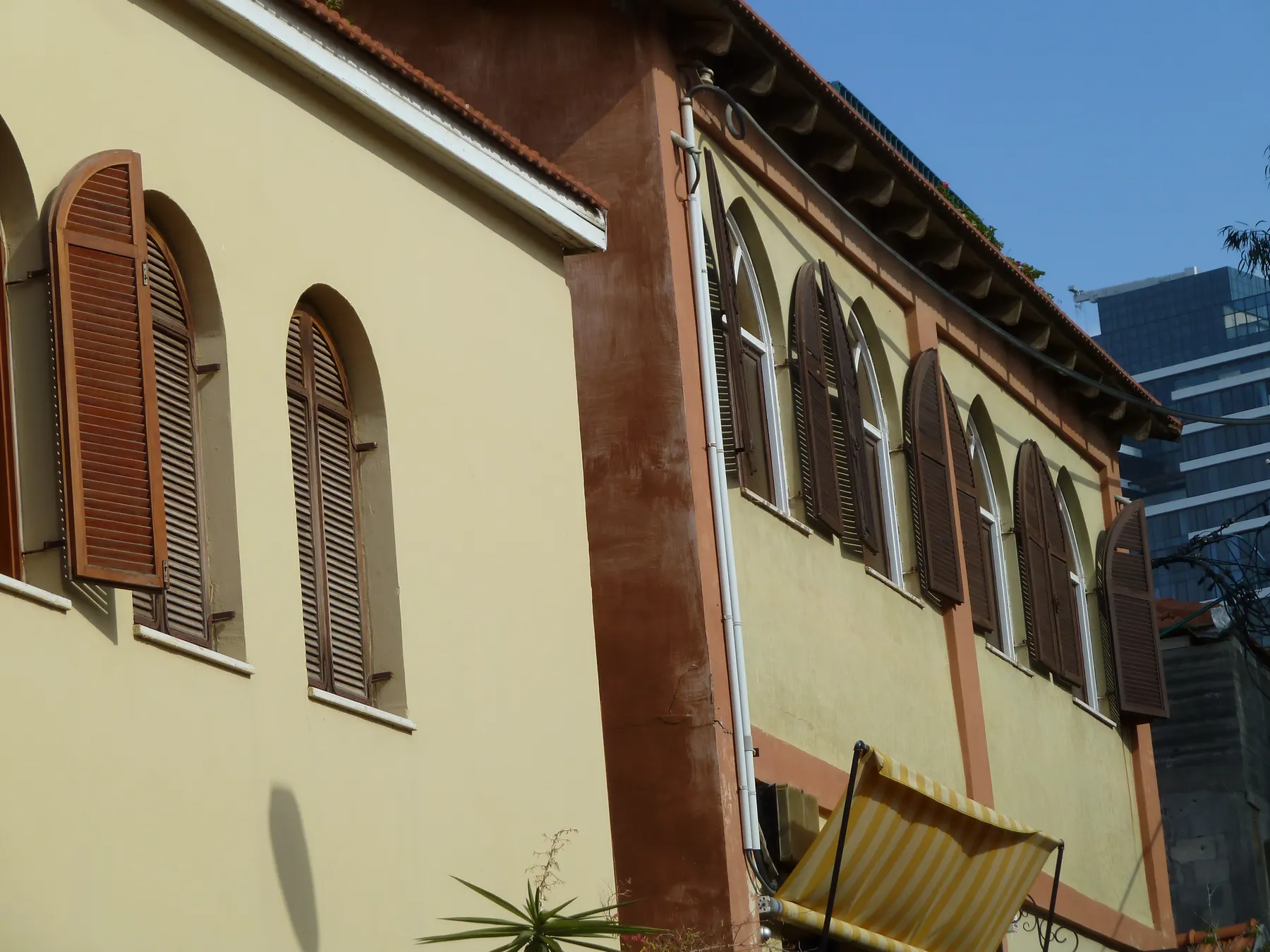
The quarter Jewish families built on the sand outside Jaffa in 1887, twenty two years before Tel Aviv existed, and the only one where the original houses were restored rather than cleared.
Rakoon / CC0 · Wikimedia Commons
Market
Carmel Market
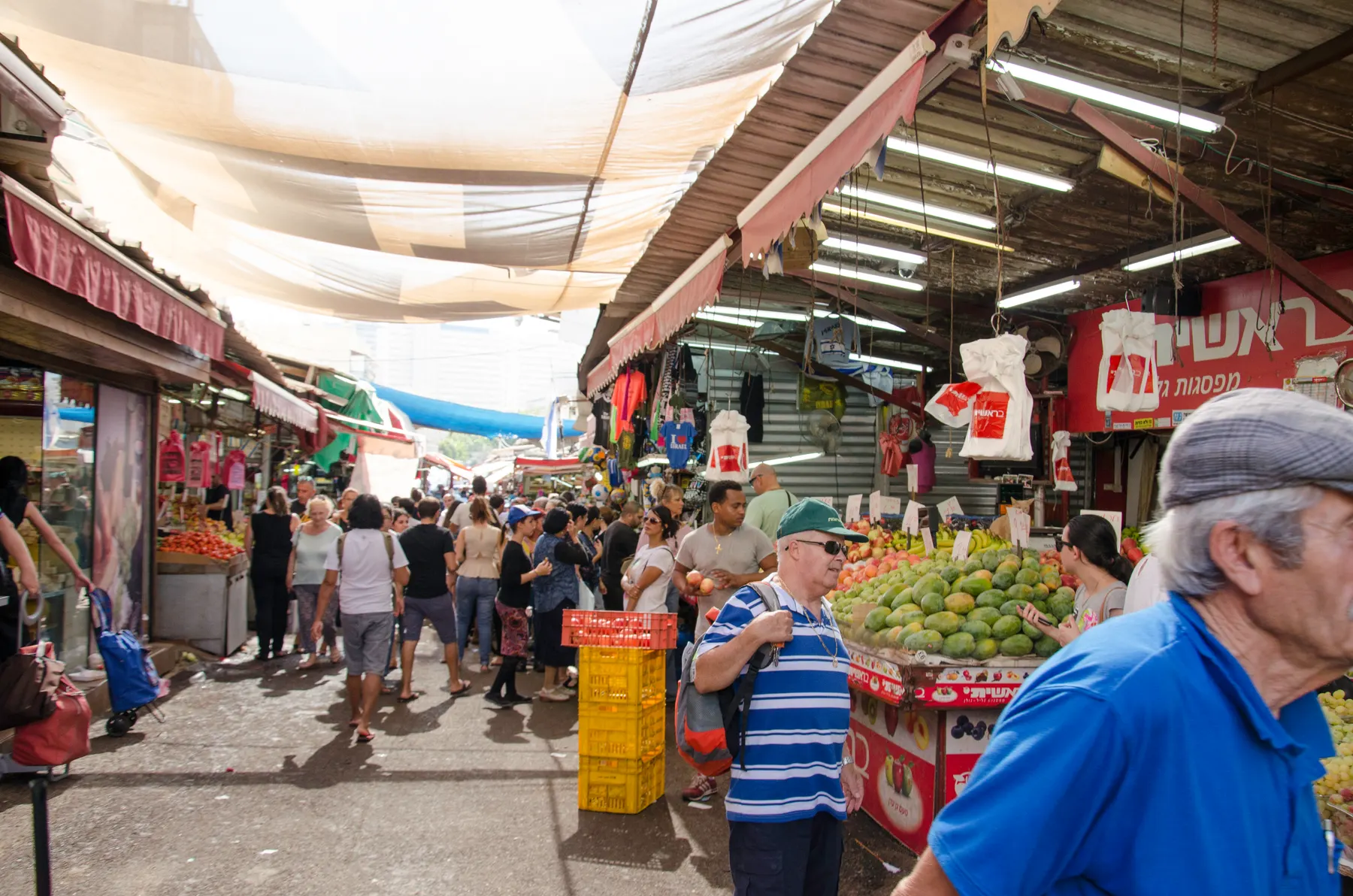
The market opened in 1920 on plots bought in Russia seven years earlier as a speculation, by investors who fled the revolution and arrived in Tel Aviv with nothing else left.
Marsupium / CC0 · Wikimedia Commons
Landmark
The White City and Bauhaus Tel Aviv
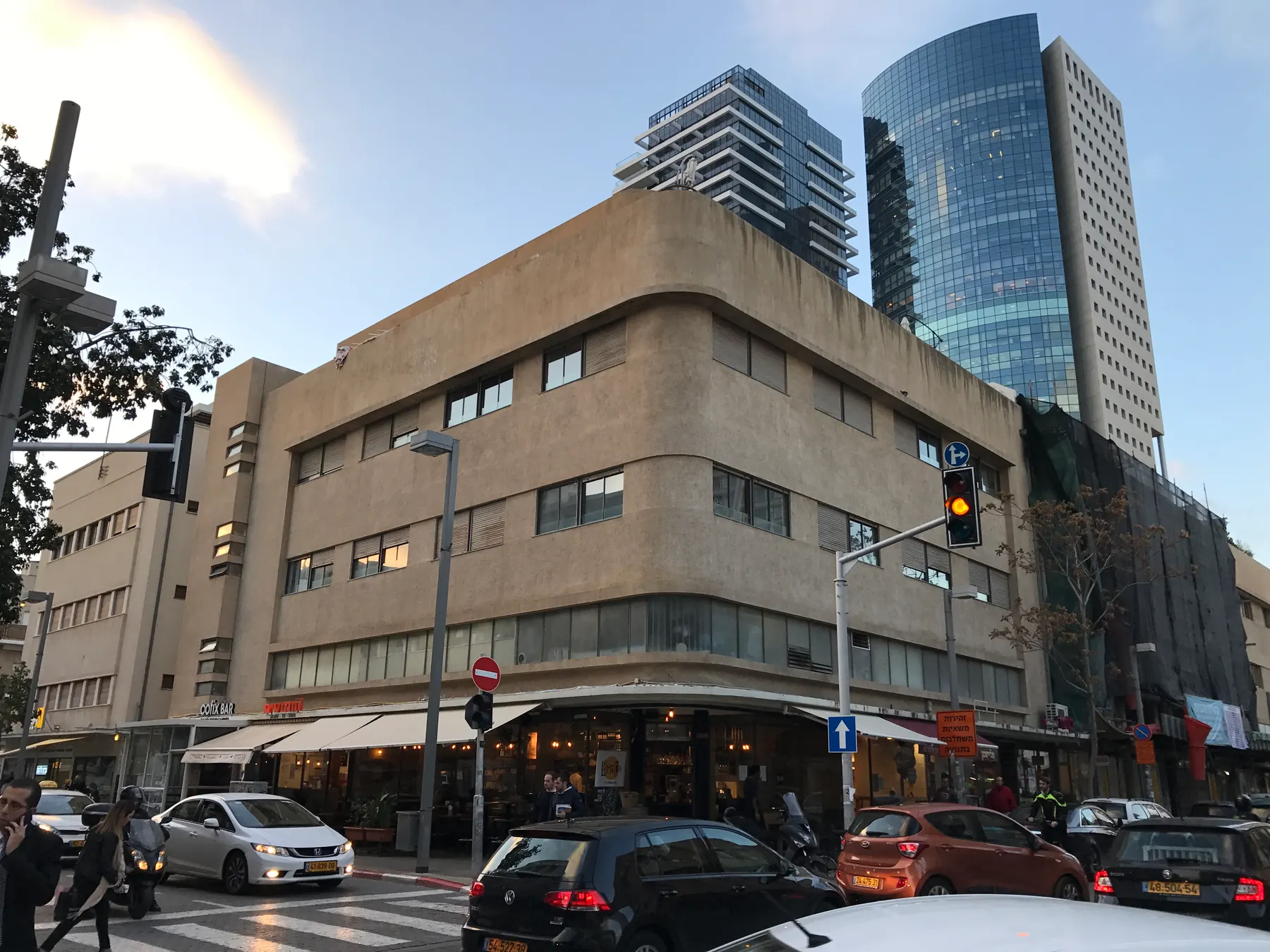
What UNESCO inscribed in 2003 is not one street but three separate zones covering 140.4 hectares, and roughly 90 per cent of the buildings inside them are privately owned flats.
Sources and further reading
Every link below was opened and checked when this page was written. Official statements are marked as such: they are the subject's own account, not an independent one.
- OfficialTel Aviv-Yafo Municipality, Department of Tourismvisit.tel-aviv.gov.ilTel Aviv-Yafo official tourism site
the municipality's own visitor site, used here as the operator link; it carries no dedicated Florentin page, which is why the practical detail on this page comes from the Ministry of Defence and from reporting
- OfficialIsraeli Ministry of Defence, museums unitmod.gov.ilLehi Museum, Tel Aviv
the operator's page: address at 8 Avraham Stern Street, hours Sunday to Thursday 08:00 to 16:00, admission ₪20, ₪15 and ₪10 with free entry for bereaved families, telephone 073-3534899, and the 120-seat lecture hall
- OfficialLehi Associationlehi.org.ilThe association for perpetuating the heritage of the fighters for the freedom of Israel
the body whose offices occupy the ground floor of the museum building and which presents the organisation's own account of itself
- ReportingTime Out Israeltimeout.co.ilThe stain remains: how Florentin went from street-art capital to tourist safari
15 August 2018: the first generation of Klone, Know Hope, Zero Cents, Foma and Adi Sand, Klone starting in 1999 at sixteen, the 2014 Thrillist ranking as the turning point, Tal Lanir on unqualified guides and her 2011 museum exhibition, and Klone's thirty-metre wall at 59 Eilat Street
- ReportingHaaretzhaaretz.comTel Aviv hipster enclave draws gawkers, and locals are pissed
20 June 2017, Moshe Gilad: a tour group of fifteen, the wall on Eilat Street telling the tours where to go, and local anger at the tourism industry in the neighbourhood
- ReportingHaaretzhaaretz.comWhat brings tourists to Tel Aviv's Florentin neighborhood?
26 September 2017, Shir Reuven: a second, independent account of the summer tourist influx into the same streets and of the graffiti tours running through them
- ReportingThe Times of Israeltimesofisrael.comTel Aviv-Jaffa offers urban tours during January
12 January 2025: the municipal tour programme, including a guided walk of Washington Street billed as the city's tiniest road, at ₪110 a person
- ReferenceHebrew Wikipediahe.wikipedia.orgFlorentin
the 353-dunam area, the four boundary streets, the 1927 founding by David Abarbanel and Shlomo Florentin, the plan mixing craft and housing, the 1936 tax revolt, the 1948 annexation, 7,620 residents in 2012, the 1991 renewal project, the key-money lawsuits, the 2006 Border Police protest, Ahavat Hesed at 54 Abarbanel, the Shuk HaAliya demolition and Elifelet Garden
- ReferenceEnglish Wikipediaen.wikipedia.orgFlorentin, Tel Aviv
Solomon Florentine as the name behind the neighbourhood (citing David Tidhar's Encyclopedia of the Pioneers of the Yishuv, vol. 4, 1950, p. 1913), the Salonika-Palestine Investment Company of 1921, the 1917 fire, the 1924 purchase, the delay to 1933, the Jaffa municipality's ground-floor ruling and the age breakdown of residents
- ReferenceHebrew Wikipediahe.wikipedia.orgLevinsky Street
the street named for Elhanan Leib Levinsky and laid out in the 1920s in Yosef Tischler's plan, the market's foundation stone on 7 August 1961 and inauguration on 15 March 1964, the stalls becoming shops, and the pedestrianisation from 2020 and 2022
- ReferenceHebrew Wikipediahe.wikipedia.orgLehi Museum
Wilkin finding Stern in the wardrobe and Morton shooting him on 12 February 1942, the 1953 plaque, the museum's opening on 4 February 1986, the preserved furniture and bullet hole, and the memorial room for 127 fighters
- ReferenceEnglish Wikipediaen.wikipedia.orgLehi Museum
the museum at 8 Stern Street, formerly Mizrahi Street, the Savorais' rented flat, and the floor-by-floor arrangement of the displays
- ReferenceEnglish Wikipediaen.wikipedia.org27 Club graffiti in Tel Aviv
the mural at 3 Haim Ben Atar Street, painted in 2014 by John Kiss with Itai Froumin and Roman Kozhokin, its dimensions and the seven figures it depicts
Florentin: common questions
Is Florentin worth visiting?+
Yes, if the interest is in how a city actually works rather than in monuments, because Florentin has almost none. It is the only quarter of Tel Aviv built from the start with workshops on the ground floor and flats above, and that plan is still legible on every street. Visitors who want restored architecture and boutiques will get more out of Neve Tzedek next door.
Is there an entrance fee for Florentin?+
No. It is an ordinary residential and commercial neighbourhood with no gate, no ticket and no closing time, and the murals and Levinsky Market are all on the public street. The only paid admission inside it is the Lehi Museum at 8 Avraham Stern Street, which the Ministry of Defence prices at ₪20 for an adult and ₪15 for youth, students, senior citizens and army pensioners.
Who is Florentin named after?+
Shlomo Florentin, rendered Solomon in English, a builder who immigrated from Salonica and developed the ground with his partner David Abarbanel. A good deal of English-language writing calls him David Florentin, which appears to be the two men merged into one. The land itself was bought by the Salonika-Palestine Investment Company, founded by Salonican Jews in 1921.
When was Florentin built?+
The two standard accounts do not agree, and this page prints both. Hebrew sources date the founding to 1927, on an orchard south of the commercial centre quarter. English sources, following a Jerusalem Post history, say the land was bought in 1924 and that Ottoman land law delayed construction until 1933, which is also the year the Jaffa municipality allowed shops and light industry on the ground floors.
How long do you need in Florentin?+
About 90 minutes covers the grid on foot, the workshop lanes off Abarbanel and the best-known murals. Add Levinsky Market and the Lehi Museum and it becomes a half day. It is small enough that a visit is naturally combined with Neve Tzedek to the west or Carmel Market to the north.
Where is the street art in Florentin?+
It is spread across the whole grid rather than gathered on one street, which is why the walks meander. The two fixed points are the 27 Club mural at 3 Haim Ben Atar Street, painted in 2014, and the Rabin assassination mural on Washington Boulevard. Everything else changes: painters here work over each other's walls continuously, and the composition of a given wall is a matter of months rather than years.
Are the graffiti tours a good idea?+
They are a genuinely contested question in the neighbourhood rather than a straightforward yes. Haaretz reported in 2017 on tour groups being walked through the lanes and on local anger about it, and the curator Tal Lanir has said publicly that many guides lack expertise and pass on misinformation. Time Out Israel's 2018 account, written with the artists themselves, argued that the tours helped push the original painters out. The walls are free to look at without a guide.
Is Florentin safe?+
It is an ordinary busy inner-city neighbourhood, and the usual city precautions are the right ones. Crime rose enough in 2006 for a decision to reinforce the local police with Border Police officers, which residents and social activists then protested against; the decision was never formally reversed but Border Police have not operated there since. The eastern end, towards the former central bus station, is noticeably rougher than the rest and is the part worth avoiding after dark.
Can you get around Florentin in a wheelchair?+
The ground is flat throughout with no climb and no steps between parts of the neighbourhood, which is the main thing in its favour. Against that, the pavements are narrow, kerbs are frequently unramped, and the workshop streets have goods and parked scooters on the footway during working hours. The pedestrianised Levinsky Market stretch is the easiest section, and the Lehi Museum, spread over three floors of a 1930s building, is the hardest.
What happened to Shuk HaAliya?+
Most of it was demolished by the municipality on 6 April 2012. It was a Bauhaus market building put up in 1938 at the corner of HaAliya and Wolfson streets, and a residential compound called Florentin Village was built on the site, with part of the original exterior listed for preservation. Visitors looking for the market building itself will not find it.