Market · Tel Aviv
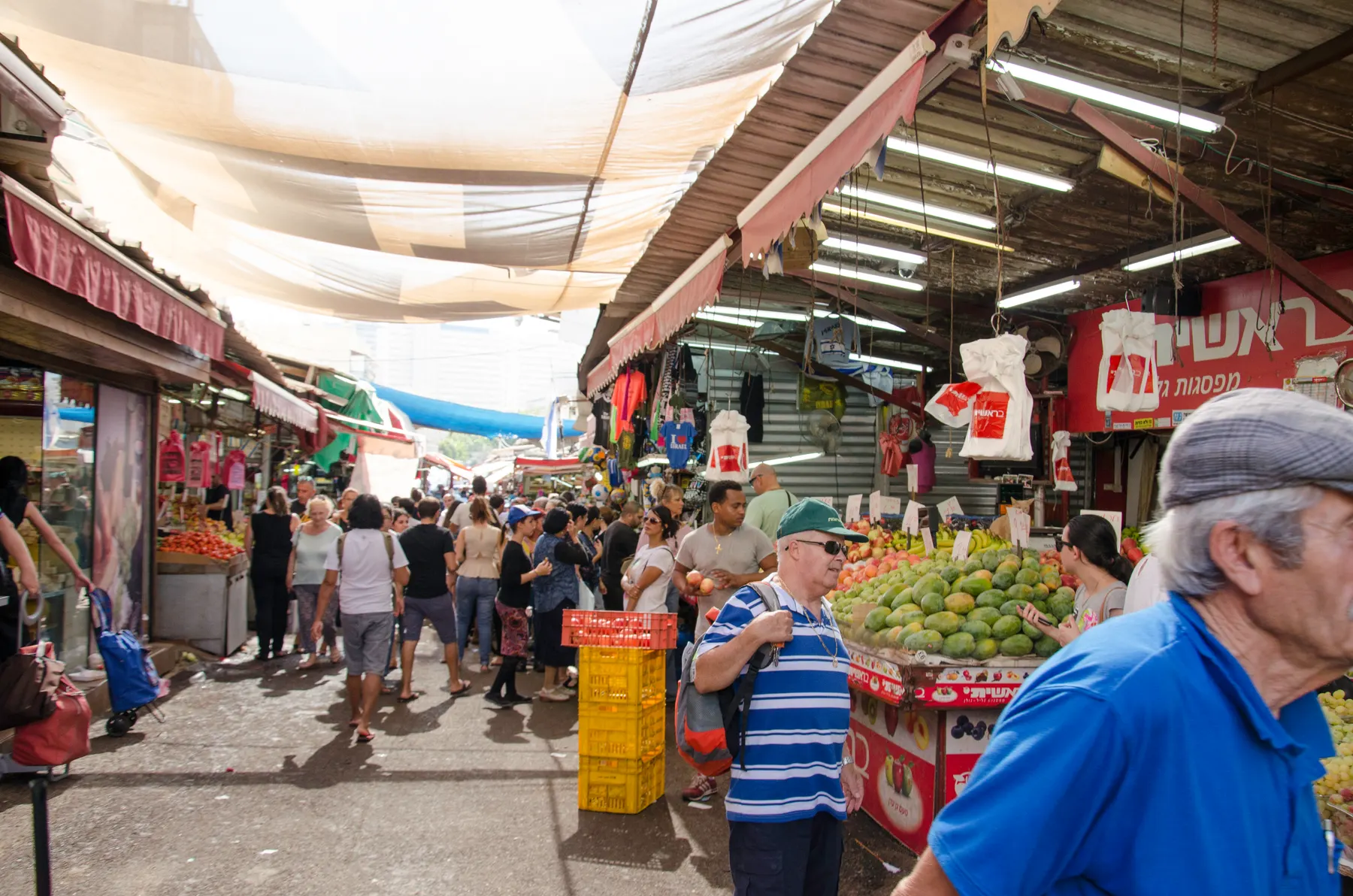
Carmel Market
The market opened in 1920 on plots bought in Russia seven years earlier as a speculation, by investors who fled the revolution and arrived in Tel Aviv with nothing else left.
Rakoon / CC0 · Wikimedia Commons
Opened
1920
as Shuk HaKerem, licensed along HaCarmel Street by mayor Meir Dizengoff
Trading days
Sunday to Friday
closed on Shabbat; Friday is the fullest day and the shortest one
Traders offered leases
about 1,000
the municipality's 2022 offer of 49-year contracts, as reported by Calcalist
Renewal plan area
about 75 dunams
the market, the western market, the Carmelit car park and part of Gan HaKovshim, 2011
In short
- How long to give it
- about 90 minutes
- Sunday to Thursday
- Most stalls open from about 08:00 and trade until the early hours of the night. Individual traders set their own closing times.
- Entry
- Free. The market is a public street, with no gate and no ticket.
שוק הכרמל
Carmel Market is the largest market in Tel Aviv: one long run of stalls down HaCarmel Street from Magen David Square towards the Carmelit terminal and Gan HaKovshim, with the lanes of the Kerem HaTeimanim neighbourhood opening off one side and the Nahalat Binyamin pedestrian mall off the other. The municipality calls it the city's biggest marketplace. There is no gate, no ticket and no building. It is a public street that trades six days a week and stops for Shabbat.
It exists because of a property speculation that went wrong. In 1913 Arthur Ruppin, who ran the Zionist movement's Palestine Office, urged Jews in Russia to buy land in the new Hebrew town going up on the dunes north of Jaffa. A group of wealthy Russian Jews bought plots along HaCarmel Street for 1,000 roubles, intending to leave the ground to their children rather than to live on it. After the October Revolution of 1917 they had to get out of Russia, and reached the country with nothing but those plots between Allenby Street and Manshiya. Unable to find work in a labour market that ran on manual trades, they asked to open a fruit and vegetable market instead, and mayor Meir Dizengoff approved it over considerable objection. It was inaugurated in 1920 as Shuk HaKerem and took the name Shuk HaCarmel a few years later.
The market that grew out of that has two halves which have never quite merged. The upper part, nearer Magen David Square, still sells produce, olives, dried fruit, spices, nuts and cheap household stock to people from the surrounding blocks. The lower part has filled with food counters, bars and chef-run stalls, and trades into the evening. The municipality has been trying to rebuild the whole thing since 2009, and so far has mostly not.
Origins
A market built by people whose only asset was the ground under it
The land came first and the market was the consolation prize. Ruppin's 1913 pitch in Russia was to buy plots in Tel Aviv as an inheritance, not as a home, and the buyers who took it up were known afterwards as Ruppin's refugees. The 1,000 roubles they paid bought them strips of the sand that HaCarmel Street would be laid across. When they arrived after 1917 they had the strips and no capital, no trade and no way into an economy built on physical labour, so they asked the municipality for permission to trade produce on their own ground.
Accounts of whose market it was differ, and the disagreement is worth stating rather than smoothing over. The Hebrew reference literature credits the Russian arrivals and Dizengoff's licence. The market's own website tells it the other way round, as an informal marketplace called HaKerem set up by the neighbouring Kerem HaTeimanim in the early 1920s, which Ruppin and a group of Russian immigrants then turned into a commercial concern and the municipality formalised. The two versions agree on the name, the decade and the street, and on Dizengoff being the one who made it permanent.
Kerem HaTeimanim, the vineyard the first name refers to, was already there. It was settled by Yemenite Jewish immigrants on land belonging to Aharon Chelouche, Yosef Moyal and Haim Amzaleg. Most accounts date that to 1906, some to 1904. Its single-storey houses of timber and tin backed straight onto the strip of sand the market took over, which is why the market still leaks into its lanes today.
One piece of the geography has since been renamed out of recognition. HaCarmel Street originally ran all the way to what is now Rabin Square. In the 1930s the greater part of it became King George Street, leaving the market with the short southern stub that still carries its name.
Friction
A stallholder writes to Davar, December 1927
On 21 December 1927 the newspaper Davar printed a letter from a market pedlar, and it is the most useful single document about the place. The municipality, he wrote, had the previous year moved the market from the corner of Allenby and Nahalat Binyamin to HaCarmel Street, and made the booth holders pay 20 Egyptian pounds each for the new booths. A large part of the customers had not followed: they stayed in the stretch of HaCarmel Street nearer Jaffa. Meanwhile Arab villagers were selling vegetables beside the market daily without any licence or municipal tax, and, carrying none of those costs, were selling cheaper. The municipality was then issuing licences to further pedlars who had not paid what he had paid, splitting a small living into smaller pieces. He signed it "one of the pedlars".
Everything that has been argued about since is in that letter: the municipality reorganising the market from above, the traders paying for the privilege, and the customers going where the price is. The 1920s complaint about unlicensed competition and the 2020s complaint about lease fees are recognisably the same argument, conducted a century apart.
The market has taken harder knocks than planning rows. A photograph from February 1948 shows a warning sign fixed to a barrel in the middle of the market, telling passers-by about sniper fire coming from the nearby Hassan Bek Mosque. In the early 1960s the Hebrew press ran a campaign calling the market a permanent sanitary nuisance. On 1 November 2004 a Palestinian suicide bomber detonated an explosive belt in the market shortly after 11 in the morning, killing three civilians and wounding dozens; the Popular Front for the Liberation of Palestine claimed the attack.
The layout
Where the vegetables stop and the food counters begin
The market is legible if it is read as a single street with things attached to it. HaCarmel Street starts at Magen David Square, where six streets meet, and runs south-west to the Carmelit terminal and Gan HaKovshim, in the direction of the old Manshiya area and the sea. Everything else is an annexe reached from that spine.
Walking it from the top, the trade shifts as the street descends. The municipality's own description of the upper stretch is bread and pastries, olives, dried fruit, exotic spices and fresh produce, sold at competitive prices. Further down, food stalls, bars and sit-down counters take over more of the frontage, and this is the part that keeps trading after the produce sellers have packed the boxes away.
The market long ago outgrew its own street and now spills into several neighbouring ones, mainly in Kerem HaTeimanim and Nahalat Binyamin. Taken together with the Nahalat Binyamin pedestrian mall and Rambam Street, this makes a large area of central Tel Aviv closed to cars, which is a useful thing to know before circling in one.
- HaCarmel Street, from Magen David Square down: the produce, spice, olive and dried fruit run, and the market's official address at number 35.
- The lanes into Kerem HaTeimanim, Gedera Street among them, which backs onto the market and carries food shops and restaurants rather than stalls.
- The south-western end, known as Shuk Gaza, which is where the municipality aimed its first renewal pilot.
- Nahalat Binyamin, east of the market: a pedestrian mall on ordinary days, an arts and crafts fair on Tuesdays and Fridays.
- Magen David Square at the head of it, named for the six streets radiating from it: Allenby in two directions, King George, Sheinkin, Nahalat Binyamin and HaCarmel.
What survives
Nothing here is old except the arrangement
Visitors who arrive expecting a historic covered bazaar are in the wrong century and the wrong empire. There is no Ottoman hall at Carmel Market, no vaulting and no protected fabric along HaCarmel Street. The stalls are demountable, the roofing is corrugated sheet and tarpaulin strung between them, and everything standing above the pavement has been replaced repeatedly since 1920. Replacing the public roofing is itself one of the line items in the municipality's current renewal programme.
What is genuinely old is the arrangement rather than the material: the line of the street, the six-way junction at its head, the 1906 grid of Kerem HaTeimanim beside it, and the habit of selling produce along that particular kerb. Even the position is not original. The market only reached HaCarmel Street in 1926, having traded until then at the corner of Allenby and Nahalat Binyamin.
That makes the usual question about ruins into the wrong question here. Reconstruction at Carmel Market is not an event that happened once and can be pointed at; it is continuous, and it is what the traders and the municipality have been arguing about for a century. The thing being conserved is a trading pattern, not a structure.
The plan
Fifteen years of drawings and a market that is still a street
The paperwork trail is long and the built result is short. The local planning committee approved a renewal scheme in 2009. In September 2011 the district committee agreed to deposit a plan covering about 75 dunams, taking in the market, the western market, the Carmelit car park, part of Gan HaKovshim and land held by the Israel Land Authority, at a reported cost of about 100 million shekels, with a logistics centre, underground public parking, light roofing over the stalls and a recycling centre. On 30 January 2013 the local committee approved the renovation itself, reported then at about 150 million shekels, with stallholders to be offered 49-year leases renewable for a further 49.
What the design would change was set out in a municipal proposal reported by Haaretz in March 2018: a roof over the main thoroughfare with the option of air conditioning, uniform stall design and signage, stall frontages capped at 1.5 metres, fish and meat moved off the main run into the side streets, fixed trading hours, and a maximum of ten seated restaurants and cafes in each section of the market, permitted only on corners. That last cap is the most revealing line in the document. It exists because the municipality did not want to produce another Sarona Market, and said so.
Money and property rights are the reason none of it has happened quickly. In 2017 traders told Globes they were being asked for 200,000 shekels for a 49-year lease on a stall of seven square metres. In September 2022 Calcalist reported a framework offered to about 1,000 traders then classed as squatters: 28,571 shekels per square metre for the first seven metres and 7,521 shekels per square metre beyond that, payable in 36 index-linked instalments, giving the trader half the ownership with the municipality keeping the other half, on a 49-year lease renewable once. The traders' committee has its own list of unresolved items, including second storeys on roughly 60 shops and the status of the meat market.
The municipality now splits the work into two stages. Stage A covers electrical safety at the stalls, replacing the public roofing, adding lighting, public address, cameras and ventilation, new stalls, drainage and resurfacing. Stage B replaces water, sewerage and underground utilities. It is to be done in 40-metre segments, each closed for several weeks with minimal pedestrian access kept open, working day and night on the main market and mostly at night on the western market, and the municipality says lease signing with the traders' committee began in 2024 and 2025. Traders remain divided. The line quoted to Time Out in January 2022 was that they did not want to become another Sarona.
What to look for
Things not to walk past at Carmel Market
The details that repay knowing about before you are standing in front of them.
Magen David Square
The market's head is a junction of six streets, which is where the square's name comes from: Allenby in two directions, King George, Sheinkin, Nahalat Binyamin and HaCarmel. Walking in from any of the other five gives a completely different first impression of the place.
The spice and dried fruit stretch
The upper run of HaCarmel Street is where the municipality's own list applies: bread and pastries, olives, dried fruit, spices and fresh produce. It is also the part that empties earliest in the day.
Nahalat Binyamin on a Tuesday or Friday
The crafts fair on the pedestrian mall next door has run since 1988 and puts around 200 vetted artists along more than half a kilometre of street. It is run by the Tel Aviv-Yafo municipality, and it is not there on any other day.
The Kerem HaTeimanim lanes
The neighbourhood behind the western side of the market dates from 1906 and was built cheaply in timber and tin. Its streets, Gedera among them, carry food shops and restaurants rather than stalls, and they are where the crowd thins out.
Shuk Gaza
The south-western end of the market carries its own name and is the section the municipality chose for its first renewal pilot, announced in January 2022. It is the best place to see what the plan actually proposes to do.
The long view
Carmel Market, in order
1906
Kerem HaTeimanim is settled by Yemenite Jewish immigrants on land belonging to Aharon Chelouche, Yosef Moyal and Haim Amzaleg. Some accounts give 1904.
1913
Arthur Ruppin, head of the Palestine Office, urges Zionists in Russia to buy land in Tel Aviv. A group buys plots on HaCarmel Street for 1,000 roubles.
1917
After the October Revolution the buyers flee Russia and reach the country with nothing but the plots, which is how they come to be called Ruppin's refugees.
1920
Mayor Meir Dizengoff licenses a small produce market along HaCarmel Street, over objections. It opens as Shuk HaKerem and is later renamed Shuk HaCarmel.
1926
The municipality moves the market from the corner of Allenby and Nahalat Binyamin to HaCarmel Street, charging each booth holder 20 Egyptian pounds for the new booths.
21 December 1927
Davar prints a pedlar's letter complaining that customers did not follow the move and that unlicensed competition is undercutting the licensed traders.
1930s
Most of HaCarmel Street, which ran as far as today's Rabin Square, is renamed King George Street, leaving the market on the southern remainder.
February 1948
A warning sign is fixed to a barrel in the middle of the market, alerting passers-by to sniper fire from the nearby Hassan Bek Mosque.
1962
The Hebrew press runs a campaign describing the market as a permanent sanitary nuisance.
1988
The arts and crafts fair starts on the Nahalat Binyamin pedestrian mall alongside the market, run by the municipality.
1 November 2004
A suicide bomber kills three civilians in the market. The Popular Front for the Liberation of Palestine claims the attack.
2009
The local planning committee approves a renewal scheme for the market and its surroundings.
September 2011
The district committee agrees to deposit a plan over about 75 dunams, costed at about 100 million shekels.
30 January 2013
The local committee approves the renovation, reported at about 150 million shekels, with 49-year leases offered to stallholders.
March 2018
A municipal design proposal caps seated restaurants and cafes at ten per market section and limits stall frontages to 1.5 metres.
January 2022
A renewal pilot is launched on the western market, the section known as Shuk Gaza.
September 2022
The municipality offers about 1,000 traders a lease framework at 28,571 shekels per square metre for the first seven metres.
2024 to 2025
The municipality and the traders' committee begin signing the lease contracts that the physical works depend on.
Practical
Visiting Carmel Market
Where
HaCarmel Street 35, Tel Aviv-Yafo. The market runs from Magen David Square, at the Allenby and King George junction, down to the Carmelit terminal.
Opening hours
- Sunday to Thursday
- Most stalls open from about 08:00 and trade until the early hours of the night. Individual traders set their own closing times.source
- Friday
- Closes in the early afternoon, and earlier in winter, ahead of Shabbat.source
- Saturday
- Closed. Some bars and restaurants in and around the market open, but the market itself does not.source
- Nahalat Binyamin crafts fair, next door
- Tuesday 10:00 to 17:00 and Friday 10:00 to 16:00, plus holidays and Chol HaMoed.source
Admission
- Entry
- Free. The market is a public street, with no gate and no ticket.source
Access
Flat throughout, with no steps and no climb: the difficulty is width and crowding, not gradient. The main run narrows to the space between two stall fronts, traders display goods into the walkway, and at Friday peak a wheelchair or a pushchair is hard work rather than impossible. Take the parallel lanes of Kerem HaTeimanim when the middle is jammed. Accessibility is one of the stated objectives of Stage A of the municipality's renewal programme, which is in effect an admission that the surface and the layout are currently poor. The nearest public toilets are off the market on Yehiye Kapach Street.
On site
- Public toilets on Yehiye Kapach Street
- Paid car park at Kalisher and HaCarmel, 313 spaces
- Cash machines on the market street
- Food counters, bars and sit-down restaurants
- No cloakroom or luggage store
Booking
Nothing is booked and nothing is ticketed. Guided tasting walks are sold by private operators and are not run by the market or by the municipality. No single body publishes the market's hours, because each trader keeps their own, so treat any stated opening time as the earliest most stalls are up rather than a guarantee.
Hours and prices are given as the operator publishes them and change without much notice, particularly around Shabbat and the festivals. Check the operator's own page before you travel for this.
Official page at tel-aviv.gov.il →What people wish they had known
- Do not plan a Saturday. The market is shut for Shabbat, and the bars that do open around it are not the market.
- Friday is the market at full strength and also the shortest day. It closes in the early afternoon and earlier in winter, so a late Friday lunchtime arrival gets the packing up rather than the market.
- The crafts fair on Nahalat Binyamin only exists on Tuesdays and Fridays, between 10:00 and 17:00 or 16:00. On any other day that street is a pedestrian mall with cafes and nothing more.
- Treating HaCarmel Street as the whole market is the commonest error. The side lanes into Kerem HaTeimanim carry the food shops and restaurants, and they are where to go when the main run is impassable.
- There is no gate, no cloakroom and no toilet on the market street itself: the public toilets are round the corner on Yehiye Kapach Street.
- Do not circle for kerbside parking in an area largely closed to cars. The paid car park at Kalisher and HaCarmel has 313 spaces.
The figures
Carmel Market by the numbers
Each figure carries the year it belongs to and links the source it came from.
| Measure | Figure | As of | Source |
|---|---|---|---|
| Market opened | 1920 | 1920 | he.wikipedia.org |
| Paid for the original plots on HaCarmel Street | 1,000 roubles | 1913 | he.wikipedia.org |
| Charged per booth after the move to HaCarmel Street | 20 Egyptian pounds | 1927 | he.wikipedia.org |
| Killed in the market bombing | 3 civilians | 2004 | en.wikipedia.org |
| Area of the deposited renewal plan | about 75 dunams | 2011 | bizportal.co.il |
| Cap on seated restaurants and cafes per market section | 10, on corners only | 2018 | haaretz.com |
| Lease offered to traders, first seven square metres | 28,571 shekels per square metre | 2022 | calcalist.co.il |
| Artist stalls on the Nahalat Binyamin fair | about 200 | 2026 | nachalatbinyamin-tlv.com |
While you are here
The rest of Tel Aviv
Everything else in this destination with a page of its own.
Deror Avi / CC BY-SA 3.0 · Wikimedia Commons
Neighbourhood
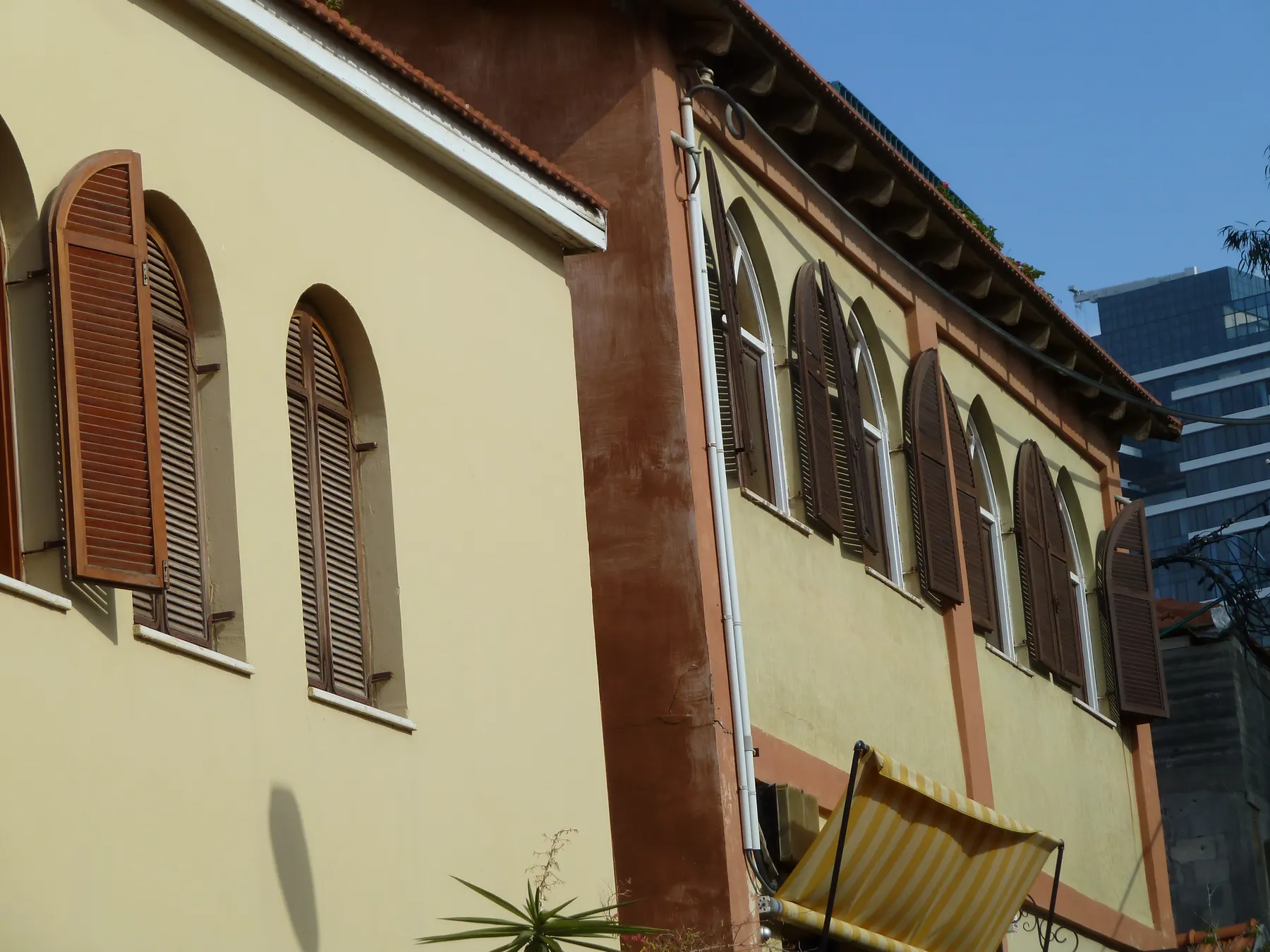
Neve Tzedek
The quarter Jewish families built on the sand outside Jaffa in 1887, twenty two years before Tel Aviv existed, and the only one where the original houses were restored rather than cleared.
ענת פרנק גורלי / CC BY 2.5 · Wikimedia Commons
Beach
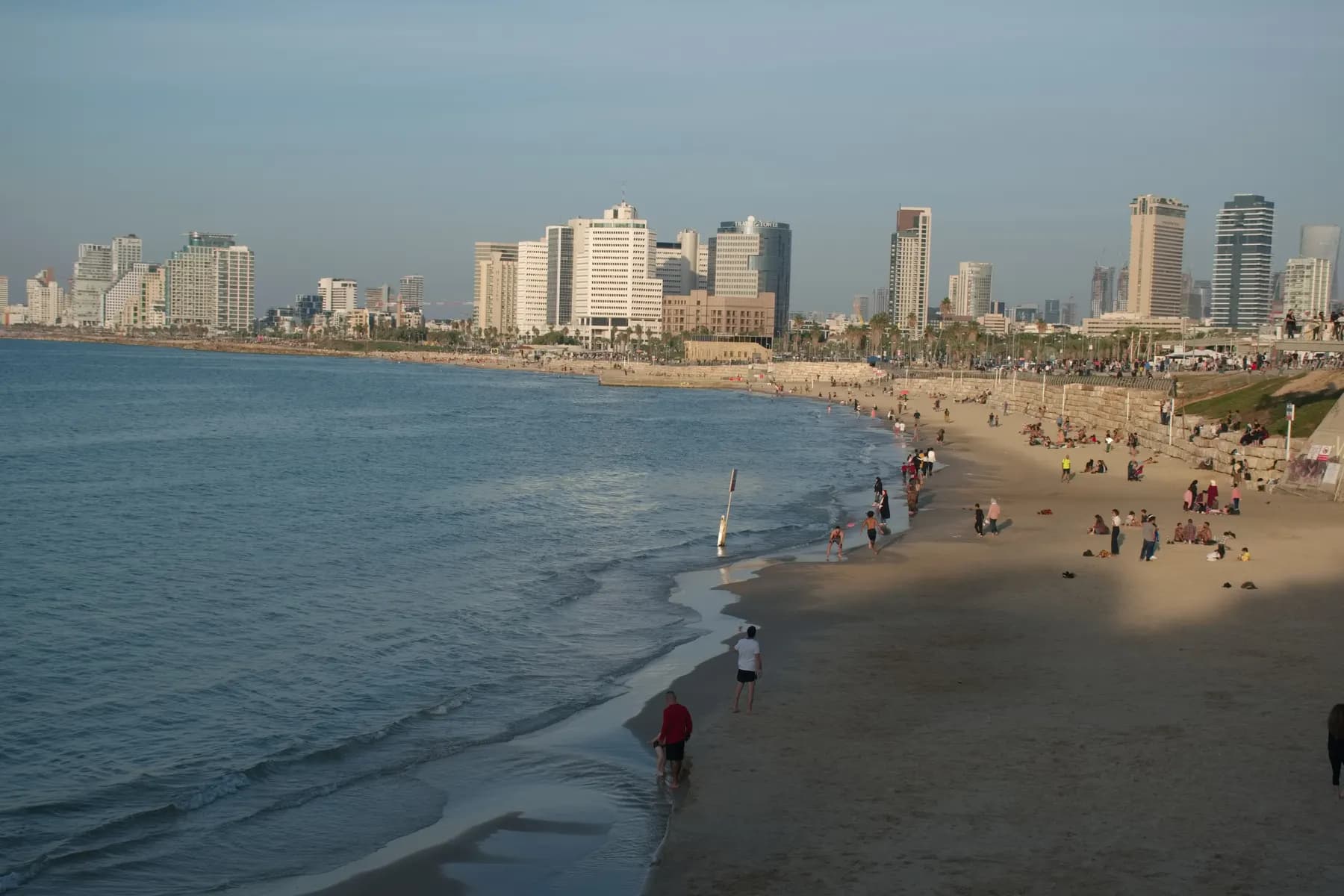
Tel Aviv Beaches and the Tayelet
Thirteen municipal beaches on one continuous promenade, opened for the 2026 season on 25 March, with the lifeguard stations due to close for the year on 10 October.
Marsupium / CC0 · Wikimedia Commons
Landmark
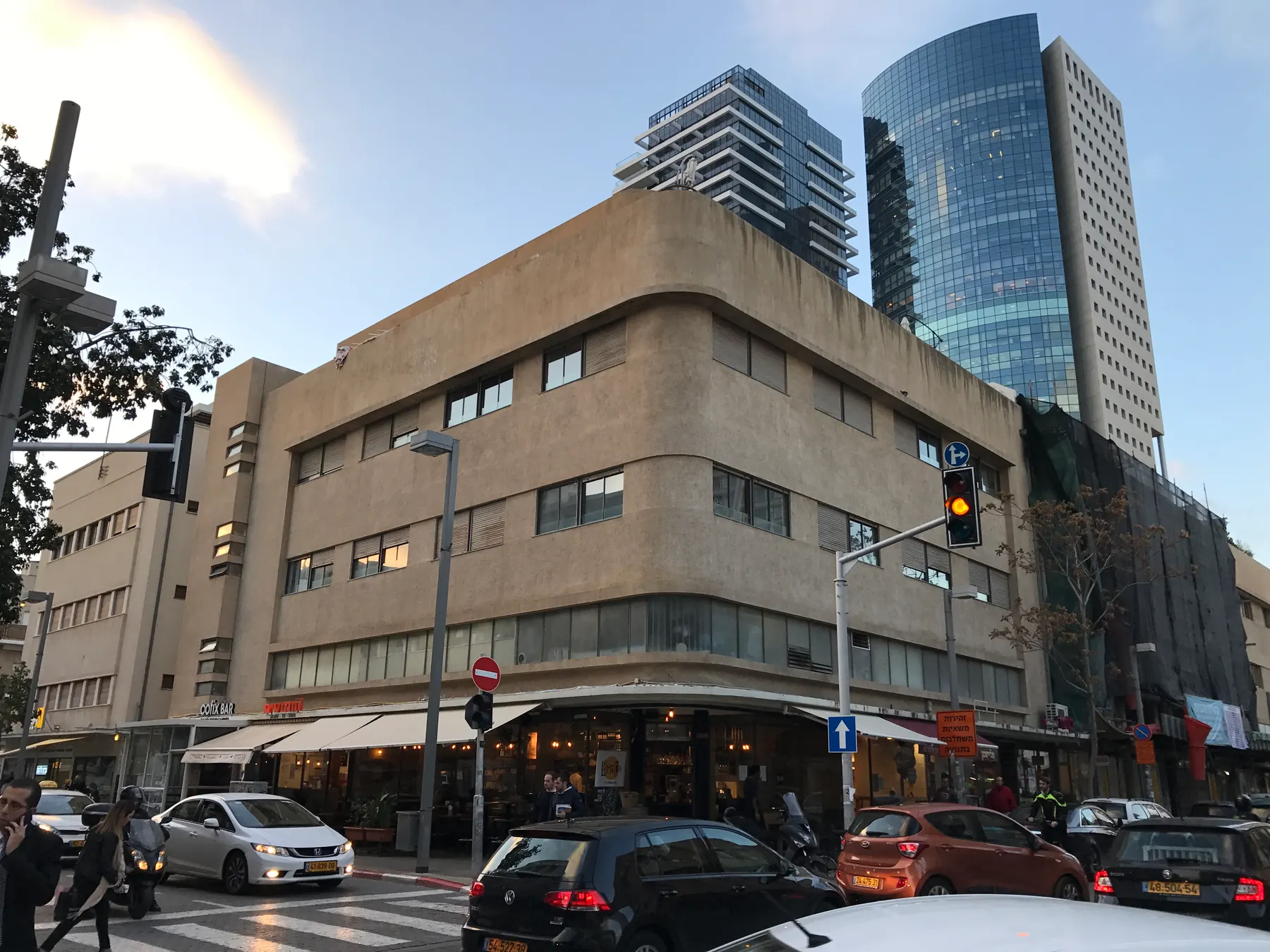
The White City and Bauhaus Tel Aviv
What UNESCO inscribed in 2003 is not one street but three separate zones covering 140.4 hectares, and roughly 90 per cent of the buildings inside them are privately owned flats.
Sources and further reading
Every link below was opened and checked when this page was written. Official statements are marked as such: they are the subject's own account, not an independent one.
- OfficialTel Aviv-Yafo Municipalitytel-aviv.gov.ilTop 10 Places: Carmel Market (Shuk HaCarmel)
The municipality's own description of the market's extent and what the stalls sell.
- OfficialTel Aviv-Yafo Municipalitytel-aviv.gov.ilשוק הכרמל: התחדשות עירונית
Stage A and Stage B of the renewal works, the 40-metre segments, and the 2024 to 2025 lease signing.
- OfficialNachalat Binyamin Arts and Crafts Fair, Tel Aviv-Yafo Municipalitynachalatbinyamin-tlv.comנחלת בנימין: על המדרחוב, ושעות פתיחה
The fair since 1988, about 200 vetted artists, and the Tuesday and Friday hours.
- ReportingHaaretzhaaretz.comTel Aviv's iconic and disorderly Carmel Market may get face lift
Meirav Moran, 20 March 2018: the roof, the 1.5 metre frontages, the cap of ten seated restaurants per section and the Sarona comparison.
- ReportingCalcalistcalcalist.co.ilעיריית ת"א מציעה לסוחרי שוק הכרמל מתווה לשיוך הנכסים
5 September 2022: the lease framework offered to about 1,000 traders and the prices per square metre.
- ReportingCalcalistcalcalist.co.ilאושרה התוכנית לשיפוץ ושיקום שוק הכרמל
The local committee's approval on 30 January 2013, the reported 150 million shekels and the 49-year leases.
- ReportingBizportalbizportal.co.ilאושר שיפוץ ושיקום שוק הכרמל בת"א בכ-100 מיליון שקל
20 September 2011: the district committee's deposit of the plan, the 75 dunams and the 100 million shekel figure.
- ReportingGlobesglobes.co.ilהשיפוץ בשוק הכרמל: אם זה יהיה כמו קניון, מי ירצה לבוא
Yael Ben Israel, 15 July 2017: the 200,000 shekels asked for a 49-year lease on a seven square metre stall.
- ReportingTime Out Israeltimeout.co.ilבכרמל תומכים בשיפוץ, אך חוששים: שלא נהפוך לעוד שרונה
5 January 2022: traders on the western market pilot, and the objection to becoming another Sarona.
- ReferenceHebrew Wikipediahe.wikipedia.orgשוק הכרמל
Ruppin's refugees, the 1,000 roubles, Dizengoff's licence, the 1927 Davar letter, Shuk Gaza and the street renaming.
- ReferenceWikipediaen.wikipedia.orgCarmel Market
The largest market in Tel Aviv, open every day except Shabbat, and the Nahalat Binyamin overspill.
- ReferenceWikipediaen.wikipedia.orgCarmel Market bombing
The attack of 1 November 2004: time, casualties and the claim of responsibility.
- ReferenceWikipediaen.wikipedia.orgKerem HaTeimanim
The neighbourhood's settlement in 1906, the landowners, and its construction in timber and tin.
- ReferenceShukTlv.co.ilen.shuktlv.co.ilUseful information: Carmel Market
A private market website rather than the municipality: the source for the stated stall hours, the 313-space car park and the public toilets.
Carmel Market: common questions
Is Carmel Market open on Saturday?+
No. The market trades Sunday to Friday and closes for Shabbat. Some bars and restaurants in and around the market open on Saturday, but the stalls do not, so a Saturday visit gets an empty street. Friday is the last trading day and it ends in the early afternoon.
What are Carmel Market's opening hours?+
Most stalls are open from about 08:00 and trade until the early hours of the night, with Friday closing in the early afternoon and earlier in winter. No single body publishes the hours, because each trader sets their own and the market is a street rather than a venue. Treat any stated time as the point by which most stalls are trading, not a guarantee that a particular one is.
Is there an entrance fee?+
No. Carmel Market is a public street with no gate and no ticket, and the Tel Aviv-Yafo municipality lists it among the places to visit in the city on that basis. The only money involved is what is spent at the stalls.
How long do you need at Carmel Market?+
About 90 minutes covers the length of HaCarmel Street at a walking pace with a couple of stops. Add an hour if the plan includes eating properly rather than grazing, and add the same again on a Tuesday or Friday to take in the crafts fair on Nahalat Binyamin next door.
Is Carmel Market worth visiting, or is it just for tourists?+
It is both, and which one it is depends on where along the street the visit happens and when. The upper stretch nearer Magen David Square is a working produce market used by people who live in the surrounding blocks, busiest in the morning. The lower part has filled with food counters and bars aimed squarely at visitors and at Tel Aviv's own evening crowd. Anyone expecting an untouched local market will be disappointed at one end and not at the other.
Can you get through Carmel Market in a wheelchair or with a pushchair?+
Physically yes, since the market is flat with no steps, but the crowding and the width make it hard work at busy hours. Traders display goods into the walkway and the main run can narrow to the space between two stall fronts. Improving accessibility is one of the stated aims of the municipality's current renewal works, which says something about the present state of the surface.
What is the best day to go?+
Tuesday, if the crafts fair on Nahalat Binyamin is of any interest, because it runs on Tuesdays and Fridays and Tuesday is far quieter than Friday. For the market itself, any weekday morning gets the full produce trade without the Friday crush. Thursday and Friday are when the city shops for the weekend and the aisles are hardest to move down.
Is there shade at Carmel Market?+
Partly, and unevenly. The stalls are strung with corrugated sheet and tarpaulin rather than covered by a single roof, so the cover comes and goes along the street and the gaps are exposed. Replacing the public roofing is one of the line items in Stage A of the municipality's renewal programme, and a permanent roof over the main thoroughfare, with the option of air conditioning, has been proposed since at least 2018.
How is Carmel Market different from Sarona Market?+
Sarona is an enclosed, managed food hall and Carmel Market is an open street of independent traders. The distinction matters because it is the explicit basis of municipal policy here: the 2018 renewal proposal capped seated restaurants and cafes at ten per section of the market, on corners only, specifically so that Carmel Market would not turn into a food mall like Sarona. Traders have used the same comparison against the plan, saying they do not want to become another Sarona.
Is Carmel Market being demolished or rebuilt?+
Neither, so far. A renewal plan covering about 75 dunams has been working through the planning system since 2009, was approved by the local committee in January 2013 and has been repeatedly redrawn since, but the physical works depend on settling the traders' property rights, and lease signing only began in 2024 and 2025. The programme is phased in 40-metre segments closed for a few weeks at a time, so visits during the works will meet sections of scaffolding rather than a closed market.