Neighbourhood · Tel Aviv
Neve Tzedek
The quarter Jewish families built on the sand outside Jaffa in 1887, twenty two years before Tel Aviv existed, and the only one where the original houses were restored rather than cleared.
Deror Avi / CC BY-SA 3.0 · Wikimedia Commons
Established
1887
22 years before Tel Aviv, on the Suzanne Dellal Centre's dating
Original nucleus
48 houses
the count the Nahum Gutman Museum gives for its own building's cohort
Suzanne Dellal Centre
opened 1989
three derelict 19th-century school buildings, restored from 1986
Israel Prize
2010
awarded to the Suzanne Dellal Centre for its work in dance
In short
- How long to give it
- About 90 minutes to walk the streets, or half a day with the Gutman Museum and HaTachana added
- The neighbourhood itself
- Public streets, open at all hours. The Suzanne Dellal plaza is open and unticketed.
- The neighbourhood and the plaza
- Free
נווה צדק
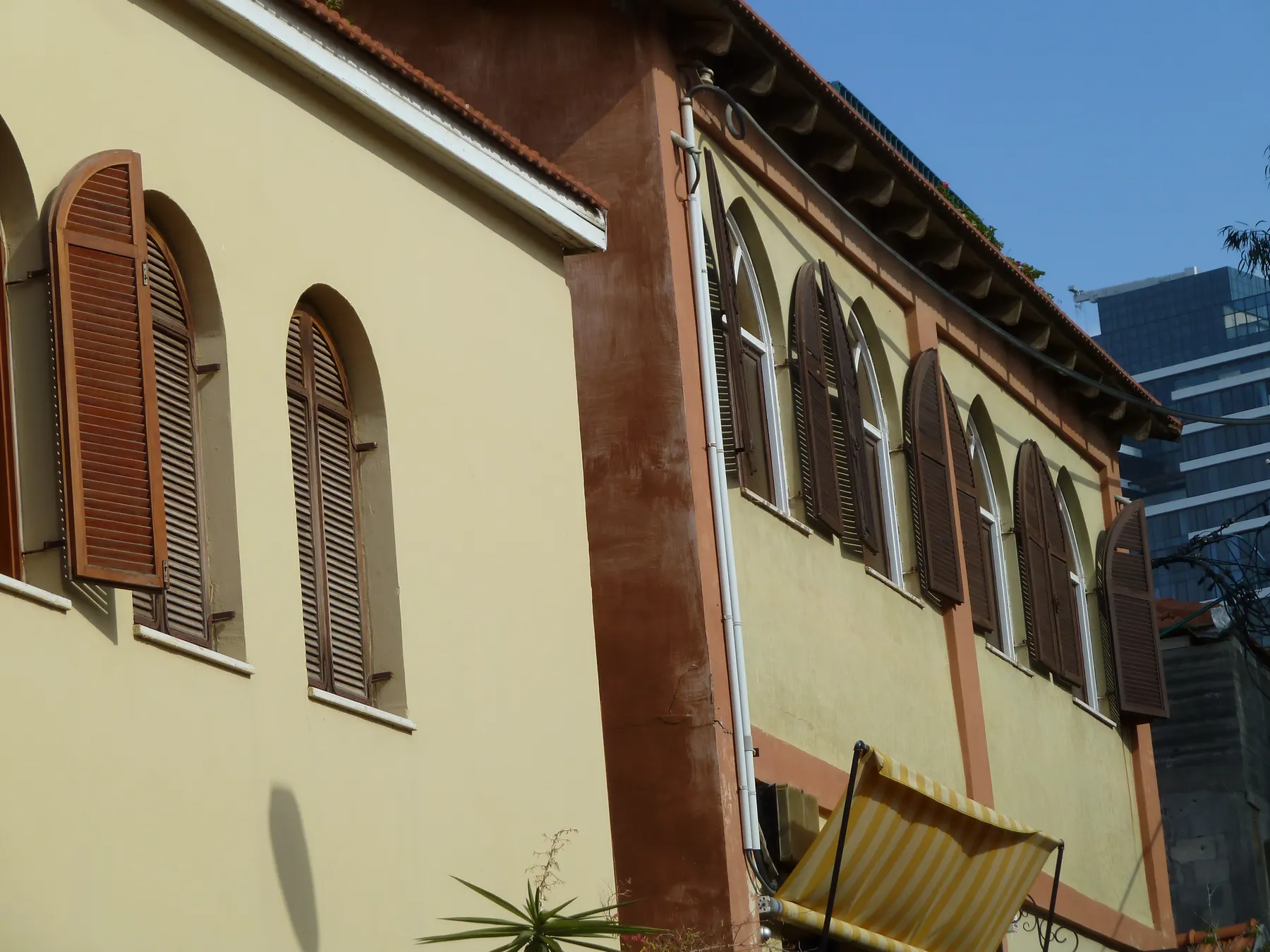
Neve Tzedek is a quarter of about a dozen short streets on the southern edge of central Tel Aviv, built from 1887 by Jewish families who wanted out of crowded Jaffa. The Suzanne Dellal Centre, which sits in the middle of it, dates the neighbourhood 22 years ahead of Tel Aviv itself. The houses are one and two storeys with tiled roofs and shuttered windows, the lanes are narrow and slightly crooked, and the quarter is small enough to walk end to end without hurrying.
What it is not is an open-air museum. Nothing is ticketed at neighbourhood level: the streets are public, the shops are shops, and the buildings are lived in and worked in. The ticketed things sit inside it. The Suzanne Dellal Centre for Dance and Theatre occupies a converted school compound and houses the Batsheva Dance Company and Inbal Dance Theatre; the Nahum Gutman Museum of Art occupies a house built in 1887 as one of the first forty-eight in the neighbourhood; Rokach House, built the same year by one of the founders, opens as a visitor centre.
The restoration that produced today's Neve Tzedek is recent and it was close-run. The quarter decayed after 1948, was written off in the 1960s and escaped demolition only because its buildings were declared heritage sites. A great deal of what a visitor now photographs was rebuilt or heavily repaired from the late 1980s onward, which is worth knowing when reading a facade.
1887
Forty-eight houses on the sand, before there was a Tel Aviv
The founding date depends on where the clock starts. The Suzanne Dellal Centre, which occupies the middle of the quarter, gives 1887 and describes a small group of Jewish families leaving the overcrowded port city of Jaffa. Wikipedia's account has the Chelouche family moving onto the ground several years earlier, in 1883, with roughly fifty families following over the next few years and the neighbourhood taking formal shape in 1887. Both accounts name the same two men: Shimon Rokach, and Aharon Chelouche, a Jaffa landowner and businessman who sold the plots.
The name is not a description of the place. Neve Tzedek is a phrase from the Book of Jeremiah, rendered in English as the habitation or oasis of justice. What the founders actually built was a grid of small plots with houses fronting straight onto narrow streets, each with its own water and sanitation, at a time when the alternative was a rented room inside the Jaffa walls.
The scale is documented from an unexpected direction. The Nahum Gutman Museum, describing its own building, says it was built by the Schulman family in 1887 as one of the first 48 houses that formed the nucleus of the new neighbourhood; the Council for Conservation of Heritage Sites in Israel repeats the same figure. Forty-eight houses is the whole of Neve Tzedek at the start, which is why the quarter is still measured in a dozen streets rather than in blocks.
It did not stay alone for long. Neve Shalom followed in 1890, Yefe Nof in 1897 and Batei Feingold in 1904, all of them on the same dunes, and in 1909 the Ahuzat Bayit society laid out the plots that became Tel Aviv a short walk to the north. The Council for Conservation makes the point plainly: these neighbourhoods were the nucleus out of which the first Hebrew city grew, and Neve Tzedek was the first of them on the coastal plain.
Writers
The house where Hebrew literature kept an office
Between 1907 and 1914 the Schulman house on Shimon Rokach Street was the editorial office of Hapoel Hatzair, The Young Worker. Its editor Yosef Aharonovitch lived there, and so did the writers Yosef Haim Brenner and Dvora Baron; Baron was the paper's literary editor and married Aharonovitch in 1912. The museum that now occupies the building says the house became the meeting place of the group of Hebrew writers who began the new Hebrew culture, and that it was known as the Writers' House long before anyone thought of restoring it.
Other names attach to the same few streets. S.Y. Agnon, who won the Nobel Prize in Literature in 1966, lived in the neighbourhood and wrote it into his novel Only Yesterday. Nahum Gutman, the painter and children's author whose estate fills the museum, grew up here. Rabbi Abraham Isaac Kook, the neighbourhood's first rabbi, opened a yeshiva in it. Israel Rokach, son of the founder, was mayor of Tel Aviv from 1936 to 1953.
The most conspicuous survivor of that period is a ruin. The Eden Theatre on Lilienblum Street, built in 1913 to a design by the German architect Richard Michael and constructed by Akiva Aryeh Weiss, one of the founders of Ahuzat Bayit, opened on 22 August 1914 as the country's first purpose-built cinema. It ran until 1974 or 1975, served briefly as a bank data centre in the 1980s and has been sealed and neglected since. The original sign and the ticket booth are still on the building. A conversion into a hotel of about sixty rooms was announced in 2016; nothing has opened.
Rescue
Condemned in the 1960s, listed instead, rebuilt from the 1980s
After 1948 Neve Tzedek was used to house new immigrants, and it went down fast. By the 1960s the quarter was in serious decay, and the municipality's answer was to clear it for high-rise building. The Nahum Gutman Museum's own account of its building is the sharpest illustration: the house was badly damaged, abandoned in the 1960s, and formally condemned by the Tel Aviv-Yafo municipality. What saved it was a long public argument that ended with the house declared a landmark and bought by the Jewish National Fund.
That pattern held across the neighbourhood. Buildings were declared heritage sites, demolition became impossible, and from the late 1980s a restoration programme worked through the quarter street by street. The result is admired and it is also a real replacement of population: the households that lived here through the bad decades are largely not the households living here now.
It is worth being precise about what survives. The Council for Conservation of Heritage Sites calls Rokach House, built in 1887 by Shimon Rokach, the only house in the neighbourhood that has been restored and reconstructed exactly as it was. The Nahum Gutman Museum is a hybrid by design: reconstruction of the Writers' House began in 1992, the northern wing was historically reconstructed and the southern wing modernised by the architect Ronny Zeibert, and an entirely new adjacent wing opened on 9 September 2009 on the spot where the Ottoman guard post had stood when the neighbourhood was founded.
The Suzanne Dellal compound is a third case again. Of its three nineteenth-century school buildings, the Lewinsky Seminar building had actually collapsed before work started, so what stands there now is reconstruction rather than a preserved building. The honest summary for a first-time visitor is that the street pattern, the plot sizes and the scale are original, many facades are restored, and a good deal of what is behind them is new.
- Rokach House, 1887: reconstructed as it was, on the conservation council's account
- Nahum Gutman Museum: northern wing reconstructed, southern wing modernised, new wing added in 2009
- Suzanne Dellal: two school buildings restored, the collapsed third rebuilt
- Eden Theatre, 1914: standing, sealed and unrestored
- The street plan and plot sizes: original, and the reason the quarter reads as old
Dance
A dead school compound turned into the home of Israeli dance
The Suzanne Dellal Centre's own history page describes what was on the site in 1986: most of the buildings empty and derelict, the Lewinsky Seminar collapsed, the Girls' School occupied only by a theatre group run by Oded Kotler and Miki Yerushalmi, Yechieli Street running between the buildings, and the Inbal Dance Company rehearsing in a small building in the back yard. The compound had held three late nineteenth-century schools: the Yechieli girls' school, the Alliance school for boys and the Lewinsky teachers' seminary.
The centre opened in 1989, funded by the Dellal family of London in memory of their daughter Suzanne, together with the Tel Aviv-Yafo municipality, the Tel Aviv Foundation and the Israeli Ministry of Culture and Education. The brief was two things at once: to give contemporary dance in Israel a permanent home, and to pull the neighbourhood around it back from the dead. In 2010 the centre was awarded the Israel Prize.
The piece that does the second job is the plaza. The road between the two main buildings was closed and replaced by a public square of 2,800 square metres, designed by Shlomo Aronson with Judy Green and Barbara Aronson. It is planted with orange and citrus trees, a deliberate reference to the groves that stood on this ground, and small water runnels beside the trees step down between levels. It is open, unticketed and in constant use as a shortcut, a meeting point and an outdoor auditorium.
What runs there now is substantial. The Batsheva Dance Company, founded in 1964 by Baroness Batsheva de Rothschild with Martha Graham as its first artistic adviser, has been resident since 1989; the company currently lists Ohad Naharin as house choreographer and Lior Avizoor as artistic director. Inbal Dance Theatre, founded in 1949 by Sara Levi-Tanai, is also based here. The centre says it stages more than 600 performances a year and has presented over 1,300 premieres since it opened, and it describes itself as the most visited tourist site in Tel Aviv, which is its own claim rather than an independent count. A renovation the centre dates to 2016 to 2018 added a third floor with the Zehava and Jack Dellal studio, rebuilt the Yerushalmi Theatre and put in an outdoor stage with seating for 300.
Today
Shabazi Street, the station at the bottom and the tram at the edge
Shabazi Street is the spine and the commercial one: galleries, design shops, patisseries, ice cream, a few boutique hotels, and rents that reflect all of it. The quieter lanes off it, Shimon Rokach, Yehieli, Chelouche, are largely residential, and the correct way to see them is slowly and on foot. The Suzanne Dellal Centre calls Neve Tzedek a good afternoon; that is about right, and it is also about the limit before the quarter starts repeating itself.
The southern edge is the old Jaffa railway station, now the HaTachana compound. Ground was broken on the station on 31 March 1890, the first section to Ramla opened on 24 May 1891, the line reached Jerusalem in 1892 and the station closed on 15 August 1948. Restoration began in 2004 and the compound reopened later that decade as a public precinct of restaurants, shops and galleries built around the platforms and the track. Entry to the compound is free.
The transport edge is newer. The Red Line light rail station Elifelet sits on the old railway ground at the bottom of the neighbourhood and reuses part of the original 1891 alignment, which makes the tram the simplest way in. The Nahum Gutman Museum gives Elifelet as its own nearest station. The Suzanne Dellal Centre directs drivers to the HaMered Street car park behind Textile House or to Manshia Street at the entrance to the old train station, and lists bus routes to the Carmelit terminal, Eilat Street and Kaufman Street.
- Shabazi Street: shops, galleries and cafes, busiest in the late afternoon
- Suzanne Dellal plaza: free to walk into, ticketed only for performances
- HaTachana, the 1890s Jaffa station compound: free entry, at the southern edge
- Elifelet light rail station: on the old railway ground, no Saturday service
- Charles Clore Park and the seafront promenade: a few minutes west
What to look for
Things not to walk past at Neve Tzedek
The details that repay knowing about before you are standing in front of them.
The Suzanne Dellal plaza
A public square of 2,800 square metres where Yechieli Street used to run, planted with orange and citrus trees in memory of the groves that stood here. Free to walk into at any hour, and the one place in the quarter with room to stand back and look at a building.
Rokach House, 36 Shimon Rokach Street
Built in 1887 by Shimon Rokach, one of the founders. The Council for Conservation of Heritage Sites calls it the only house in Neve Tzedek restored and reconstructed exactly as it was. Its own site now also sells a booked escape-room experience in the building, so check what is on before turning up.
The Nahum Gutman Museum of Art
The 1887 Schulman house, which was the office of Hapoel Hatzair and the home of Brenner, Dvora Baron and Yosef Aharonovitch from 1907 to 1914. It holds Gutman's paintings, drawings, sculpture, prints and illustrated books, alongside contemporary Israeli work.
The Eden Theatre shell on Lilienblum Street
The country's first purpose-built cinema, opened on 22 August 1914 and closed in the mid 1970s. It stands sealed and unrestored with its original sign and ticket booth still in place, which is what most of the neighbourhood looked like in 1985.
HaTachana, the old Jaffa station
The 1890s terminus of the Jaffa to Jerusalem railway, closed in 1948 and reopened after 2004 as a free compound of shops and restaurants around the platforms and rails at the foot of the neighbourhood.
A Batsheva evening
The company has been resident at the Suzanne Dellal Centre since 1989 and performs there regularly. Note the centre's rule that its usual student, senior and soldier discounts do not apply to Batsheva performances.
The long view
Neve Tzedek, in order
1883
The Chelouche family moves onto the ground outside Jaffa, on Wikipedia's account, with about fifty families following over the next few years
1887
Neve Tzedek takes shape as the first Jewish neighbourhood outside Jaffa; Rokach House and the Schulman house are among the first 48
1890
Neve Shalom is founded next door, followed by Yefe Nof in 1897 and Batei Feingold in 1904
1891
The Jaffa railway station at the foot of the neighbourhood opens its first section, to Ramla, on 24 May; the line reaches Jerusalem in 1892
1907
Hapoel Hatzair moves into the Schulman house, which becomes the Writers' House until 1914
1914
The Eden Theatre opens on Lilienblum Street on 22 August, the first purpose-built cinema in the country
1948
The railway station closes on 15 August; the quarter is used to house new immigrants and begins a long decline
1960s
Serious decay, and municipal plans to clear the neighbourhood for high-rise building; buildings are declared heritage sites instead
1986
A plan is drawn up to rehabilitate the derelict school compound and revive the neighbourhood around it
1989
The Suzanne Dellal Centre for Dance and Theatre opens; Batsheva takes up residence; Shlomo Aronson's plaza replaces Yechieli Street
1992
Reconstruction of the Writers' House begins, after the Jewish National Fund buys the condemned building
1998
The Nahum Gutman Museum of Art opens in the restored house on Shimon Rokach Street
2009
The museum's new wing opens on 9 September, on the site of the Ottoman guard post; the old railway compound reopens as HaTachana
2010
The Suzanne Dellal Centre is awarded the Israel Prize
2016 to 2018
The centre's renovation adds a third floor and the Zehava and Jack Dellal studio, and an outdoor stage seating 300
2023
Elifelet light rail station opens at the foot of the neighbourhood, on part of the 1891 railway alignment
Practical
Visiting Neve Tzedek
Where
Neve Tzedek, Tel Aviv-Yafo. The Suzanne Dellal Centre is at Yehieli Street 5; the Nahum Gutman Museum at 21 Shimon Rokach Street; Rokach House at 36 Shimon Rokach Street.
What ticket you need
Neve Tzedek is not a ticketed site. The streets and the Suzanne Dellal plaza are public and free at all hours; each museum and each performance inside the quarter is ticketed separately by its own operator.
Opening hours
- The neighbourhood itself
- Public streets, open at all hours. The Suzanne Dellal plaza is open and unticketed.source
- Suzanne Dellal box office
- Sunday to Thursday 9am to 9pm; Friday and holiday eves 9am to 1pm; also open two hours before every performance, with doors 15 minutes before curtainsource
- Nahum Gutman Museum
- Sunday closed; Monday 10:00 to 19:00; Tuesday and Wednesday 10:00 to 15:00; Thursday 10:00 to 19:00; Friday 10:00 to 14:00; Saturday 10:00 to 15:00source
- Rokach House
- Sunday to Thursday 10:00 to 16:00; Friday and holiday eves 10:00 to 14:00; Saturday and holidays 10:00 to 14:00, as listed by the conservation councilsource
Admission
- The neighbourhood and the plaza
- Freesource
- Nahum Gutman Museum
- Adult 35 NIS; pensioner 30 NIS; student 20 NIS; Tel Aviv-Yafo resident 20 NIS; children under 18 freesource
- Suzanne Dellal performances
- Priced per performance. Student, senior and soldier discounts vary by show, are sold only at the box office, one per customer, and do not apply to Batsheva or Orna Porat performancessource
- HaTachana compound
- Free to entersource
Access
Flat throughout: this is coastal sand, not a hill, and there is no climb anywhere in the quarter. The difficulties are narrow pavements, stone and cobbled surfaces, high kerbs and parked cars, which make a wheelchair or a pushchair harder work than the gradient suggests. The Nahum Gutman Museum states that it is accessible to people with disabilities. The escape-room experience now sold in Rokach House states that it is not suitable for people with mobility impairments because of the stairs, and not suitable during pregnancy or with heart conditions or epilepsy.
On site
- Cafes and restaurants
- Galleries and design shops
- Boutique hotels
- Museum shop at the Gutman Museum
- Restaurant and cafe on the Suzanne Dellal campus
- Box office at Yehieli Street 5
- Car parks at HaMered Street and by the old station
- Elifelet light rail station
Booking
Tickets for the Suzanne Dellal Centre may be exchanged for a full refund until 48 hours before a performance, with no refund for unused tickets, and the credit card used to buy them must be presented to collect them.
Hours and prices are given as the operator publishes them and change without much notice, particularly around Shabbat and the festivals. Check the operator's own page before you travel for this.
Official page at suzannedellal.org.il →What people wish they had known
- Do not look for an entrance. Neve Tzedek is a residential quarter of public streets with no gate, no ticket and no visitor centre, and first-time visitors regularly waste twenty minutes hunting for one.
- Check the day before travelling for a museum. The Nahum Gutman Museum is closed on Sundays and its Tuesday and Wednesday closing time is 15:00, which catches out anyone who assumes a late afternoon visit works midweek.
- Buy Suzanne Dellal discount tickets in person. The centre sells student, senior and soldier discounts only at the box office, one per customer, and does not apply them to Batsheva or Orna Porat performances.
- Ring Rokach House before setting out. The conservation council lists it with museum hours, while the house's own website now advertises a booked escape-room experience in the same building, so what is actually open on a given day varies.
- Arrive by tram rather than by car. Elifelet station sits on the old railway ground at the foot of the neighbourhood; the streets above it are narrow, residential and mostly resident-parked, and the light rail does not run on Shabbat.
- Treat Friday afternoon as the cut-off. Shops along Shabazi Street wind down before Shabbat while restaurants and the plaza stay busy, so a Friday visit gets the atmosphere and misses the retail.
The figures
Neve Tzedek by the numbers
Each figure carries the year it belongs to and links the source it came from.
| Measure | Figure | As of | Source |
|---|---|---|---|
| Houses in the original nucleus | 48 | 1887 | gutmanmuseum.co.il |
| Years Neve Tzedek predates Tel Aviv | 22 | 1887 | suzannedellal.org.il |
| Suzanne Dellal plaza | 2,800 square metres | 1989 | s-aronson.co.il |
| Performances a year at the Suzanne Dellal Centre | more than 600, on the centre's own count | 2026 | suzannedellal.org.il |
| Premieres presented since 1989 | more than 1,300, on the centre's own count | 2026 | suzannedellal.org.il |
| Seats on the centre's new outdoor stage | 300 | 2026 | suzannedellal.org.il |
| Adult admission, Nahum Gutman Museum | 35 NIS | 2026 | gutmanmuseum.co.il |
| Eden Theatre opening night | 22 August 1914 | 1914 | en.wikipedia.org |
While you are here
The rest of Tel Aviv
Everything else in this destination with a page of its own.
Ovedc / CC BY-SA 4.0 · Wikimedia Commons
Neighbourhood
Florentin
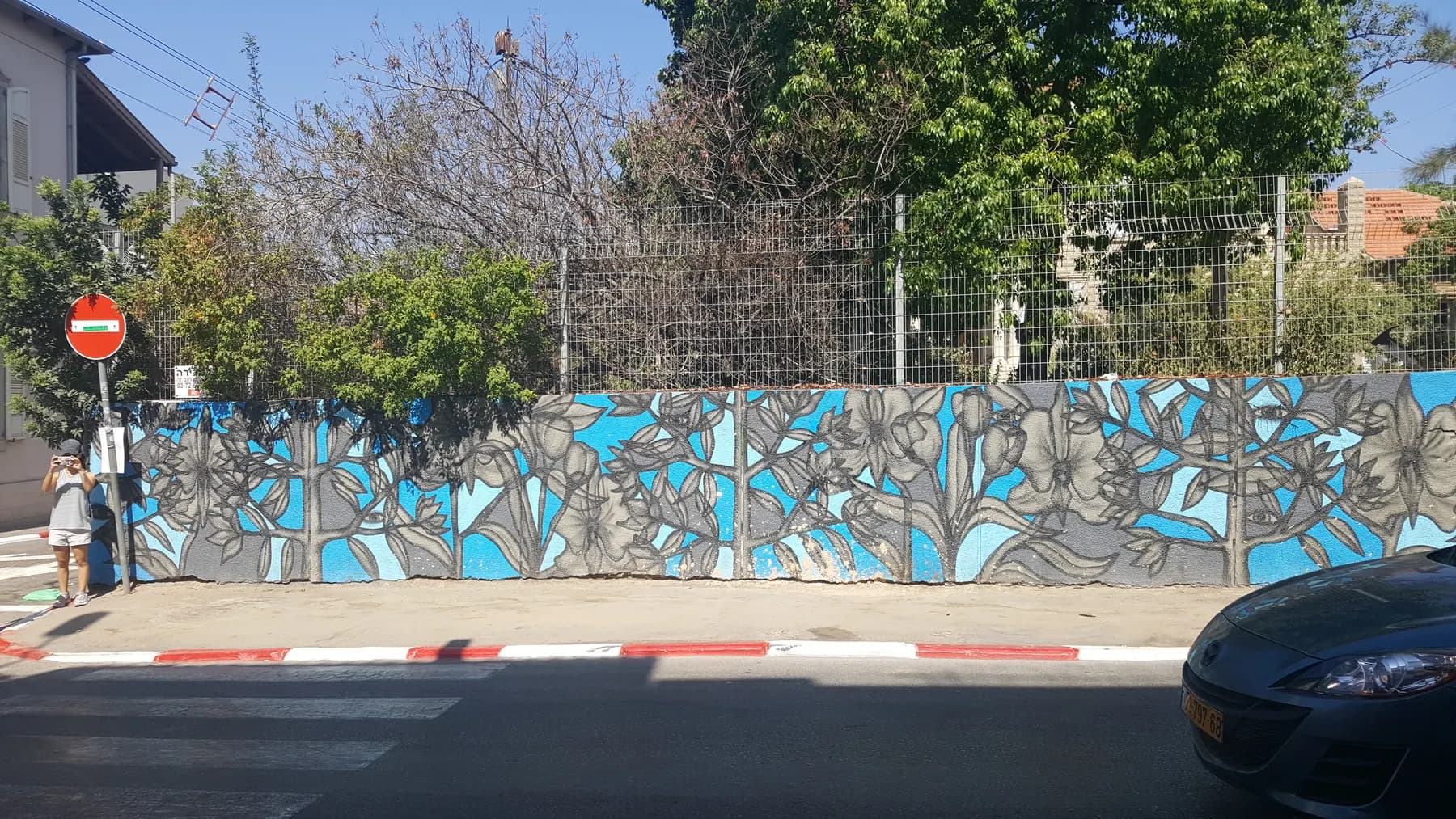
A 353-dunam grid laid out on an orchard in 1927 by Jews from Salonica, built with workshops on the ground floor and flats above, and still arranged that way.
Rakoon / CC0 · Wikimedia Commons
Market
Carmel Market
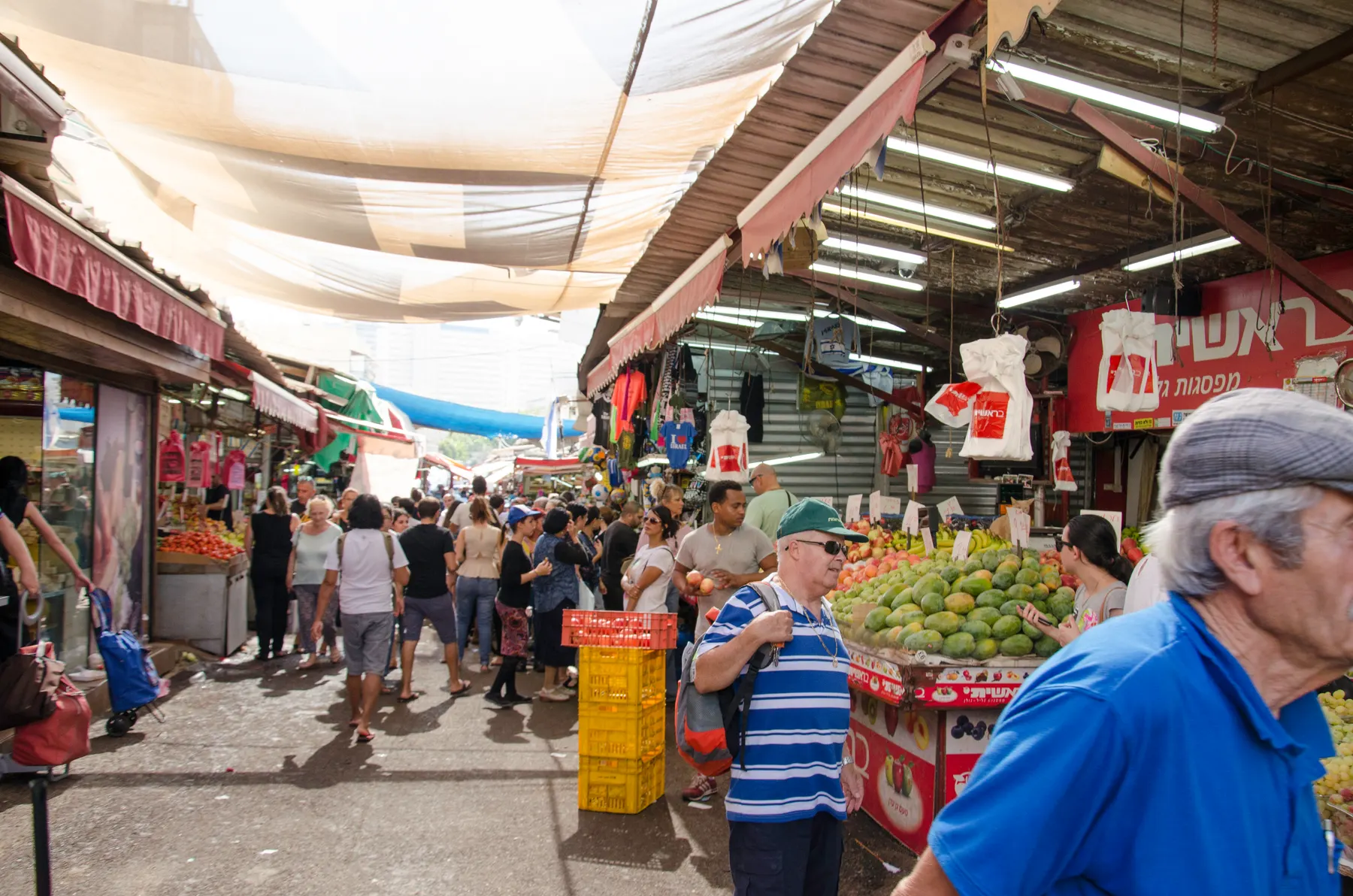
The market opened in 1920 on plots bought in Russia seven years earlier as a speculation, by investors who fled the revolution and arrived in Tel Aviv with nothing else left.
ענת פרנק גורלי / CC BY 2.5 · Wikimedia Commons
Beach
Tel Aviv Beaches and the Tayelet
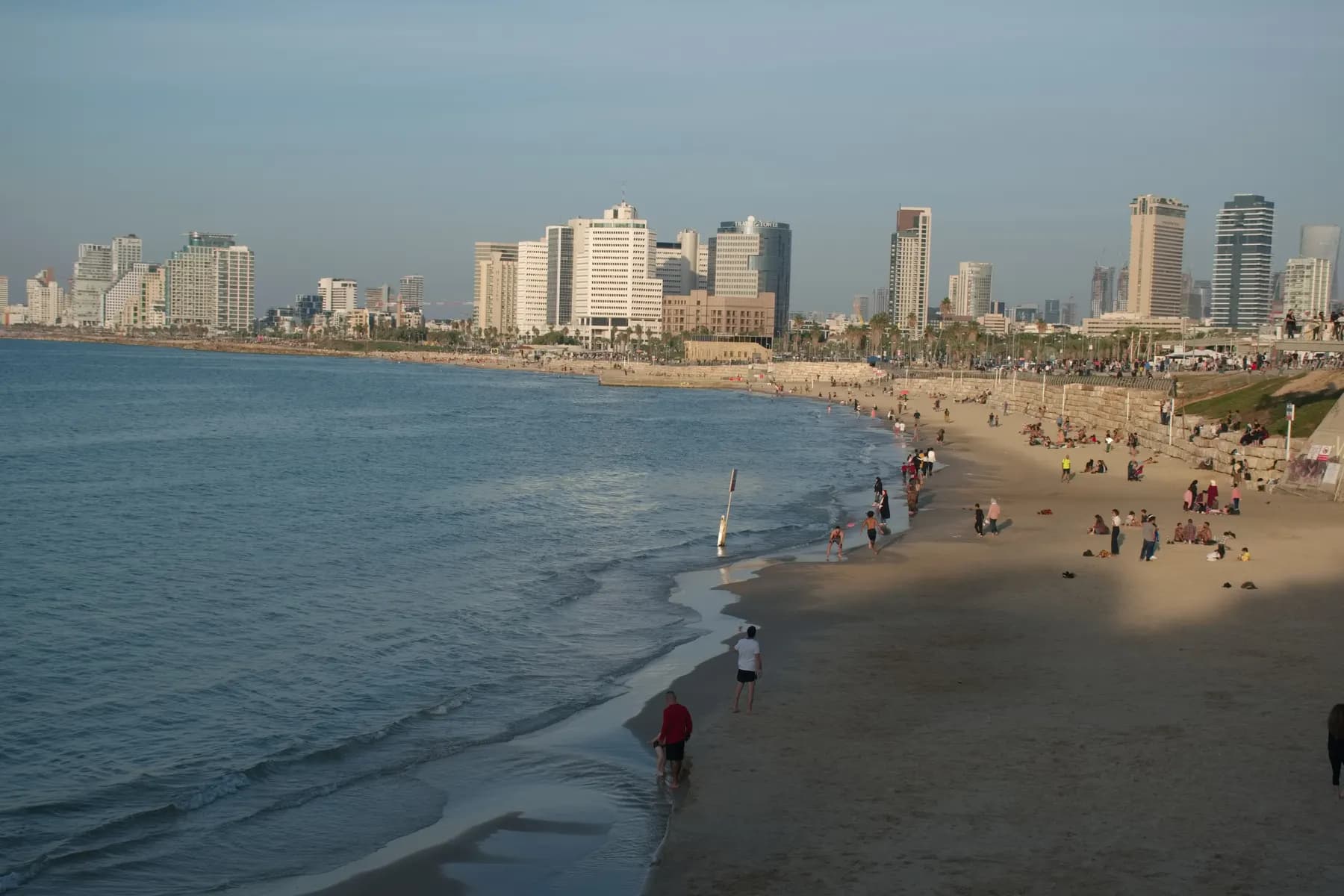
Thirteen municipal beaches on one continuous promenade, opened for the 2026 season on 25 March, with the lifeguard stations due to close for the year on 10 October.
Sources and further reading
Every link below was opened and checked when this page was written. Official statements are marked as such: they are the subject's own account, not an independent one.
- OfficialSuzanne Dellal Centre for Dance and Theatresuzannedellal.org.ilNeve Tzedek
The 1887 founding, the 22 years before Tel Aviv, the decline and the 1980s revival
- OfficialSuzanne Dellal Centre for Dance and Theatresuzannedellal.org.ilCentre History
The 1986 state of the compound, the three schools, the 1989 founding and the recent renovation
- OfficialSuzanne Dellal Centre for Dance and Theatresuzannedellal.org.ilGeneral Information
Box office hours, ticket and discount policy, parking and bus routes
- OfficialSuzanne Dellal Centre for Dance and Theatresuzannedellal.org.ilSummary
The Israel Prize in 2010, the performance and premiere counts, and the resident companies
- OfficialNahum Gutman Museum of Artgutmanmuseum.co.ilNahum Gutman Museum of Art: hours, prices and address
Current opening hours, admission in shekels and the Elifelet light rail station
- OfficialNahum Gutman Museum of Artgutmanmuseum.co.ilThe Museum
The 1887 Schulman house as one of the first 48, the Writers' House years, the 1992 reconstruction and the 2009 wing
- OfficialRokach House1887.co.il1887, the haunted house at Rokach House
The booked escape-room experience now run in the building, with its age, group size and access restrictions
- OfficialShlomo Aronson Architectss-aronson.co.ilSuzanne Delal Dance and Theater Center
The 2,800 square metre plaza, the closed road, the citrus planting and the design team
- OfficialBatsheva Dance Companybatsheva.co.ilAbout Us
The 1964 founding by Baroness Batsheva de Rothschild and the company's current artistic leadership
- ReferenceCouncil for Conservation of Heritage Sites in Israelshimur.orgRokach House, Neve Tzedek
Rokach House as the only house reconstructed exactly as it was, with its listed visiting hours
- ReferenceCouncil for Conservation of Heritage Sites in Israelshimur.orgNachum Gutman Museum
Dates the museum's founding to 1998 and confirms the 48-house nucleus
- ReferenceWikipediaen.wikipedia.orgNeve Tzedek
The 1883 dating, the founders, the name's biblical origin, the neighbouring quarters and the notable residents
- ReferenceWikipediaen.wikipedia.orgJaffa railway station
The 1890 groundbreaking, the 1891 and 1892 openings, the 1948 closure and the Elifelet station on the old alignment
- ReferenceWikipediaen.wikipedia.orgEden Cinema
The 1913 construction, the 22 August 1914 opening, the architect and builder, and the building's present condition
Neve Tzedek: common questions
Is Neve Tzedek free to visit?+
Yes. It is a public neighbourhood of ordinary streets, and the Suzanne Dellal plaza in the middle of it is open and unticketed. Admission charges apply only inside the individual venues: the Nahum Gutman Museum charges 35 NIS for an adult, and performances at the Suzanne Dellal Centre are priced per show. The HaTachana compound at the southern edge is also free to enter.
How long do I need in Neve Tzedek?+
About 90 minutes covers the streets at a walking pace. Half a day is the sensible allowance if the Nahum Gutman Museum and the old railway compound are included, and an evening on top of that if there is a performance at the Suzanne Dellal Centre. The quarter is roughly a dozen short streets, so it is easy to over-allocate time to it.
Is any of it actually original, or is it all rebuilt?+
The street plan, the plot sizes and the low scale are original, and many facades are restored rather than replaced. Behind them, a good deal is new. The Council for Conservation of Heritage Sites singles out Rokach House of 1887 as the only house in the neighbourhood reconstructed exactly as it was; the Gutman Museum reconstructed one wing and modernised the other; and at the Suzanne Dellal compound the Lewinsky Seminar building had collapsed before work began, so what stands there is rebuilt.
Was Neve Tzedek really the first Jewish neighbourhood outside Jaffa?+
That is the standard account and it comes from the operators and reference works alike, with 1887 as the usual date. The complication is that people were on the ground earlier: Wikipedia dates the Chelouche family's move to 1883, with about fifty families following. The Council for Conservation puts it as the first independent Jewish quarter on the coastal plain, which is the claim that survives either dating.
What is the Suzanne Dellal Centre and can I just walk in?+
It is Israel's principal dance venue, opened in 1989 in three restored nineteenth-century school buildings, home to the Batsheva Dance Company and Inbal Dance Theatre, and awarded the Israel Prize in 2010. The plaza and the compound are open to walk through for free. The halls are ticketed, with the box office open Sunday to Thursday from 9am to 9pm and Friday and holiday eves from 9am to 1pm.
Is the Nahum Gutman Museum open on Sunday?+
No. The museum is closed on Sundays. It opens Monday and Thursday from 10:00 to 19:00, Tuesday and Wednesday from 10:00 to 15:00, Friday from 10:00 to 14:00 and Saturday from 10:00 to 15:00, and it publishes separate holiday hours. Children under 18 go free and Tel Aviv-Yafo residents pay 20 NIS.
Can Rokach House be visited?+
It depends on the day, and this is the one thing in the quarter worth phoning about first. The Council for Conservation lists the house as a visitor centre open Sunday to Thursday from 10:00 to 16:00 and Friday and Saturday from 10:00 to 14:00, with guided and theatrical tours. The building's own website now promotes a booked escape-room game inside the house instead, for groups of up to eight and ages ten and over.
Is Neve Tzedek accessible with a wheelchair or a pushchair?+
The ground is flat, so there is no climb anywhere, but the surfaces are the problem: narrow pavements, stone and cobbled paving, high kerbs and cars parked tight against the buildings. The Gutman Museum states that it is accessible to people with disabilities. The escape room in Rokach House states that it is not suitable for people with mobility impairments because of its stairs.
How do I get there without a car?+
Take the Red Line light rail to Elifelet, which sits at the foot of the neighbourhood on part of the 1891 railway alignment and is the station the Gutman Museum gives as its own. Buses run to the Carmelit terminal, Eilat Street and Kaufman Street nearby. Neither the light rail nor scheduled buses run on Shabbat, so a Saturday visit means walking, cycling or a taxi.
Is it worth it if I only have one afternoon in south Tel Aviv?+
Yes, and it combines well rather than competing. Neve Tzedek, the HaTachana compound and the seafront sit in a line within a few minutes of each other, and Florentin and Carmel Market are a short walk east and north. What Neve Tzedek gives that the rest of the city does not is the pre-1909 scale: one and two storey houses on narrow lanes, which is what the whole coast looked like before Tel Aviv was drawn.