
Masada
Things to do in Masada
Every site here that is worth building time around, each one with a page of its own covering what it is, what survives, when it opens and what it costs.
Sites covered
11
each with its own page
Ticketed
11
0 free to walk into
Sourced figures
87
each with its year and source
Citations
59
opened and checked
Masada is not one attraction. It is 11 of them, and they do not reward the same amount of time or the same time of day. This page is the index: what each one is in a sentence, how long it takes, and what it costs, so that the choosing happens here and the reading happens on the page for whichever you pick.
Every site below has been checked against its operator's own published information. Where a site charges admission, the price on its page is the operator's published price with the year it was taken. Where it sits inside a larger park, its page says which ticket covers it.
6 sites
The ruins and excavations
Carole Raddato from FRANKFURT, Germany / CC BY-SA 2.0 · Wikimedia Commons
Archaeological site
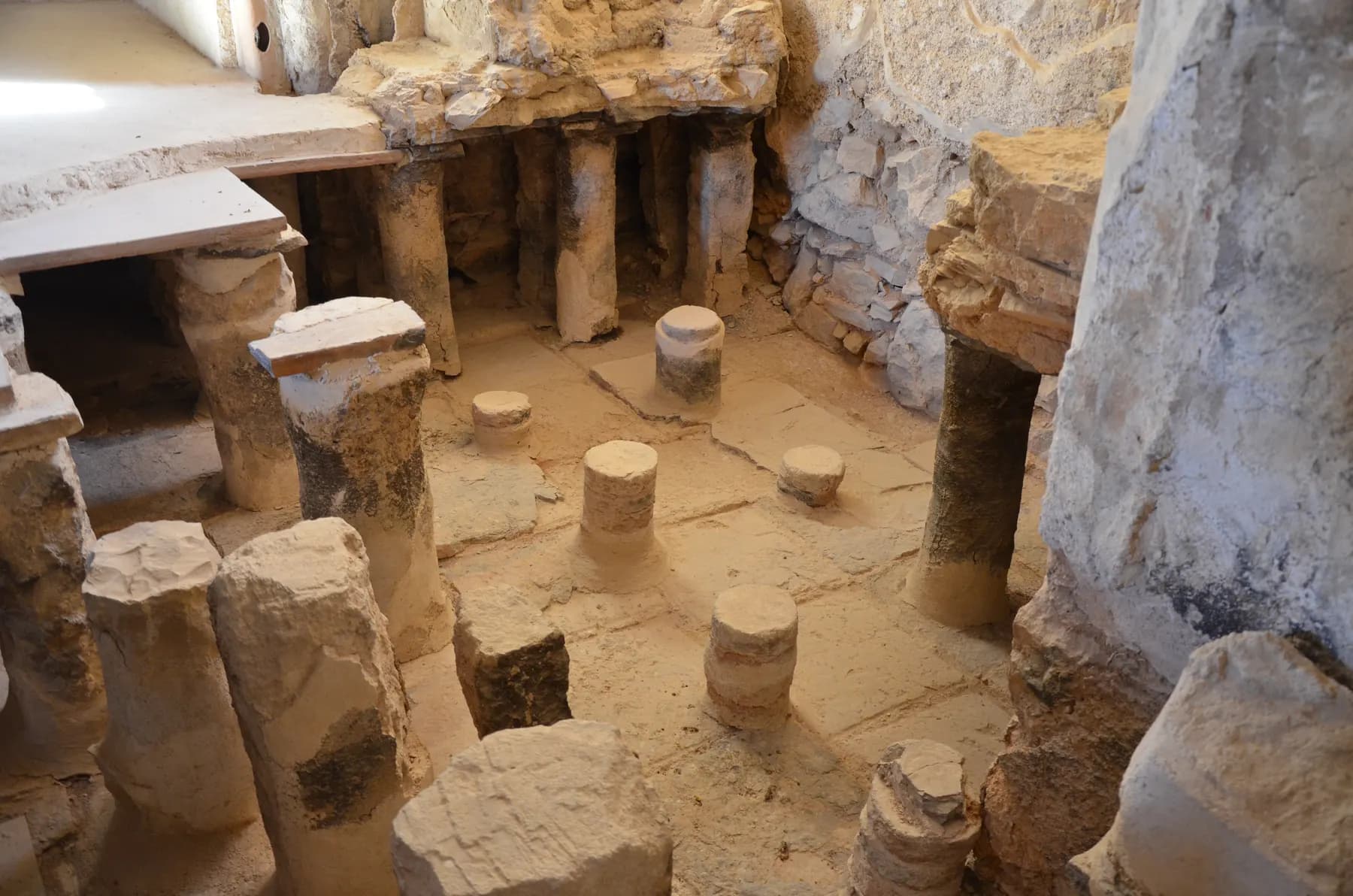
Herod's Large Bathhouse
The floor of the hot room still stands on roughly 200 small columns, most of them brick, with the furnace stokehole, the wall flues and the stepped cold pool all in place around it.
- Time:
- about 25 minutes for the bathhouse and its court, inside the two to three hours most visitors give the plateau
- Entry:
- ₪37
Godot13 / CC BY-SA 4.0 · Wikimedia Commons
Archaeological site
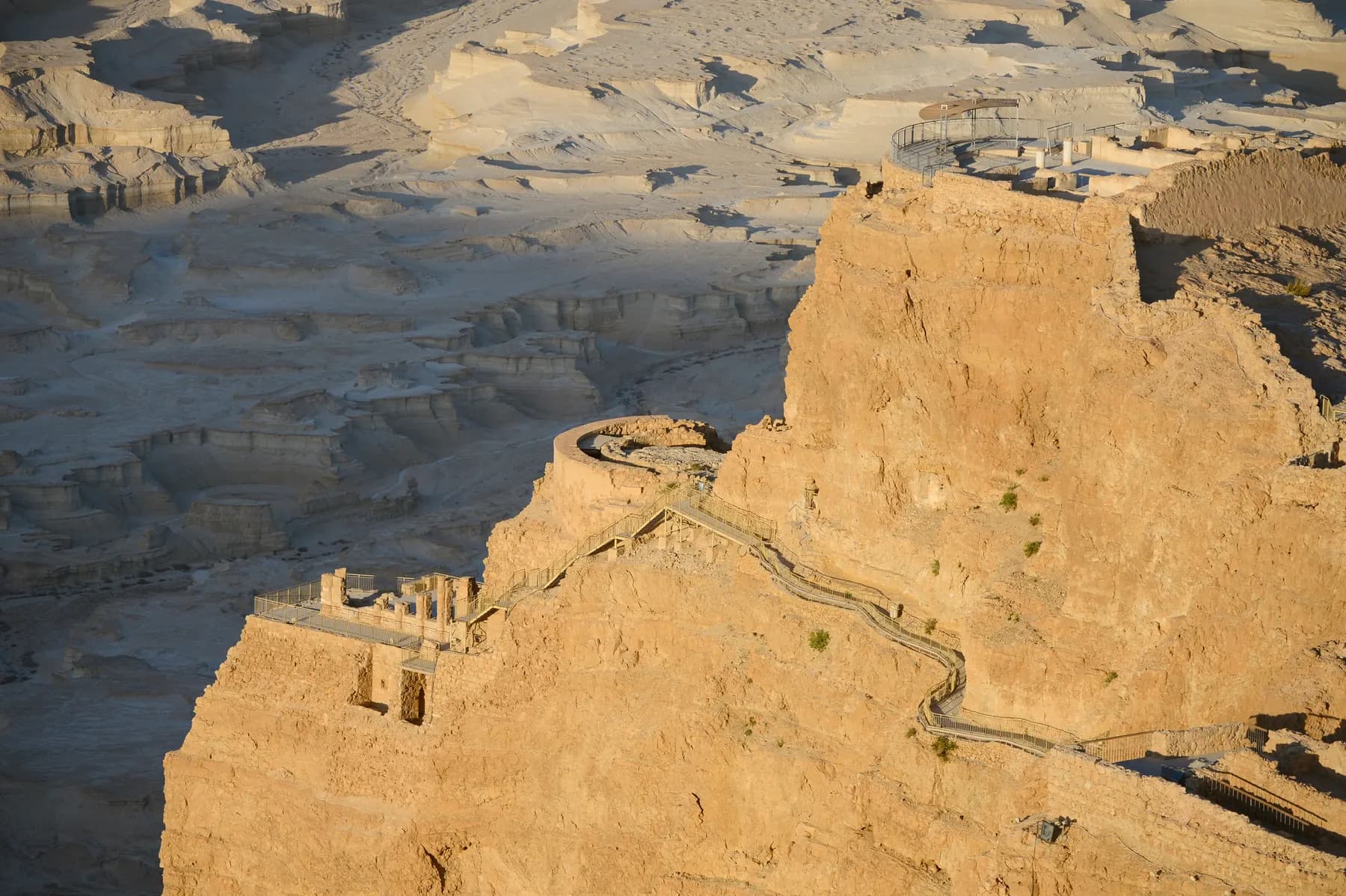
Herod's Northern Palace
Herod's architects hung a private house on three rock terraces at the northern tip of Masada, with about 30 metres of height between the top terrace and the bottom one and retaining walls holding the lower two onto the cliff.
- Time:
- about 45 minutes for the palace and its terraces, inside the two to three hours most visitors give the whole plateau
- Entry:
- ₪37
4.7 on Google, 125 ratings
Jan Helebrant / CC0 · Wikimedia Commons
Archaeological site
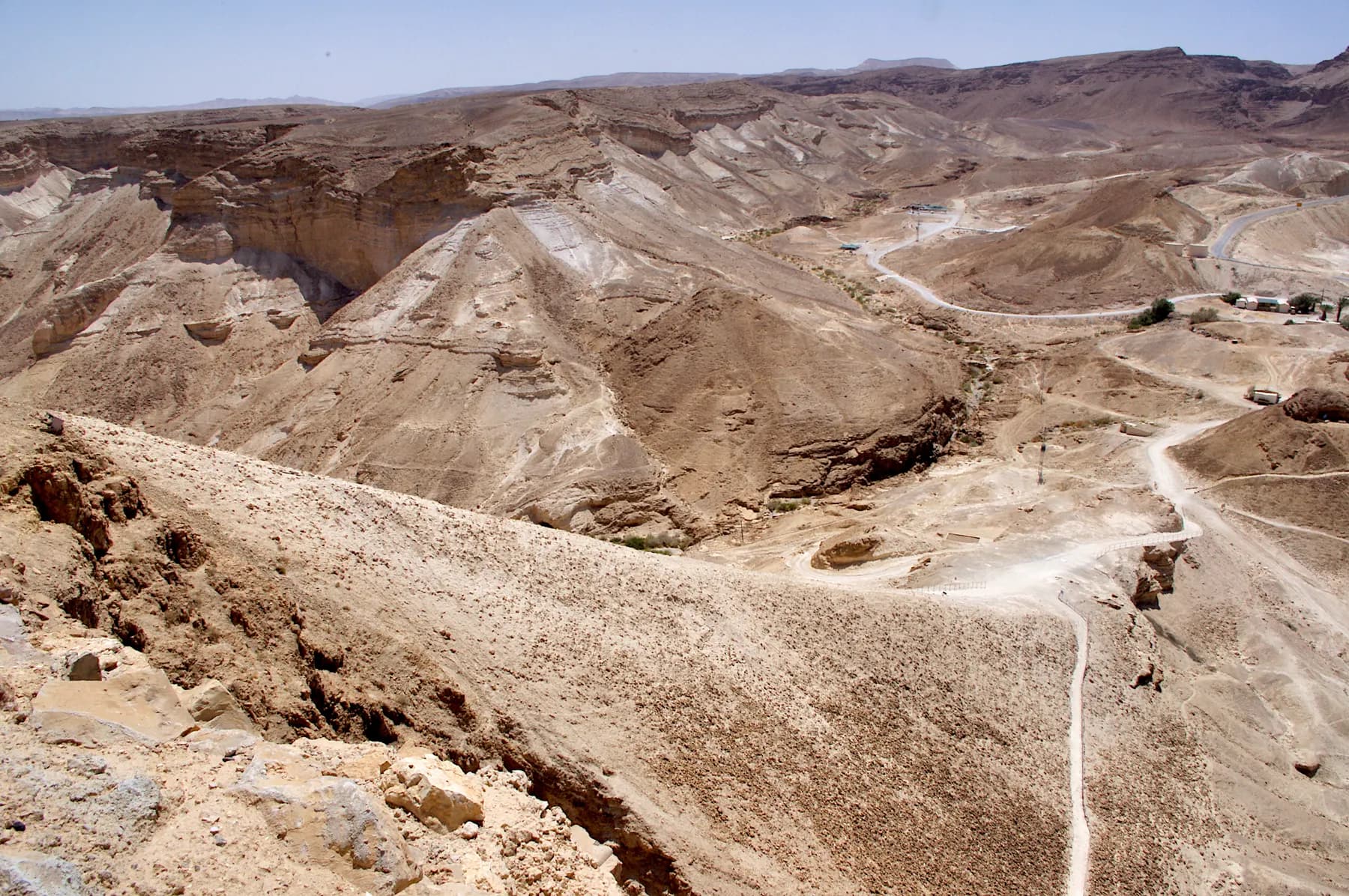
The Roman Assault Ramp
The bank the Tenth Legion raised against Masada's western cliff in the siege of 73 or 74 CE, whose foot the parks authority puts only about 60 metres below the summit, and which now carries the shortest footpath to the top.
- Time:
- about 30 minutes up and a little less down, per the parks authority, and about two to three hours for the climb, the plateau and the return
- Entry:
- ₪37
יוסי רון / CC BY 2.5 · Wikimedia Commons
Archaeological site
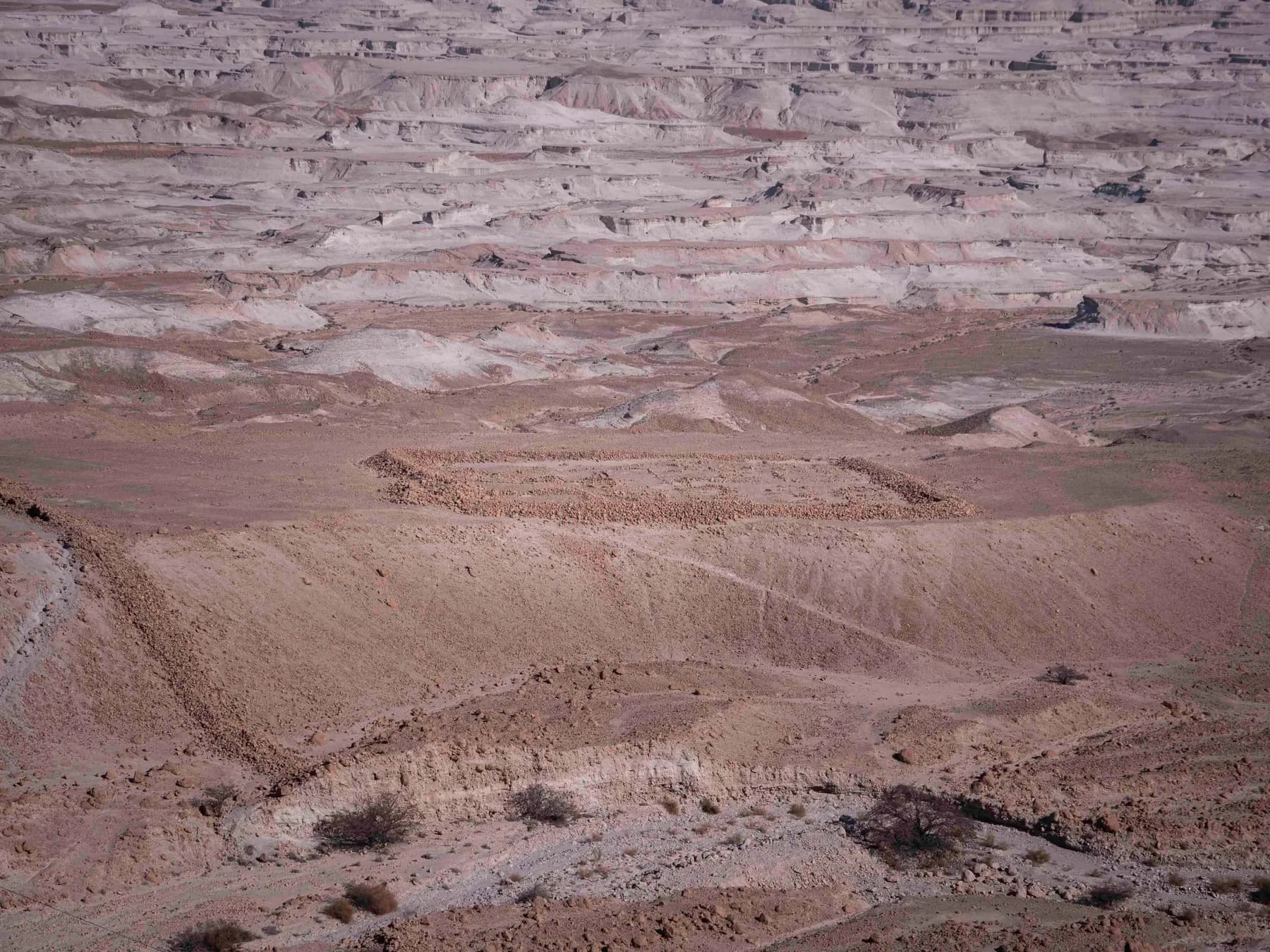
The Roman Siege Camps and Circumvallation Wall
Eight Roman camps and a stone wall that a 2024 survey measured at 4,290 metres still ring the foot of Masada, and almost none of it has ever been excavated.
- Time:
- about 30 minutes at the summit lookouts to work out the plan of the siege works, and about 90 minutes if the walk up the Roman ramp path from the western side is part of it
- Entry:
- ₪37
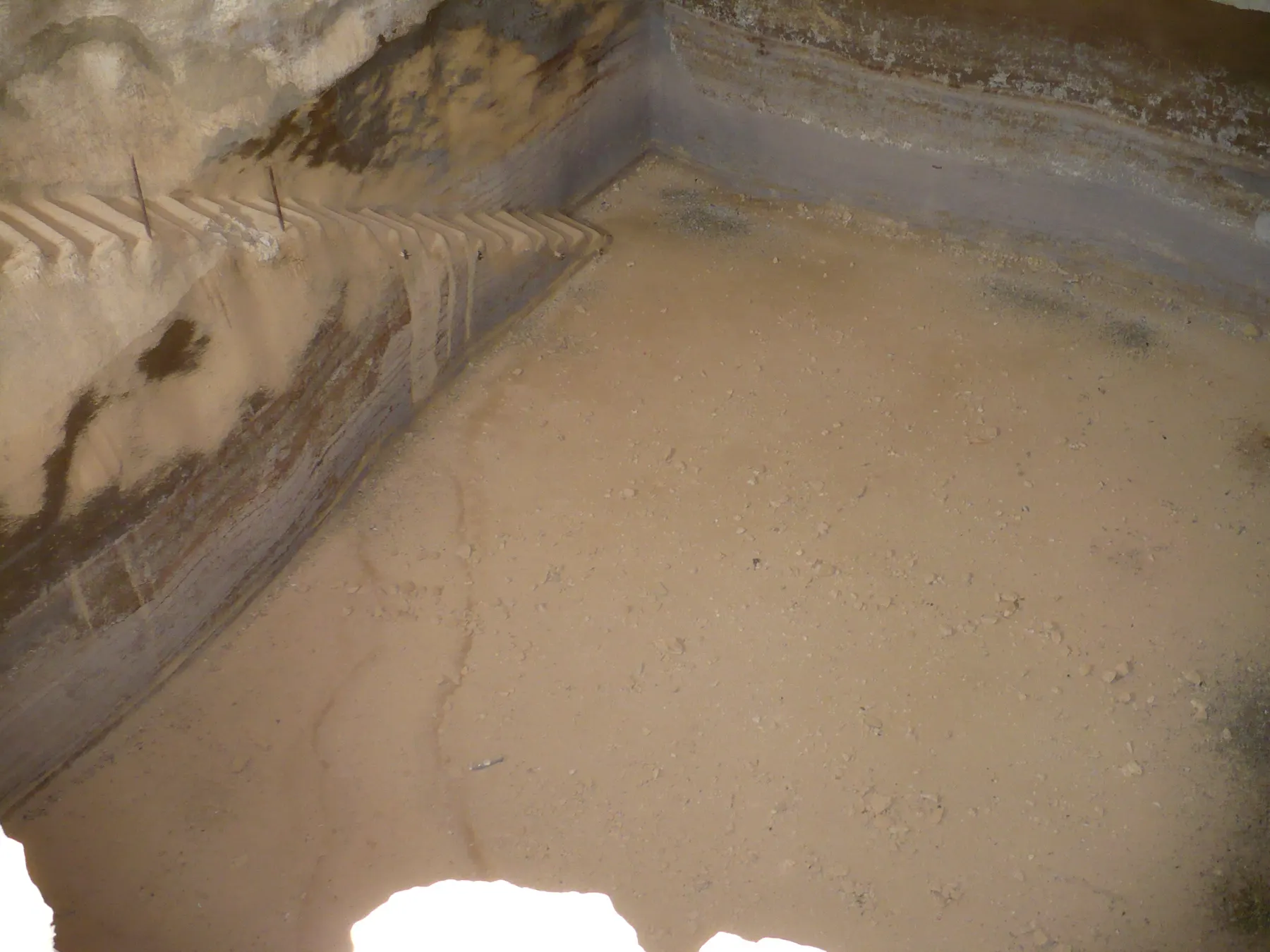
Tribun militum / CC BY-SA 4.0 · Wikimedia Commons
Archaeological site
The Water Cisterns and Water System
Dams built in the wadi beds diverted flash floods into plastered channels that filled twelve cisterns cut in two rows into the slope, and the parks authority puts their combined capacity at 40,000 cubic metres.
- Time:
- about 30 minutes for the cisterns trail there and back, per the parks authority, plus the plateau visit if you also want the southern cistern
- Entry:
- ₪37
Archaeological site
The Western Palace
The Israel Nature and Parks Authority puts this building at 3,700 square metres, which makes it the largest on the Masada plateau, and its four wings held Herod's reception rooms, his storerooms, his workshops and his administration.
- Time:
- about 30 minutes for the palace, inside a plateau visit of two to three hours
- Entry:
- No separate charge: it stands inside the park boundary and is covered by the park ticket
1 site
Churches, synagogues and holy places
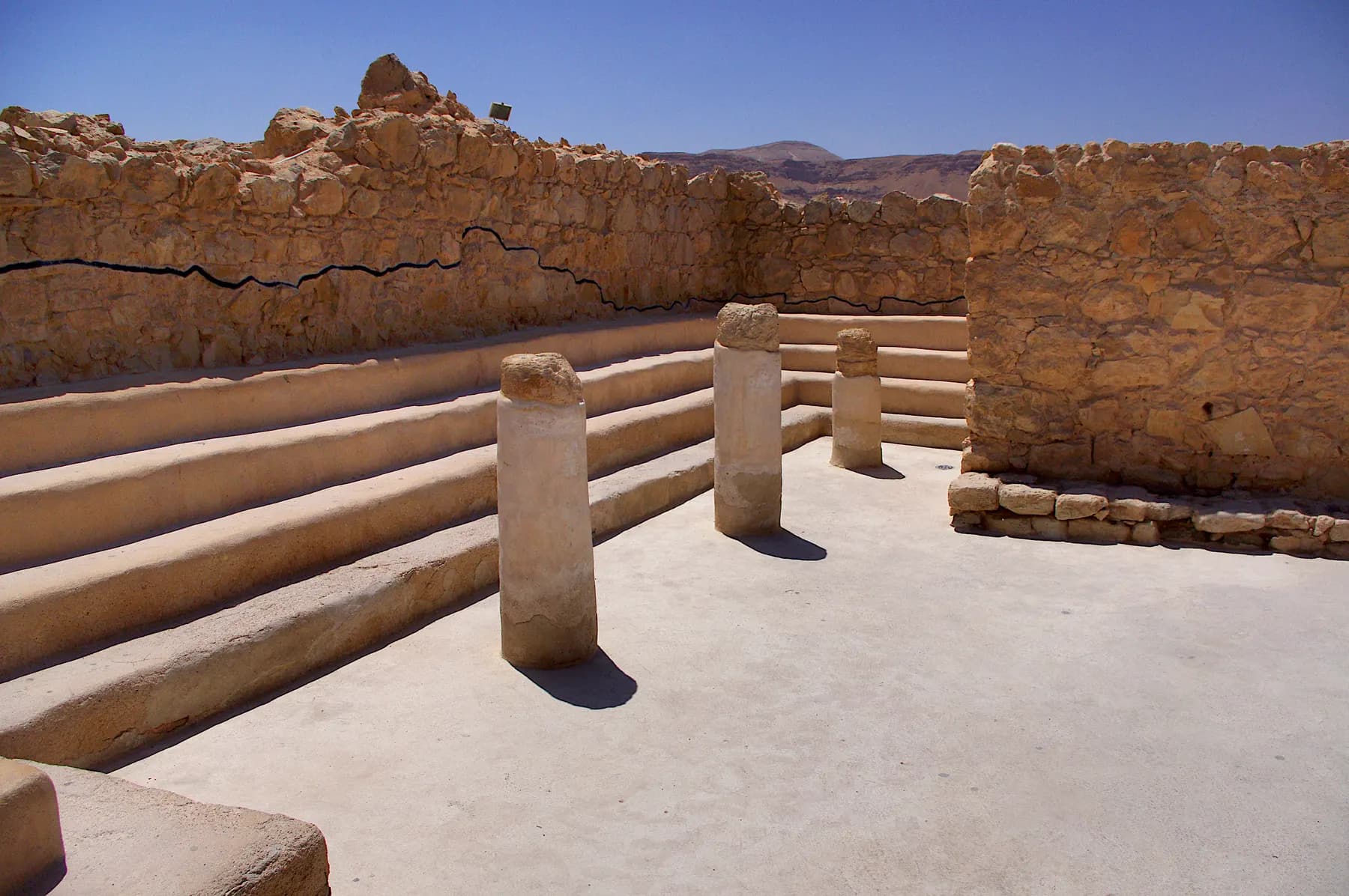
Jan Helebrant / CC0 · Wikimedia Commons
Religious site
The Masada Synagogue
A rectangular room set into the northwestern casemate wall, used as a stable in Herod's day on the parks authority's account and rebuilt during the revolt with four tiers of plastered benches and two pits in the back room floor that held parts of Deuteronomy and Ezekiel.
- Time:
- about 20 minutes for the synagogue and the casemate wall beside it, inside the two to three hours most visitors give the whole plateau
- Entry:
- No separate charge: it is inside the park boundary and covered by the park ticket
1 site
Museums and collections
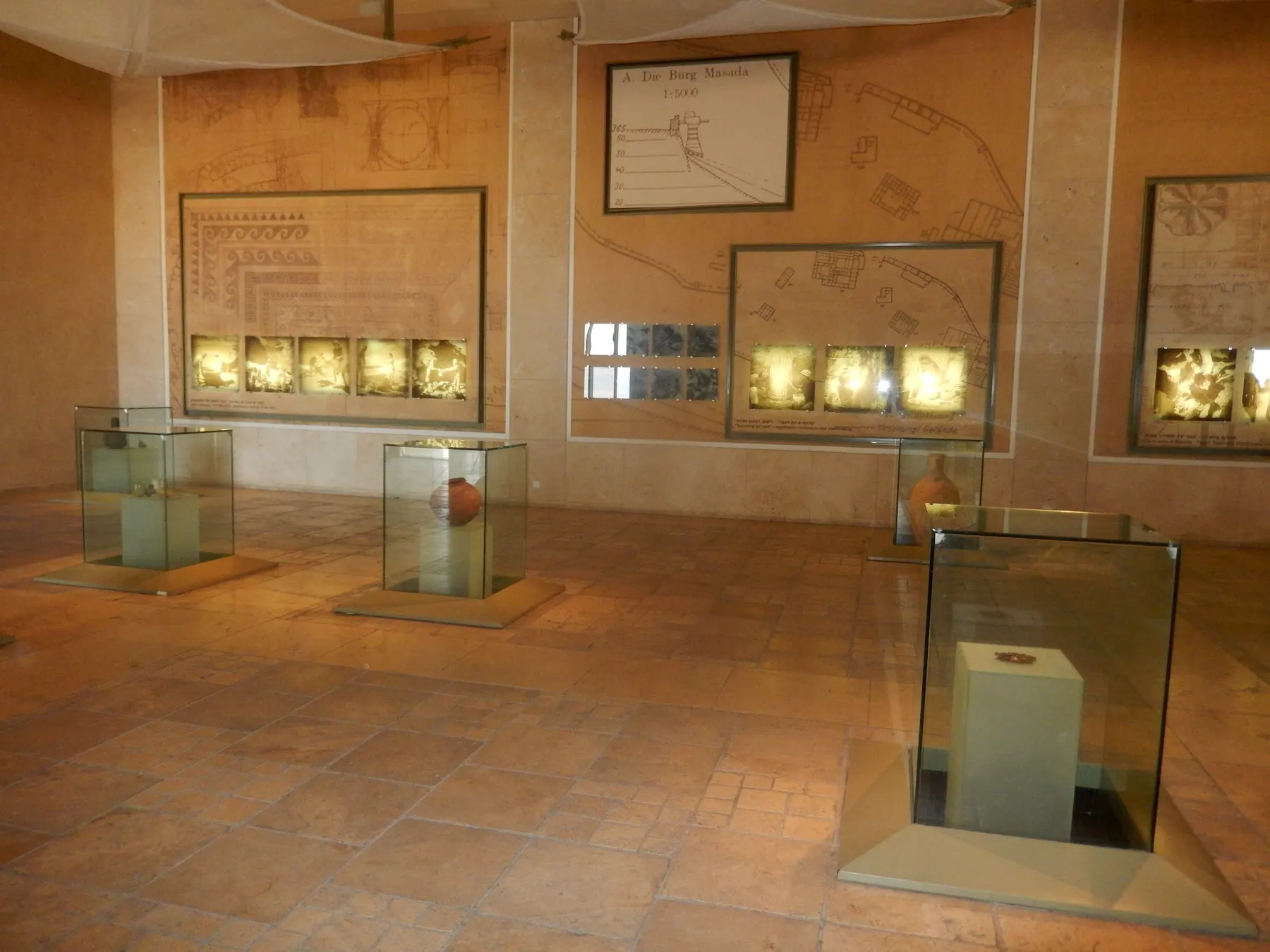
Armineaghayan / CC BY-SA 4.0 · Wikimedia Commons
Museum
The Masada Museum in Memory of Yigael Yadin
Nine rooms at the foot of the mountain, painted from dark grey to black so that the objects Yigael Yadin's expedition dug out of Masada between 1963 and 1965 are the only lit things in them.
- Time:
- The parks authority publishes no figure for the museum on its own. Its accessible itinerary allows two to four hours for the whole eastern visit, museum and plateau together, depending on how much detail the visitor wants.
- Entry:
- no additional charge, but a reservation is still required
3 sites
Things to do rather than see
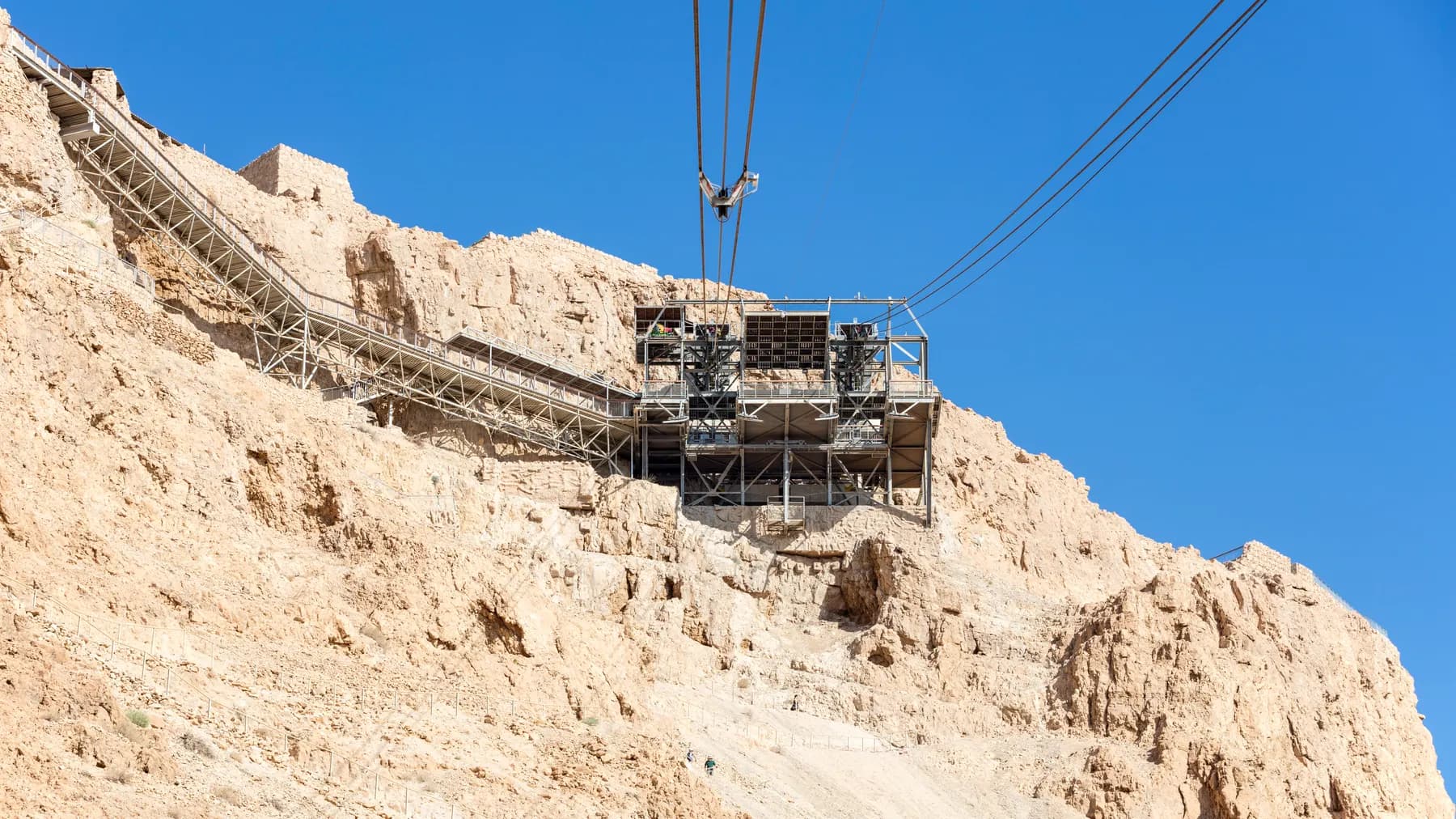
Godot13 / CC BY-SA 4.0 · Wikimedia Commons
Activity
The Masada Cable Car
Its lower station stands 257 metres below sea level and its upper station 33 metres above, which is why ropeway databases file it as the lowest aerial tramway in the world.
- Time:
- about 3 minutes in the cabin, and about 15 to 20 minutes each way once queueing and the walk through the stations are counted. Allow two to four hours for the plateau itself.
- Entry:
- ₪54, not including park entry
4.6 on Google, 119 ratings
Jan Helebrant / CC0 · Wikimedia Commons
Activity
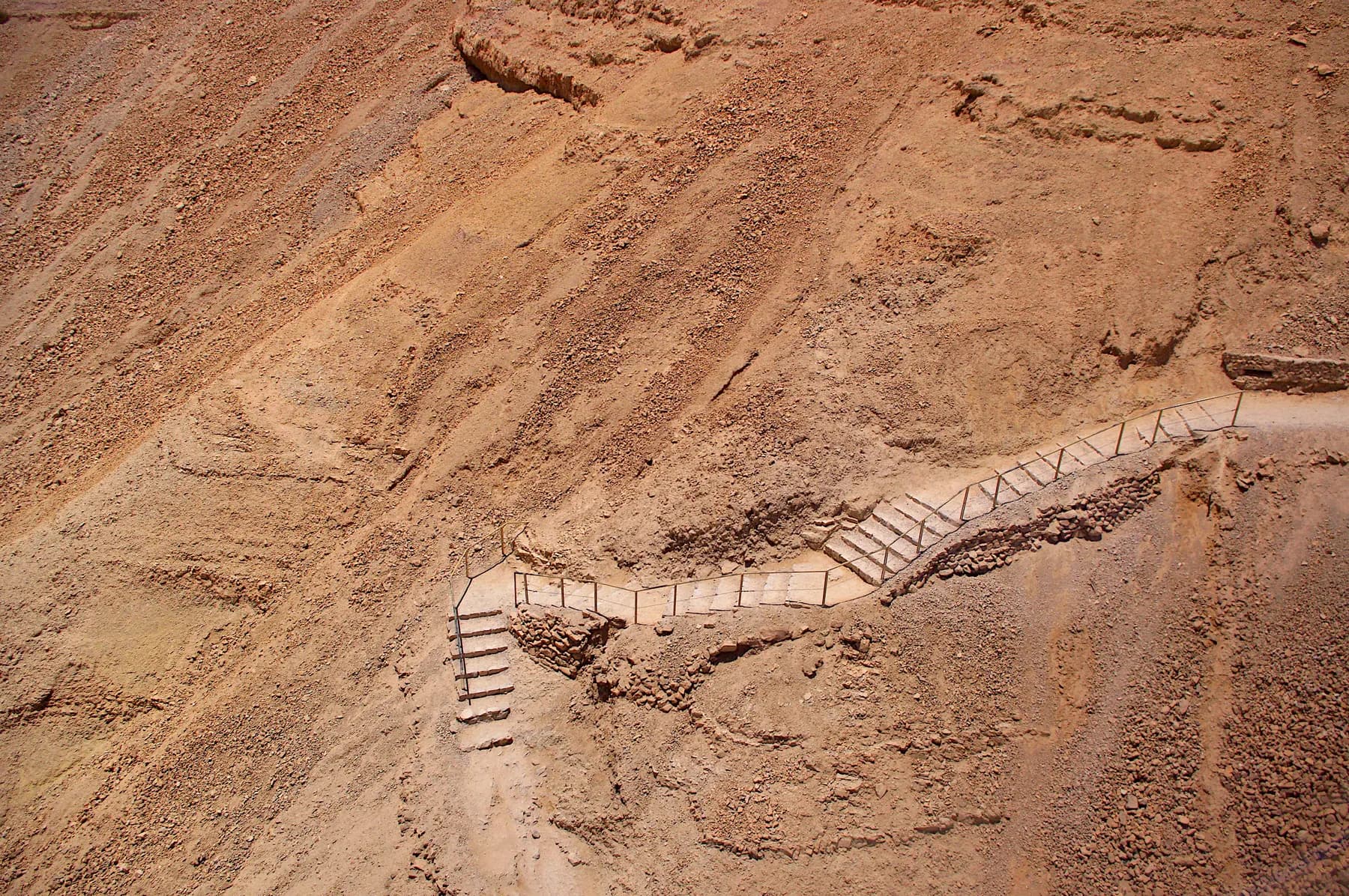
The Snake Path
The parks authority measures the climb at 350 metres over about two kilometres and roughly 900 steps, on a line up the east face that Josephus already knew as the serpent.
- Time:
- about an hour up, per the parks authority, and about half a day for the climb, the plateau and the way down
- Entry:
- ₪37
4.6 on Google, 52 ratings
Activity
Masada from Dusk to Dawn
A 45-minute video-mapping show projected straight onto the western cliff of Masada, between the Roman siege ramp and the Northern Palace, watched from an open-air theatre that can only be reached through Arad.
- Time:
- about 45 minutes for the show, and about two hours on site if the pre-show installations are included as the operator advises
- Entry:
- ₪45
Planning the rest of it
Seeing the sites is one part of a day here. These cover the others.
Sources and further reading
Every link below was opened and checked when this page was written. Official statements are marked as such: they are the subject's own account, not an independent one.
- OfficialIsrael Nature and Parks Authorityen.parks.org.ilThe Masada Cable Car
The operator's own page for this site, dated 30 December 2025: the 1971 line and its staircase, the 1998 replacement for growing visitor numbers, the lower station as part of the visitor centre, the suspension bridge, the 2020 electronic upgrade, the 80-passenger cabin limited to 65, the three-minute ride, wheelchair accessibility, the safety and inspection regime with the January 2021 annual test, and the opening hours with entry closing one hour before
- OfficialIsrael Nature and Parks Authorityparks.org.ilרכבל מצדה (The Masada cable car, Hebrew site)
The Hebrew original of the same page, which gives Yom Kippur eve as 08:00 to 13:00 where the English page gives 12:00, and states that the cable car ascends to the Snake Path Gate
- OfficialIsrael Nature and Parks Authorityen.parks.org.ilMasada National Park
Summer and winter hours, the note that the last cable car ascends one hour before closing, the entrance fee table headed 'Entrance fee No cable car' (₪37/₪21/₪31/₪18/₪19 and ₪20 for the museum), the accessible features at the eastern entrance and on the plateau, the Snake Path heat rules, the ban on dogs, and the distances from Ein Gedi and Ein Bokek
- OfficialIsrael Nature and Parks Authorityparks.org.ilגן לאומי מצדה (Masada National Park, Hebrew site)
The two cable car price tabs missing from the English site: one-way ₪32 adult and ₪16 child, return ₪54 and ₪32, both marked as not including the entrance fee
- OfficialIsrael Nature and Parks Authorityparks.org.ilמצדה מציגה: זריחה לכו-לם (Masada presents: sunrise for everyone)
The booked sunrise cable car: Friday departures at 05:30, 06:30 and 07:30, ₪91 adult, ₪53 child to 18 and ₪46 Israeli senior including entry and a return ride, boarding from Masada East only, the note that Snake Path climbers can buy a descent ticket on the spot, and the cancellation terms
- OfficialIsrael Nature and Parks Authorityparks.org.ilמצדה בגרסה נגישה (Masada, the accessible version)
The accessible route as the authority sets it out: covered parking, museum, shops, public areas, film halls and lifts at the eastern complex, the accessible cable car and bridge, the concrete paths on the plateau, and a suggested visit of two to four hours
- OfficialIsrael Nature and Parks Authorityen.parks.org.ilMasada National Park: The Plateau
The operator's own account of the bathhouse: built in Roman style with all its rooms well preserved, an entrance courtyard surrounded by columns serving as exercise space, the dressing room (apodyterium) decorated with frescoes and special floor tiles, the ritual immersion installation built there during the revolt, the opening leading to a stepped pool in the cold room (frigidarium), the opening east from the tepidarium into the hot room (caldarium) where the floor rests on small columns, hot air flowing through clay pipes in the walls, and the view of the whole plateau from the bathhouse roof. Also the small bathhouse on the Northern Palace's lower terrace with three skeletons and a woman's preserved braids
- OfficialIsrael Nature and Parks Authoritystatic-en.parks.org.ilMasada site brochure (English)
Written by Guy Stiebel with Ehud Netzer as content consultant. The excavation and conservation history: Yadin's Hebrew University excavations from 1963 to 1965 uncovering most of Masada's structures, many buildings conserved and reconstructed during the dig, the national park opening in 1966 after preparation for visitors, the first cable car in 1971, Netzer's 1989 season, the renewed Hebrew University excavations from 1995 under the Tourism Ministry development project, and conservation and restoration carried out by the parks authority
- OfficialIsrael Nature and Parks Authorityen.parks.org.ilWorld Heritage Sites
The operator's record of the 2001 UNESCO inscription, naming Herod's Northern Palace as an outstanding example of a luxurious villa from the Early Roman period and quoting UNESCO on the surrounding siege works as the finest and most complete Roman siege works to have survived, and noting the parks authority's conservation investment and accessibility work over recent decades
- OfficialIsrael Nature and Parks Authorityen.parks.org.ilMasada National Park: The Masada Museum in memory of Yigael Yadin
The parks authority's page for the museum at the eastern foot, which displays the archaeological finds discovered at the site by the Hebrew University of Jerusalem expedition headed by Yigael Yadin, is entered through the reservation system, and supplies recorded tours on personal headphones in seven languages
- OfficialIsrael Nature and Parks Authorityparks.org.ilמוזיאון מצדה על שם יגאל ידין תרומת קרן שוקי לוי (the same page in Hebrew)
The Hebrew original, which states the closing rule differently: entry to the museum closes half an hour before the listed hours. It also carries the gallery captions for the imported amphorae that held wine for King Herod, the remains of dried fruit from the excavations, the fresco transferred from the lower terrace of the Northern Palace, and the artisans laying the mosaic of the set
- OfficialIsrael Nature and Parks Authorityparks.org.ilפעילות שוטפת של תחזוקה ושימור במצדה (Routine maintenance and conservation at Masada)
Reported by Ruby Miel, head of the southern conservation team, on 31 August 2025: the periodic cleaning of the wall paintings in the Northern Palace, the bathhouse, the commander's quarters, building 8 and in the museum, which confirms that original frescoes are displayed and conserved inside the museum
- ReportingYnet, Shimon Iferganynet.co.ilאחרי 30 שנה יוחלף הרכבל במצדה (After 30 years the Masada cable car will be replaced)
Contemporary reporting from 12 March 2001: the new tramway already built and run in, Swiss specialists about to spend three weeks dismantling the old one, capacity of about 1,200 an hour in groups of 80 against 40 a cabin and 600 an hour before, and more than 10 million visitors to Masada up to that date
- ReferenceHebrew Wikipediahe.wikipedia.orgרכבל מצדה (Masada cable car)
The detailed history, footnoted throughout to the Israeli press of the period: the 1955 proposal, Egged's 1963 plan and its rejection, the October 1966 committee decision and the 20 four-person cabins, the failed tender, the Six Day War delay, Yadin's 1968 complaint, Arnold Kagan, construction from February 1970 by Brändle with the contractor Fogtsh and the engineer Georg Sashegy, the opening on 11 February 1971 with its 840 m line and four-lira fare, Warhaftig's Shabbat request, the 1973 capacity increase, the 1997 to 1998 Von Roll rebuild, and the current figures of 900 m, 290 m, 8 m per second, 1,200 an hour and stations at minus 257 m and plus 33 m
- ReferenceWikipediaen.wikipedia.orgMasada cableway
The English summary: Karl Brändle of Switzerland in 1971, the Von Roll replacement in 1998 with no support pillar so the hanger encloses both track ropes and the haul rope, cars every fifteen minutes, a line length of 0.9 km and a speed of 28.8 km/h, and the claim to be the lowest aerial tramway in the world. Its technical account rests on a single travel aggregator and attaches the 900 m and 290 m figures to the 1971 line
- ReferenceRemontées Mécaniquesremontees-mecaniques.netTPH80 Massada
A specialist ropeway survey of the tramway: described as the machine with the lowest bottom station in the world, built 1998 by Von Roll after 27 years of the Brändle line, bicable with a single haul rope, drive at the lower station and counterweight tension at the upper, cabins by Gangloff of Bern, the upper station cantilevered below the summit for visual reasons, and one old cabin preserved at the bottom station
- ReferenceICOMOS, for the UNESCO World Heritage Committeewhc.unesco.orgAdvisory Body Evaluation, Masada (Israel), No 1040
The 2001 evaluation of the nomination. Places the large bathhouse on a small hill just south of the Northern Palace, with the large courtyard entrance probably used as a palaestra, a changing room (apodyterium), a stepped pool and a large hot room (caldarium) with a barrel-vaulted roof, mosaic floors and wall paintings later replaced by opus sectile, and surviving heating furnaces and water installations. Also the three Herodian building phases (early c. 35 BCE, main mid-20s BCE, final c. 15 BCE), the storeroom complex of 18 rooms with 13 of them 26 m long, the two rows of cisterns at 4,000 and 3,000 cubic metres, the seven or eight ritual baths, the finding of no additions or reconstruction beyond an acceptable level of anastylosis, the early use of Portland cement since almost entirely replaced, and the management decision against further research excavation in the present generation
- ReferenceEncyclopaedia Judaica, entry by Guy D. Stiebel, via Encyclopedia.comencyclopedia.comMasada, in Encyclopaedia Judaica (2nd edition)
The fullest published description of the building: a large bathhouse of four rooms and a court south of the Northern Palace in traditional Roman style, the bathing sequence, mosaic floors in every room except the cold one later replaced by pink and black triangular tiles (opus sectile), frescoed walls, the Greek inscription praising the tyche on the dressing room wall, the immersion pool and bench of dismantled pillar drums built there during the revolt, the hot room's floor standing on about 200 tiny columns mostly made of bricks over a hypocaust, the furnace driving hot air through the floor and the double walls with their clay pipes, hot water running to a bathtub and quartz fountain in the room's niches, the charcoal graffito of Legio X Fretensis, the storerooms east and south of the bathhouse, the twelve cisterns totalling about 40,000 cubic metres, and the water gate near the bathhouse used to bring water up from the upper cisterns
- ReferenceJewish Virtual Library, from Israel Ministry of Foreign Affairs materialjewishvirtuallibrary.orgArchaeology in Israel: Masada Desert Fortress
An independent description of the same building: elaborately built and probably serving the guests and senior officials of Masada, consisting of a large courtyard surrounded by porticos and several rooms with mosaic or tiled floors and some frescoed walls, the hot room (caldarium) the largest, its suspended floor supported by rows of low pillars allowing hot air to be blown from the furnace outside, under the floor and through clay pipes along the walls. Also distinguishes it from the small private bathhouse on the lowest terrace of the Northern Palace
- ReferenceEncyclopaedia Britannicabritannica.comMasada
Herod's reign of 37 to 4 BCE, his two ornate palaces, heavy walls, defensive towers and aqueducts feeding cisterns holding nearly 750,000 litres, Yadin's excavation of 1963 to 1965 with thousands of volunteers, and the statement that the synagogue and ritual bath discovered on Masada are the earliest yet found in Palestine
- ReferenceJodi Magness, Princeton University Press (sample chapter)assets.press.princeton.eduMasada: From Jewish Revolt to Modern Myth, chapter 1
The excavator's account of the Roman material: twenty-two ostraca inscribed in Latin with the names of Roman soldiers, among them Aemilius, Fabius and Terentius, found in the vicinity of the large bathhouse in the northern palace complex, unusual in being written on the inside of the potsherd rather than the outside, alongside the Latin papyri from the site
- ReferencePenelope, University of Chicagopenelope.uchicago.eduThe Wars of the Jews, Book VII (Whiston translation)
Josephus on Herod's works at Masada: the furniture of the edifices, of the cloisters and of the baths being of great variety and very costly, the buildings supported by pillars of single stones, the walls and floors paved with stones of several colours, and the many great pits cut out of the rock as reservoirs for water
- ReferenceWikipediaen.wikipedia.orgMasada
That the Masada Museum in Memory of Yigael Yadin opened in 2007, displaying finds in a theatrical setting and funded by the Shuki Levy Foundation, citing the parks authority's former page and the Hebrew University Institute of Archaeology; also that the visitor centre and the museum stand at the base of the cable car, and that the eleven ostraca in front of the Northern Palace may or may not be the lots of Josephus's account
- ReferenceWikipediahe.wikipedia.orgמצדה (Masada, Hebrew Wikipedia)
The two excavation seasons dated precisely: October 1963 to April 1964, and December 1964 to March 1965
Things to do in Masada: common questions
How many days do you need in Masada?+
There are 11 sites here with a page of their own, and giving each the time its own page suggests comes to more than one day. Most visitors pick three or four and treat the rest as a return trip. The per-site pages each carry a "how long to give it" figure, which is the number to add up.
What does it cost to see Masada?+
11 of the 11 sites listed here charge admission and 0 do not. Every ticketed one has its published price on its own page, with the operator's page linked beside it. Israel's national parks also sell a multi-site pass, which pays for itself at roughly the third park.
Are these sites open on Shabbat and holidays?+
Most national parks and museums keep shortened Friday hours and either close on Saturday or open late. Each page carries the hours as the operator publishes them, and the operator's own page is linked, which is the only version that will be current on the day you go.
Where do the opening hours and prices on these pages come from?+
From the operator: the Israel Nature and Parks Authority, the museum, the municipality or the site's own management, whichever publishes them. Each figure links the page it was taken from. Ratings and review counts, where a page shows them, come from a dated snapshot of Google Maps and are labelled as such rather than presented as current.
Which one is worth it if you only see one thing in Masada?+
The Masada Cable Car is the one this guide would keep. Its lower station stands 257 metres below sea level and its upper station 33 metres above, which is why ropeway databases file it as the lowest aerial tramway in the world.
Is there anything worth seeing that is not on this list?+
Plenty, and that is deliberate. A site earns a page here when a visitor could reasonably spend half an hour there, when there is enough documented substance to write a real page about it, and when the operator publishes something a visitor can plan against. Things that fail those tests are covered on the Masada overview instead of padded out into pages of their own.