
The year ahead, December 2026 to October 2027
Jewish holidays
The next is Hanukkah, from sundown on Friday 4 December. Each holiday begins at sundown on the evening before the first day shown.
5787 is a leap year, with a second month of Adar, so from Purim on every holiday falls about three weeks later than it did in 2026.
Add every holiday to your calendar
Subscribe once and each one appears on the evening it begins, every year from 2024 to 2030.
Outside IsraelDownload the file
Two calendars, because Israel keeps one day of Shavuot and of Shemini Atzeret, and seven of Passover.
Coming up
- In 45 days
Hanukkahחנוכה
From sundown on Friday 4 December
Sat 5 Dec to Sat 12 Dec, eight nights, first candle Fri 4 Dec


These Hanukkah gifts are drawn from the same calendars as this site.
A city's Shabbat times for 2027, the moon on the night someone was born, a bar or bat mitzvah portion, the Kinneret on a day that matters. Each one is drawn for the person you choose, then printed and shipped free.
Order by November 18 for delivery in the US before the first candle, or by November 11 for Israel.
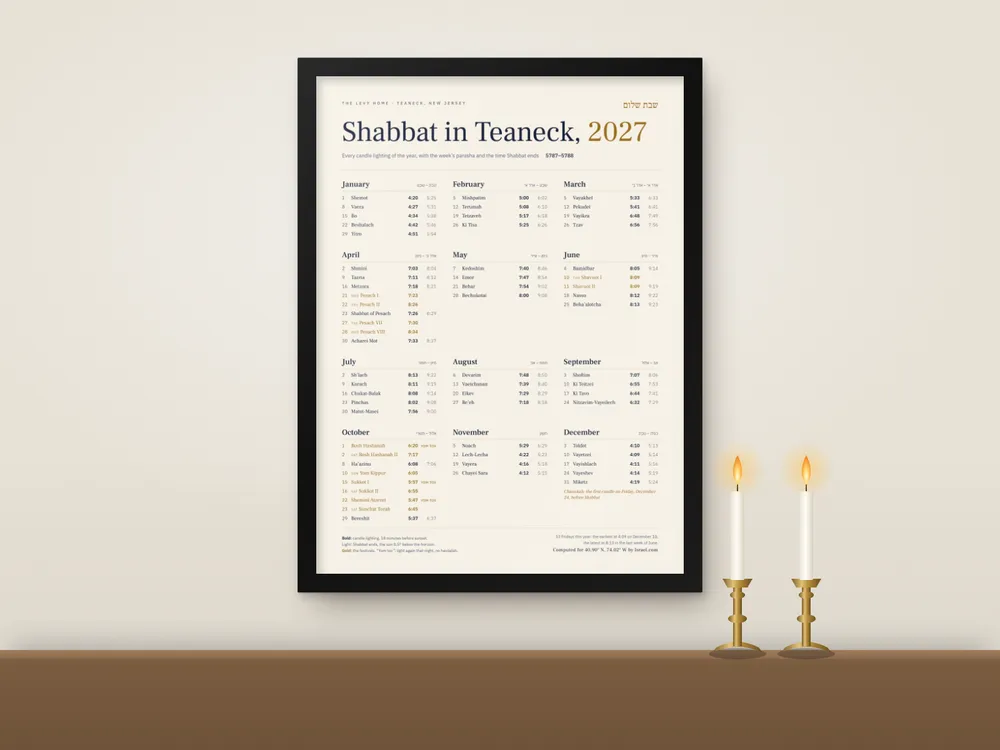
Shabbat in your city, 2027
From $36
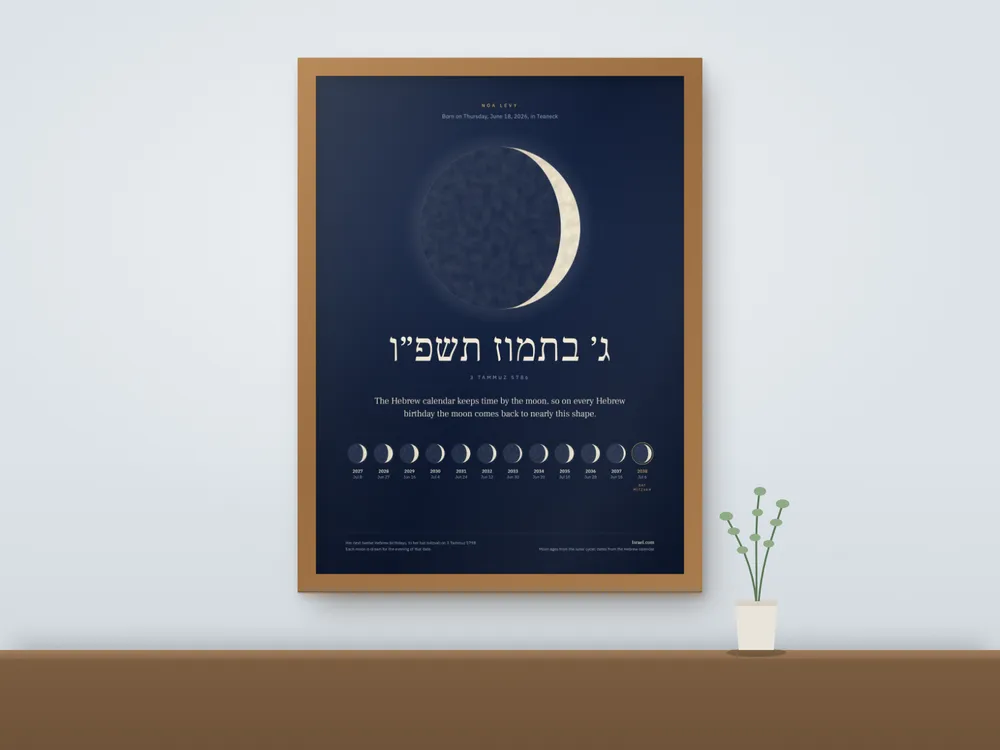
The moon they were born under
From $36
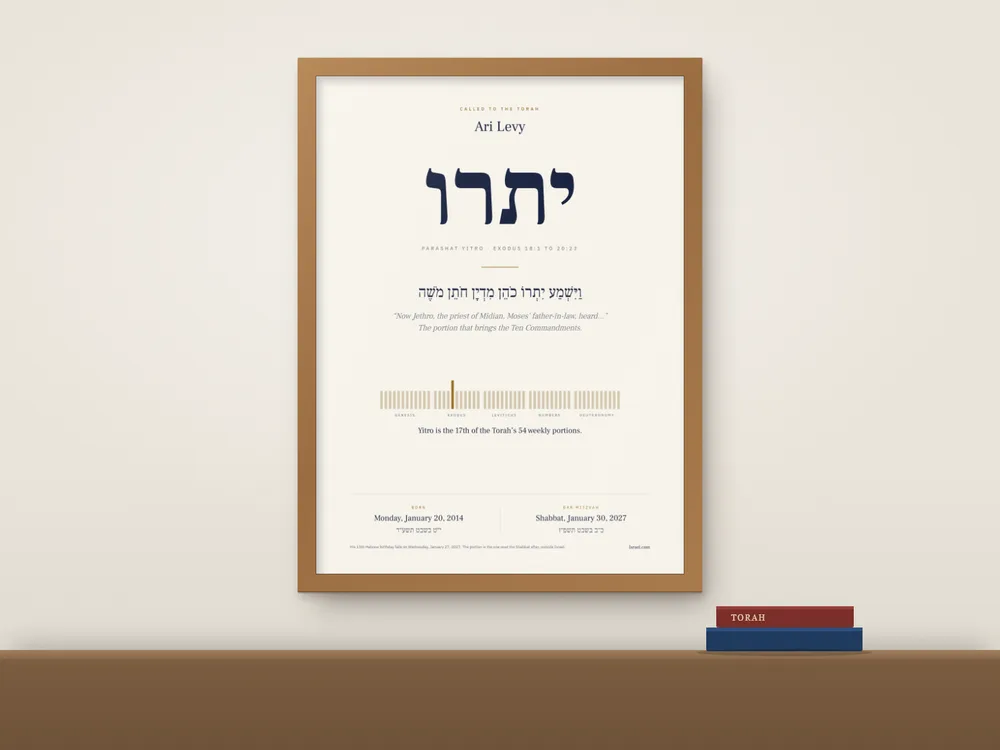
Their Torah portion
From $36
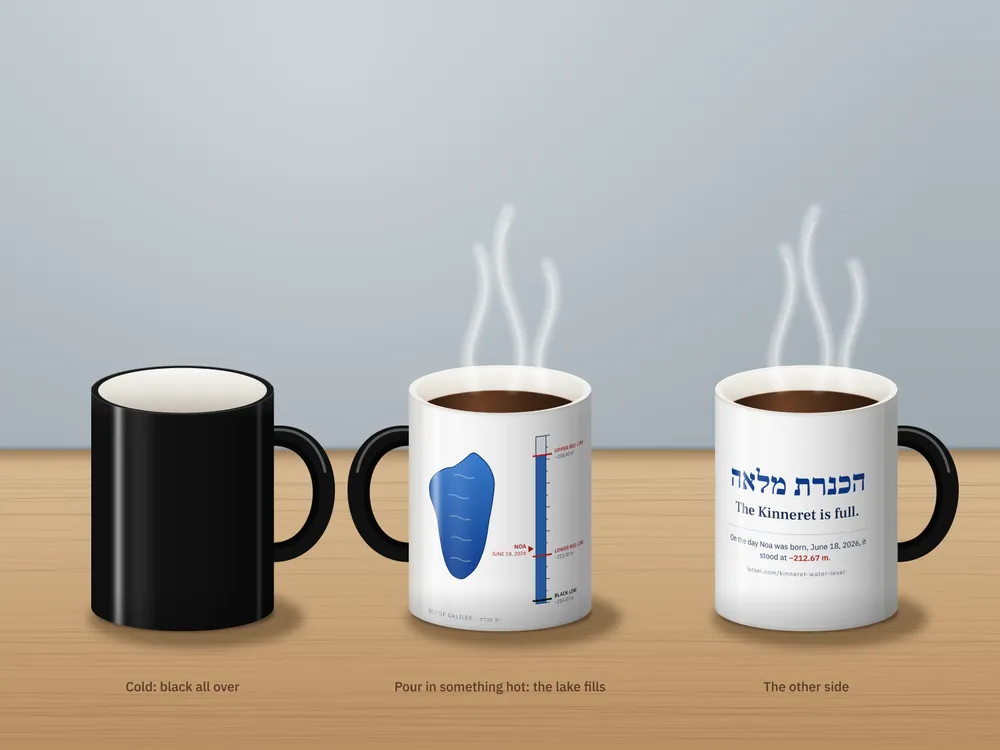
The Kinneret mug
From $29
The year at a glance
Each holiday on the first full day, the morning after it begins.
December 2026
January 2027
February 2027
No holidays
March 2027
April 2027
May 2027
June 2027
July 2027
No holidays
August 2027
September 2027
No holidays
October 2027
- Work stops on at least one day
- A working day
Every date, and the days work stops in Israel and outside it
Yom tov is kept like Shabbat, and work stops. Outside Israel most festivals keep two days of it where Israel keeps one.
| Holiday | Begins at sundown | Dates | Work stops in Israel | Outside Israel |
|---|---|---|---|---|
| Hanukkahחנוכה | Fri 4 Dec | Sat 5 Dec to Sat 12 Deceight nights, first candle Fri 4 Dec | ||
| 2027 | ||||
| Tu BiShvatט"ו בשבט | Fri 22 Jan | Sat 23 Jan | ||
| Purimפורים | Mon 22 Mar | Tue 23 Marand Wed 24 Mar in Jerusalem | ||
| Passoverפסח | Wed 21 Apr | Thu 22 Apr to Wed 28 Aprto Thu 29 Apr outside Israel | Work stops in Israel: Thu 22 and Wed 28 Apr | Outside Israel: Thu 22, Fri 23, Wed 28 and Thu 29 Apr |
| Yom HaShoahיום השואה | Mon 3 May | Tue 4 May | ||
| Yom HaZikaronיום הזיכרון | Mon 10 May | Tue 11 May | ||
| Yom HaAtzmautיום העצמאות | Tue 11 May | Wed 12 Maya public holiday in Israel | ||
| Lag BaOmerל"ג בעומר | Mon 24 May | Tue 25 May | ||
| Shavuotשבועות | Thu 10 Jun | Fri 11 Junand Sat 12 Jun outside Israel | Work stops in Israel: Fri 11 Jun | Outside Israel: Fri 11 and Sat 12 Jun |
| Tisha B'Avתשעה באב | Wed 11 Aug | Thu 12 Aug | ||
| Tu B'Avט"ו באב | Tue 17 Aug | Wed 18 Aug | ||
| Rosh Hashanahראש השנה | Fri 1 Oct | Sat 2 and Sun 3 Oct | Work stops in Israel: Sat 2 and Sun 3 Oct | Outside Israel: Sat 2 and Sun 3 Oct |
| Yom Kippurיום כיפור | Sun 10 Oct | Mon 11 Oct | Work stops in Israel: Mon 11 Oct | Outside Israel: Mon 11 Oct |
| Sukkotסוכות | Fri 15 Oct | Sat 16 Oct to Fri 22 Oct | Work stops in Israel: Sat 16 Oct | Outside Israel: Sat 16 and Sun 17 Oct |
| Shemini Atzeret and Simchat Torahשמיני עצרת ושמחת תורה | Fri 22 Oct | Sat 23 Octand Sun 24 Oct outside Israel | Work stops in Israel: Sat 23 Oct | Outside Israel: Sat 23 and Sun 24 Oct |
Every holiday, in the order of the Hebrew year
Each guide has the customs, what happens in Israel, and the dates in every year from 2024 to 2030.
Rosh Hashanahראש השנה
The Jewish New Year, the start of a new Hebrew year. Shofar blasts, apples and honey, two days of prayer and festive meals.
Yom Kippurיום כיפור
The Day of Atonement, the holiest day of the Jewish year. A 25-hour fast from sundown to nightfall.
Sukkotסוכות
The festival of booths. A week of meals in the sukkah with the four species. The first two days are yom tov in the diaspora.
Shemini Atzeret and Simchat Torahשמיני עצרת ושמחת תורה
The closing festival of Sukkot, followed by Simchat Torah: finishing and restarting the Torah reading with dancing. One combined day in Israel, two in the diaspora.
Hanukkahחנוכה
The festival of lights: eight nights of candle lighting marking the rededication of the Temple. Latkes, sufganiyot and dreidels.
Tu BiShvatט"ו בשבט
The new year of the trees. Tree planting in Israel and eating the fruits of the land.
Purimפורים
Celebrates the rescue of the Jews of Persia as told in the Book of Esther. Megillah readings, costumes, mishloach manot and festive meals.
Passoverפסח
The festival of freedom, marking the Exodus from Egypt. Seder nights, matzah, and no chametz for eight days (seven in Israel).
Yom HaShoahיום השואה
Holocaust Remembrance Day. In Israel a two-minute siren brings the country to a standstill.
Yom HaZikaronיום הזיכרון
Israel's Memorial Day for fallen soldiers and victims of terror, the day before Independence Day.
Yom HaAtzmautיום העצמאות
Israel's Independence Day, marking the declaration of the state in 1948.
Lag BaOmerל"ג בעומר
The 33rd day of the Omer count. Bonfires, weddings and celebrations at Mount Meron.
Shavuotשבועות
The festival of receiving the Torah at Sinai. All-night learning and dairy foods. Two days in the diaspora, one in Israel.
Tisha B'Avתשעה באב
Fast day mourning the destruction of both Temples in Jerusalem. If the 9th of Av falls on Shabbat, the fast is observed on Sunday.
Tu B'Avט"ו באב
A minor festival of love and new beginnings, often called the Jewish Valentine's Day.


A calendar counted by the moon
Each Hebrew month begins near the new moon and runs 29 or 30 days, which puts twelve of them at about 354 days: eleven short of the civil year. Seven years in every nineteen add a thirteenth month so the festivals stay in their seasons.
That is why a holiday can fall in early September one year and in October the next, and why Purim moves to Adar II in a leap year. Every date on this page is computed from the calendar itself, so it holds for any year, not just the ones people usually publish.

Four kinds of day, 15 dates
2026 holds 15 dated holidays: 7 major festivals, 4 minor ones, 3 modern Israeli days and 1 public fast day.
6 of them include yom tov, when traditional observance prohibits work. On Passover and Sukkot only the days at each end are restricted: the days between are chol hamoed, when most work is permitted. Hanukkah, Purim and the modern Israeli days do not restrict work at all.

The next holiday, every Friday
The Israel.com Friday email names the next Jewish holiday and the day it begins, with the news and Shabbat times. Free.
One list, unsubscribe in a click. See our privacy policy.
Frequently asked questions
Why do Jewish holidays fall on different dates every year?+
Jewish holidays follow the Hebrew calendar, which is lunisolar: months track the moon while leap months keep holidays in their seasons. Against the Gregorian calendar, dates shift within a window of about a month.
When do Jewish holidays start, evening or morning?+
Every Jewish holiday begins at sundown on the evening before its first calendar day and ends at nightfall on its last day.
Which Jewish holidays restrict work?+
The yom tov days, when traditional observance prohibits work, are: both days of Rosh Hashanah; Yom Kippur; the first two and last two days of Passover; the first two days of Sukkot; Shemini Atzeret and Simchat Torah; and both days of Shavuot. In Israel each of those pairs is a single day. The days in between on Passover and Sukkot are chol hamoed, when most work is permitted, and that includes Hoshana Rabbah, the last day of Sukkot itself. Hanukkah, Purim and the modern Israeli holidays do not restrict work.
What is the difference between Israeli and diaspora observance?+
Outside Israel most yom tov days are doubled: Passover opens with two seder nights, and Shavuot and Shemini Atzeret run two days. In Israel they are single days. The table above gives the yom tov days for both.
Israel.com is free to use, with no paywall and no sign-up, and its readers keep it that way. Support Israel.com