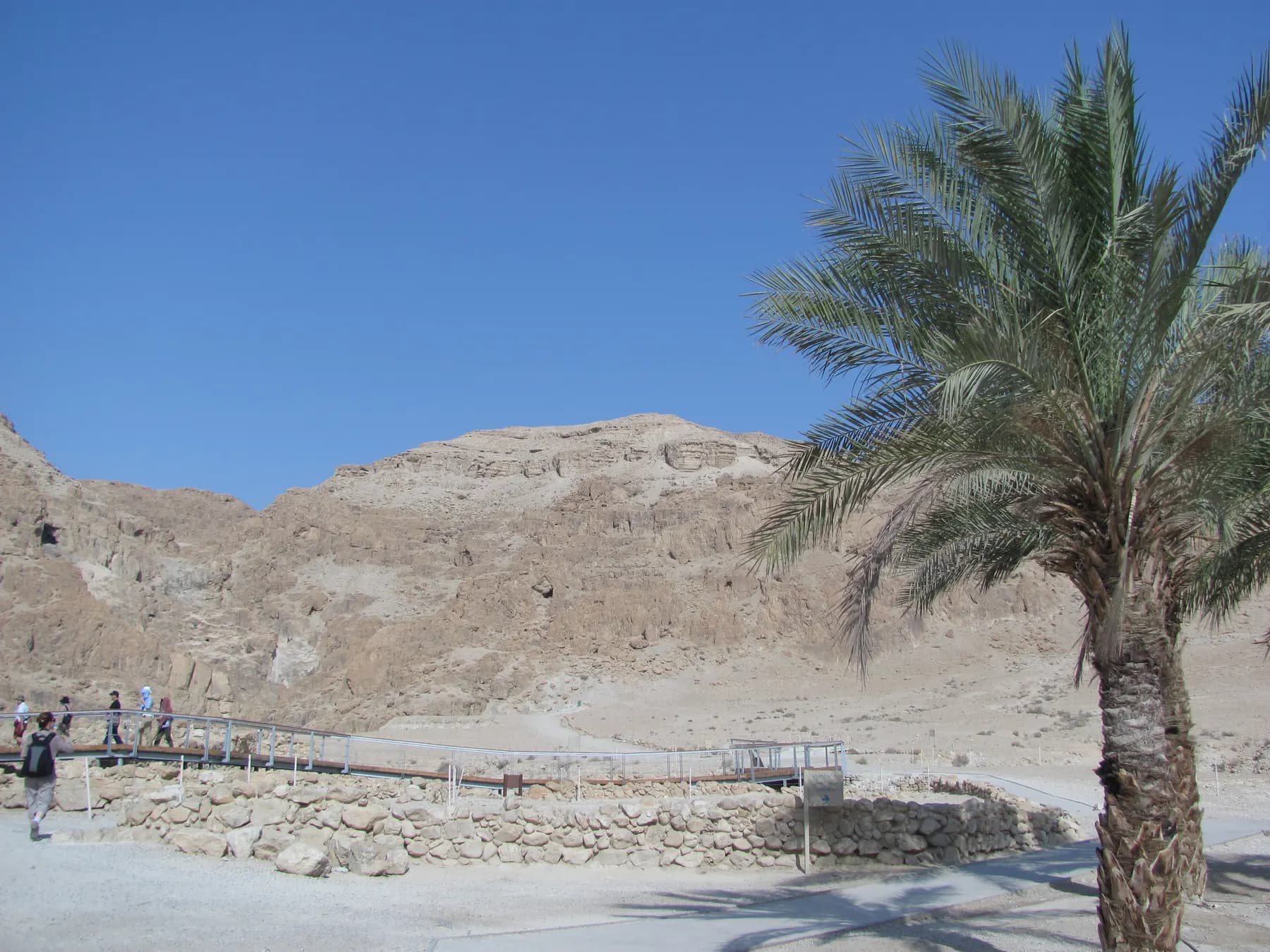
Archaeological site · The Dead Sea
Qumran National Park
Eleven caves here gave up the Dead Sea Scrolls between 1947 and 1956, five of them found by Bedouin and six by archaeologists, and what the settlement beside them actually was is still argued over.
MotherForker / CC BY-SA 3.0 · Wikimedia Commons
Scrolls found
1947 to 1956
in eleven caves, five located by Bedouin and six by archaeologists, per the Israel Antiquities Authority
Texts represented
over 900
the IAA's figure for the Qumran caves; Britannica gives 800 to 900 original manuscripts
Graves in the cemetery
about 1,100
east of the settlement, mostly men, on the parks authority's Hebrew page
Adult admission
₪31
Israel Nature and Parks Authority price list, read in 2026
In short
- How long to give it
- about 90 minutes, of which ten are the film and roughly an hour the walking circuit
- Summer, Sunday to Thursday and Saturday
- 08:00 to 17:00
- Adult
- ₪31
גן לאומי קומראן
Qumran National Park is the excavated shell of a small settlement on a marl shelf above the north-western shore of the Dead Sea, with the caves around it in which the Dead Sea Scrolls were found. The Israel Nature and Parks Authority runs it: a car park off Route 90 beside Kibbutz Kalya, a ten-minute film, a small museum, then a signed circuit through waist-high stone walls with lookouts over the cliff and the terrace. Nothing found here is kept here.
The scrolls came out of eleven caves between 1947 and 1956. The Israel Antiquities Authority, which holds them, records that five of those caves were found by Bedouin and six by archaeologists, and that the fragments represent over 900 separate texts. Britannica puts the haul at roughly 15,000 fragments from 800 to 900 original manuscripts. The best preserved, including the Great Isaiah Scroll, are in the Shrine of the Book at the Israel Museum in Jerusalem, as the parks authority's own brochure tells visitors before they arrive.
The park presents the site as the home of the Essenes, the ascetic Jewish sect that Roland de Vaux believed wrote and hid the scrolls. That reading has been contested in print for forty years, by archaeologists who have dug here and by others who re-examined what de Vaux left. The ruin is real and the caves are real; the connection between them is what scholars still cannot settle.
Orientation
A shelf of marl between the cliff and the sea
The site is reached from Route 90, turning west at Kibbutz Kalya and following the signs, as the parks authority's directions put it. Everything then happens in a compact order. The entrance building holds the ticket desk, the toilets and a counter selling cold drinks, ice cream, souvenirs, books, hats and sunscreen. Beyond it a ten-minute film on the history of the site runs in a screening hall, and past that a small museum sets out how the parks authority understands life here. The trail to the ruin starts from the museum, with seven QR posts along it.
The circuit itself is short and legible. The parks authority's Hebrew page walks it in this order: the water channel and the ritual baths, the assembly rooms, the central dining room where communal meals were eaten, the remains of the kitchen, the watchtower, the workshops where vessels were made, and the stable. The printed English site plan uses the labels de Vaux gave them: aqueduct entrance, ancient cistern, reservoir, tower, scriptorium, kitchen, assembly hall and refectory, pantry, pottery workshop, kiln, cattle pen.
What dominates the plan is water. The settlement stands where almost no rain falls, and it survived on winter floods caught behind a dam in Wadi Qumran and led in along an aqueduct to a chain of stepped, plastered cisterns. The parks authority draws attention to how many of those pools it identifies as miqva'ot, ritual baths, and to the concentration of them beside the dining room. Whether every stepped pool here is a ritual bath or simply a reservoir is a long-running argument, and Katharina Galor's suggestion that they served as both is where much of the literature has settled.
East of the observation shelter is the cemetery: about 1,100 graves, most of them men, dug as north-south trenches with the body on its back and the arms at its sides. Only a small share has ever been excavated. The caves are the other half of the view. Some are dark slots in the cliff above; others, including the double-mouthed Cave 4, are cut into the soft marl of the terrace almost within shouting distance of the walls. They are looked at from the park, not entered on the marked route.
1947
Seven scrolls, a stray animal, and nine years of searching
The Israel Antiquities Authority's account is that a young Bedouin shepherd of the Ta'amireh tribe found the first scrolls in 1947 while looking for a stray animal. The parks authority's brochure gives the same year and says seven ancient scrolls came out of that cave. Archaeologists reached it only early in 1949, identified it as Cave 1, and found the remains of at least seventy manuscripts, including further pieces of the original seven: the Community Rule, the War Scroll, the Genesis Apocryphon and both Isaiah scrolls.
The years from 1951 to 1956 were a race. Roland de Vaux and a French team from the École Biblique excavated the settlement while an eight-kilometre strip of cliff was combed for more caves, and the Bedouin, for whom scraps of inscribed leather had become a serious income, combed it too. Cave 3 gave up the Copper Scroll, a two-part metal document listing what may be buried Temple treasure. Cave 4 was found by Bedouin in 1952, working, as the antiquities authority phrases it, right under the noses of the archaeologists digging the site; it alone accounts for 75 per cent of all the material recovered from the Qumran caves. Cave 11, found by Bedouin in 1956, produced the Temple Scroll and closed the sequence.
The object most people picture is the Great Isaiah Scroll from Cave 1: about 7.34 metres of parchment in 54 columns, placed by handwriting in the decades around 100 BCE. It is the oldest substantially complete copy of a biblical book, and it is in Jerusalem, not here.
The sequence may not be closed after all. In February 2017 a Hebrew University and Israel Antiquities Authority team under Oren Gutfeld and Ahiad Ovadia excavated a cave in the cliffs west of Qumran and found the whole apparatus of scroll storage with the scrolls gone: broken storage jars of the familiar type, a leather binding strap, wrapping cloth, and a blank piece of prepared parchment rolled inside a jug. Looters' pickaxe heads from the mid-twentieth century were still lying there. Gutfeld's summary was that there were certainly twelve caves and perhaps more.
The dig
What de Vaux uncovered, and how he read it
There was a settlement on this shelf long before the scrolls. The parks authority dates a Jewish population here to the eighth century BCE, and the modest Iron Age remains, which included a royal seal impression, led de Vaux to identify Qumran with the City of Salt listed in the Book of Joshua. The building whose walls a visitor now walks between went up much later, in the late second century BCE, under John Hyrcanus I or Alexander Jannaeus.
De Vaux divided the occupation into periods, and the turning points are firm enough to date. An earthquake and fire ended the Hasmonean phase in 31 BCE. The parks authority's brochure says the community abandoned the site and returned a quarter of a century later, under Herod's son Archelaus, and rebuilt. The Romans took Qumran in 68 CE. The last occupants on the brochure's account were a Roman garrison here during the Bar Kokhba revolt of 132 to 135 CE, after which the place was abandoned and forgotten.
The plan de Vaux uncovered has two parts: a squarish main building of two storeys around a central courtyard, with a heavy defensive tower at its north-western corner, and a secondary building to the west. He read particular rooms as particular things, and those readings are what the park's signage inherits. Locus 77 became the refectory, on the strength of the bowls stacked in the pantry next door. Locus 30 became the scriptorium, because inkwells were found there with plaster furniture that had fallen through from an upper floor. Many of the stepped cisterns became ritual baths, by analogy with baths near the Temple Mount in Jerusalem.
The inkwells are the strongest single piece of evidence that writing happened here. De Vaux found three; a fourth, fifth and sixth have been identified since, the last by Yitzhak Magen and Yuval Peleg. That total is larger than at any other excavated site of the Second Temple period. The parks authority adds that hundreds of pottery lamps came out of the same rooms, and reads them as light to write and study by after dark.
Fabric
What is ancient here, and what is not
Qumran is unusual among Israel's archaeological parks in how little of it has been put back up. There is no reconstructed storey, no rebuilt tower and no restored roof. What a visitor sees is a floor plan in low stone, with the water system as the one element still legible at close to full depth: the channel, the settling pools and the stepped cisterns, several of which retain their plaster. The most photographed detail on the circuit is the crack running down the steps of one large stepped pool, which excavation attributed to the earthquake.
The visitor infrastructure is modern and its date is known. Restoration work was carried out at Qumran in 1967 by R. W. Dajjani of Jordan's Department of Antiquities, and the same year, after the Six Day War, the site passed to Israel's parks authority, which by its own account then built the access road and car park, installed sanitary facilities and laid out the footpaths and signs.
One reconstruction is worth knowing about precisely because it is not on site. The plaster furniture from the room de Vaux called the scriptorium was reassembled for museum display, and the Orion Center at the Hebrew University notes that it was rebuilt in a shape that accommodated de Vaux's own reading of it. What the furniture was for has never been established, and the suggestion that the pieces were dining couches in the Greco-Roman manner runs into the objection that they are too narrow to recline on.
The largest missing piece is a document. De Vaux died in 1971 without publishing a final report. The École Biblique appointed Robert Donceel in 1986 to finish the job; preliminary findings were presented in New York in 1992 and the report never appeared, on Pauline Donceel-Voûte's account because too many finds had been lost or their records corrupted. A synthesis of de Vaux's field notes came out in French in 1994 and in English in 2003. The site everyone argues about has never had a complete excavation report from the man who dug it.
- Ancient and in place: the low walls of the main building and its western annexe, the tower footings, the aqueduct channel and settling pools, the plastered stepped cisterns, the pottery kilns and the cracked steps of the large stepped pool
- Restored: work carried out at the site in 1967 by R. W. Dajjani of Jordan's Department of Antiquities
- Added for visitors after 1967: the access road, the car park, the toilets, the paths and the signage, all installed by the Israel Nature and Parks Authority
- Reconstructed, and not here: the plaster furniture from the room called the scriptorium, reassembled for museum display in a form that matched de Vaux's reading of it
- Never delivered: de Vaux's final excavation report, unpublished at his death in 1971 and abandoned by his successor in the 1990s
Dispute
Whether anyone here wrote a single word of it
The parks authority's brochure states the traditional case without hedging: the Essenes arrived at the end of the second century BCE, lived communally, bathed ritually, wrote in the scriptorium and hid their library in the caves. That is de Vaux's Qumran-Essene hypothesis, built by reading the settlement against the contents of the scrolls and against what Pliny, Philo and Josephus wrote about the Essenes. It remains the majority position: Britannica's phrasing is that most scholars think the site housed the community that owned the scrolls.
Each alternative starts from something the standard account handles awkwardly. Norman Golb argued that Qumran was a fortress throughout, that no sectarians ever lived here, and that the scrolls were a library carried out of Jerusalem and hidden in the desert. Pauline Donceel-Voûte proposed a Roman villa, on the strength of glass and stoneware from the dig that looked too fine for ascetics. Yizhar Hirschfeld accepted a Hasmonean fortress that became a fortified, agriculturally based trading station. Yitzhak Magen and Yuval Peleg, after ten seasons between 1993 and 2004, concluded that the water system was built to bring clay-laden water into the site and that Qumran was a pottery production plant, noting that a community of the size usually claimed would have left hundreds of ovens and thousands of cooking pots that are not there.
The finds cut both ways. De Vaux's excavations produced about 1,250 coins, including three silver hoards, which is a great deal of cash for a community of poor recluses. The inkwell count is larger than at any comparable site, which is hard to explain if nobody wrote here. Population estimates run from Hirschfeld's twenty in the Hasmonean period, through Joseph Patrich's fifty at most, to the roughly 150 to 200 accepted by Jodi Magness on the strength of the dining dishes stacked in the pantry.
Robert Cargill's survey of the fortress readings proposes a Hasmonean fort later reoccupied and extended by the sectarians who owned the scrolls, which would let most of the evidence stand at once. Nobody has closed the question. Take the confident sentences on the signs as one reading of the site rather than a finding of fact.
What to look for
Things not to walk past at Qumran National Park
The details that repay knowing about before you are standing in front of them.
Cave 4, seen from the terrace
The double-mouthed cave cut into the soft marl below the settlement produced 75 per cent of all the material recovered from the Qumran caves. It is looked at from the park rather than entered.
The cracked steps of the stepped pool
A split runs straight down the plastered steps of one of the large stepped cisterns, attributed to the earthquake that ended the Hasmonean phase in 31 BCE. It is the clearest piece of dated damage on the circuit.
The room de Vaux called the scriptorium
Inkwells and collapsed plaster furniture came out of this long room on the western side of the main building. The inkwells are genuine and unusual; what the furniture was remains unresolved.
The aqueduct and the chain of cisterns
Winter flood water was dammed in Wadi Qumran and led in along a channel to settling pools and stepped, plastered cisterns. It is the part of the site that still reads at close to its full depth.
The refectory and its pantry
A long hall that de Vaux read as a communal dining room, next to a store that held more than a thousand dishes. That stack of crockery is still the main evidence anyone has for how many people lived here.
The cemetery east of the lookout
About 1,100 graves in north-south trenches, mostly of men, only a small fraction of them excavated. It is visible from the shelter at the eastern edge of the circuit.
The long view
Qumran National Park, in order
8th-7th century BCE
An Iron Age settlement stands on the shelf. Its modest remains, including a royal seal impression, led de Vaux to identify Qumran with the City of Salt of Joshua 15.
late 2nd century BCE
The settlement whose walls survive is founded, under John Hyrcanus I or Alexander Jannaeus.
31 BCE
An earthquake and fire end the Hasmonean phase. Cracks and a thick ash layer were recorded in excavation.
4 BCE to 6 CE
The site is reoccupied and rebuilt in the reign of Archelaus, on the parks authority's account, with rooms added and the water system repaired.
68 CE
Roman forces take Qumran during the first Jewish revolt.
132-135 CE
A Roman garrison is stationed here during the Bar Kokhba revolt. When it leaves, the site is abandoned.
1947
A young Bedouin shepherd of the Ta'amireh tribe finds the first scrolls, seven of them, in the cave later numbered 1.
1949
Archaeologists identify Cave 1 and excavate it, recovering remains of at least seventy manuscripts.
1951-1956
Roland de Vaux and a French team excavate the settlement while eight kilometres of cliff are searched for caves.
1952
Cave 3 yields the Copper Scroll. Bedouin find Cave 4, the richest of them all, beside the site itself.
1956
Bedouin find Cave 11 and the Temple Scroll. It is the last of the eleven scroll caves.
1967
R. W. Dajjani of Jordan's Department of Antiquities carries out restoration at the site, and after the Six Day War Qumran passes to Israel's parks authority. Published accounts do not set out the order within the year.
1971
De Vaux dies without having published a final report on his excavations. The report is never completed.
1993-2004
Yitzhak Magen and Yuval Peleg run ten seasons at Qumran and conclude the site was a pottery production plant rather than a sectarian community.
February 2017
A Hebrew University and Israel Antiquities Authority team announce a twelfth cave: jars, wrapping cloth, a binding strap, a blank parchment and looters' pickaxe heads, but no scrolls.
Practical
Visiting Qumran National Park
Where
Qumran National Park, west off Route 90 at Kibbutz Kalya, northern Dead Sea
What ticket you need
Qumran is a self-contained national park with its own gate and its own ticket. No Dead Sea beach or spa entry covers it, and it is not part of any larger site. An Israel Nature and Parks Authority subscription or an Israel Pass does cover it, and the operator's brochure advertises the subscription as unlimited entry to 55 parks and reserves.
Opening hours
- Summer, Sunday to Thursday and Saturday
- 08:00 to 17:00source
- Summer, Friday and holiday eves
- 08:00 to 16:00source
- Winter, Sunday to Thursday and Saturday
- 08:00 to 16:00source
- Winter, Friday and holiday eves
- 08:00 to 15:00source
- Rosh Hashanah eve, Passover eve and Yom Kippur eve
- 08:00 to 13:00source
- Last entry to the site
- one hour before the closing time listedsource
- Last entry to the museum and the film
- one hour before closing on the operator's English page; half an hour before closing on its Hebrew pagesource
Admission
- Adult
- ₪31source
- Child
- ₪16source
- Student
- ₪26source
- Adult in a group
- ₪26, for groups above 30 peoplesource
- Child in a group
- ₪14, for groups above 30 peoplesource
- Israeli senior citizen
- ₪16source
- Reserve-duty soldier
- ₪23, listed on the Hebrew price table onlysource
- Pupil
- ₪8, listed on the Hebrew price table onlysource
Access
Better than most excavated sites and still a desert walk. The parks authority lists an accessible entrance complex, including the car park, the toilets, the museum display and the film with subtitles in several languages, and on the archaeological site a circular trail adapted for wheelchairs, handrails on the steps, lookouts, shade shelters and directional signage. A wheelchair can be borrowed at the ticket office against an identity document left as a deposit, and there is an accessible visit coordination form for people with disabilities. The circuit is otherwise open ground in full sun with no natural shade, and the parks authority's Hebrew page carries a standing note that the site is being refurbished and details may change.
On site
- Car park at the entrance
- Toilets
- Screening hall showing a ten-minute film
- Museum display
- Service counter: cold and hot drinks, ice cream, souvenirs, books, hats, sunscreen
- Shade shelters and lookouts on the circuit
- Wheelchair loan from the ticket office
- Trip-Talk audio guide, with a plain-language version
- Seven QR information posts along the trail
- No dogs
Booking
The parks authority's Hebrew page states that from 1 January 2026 entry to the site is by advance registration only, and that a visitor who has booked and finds the site full should show the visit coordination confirmation at the gate. The English page carries the booking widget but does not say the registration is compulsory. Book before travelling.
Hours and prices are given as the operator publishes them and change without much notice, particularly around Shabbat and the festivals. Check the operator's own page before you travel for this.
Official page at en.parks.org.il →What people wish they had known
- Book before travelling. The parks authority's Hebrew page says entry has been by advance registration only since 1 January 2026, and the English page does not mention it, so a visitor reading only the English page can arrive without a slot.
- Entry to the site closes an hour before the published closing time, and the cutoff for the museum and the film is stated as one hour before closing in English and half an hour before closing in Hebrew. Treat the earlier of the two as the deadline and see the film first.
- The scrolls are not at Qumran. The best preserved are in the Shrine of the Book at the Israel Museum in Jerusalem, which the parks authority's own brochure says on its first page.
- The caves are viewed, not entered. Cave 4 is close enough below the terrace to photograph clearly, but the marked circuit does not go into any of them.
- There is no natural shade on the circuit and the site sits in one of the hottest, driest places in the country. Go early, and note that the entrance shop stocks hats and sunscreen for people who did not.
- Qumran pairs naturally with Einot Tzukim, about fifteen minutes away by car, and with Qasr al-Yahud, about twenty. The parks authority prints both on its own brochure as the nearby sites.
The figures
Qumran National Park by the numbers
Each figure carries the year it belongs to and links the source it came from.
| Measure | Figure | As of | Source |
|---|---|---|---|
| Adult admission | ₪31 (child ₪16, student ₪26, Israeli senior ₪16) | 2026 | en.parks.org.il |
| Group rate, for parties above 30 people | ₪26 adult, ₪14 child | 2026 | parks.org.il |
| Caves that yielded written remains | 11, of which five were found by Bedouin and six by archaeologists | 2026 | deadseascrolls.org.il |
| Share of all Qumran cave material that came from Cave 4 | 75 per cent | 2026 | deadseascrolls.org.il |
| Separate texts represented among the fragments | over 900 | 2026 | deadseascrolls.org.il |
| Fragments recovered from the eleven caves | about 15,000, representing 800 to 900 original manuscripts | 2026 | britannica.com |
| Graves in the cemetery east of the settlement | about 1,100, mostly of men | 2026 | parks.org.il |
| Coins recovered by de Vaux's excavations | about 1,250, including three silver hoards found in 1955 | 2026 | en.wikipedia.org |
While you are here
The rest of The Dead Sea
Everything else in this destination with a page of its own.
DinaKuzia / CC BY-SA 4.0 · Wikimedia Commons
Nature reserve
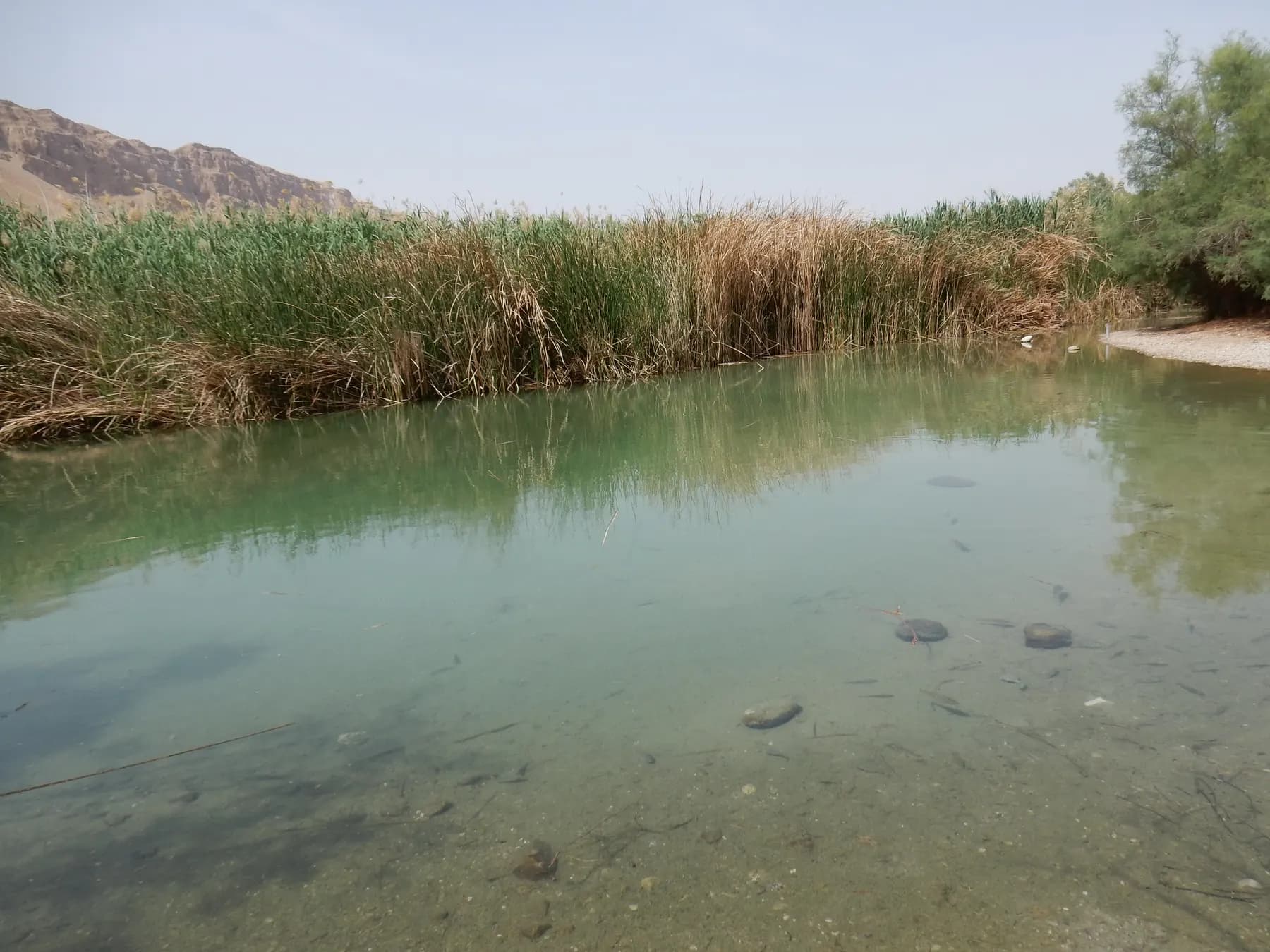
Einot Tzukim (Ein Feshkha) Nature Reserve
Brackish springs surface at the foot of the escarpment here and run into pools you can get into, and the Israel Nature and Parks Authority puts the point where they emerge at 390 metres below sea level.
שלמה רודד / CC BY 2.5 · Wikimedia Commons
Religious site
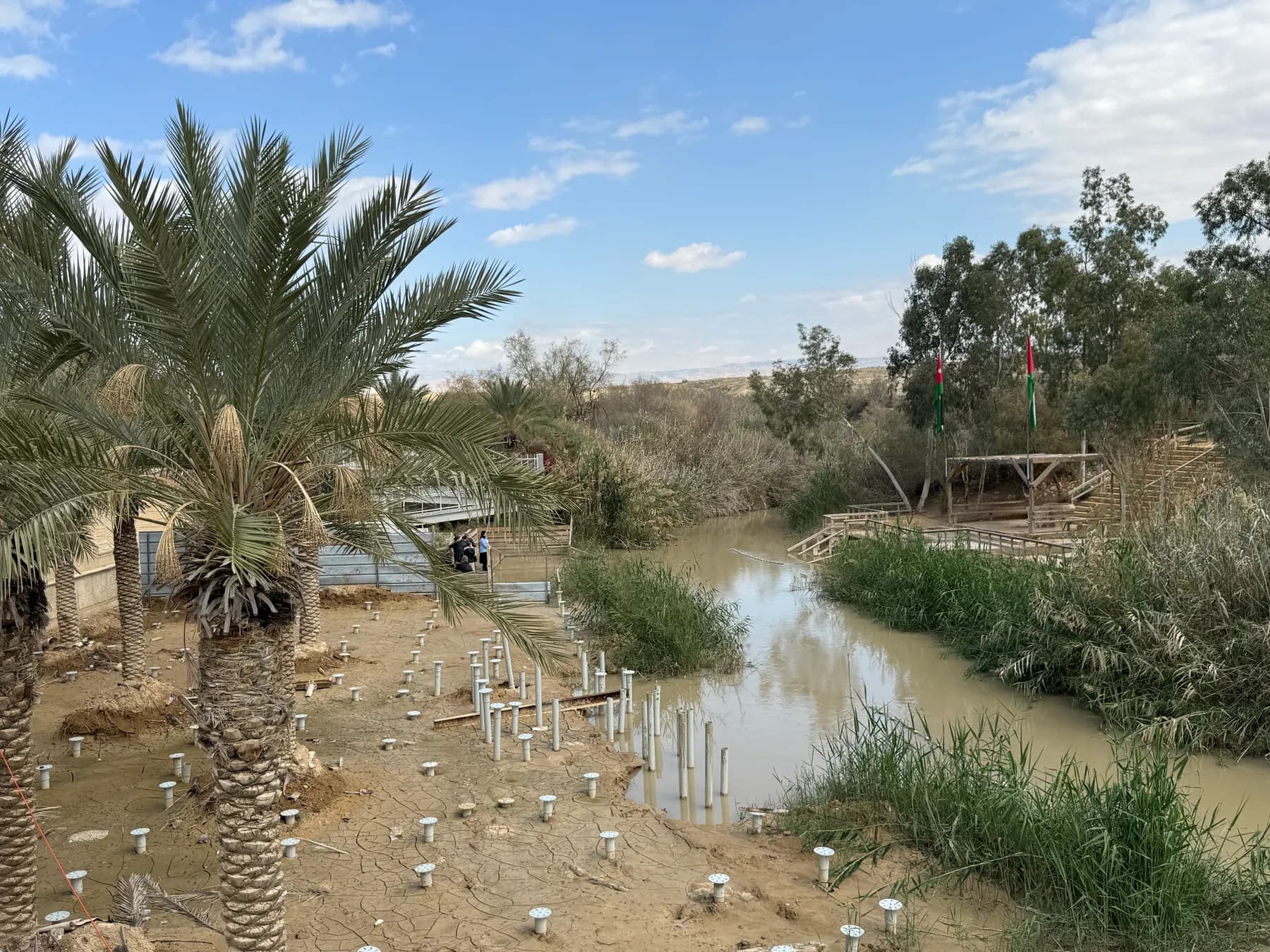
Qasr al-Yahud Baptismal Site
The traditional site of Jesus's baptism stands inside a closed military zone: more than 6,500 landmines were lifted from the monasteries around it between 2018 and 2020, and the riverbank itself reopened in February 2026 after NIS 25 million of building work.
Bahnfrend / CC BY-SA 4.0 · Wikimedia Commons
Beach
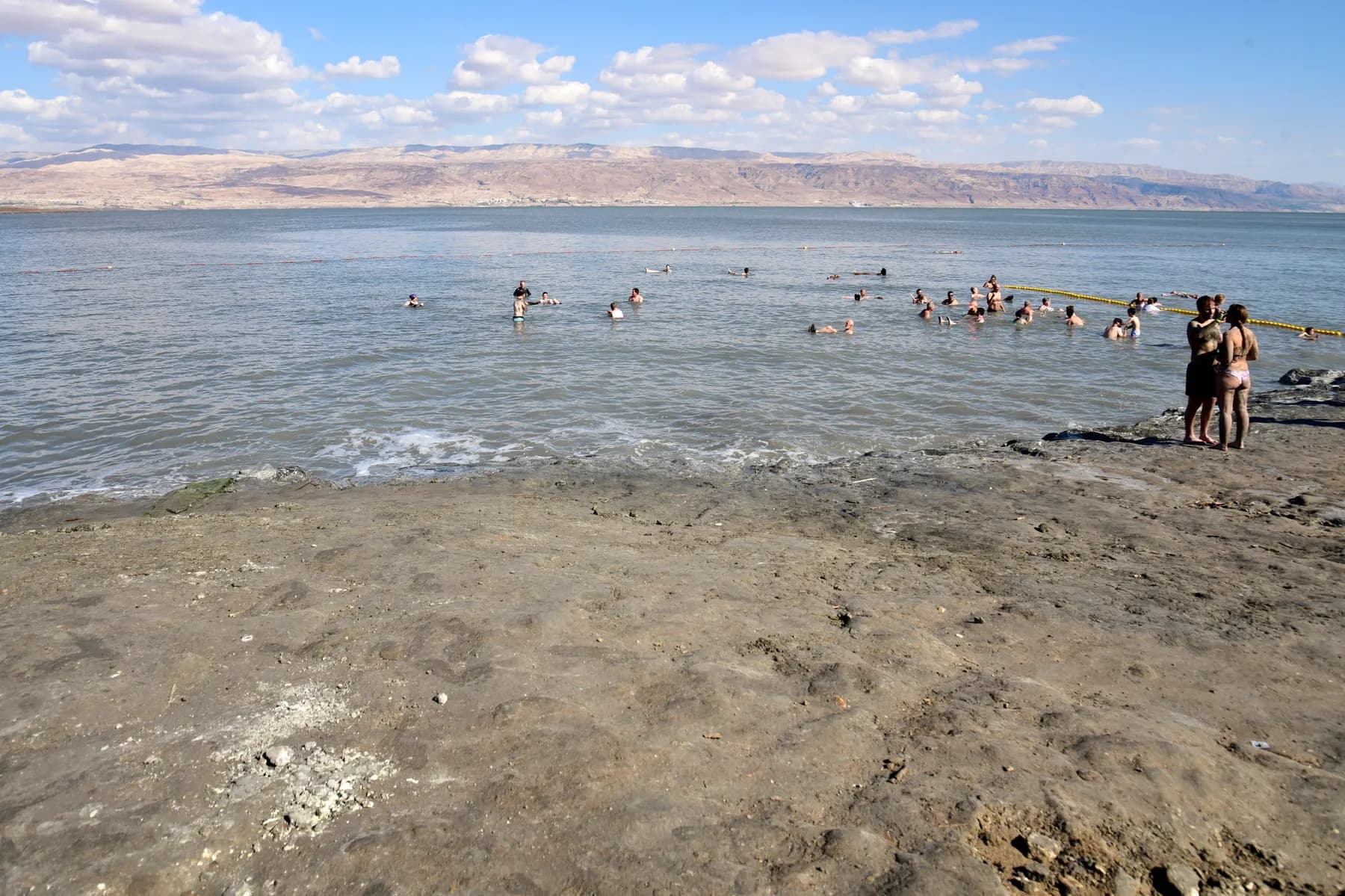
Kalia Beach
The northernmost managed beach on the Dead Sea, run by Kibbutz Kalia on the site of the potash works the Arab Legion destroyed in May 1948, with a paid gate and two quite different tickets.
Sources and further reading
Every link below was opened and checked when this page was written. Official statements are marked as such: they are the subject's own account, not an independent one.
- OfficialIsrael Nature and Parks Authorityen.parks.org.ilQumran National Park: Uncover the Secrets of the Scrolls
Summer and winter opening hours, the one-hour entry cutoff, the full fee table (adult ₪31, child ₪16, student ₪26, group ₪26 and ₪14, Israeli senior ₪16), the accessibility provision, the no-dogs rule and the driving directions off Route 90 at Kibbutz Kalya
- OfficialIsrael Nature and Parks Authorityparks.org.ilפארק (גן לאומי) קומראן (Qumran National Park, Hebrew site)
The advance-registration requirement from 1 January 2026, the half-hour cutoff for the museum and film, the ten-minute film and the seven QR posts, the order of the walking circuit, the miqva'ot beside the dining room, the inkwells and hundreds of lamps in the scribes' rooms, the cemetery of about 1,100 graves, the wheelchair loan, the refurbishment note, the service counter and the two extra fee rows
- OfficialIsrael Nature and Parks Authoritystatic.parks.org.ilQumran Park (National Park), visitor brochure
The operator's own history: an eighth-century BCE Jewish population, the Essenes arriving under John Hyrcanus I or Alexander Jannaeus, the 31 BCE earthquake, the return under Archelaus, the Roman conquest of 68 CE, the Bar Kokhba garrison, the seven scrolls of 1947, de Vaux's 1951 to 1956 excavation, the Shrine of the Book, the site plan legend, the 1967 handover and the nearby-site drive times
- OfficialIsrael Antiquities Authority, Leon Levy Dead Sea Scrolls Digital Librarydeadseascrolls.org.ilThe Dead Sea Scrolls: Discovery Sites
Eleven caves with written remains, five found by Bedouin and six by archaeologists; Cave 1 identified in 1949 with at least 70 manuscripts; Cave 3 and the Copper Scroll; Cave 4 found by Bedouin in 1952 and accounting for 75 per cent of all material; Cave 11 in 1956 and the Temple Scroll; Cave 6 as the most accessible to visitors; the eight-kilometre strip of cliff searched from 1951 to 1956
- OfficialIsrael Antiquities Authority, Leon Levy Dead Sea Scrolls Digital Librarydeadseascrolls.org.ilThe Dead Sea Scrolls: Discovery and Publication
The Ta'amireh shepherd and the stray animal in 1947, over 900 different texts represented, Cave 4 holding about 500 scrolls, the de Vaux and Harding excavations, and the reorganisation of publication by the IAA in the early 1990s
- ReportingArchaeology Magazine, Archaeological Institute of Americaarchaeology.orgTwelfth Cave Discovered at Qumran
Oren Gutfeld and Ahiad Ovadia's 2017 excavation, the parchment scrap in a jar, seven broken containers, a leather binding strap and wrapping cloth, the looters' pickaxes, and Gutfeld's remark that there were certainly twelve caves and maybe more
- ReferenceEncyclopaedia Britannicabritannica.comDead Sea Scrolls
About 15,000 fragments from eleven caves representing 800 to 900 original manuscripts, a text range from the third century BCE to the second century CE, and the cautious phrasing that most scholars think the site housed the community that owned the scrolls
- ReferenceWikipediaen.wikipedia.orgQumran
De Vaux's periodisation and the loci he named, the tower and the two building blocks, the inkwell count and its significance, about 1,250 coins including three silver hoards, the 1967 restoration by R. W. Dajjani, the population estimates from Hirschfeld through Patrich to Magness, the failure of the final report after de Vaux's death in 1971, and the Golb, Donceel-Voute, Hirschfeld and Magen-Peleg interpretations
- ReferenceWikipediaen.wikipedia.orgQumran Caves
The 230 caves and crevices examined along eight kilometres of cliff, the distinction between natural cliff caves and those cut into the marl terrace, and the discovery dates of caves 1 to 11 and the 2017 announcement
- ReferenceOrion Center for the Study of the Dead Sea Scrolls, Hebrew University of Jerusalemvirtualqumran.huji.ac.ilThe Orion Virtual Qumran Tour: Scriptorium
That the plaster furniture was reconstructed for museum display in a form accommodating de Vaux's interpretation, that its purpose is still undetermined, and the objection that the pieces are too narrow to have been dining couches
- ReferenceRobert R. Cargill, Bible and Interpretation, University of Arizonabibleinterp.arizona.eduThe Fortress at Qumran: A History of Interpretation
The history of the fortress readings from the nineteenth-century explorers through Golb, Hirschfeld and Magen and Peleg, and Cargill's own proposal of a Hasmonean fort later reoccupied and expanded by the sectarians
- ReferenceWikipediaen.wikipedia.orgIsaiah Scroll
The Great Isaiah Scroll at about 7.34 metres in 54 columns, its radiocarbon and palaeographic dating, its origin in Cave 1 and its display at the Shrine of the Book
Qumran National Park: common questions
Is Qumran worth visiting if the scrolls are not there?+
It depends on whether ruins interest you on their own terms. The site is a modest floor plan of low stone walls, a water system and a cemetery, and it takes about an hour to walk; nothing found here is displayed here. What it gives you is the geography, which no museum case can: the marl terrace, the cliff, and Cave 4 sitting a few minutes' walk from a room with inkwells in it.
How long do you need at Qumran National Park?+
About 90 minutes covers it comfortably. The film runs ten minutes, the museum a few more, and the walking circuit around the excavation roughly an hour at an unhurried pace. A group with a guide should allow two hours.
Do you have to book in advance?+
Yes, according to the operator's Hebrew page, which states that from 1 January 2026 entry to the site is by advance registration only. Its English page shows the booking system but does not say the booking is required. Reserve a slot rather than gamble on the discrepancy.
Can you go inside the Dead Sea Scroll caves?+
Not on the marked route inside the national park. The caves are viewed from the site and from the lookouts, including the double-mouthed Cave 4 cut into the marl terrace just below the settlement. The Israel Antiquities Authority describes Cave 6 as the most accessible of the scroll caves to visitors, but reaching any of them is not part of the park circuit.
How much does Qumran National Park cost?+
Adult admission is ₪31 and a child is ₪16 on the parks authority's own price table. A student pays ₪26 and an Israeli senior citizen ₪16, and groups above 30 people pay ₪26 an adult and ₪14 a child. The Hebrew table adds two rows the English one omits: reserve-duty soldiers at ₪23 and pupils at ₪8.
Is Qumran wheelchair accessible?+
Largely yes, and this is one of the better-adapted archaeological parks in Israel. The parks authority lists an accessible entrance complex, car park, toilets, museum and subtitled film, plus a circular trail on the archaeological site adapted for wheelchairs, with handrails on the steps, lookouts and shade shelters. A wheelchair can be borrowed at the ticket office against an identity document.
Did the Essenes really live at Qumran?+
That is the majority view and it is not settled. Roland de Vaux, who excavated the site between 1951 and 1956, identified the inhabitants as Essenes and the parks authority repeats that account without qualification. Others have argued for a Hasmonean fortress, a Roman villa, a fortified trading station and a pottery production plant, and Norman Golb argued that the scrolls were a library brought out from Jerusalem and hidden here by people who never lived on the site.
Is there shade at Qumran, and how hot does it get?+
There are built shade shelters at the lookouts and in the entrance area, and effectively no natural shade anywhere on the circuit. The site sits above the Dead Sea in the Judaean Desert, which is among the hottest and driest inhabited places in the region, so the sensible plan in summer is to arrive at opening time and be finished by mid-morning.
Can Qumran be combined with the Dead Sea in one day?+
Easily, and most visitors do exactly that. Qumran sits just off Route 90 at the northern end of the lake, minutes from Kalia Beach, about fifteen minutes' drive from the Einot Tzukim reserve and about twenty from Qasr al-Yahud, the baptismal site on the Jordan. The parks authority's own brochure lists those last two as the nearby sites.
Who administers Qumran, and where is it?+
The Israel Nature and Parks Authority has run the site since 1967, and its Hebrew pages file the park under the Judea and Samaria district. Qumran lies in the West Bank, on the north-western shore of the Dead Sea near Kibbutz Kalya, roughly 20 kilometres from Jerusalem by road down Route 1 and Route 90.