Museum · Tel Aviv
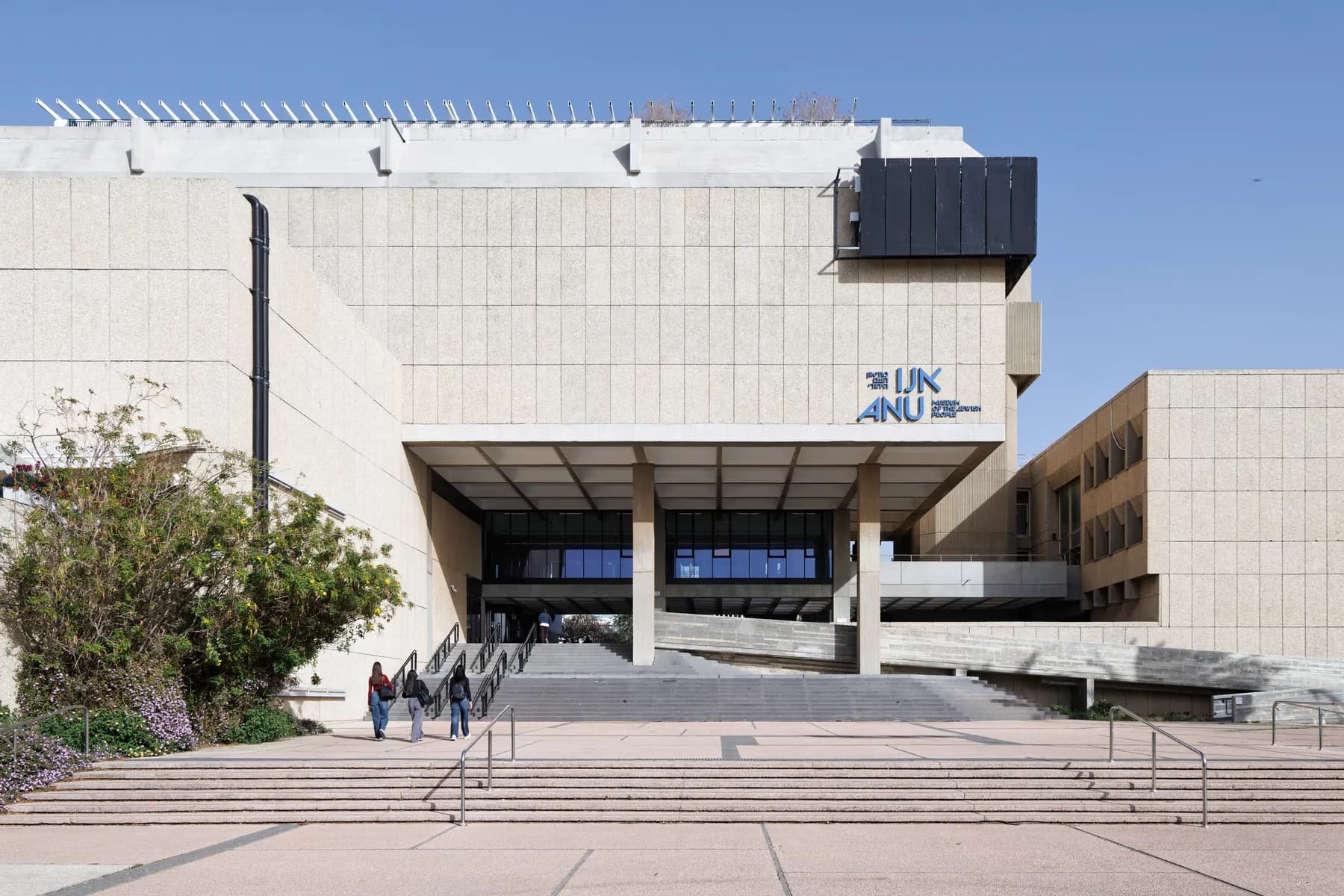
ANU, Museum of the Jewish People
The museum that opened in 1978 having deliberately decided not to collect objects reopened in 2021 with a 1,100-year-old Hebrew Bible as its centrepiece.
D. Benjamin Miller / CC0 · Wikimedia Commons
Reopened
10 March 2021
after a rebuild the museum describes as ten years of planning and construction
Exhibition space
6,700 sq m
roughly triple the old museum, across three narrative floors
First opened
15 May 1978
as the Museum of the Jewish Diaspora, later Beit Hatfutsot
Adult ticket
NIS 54
the price on the museum's own visit page, guided tour included
In short
- How long to give it
- about two hours; the museum recommends setting aside at least an hour and a half, and reading the Journey floor properly takes longer
- Sunday to Thursday
- 10:00–17:00
- Regular
- NIS 54
אנו, מוזיאון העם היהודי
ANU, Museum of the Jewish People, is a three-floor museum on the Tel Aviv University campus in Ramat Aviv that sets out to tell the story of Jewish life worldwide. It is the same institution that opened on 15 May 1978 as the Museum of the Jewish Diaspora and was known for four decades as Beit Hatfutsot. It reopened under the name ANU, the Hebrew word for we, on 10 March 2021, after a rebuild costed in reporting at the time at about $100 million, with exhibition space roughly tripled to 6,700 square metres. The museum's claim for itself is that it is the largest and most comprehensive Jewish museum in the world.
The founding premise was unusual and it explains what the place feels like today. The 1978 museum was built by people who chose, in as many words, not to follow the tradition that a museum exists first to acquire, care for and display objects from the past. There was almost no collection: instead there were reconstructions, sets, dioramas, scale models and film, under six thematic gates that Abba Kovner devised. The rebuild kept the method and added what was missing, original ritual objects beside the synagogue models and, since 2025, a tenth-century Hebrew Bible downstairs.
The practical shape of a visit runs downwards. Visitors are sent up to floor 3 and work back to floor 1, so the museum opens on the present day and ends on the Bible. It is open seven days a week, closes early on Friday, and sits inside a working university campus, so identification is checked at the gate before anyone reaches the door.
1978
A museum designed on the principle of not collecting anything
Nahum Goldmann, the founder and president of the World Jewish Congress, proposed the institution in 1959 as an educational and cultural centre for world Jewry, and it was named in his honour. The building came first. On the museum's own account, an architectural competition opened in 1960 with an evaluation committee chaired by Mies van der Rohe; the winning plan was by Eli Gvirtzman, then little known, who was joined by Itzhak Yashar. Construction started in 1967, the front wing holding the library and archive was finished in 1969, and the museum opened on 15 May 1978 with President Efraim Katzir and Goldmann present.
What went inside it was the argument. Abba Kovner, one of the founders, devised the core exhibition on a thematic rather than chronological principle, six gates covering family, community, faith, culture, existence and return. Jeshajahu Weinberg was the first director, from 1978 to 1984, and later founded the United States Holocaust Memorial Museum; Meyer Weisgal was the first president. The exhibitions were built from reconstructions and sets, and the designers deliberately set aside the convention that a museum acquires and displays objects.
The narrative that ran through those gates was as deliberate as the method. The Tel Aviv Review of Books summarised the old exhibition in its opening and closing images: it began with an enlarged replica of the relief on the Arch of Titus in Rome, Roman soldiers carrying the menorah away from the destroyed Temple, and ended with the menorah again and the war of 1948. Exile begins in catastrophe and ends in return. That is the reading the rebuild set out to replace.
It nearly did not survive to be rebuilt. Budget cuts and a fall in tourism produced a crisis, and the campaign to save the museum drew in the former Tel Aviv mayor Shlomo Lahat and Ariel Sharon. The Knesset passed a law in 2005 making Beit Hatfutsot the national centre for Jewish communities in Israel and abroad, and a recovery plan followed with the government, Leonid Nevzlin's NADAV Foundation and the Claims Conference.
- The six gates of the 1978 exhibition: family, community, faith, culture, existence, return
- Building: Eli Gvirtzman with Itzhak Yashar, from a competition judged by a committee under Mies van der Rohe
- Construction from 1967, front wing complete 1969, museum open 15 May 1978
- First director Jeshajahu Weinberg, 1978 to 1984; first president Meyer Weisgal
- 1985: the Knesset Speaker's Quality of Life Award
- 2005: the Knesset law making it the national centre for Jewish communities
The rebuild
Ten years, a hundred million dollars and a change of name
The renewal was done in stages around a museum that stayed in business. The first stage, in 2016, added a wing: rotating temporary exhibitions, the Alfred H. Moses and Family Synagogue Hall, and Heroes, an interactive children's gallery. The three floors of core galleries opened on 10 March 2021, tripling exhibition space to 6,700 square metres, and the institution took the name ANU, chosen, in board chair Irina Nevzlin's words, to embrace inclusion and reflect the diversity and collective spirit of the Jewish people everywhere.
The money came from three directions. The Times of Israel reported at the reopening that close to a third of the $100 million came from Leonid Nevzlin's NADAV Foundation, $52 million from other United States philanthropists and foundations, and $18 million from the Israeli government. The published credits name Dr Orit Shaham Gover as chief curator, Prof Israel Bartal and Prof Gideon Shimoni as authors of the renewal conception, and the Washington firm Gallagher and Associates as head designer.
What changed is not the technique, which is still screens, sets and staged scenes, but the argument: Jewish life is presented as plural rather than as a single road leading to Israel. The Tel Aviv Review of Books called the result multicultural, multilingual, multi-denominational and multi-ethnic, and beautifully executed; its criticism was that ANU downplays its own Israeli setting, and makes a case a substantial bloc of the Knesset openly rejects.
The core exhibition
Top down: Mosaic, Journey, Foundations
The route starts at the top. Visitors enter on the ground floor and are sent up to floor 3, then work down, which inverts the usual museum chronology and puts living people first. Floor 3, the Mosaic, is subtitled Identity and Culture in Our Times and covers folklore and the arts, language and literature, the denominations and the Jewish contribution to wider culture. It opens with a hall of full-height screens on which, by the Tel Aviv Review of Books count, twenty-one Jews of different backgrounds each speak in their own language at once, before walls of enlarged family photographs.
The same floor carries the culture galleries the museum is best known for: food, film, theatre, music and comedy, ending in a section called Luminaries. Leonard Cohen's guitar and Ruth Bader Ginsburg's lace collar are there, with caricatures by the illustrator Yirmi Pinkus and media stations holding the biographies of 150 famous Jews; reporting at the reopening also listed Isaac Bashevis Singer's typewriter and a model of E.T. The Tel Aviv Review of Books thought the run of famous names close to a triumphal procession, saved by its playfulness.
Floor 2, the Journey, is the history: migrations, the large centres of Jewish life, scholarship, persecution, the Holocaust, the founding of the state and communities today. It is the most conventional of the three and the most crowded with text, and it is where a tiring visitor should be selective. Floor 1, the Foundations, deals with Shabbat, the covenant, the year and the life cycle, and with the reception of the Hebrew Bible in world culture. It is built largely from modern artistic interpretations rather than historic objects, and it ends at the synagogue models.
- Floor 3, the Mosaic: identity and culture now, the language installation, Luminaries
- Floor 2, the Journey: the historical narrative from antiquity to the present
- Floor 1, the Foundations: Shabbat, the covenant, the life cycle, the Bible in world culture
- Ground floor: lobby, cafe, shop, the Heroes children's gallery and the Codex Sassoon gallery
What survives
Which of this is old, and which was made to explain something old
Almost nothing in a museum of this kind is what it appears to be, and here the rule is easy to state. The building is genuinely from the 1960s, the shell Gvirtzman and Yashar designed, and the wide lobby that lets people cross the campus without a ticket is part of the original conception. The galleries inside are new.
The synagogue models are the thread back to 1978. They were the signature of the old museum, and the Times of Israel reported at the reopening that eleven of the replicas were still there, touched up and rehoused in their own gallery. The museum's own page for the Alfred H. Moses and Family Synagogue Hall, opened in May 2016, describes an exhibition of 21 models. The figures need not conflict, since the hall was rebuilt and enlarged around the older models, but no published source reconciles them.
Elsewhere the older material was reused rather than retired: the Tel Aviv Review of Books noted plaster replicas of the medieval Ecclesia and Synagoga figures and several old dioramas reappearing on the Journey floor. What is new is the presence of real objects at all. Each model in the Hallelujah gallery now has an original ritual object from that community beside it, among them prayer books, Judaica and a stained glass window made in Germany in 1919 by Friedrich Adler.
The one object of the first rank carries a caveat the museum publishes itself. Codex Sassoon is permanently displayed on the Foundations floor, and the museum notes that from time to time a replica is shown instead, subject to security, conservation and acclimatisation requirements. Anyone travelling specifically to see the original should treat that as a real possibility rather than boilerplate.
- Original: the 1967 to 1969 building shell and its lobby
- Carried over from Beit Hatfutsot: the synagogue models, restored and rehoused
- Reused: plaster replicas of Ecclesia and Synagoga, and several old dioramas, on floor 2
- Genuinely old and genuinely here: Codex Sassoon, plus ritual objects beside the models
- Everything else: made for the rebuild that opened in 2021
Codex Sassoon
A tenth-century Bible bought at auction for $38.1 million
Codex Sassoon is the earliest near-complete copy of the Hebrew Bible. The museum dates it to the early tenth century CE on its materials and graphic features and places its production in the region of the Land of Israel and Syria. It holds all 24 books of the Tanakh, written on parchment by a single scribe, with vocalisation and cantillation marks and Masoretic notes added by two hands from different periods. It runs to 792 pages, about 92 per cent of the biblical text, and weighs about 12 kilogrammes.
Its own history is written into it. A Judeo-Arabic inscription dated to around the year 1000 records its sale from Khalaf ben Avraham to Yitzhak ben Yehezkel al-Attar, and a Hebrew inscription on the same page has the buyer declaring the book sacred unto God and cursing anyone who sells or steals it. Later inscriptions make it property of the synagogue at Makisin, identified with modern Markada in northeastern Syria, and record it being entrusted to one Salama ibn Abi al-Fakhr until that synagogue was rebuilt. It never was, and the codex disappears for some five centuries.
David Solomon Sassoon bought it in 1929 from a private owner in Ankara for £350 and gave it the shelf mark 1053 still stamped on the spine. His descendants sold it in the 1970s to the British Rail Pension Fund, which deposited it at the British Library, where it was shown publicly only once, in late 1982; in 1989 it went to Jacqui Safra of Geneva. Ambassador Alfred H. Moses bought it at Sotheby's in New York in May 2023 and gave it to ANU, and the permanent display, ready for October 2023 and delayed by the war, was inaugurated on 29 May 2025.
Beyond the core
The synagogue hall, the children's wing, the archives and October Seventh
The Alfred H. Moses and Family Synagogue Hall shows Hallelujah! Assemble, Pray, Study, Synagogues Past and Present, curated by Amitai Achiman. Florence, Warsaw, Krakow, Fez, Cochin and Amsterdam are among the communities represented. The subject is not architecture alone but what a synagogue was used for: assembly, study, weddings, bar and bat mitzvah and charity as much as prayer.
Heroes, Trailblazers of the Jewish People, occupies the Tamar and Milton Maltz Family Gallery on the ground floor and is the one part of the museum that has to be booked. It runs on Saturdays only, in fixed 90-minute slots at 10:00, 11:45 and 13:30, and the museum states it suits children aged 6 to 12. Shoes come off at the entrance and pushchairs are not allowed in. A Heroes ticket is valid for the rest of the museum before or after the slot.
The archive is the least visible part of the institution and for some visitors the reason to come. Over more than four decades the museum has assembled family trees covering over five million individuals, with images, films, music and research into Jewish family names and community histories. The databases are free to search online, and staff will help in person in the lobby study area, Sunday to Thursday, 10:00 to 13:00.
Temporary exhibitions turn over, and one of them is not a normal museum experience. October Seventh opened on 23 February 2024 with work by 25 artists responding to the attacks of 7 October 2023 and the war that followed, some of them killed, some from the communities attacked. The museum describes it as a space of anguish, loss, anger, memory and sorrow, an accurate warning for anyone travelling with children.
What to look for
Things not to walk past at ANU, Museum of the Jewish People
The details that repay knowing about before you are standing in front of them.
The Hallelujah synagogue hall
The collection that made the old museum's reputation, rebuilt in 2016 as 21 models with an original ritual object from each community beside it. It is at the end of the route, on floor 1, and tired visitors walk past it.
Codex Sassoon
The earliest near-complete Hebrew Bible, dated by the museum to the early tenth century, on permanent display since 29 May 2025. A replica is shown in its place from time to time for conservation and security reasons.
The opening installation on floor 3
Full-height screens on which people from across the Jewish world each speak in their own language at once, in front of walls of enlarged family photographs. It sets the argument of the whole museum in about five minutes.
Luminaries
Leonard Cohen's guitar, Ruth Bader Ginsburg's lace collar, Isaac Bashevis Singer's typewriter and media stations holding 150 biographies. Playful rather than solemn, and the part of the museum most visitors quote afterwards.
The genealogy databases
Family trees covering more than five million individuals, searchable free online and with staff help in the lobby study area from 10:00 to 13:00, Sunday to Thursday. Bring the names and dates you already have.
October Seventh
Work by 25 artists responding to 7 October 2023 and the war, open since 23 February 2024. The museum frames it as a space of anguish and mourning rather than an exhibition to walk through quickly.
The long view
ANU, Museum of the Jewish People, in order
1959
Nahum Goldmann, president of the World Jewish Congress, proposes a museum of the Jewish diaspora. It is later named after him.
1960
An architectural competition is announced. The evaluation committee, chaired by Mies van der Rohe, picks Eli Gvirtzman's plan; Itzhak Yashar joins the project.
1967 to 1969
Construction starts, and the front wing holding the library, archive and researchers' rooms is completed.
15 May 1978
The Museum of the Jewish Diaspora opens, with President Efraim Katzir and Goldmann present. Its exhibition is built from reconstructions and sets under Abba Kovner's six gates.
1985
The museum receives the Knesset Speaker's Quality of Life Award.
2005
After a budget crisis, the Knesset passes a law defining Beit Hatfutsot as the national centre for Jewish communities in Israel and around the world.
May 2016
The first stage of the renewal opens: a new wing with temporary exhibitions, the Alfred H. Moses and Family Synagogue Hall and the Heroes children's gallery.
10 March 2021
The three floors of core galleries open and the museum takes the name ANU, with exhibition space roughly tripled to 6,700 square metres.
March 2023
Codex Sassoon is shown at the museum on its pre-auction world tour.
May 2023
Ambassador Alfred H. Moses buys Codex Sassoon at Sotheby's in New York for $38.1 million and donates it to the museum.
23 February 2024
October Seventh opens, with work by 25 artists responding to the attacks of 7 October 2023 and the war.
29 May 2025
The permanent Codex Sassoon display is inaugurated, some twenty months later than planned.
Practical
Visiting ANU, Museum of the Jewish People
Where
15 Klausner Street, Ramat Aviv, Tel Aviv, inside the Tel Aviv University campus
What ticket you need
The museum sits inside the Tel Aviv University campus, which is not ticketed but is controlled: an ID card, passport or driving licence is checked at the campus gate. The museum's visit page directs visitors through Gates 2 and 7, while the address block at the foot of its own exhibition pages gives Gate 1, so it is worth having the map open. The nearest station is Tel Aviv University, on the railway, with Dan bus routes 7, 25, 45 and 289 and Egged 222, 271 and 572 serving the campus.
Opening hours
- Sunday to Thursday
- 10:00–17:00source
- Friday
- 10:00–14:00source
- Saturday
- 10:00–17:00source
- Heroes children's gallery
- Saturdays only, in fixed 90-minute slots at 10:00, 11:45 and 13:30, booked in advancesource
- Guided tours
- Hebrew Sunday to Thursday at 12:00, English Sunday and Thursday at 13:00, about 60 minutessource
- Database help in the lobby
- Sunday to Thursday, 10:00–13:00source
- Cafe and shop
- Sunday to Thursday 10:00–17:00, Friday 10:00–14:00, closed Saturdays and holidayssource
- Holiday closures
- The museum publishes a list of dates it is shut, including festival eves. Check it before travellingsource
Admission
- Regular
- NIS 54source
- Israeli senior citizens
- NIS 27source
- Students, people with disabilities, olim
- NIS 44source
- Children under 5
- Freesource
- Soldiers in uniform
- Free, on presentation of IDsource
- Guided tour
- Included in the admission fee, but places are limited and should be bookedsource
- Heroes gallery
- A separate timed ticket, which is also valid for the rest of the museumsource
- Car park
- Paid, in the museum lot on Klausner Street opposite Gate 2source
Access
Good, and mostly step-free. The museum states that all exhibition spaces, auditoriums, cafeteria and lobby are wheelchair accessible, with lifts sized for wheelchairs and exhibits set at seated eye level; wheelchairs are lent at the information desk, and the toilets, cloakroom and cafe are accessible. Visitors who are hard of hearing get audio guides with written texts, and visitors with impaired sight can handle the 3D synagogue models and reserve an OrCam MyEye reader, which has to be ordered at least a week ahead through the tours address. A sensory map is available at the desk. Two things need arranging in advance: accessible parking, which the museum asks be booked by email or phone, and the OrCam device. No animals are allowed on the university campus other than service dogs with a valid certificate.
On site
- Aroma Cafe on the entrance floor, kosher under the Chief Rabbinate
- Museum shop
- Audio guide, using your own phone and headphones
- Free guided tours in Hebrew and English
- Study area in the lobby for database searches, with staff help
- Accessible toilets and cloakroom
- Paid car park opposite Gate 2
- Loan wheelchairs and a sensory map at the desk
Booking
Tickets do not have to be bought in advance and the museum recommends it anyway. The exception is Heroes, which is sold only as a timed Saturday slot and must be booked. Guided tours are included in admission but capped, so book those too. Holders of benefit club cards pay on the club's site first, then order a zero-shekel ticket on the museum's site and present the order number on arrival.
Hours and prices are given as the operator publishes them and change without much notice, particularly around Shabbat and the festivals. Check the operator's own page before you travel for this.
Official page at anumuseum.org.il →What people wish they had known
- Go up before you go along. The route runs from floor 3 down to floor 1, and people who wander into the first gallery they find on the ground floor start at the end of the argument and never recover the thread.
- Book Heroes before travelling if there are children. It runs on Saturdays only, in three fixed slots, for ages 6 to 12, and a Heroes ticket also covers the rest of the museum. There is no weekday alternative for that gallery.
- Bring headphones and a charged phone. The audio guide runs on the visitor's own device, and the museum only supplies the guide itself.
- Take the free tour. It is included in the ticket, runs about an hour, and each weekday covers a different theme in Hebrew at noon, with English tours on Sunday and Thursday at 13:00. Places are limited, so order in advance.
- Carry identification. This is a university campus with a manned gate, and passports or ID cards are checked before anyone reaches the museum door.
- Do not plan on eating there on a Saturday. The museum opens, but the cafe and the shop are closed on Saturdays and holidays, and Friday closing is 14:00.
The figures
ANU, Museum of the Jewish People by the numbers
Each figure carries the year it belongs to and links the source it came from.
| Measure | Figure | As of | Source |
|---|---|---|---|
| Adult admission | NIS 54 | 2026 | anumuseum.org.il |
| Exhibition space after the rebuild | 6,700 sq m, about triple the old museum | 2021 | en.wikipedia.org |
| Cost of the renewal | About $100 million | 2021 | timesofisrael.com |
| Models in the Synagogue Hall | 21 | 2026 | anumuseum.org.il |
| Codex Sassoon | 792 pages, about 92 per cent of the biblical text, about 12 kg | 2026 | anumuseum.org.il |
| Price paid for Codex Sassoon at auction | $38.1 million | 2023 | anumuseum.org.il |
| Individuals in the genealogy database | Over five million | 2026 | dbs.anumuseum.org.il |
| Heroes gallery age range | 6 to 12 | 2026 | anumuseum.org.il |
While you are here
The rest of Tel Aviv
Everything else in this destination with a page of its own.
Deror_avi / CC BY-SA 4.0 · Wikimedia Commons
Museum
Eretz Israel Museum
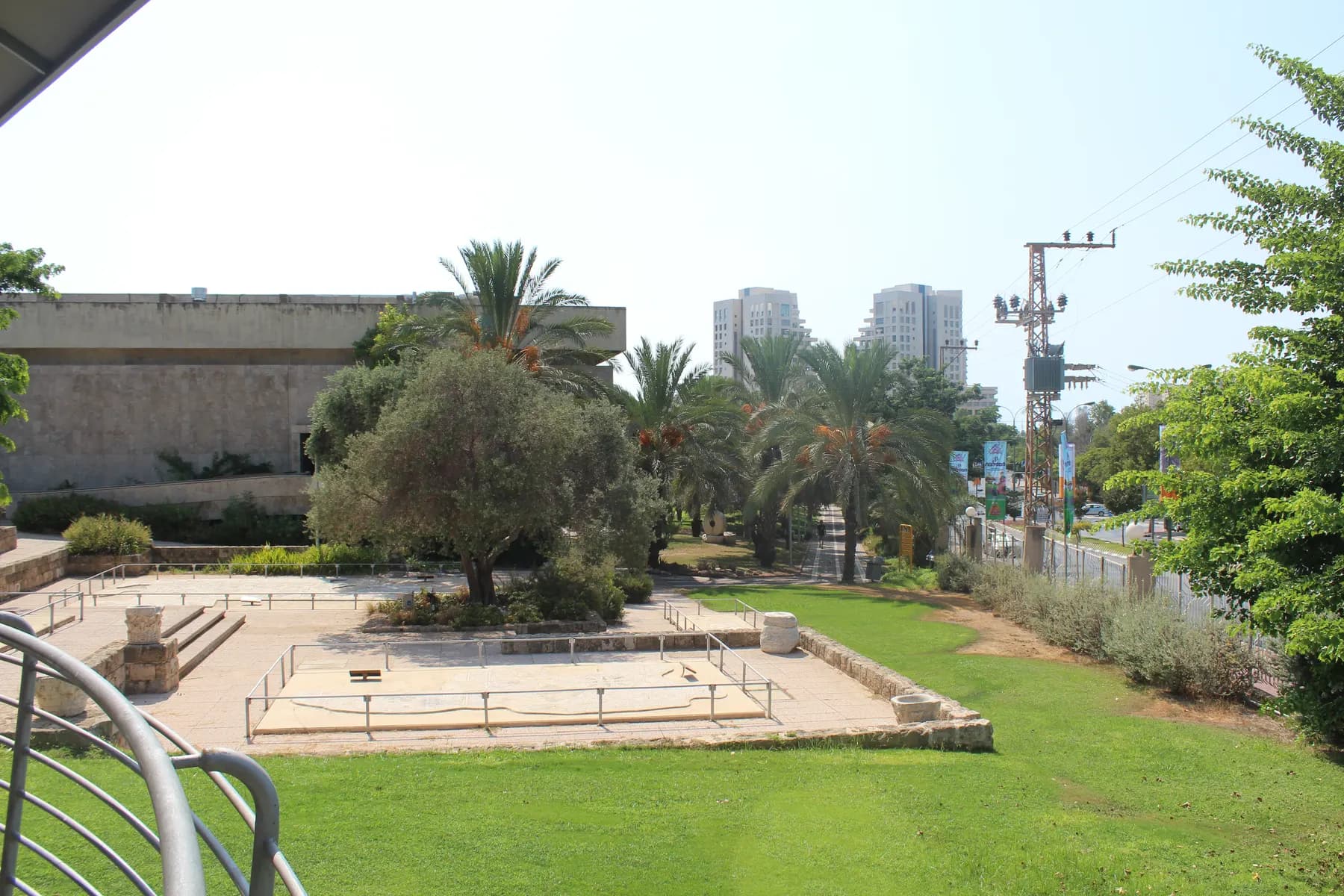
The first excavation permit issued by the State of Israel, in 1948, was for the mound that still stands at the centre of this museum's grounds in Ramat Aviv.
הרווי ספיר / CC BY 2.5 · Wikimedia Commons
Nature reserve
HaYarkon Park
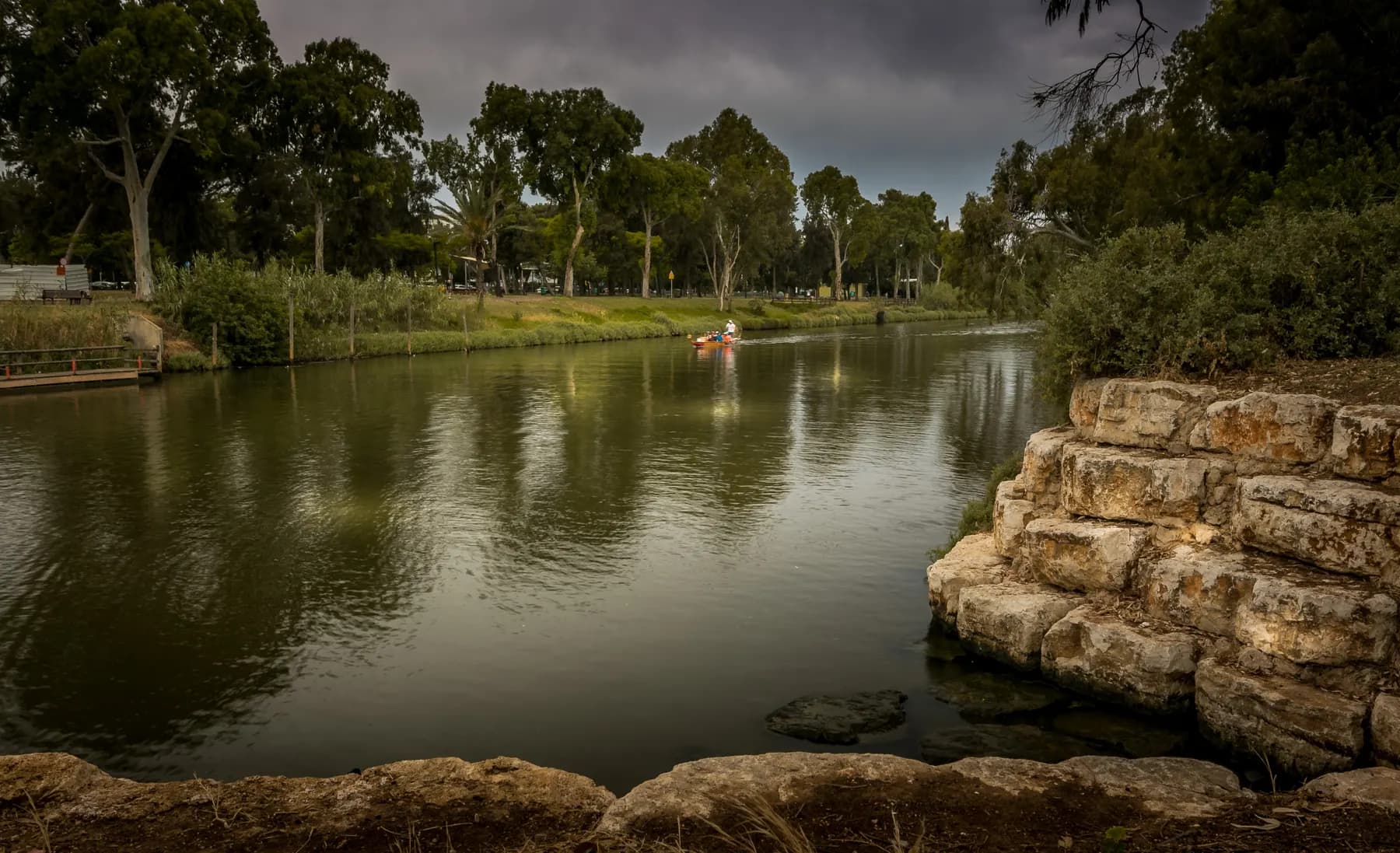
The park runs about 3,800 dunams from the Geha road to the sea, and the river it is named for now carries roughly 5 per cent of the water it did before the Yarkon-Negev pipeline took the springs.
Romanhit / CC BY-SA 3.0 · Wikimedia Commons
Landmark
Tel Aviv Port
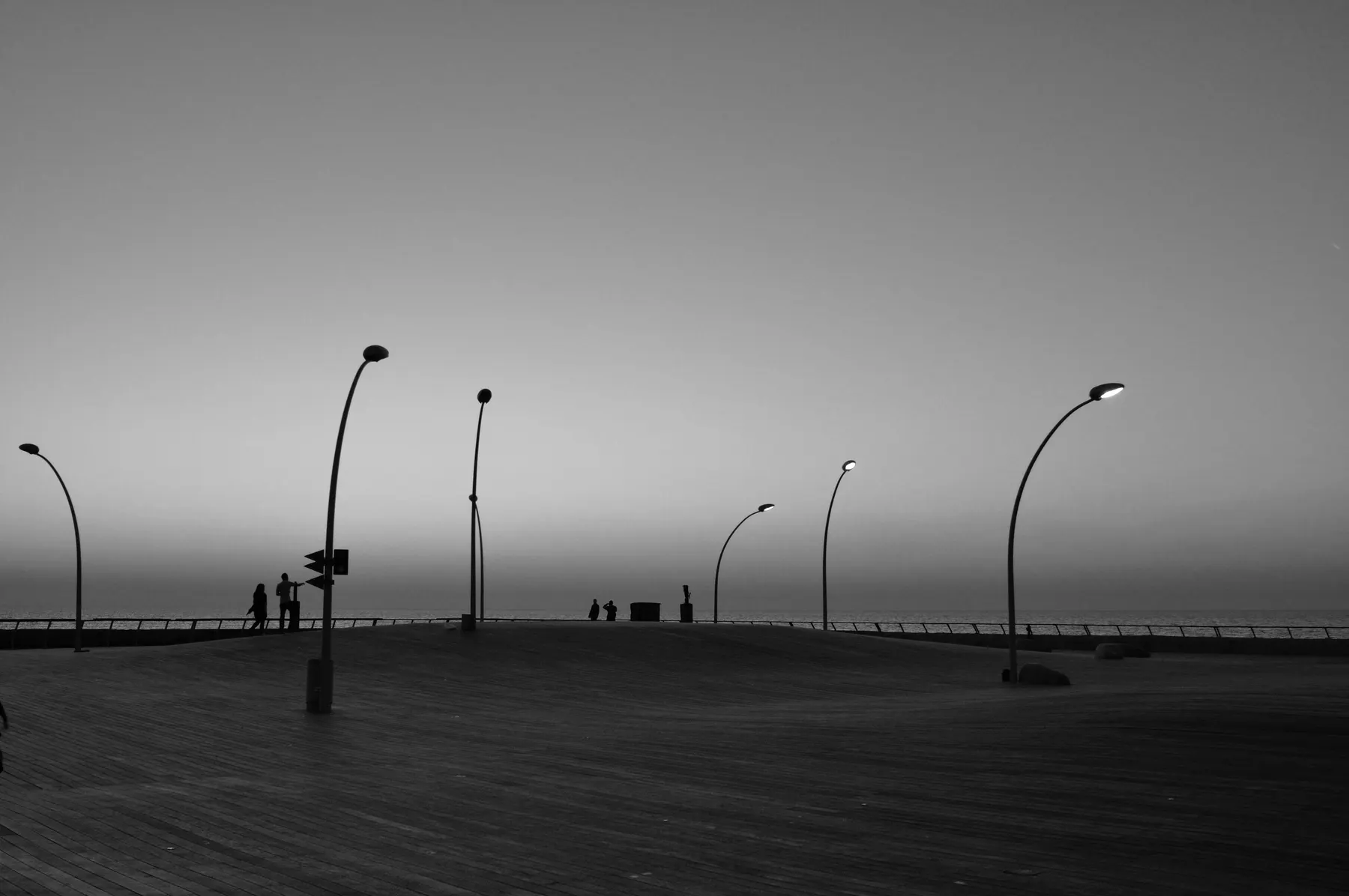
The first Jewish-run port on this coast landed its first cargo, a load of cement, on 19 May 1936, worked until 25 October 1965, and reopened as public space under a timber deck finished in 2008.
Sources and further reading
Every link below was opened and checked when this page was written. Official statements are marked as such: they are the subject's own account, not an independent one.
- OfficialANU, Museum of the Jewish Peopleanumuseum.org.ilPlan Your Visit
opening hours by day, the full price table in shekels, address and gates, parking, buses, cafe and shop hours, holiday closures and the visitor FAQ
- OfficialANU, Museum of the Jewish Peopleanumuseum.org.ilThe Core Exhibition
the three floors and their titles, the top-down route, ten years of planning and construction, and the credits naming the curators and designers
- OfficialANU, Museum of the Jewish Peopleanumuseum.org.ilSynagogue Hall: Hallelujah! Assemble, Pray, Study
the May 2016 opening, the 21 models, the original ritual object beside each one and the 1919 Friedrich Adler window
- OfficialANU, Museum of the Jewish Peopleanumuseum.org.ilHeroes, Trailblazers of the Jewish People
Saturday time slots, the 6 to 12 age range, the shoes and pushchair rules and the Maltz Family Gallery location
- OfficialANU, Museum of the Jewish Peopleanumuseum.org.ilCodex Sassoon
dating, 792 pages, weight, the medieval inscriptions, the Sassoon and Safra ownership, the $38.1 million purchase, and the note that a replica is sometimes displayed
- OfficialANU, Museum of the Jewish Peopleanumuseum.org.ilOctober Seventh
the 23 February 2024 opening and the 25 artists in the exhibition
- OfficialANU, Museum of the Jewish Peopleanumuseum.org.ilGuided Tours
tour times and languages, the 60-minute length, the daily themes and the fact that tours are included in admission
- OfficialANU, Museum of the Jewish Peopleanumuseum.org.ilAccessibility
lifts, loan wheelchairs, accessible toilets and cafe, OrCam reservation, the sensory map, accessible parking by arrangement and the service dog rule
- OfficialANU, Museum of the Jewish Peopleanumuseum.org.ilBeit Hatfutsot 40th Anniversary: Our Building is an Architectural Icon
the 1960 competition, the committee chaired by Mies van der Rohe, Eli Gvirtzman and Itzhak Yashar, construction from 1967 and the 15 May 1978 opening
- ReportingTel Aviv Review of Bookstarb.co.ilToo Good to be True?
a long critical review of the new museum: the old Arch of Titus opening, the reused dioramas and Ecclesia and Synagoga replicas, the Luminaries gallery and the argument about the museum's Israeli setting
- ReportingThe Times of Israeltimesofisrael.comRevamped Tel Aviv museum a globe-spanning journey through Jewish history
the funding breakdown, the tripling of floor space and the report that eleven of the old synagogue replicas were retained
- ReportingThe Times of Israeltimesofisrael.comCodex Sassoon, oldest near-complete Hebrew Bible, displayed in Israel after Oct. 7 delay
the 29 May 2025 inauguration of the permanent Codex Sassoon display, twenty months after the planned opening
- DataANU, Museum of the Jewish Peopledbs.anumuseum.org.ilThe Museum Databases
family trees covering over five million individuals, the wider archive, and the museum's own caution that donated trees contain gaps and errors
- ReferenceWikipediaen.wikipedia.orgAnu, Museum of the Jewish People
Goldmann's 1959 proposal, Kovner's six gates, Weinberg and Weisgal, the deliberate decision not to collect objects, the 2005 Knesset law and the 6,700 square metre figure
ANU, Museum of the Jewish People: common questions
Is ANU the same as Beit Hatfutsot?+
Yes, it is the same institution in the same building. It opened on 15 May 1978 as the Museum of the Jewish Diaspora, named for Nahum Goldmann, and was generally known as Beit Hatfutsot. It reopened on 10 March 2021 as ANU, the Hebrew for we, after a rebuild that replaced the entire core exhibition.
How much does ANU cost and what are the opening hours?+
The museum publishes NIS 54 for regular admission, NIS 27 for Israeli senior citizens and NIS 44 for students, people with disabilities and olim, with children under 5 and soldiers in uniform free. It is open Sunday to Thursday and Saturday from 10:00 to 17:00, and Friday from 10:00 to 14:00. A guided tour is included in the price.
How long do you need at ANU?+
The museum recommends at least an hour and a half, and about two hours is a realistic figure for three floors at a steady pace. Anyone who intends to read the Journey floor properly, take the guided tour and see the synagogue hall should allow closer to three hours. It is a half-day rather than a stop between two other things.
Is it worth visiting?+
It is worth it for anyone interested in Jewish history and culture worldwide, and it is one of the more ambitious museum projects in Israel. Be clear about what it is: a narrative museum built from screens, sets and scale models, with a handful of significant objects, rather than a collection of antiquities. Visitors who want ancient material in quantity will do better at the Israel Museum in Jerusalem or the Eretz Israel Museum a short distance south.
What is the Codex Sassoon and can you see it?+
Codex Sassoon is the earliest near-complete Hebrew Bible, dated by the museum to the early tenth century, and it is permanently displayed on the Foundations floor. The museum notes that a replica is shown in the gallery from time to time, subject to security, conservation and acclimatisation requirements, so seeing the original on a given day is not guaranteed. It was bought at auction in May 2023 for $38.1 million by Ambassador Alfred H. Moses and given to the museum.
Is anything left from the old Diaspora Museum?+
Yes, though less than visitors expect. The synagogue models are the main survival: the Times of Israel reported that eleven of the old replicas were retained and restored, and the museum's rebuilt Synagogue Hall now shows 21 models. Plaster replicas of Ecclesia and Synagoga and several of the old dioramas were reused on the history floor. The building itself, designed by Eli Gvirtzman with Itzhak Yashar and built from 1967, is original.
Is ANU good for children?+
The Heroes gallery is built for children aged 6 to 12, but it runs only on Saturdays, in fixed 90-minute slots at 10:00, 11:45 and 13:30, and must be booked in advance. Shoes come off at the door, pushchairs are not allowed in, and there are small loose objects that need supervision. The main floors are screen-heavy and interactive, which younger children take to, but the October Seventh exhibition is explicitly a space of grief and should be considered before bringing them.
Is ANU wheelchair accessible?+
Yes. The museum states that all exhibition spaces, auditoriums, cafeteria and lobby are wheelchair accessible, with lifts, exhibits at seated eye level, accessible toilets and cloakroom, and wheelchairs lent at the desk. Accessible parking has to be arranged in advance by email or telephone, and an OrCam MyEye reader for visitors with impaired sight must be ordered at least a week ahead.
How do you get to ANU without a car?+
Tel Aviv University is the nearest railway station, and the museum lists Dan bus routes 7, 25, 45 and 289 and Egged 222, 271 and 572. Neither trains nor scheduled buses run on Shabbat, which matters here because the museum opens on Saturday and the children's gallery runs only on Saturday. Bring identification for the campus gate.
Can you look up your own family there?+
Yes. The museum's genealogy databases hold family trees covering over five million individuals, alongside photographs, films, family name research and community histories, and they are free to search online from anywhere. Staff will help with a search in person in the lobby study area, Sunday to Thursday between 10:00 and 13:00. Family trees are donated by their makers, so the museum warns that gaps and errors are possible.