Archaeological site · The Galilee
Zippori National Park
The Roman capital of the Galilee, where the dining room of a third-century mansion holds the face known as the Mona Lisa of the Galilee and a rock-cut reservoir 260 metres long runs under the hill to the east.
Yair Haklai / CC BY-SA 4.0 · Wikimedia Commons
Adult admission
₪31
the Israel Nature and Parks Authority's published rate, with children at ₪16
The underground reservoir
260 m long
holding 4,300 cubic metres, cut in the second century and used until the seventh
Seats in the theatre
about 4,500
cut into the northern slope at the end of the first century or the start of the second
Mosaics uncovered
more than 70
dating from the third to the fifth centuries, on the excavator Zeev Weiss's count
In short
- How long to give it
- about 3 to 4 hours on the operator's own touring route, which starts at the water system east of the ruins; about 2 hours if the plan is the Dionysus House, the Nile House, the synagogue and the fortress and nothing else
- Summer, Sunday to Thursday and Saturday
- 08:00–17:00
- Adult
- ₪31
גן לאומי ציפורי · صفورية
Zippori National Park is the excavated hilltop city of Sepphoris, capital of the Galilee under the Romans and a bishopric under the Byzantines, on a ridge 289 metres above sea level about five kilometres north-west of Nazareth. The Israel Nature and Parks Authority runs it. On the ground are a Roman street grid with a colonnaded cardo and decumanus, a theatre cut into the northern slope, a Crusader fortress with an eighteenth-century doorway, a fifth-century synagogue, and the floors: more than seventy mosaics on the excavator's count, from the third century to the fifth.
The city's two claims sit awkwardly against each other, and the park does not hide it. Zippori is where Rabbi Judah ha-Nasi lived for seventeen years and where, around 200 CE, the Mishnah was redacted. It is also a thoroughly Greco-Roman town, with a bath house, a market building, a probable library, a theatre for roughly 4,500 people and dining-room floors showing Dionysus and Orpheus. Rabbinic literature is openly hostile to theatres, and this one stands a short walk from a cluster of ritual baths.
It is not a compact site. The Parks Authority's touring route runs three to four hours and begins 1.5 kilometres east of the ruins, at the mouth of the underground reservoir. Adult entry is ₪31, and in winter the gate shuts at 16:00 with last entry an hour earlier.
The city
Burned by Varus, then it made terms with Rome
Zippori is first mentioned in the reign of Alexander Jannaeus, in 103 BCE. In 55 BCE Gabinius, the Roman governor of Syria, declared it the capital of the Galilee. Herod the Great was appointed governor of the Galilee in 47 BCE and, on the Parks Authority's account, had to take the city by force in a snowstorm.
When Herod died in 4 BCE the Jews of the Galilee revolted and captured Zippori. The Roman general Varus put the revolt down, burned the city and sold its Jewish inhabitants into slavery. Herod's son Antipas rebuilt and fortified it, and Josephus called the result the ornament of all Galilee. Because that rebuilding went on an hour's walk from Nazareth, guides often raise the possibility that Joseph worked on it; that is an inference from geography, and Zippori appears nowhere in the New Testament.
In 66 CE, when the First Revolt broke out, the people of Zippori made a treaty with the Roman army instead of joining it, and the city escaped the destruction visited on other Galilean centres. Its part in the Bar Kokhba revolt of 132 to 135 CE is unclear; afterwards the name was changed to Diocaesarea, for Zeus and Caesar, and the Jewish leadership was replaced by pagan rulers.
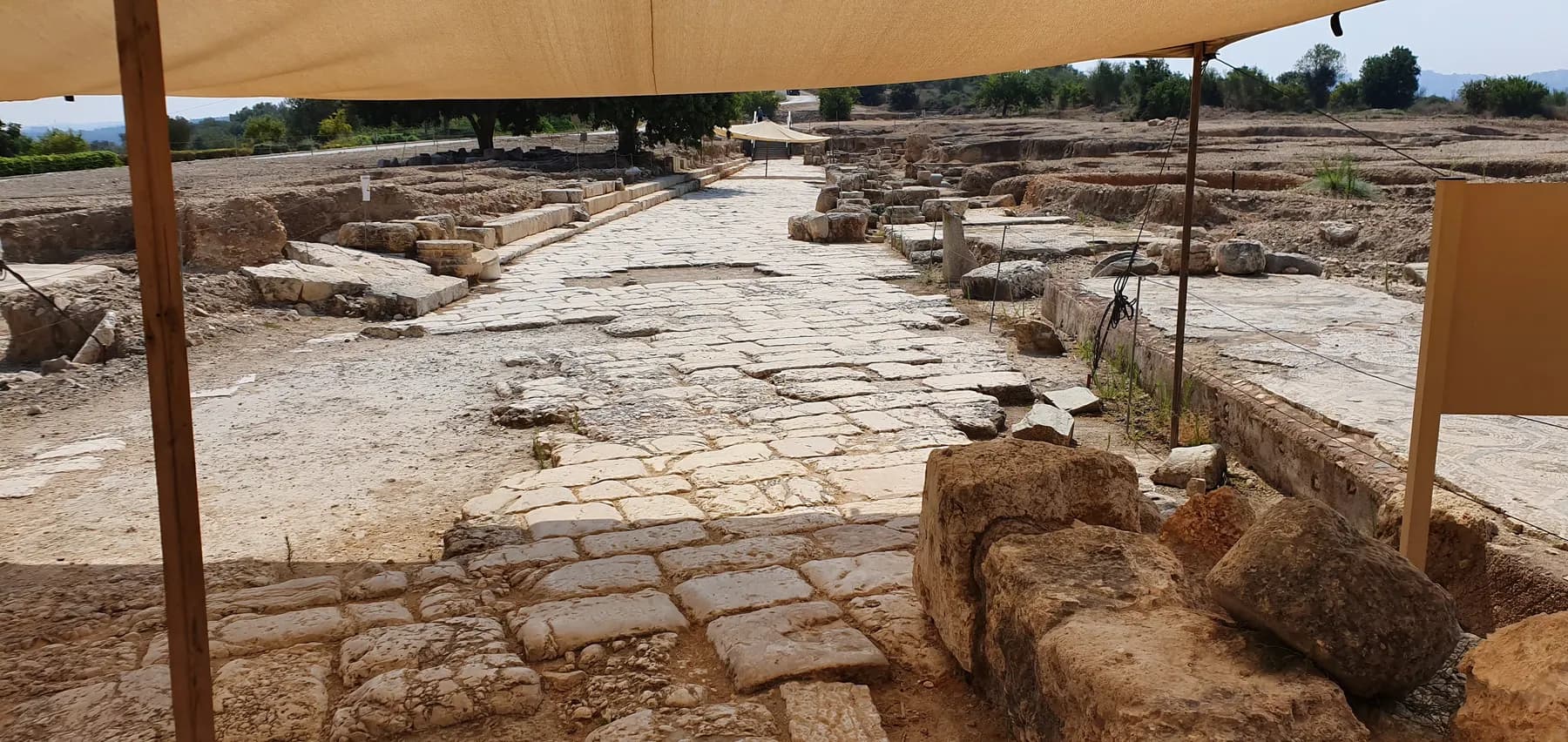
The city was rebuilt on a grid, apparently in the early second century CE, with a colonnaded cardo running north to south and a decumanus crossing it east to west, both paved in hard limestone and carrying mosaic under the porticoes. Small shops lined the street, part of what the Talmud calls Zippori's lower market. Zeev Weiss, who has directed the Hebrew University excavation since 1990, puts the population at its height at 15,000 to 20,000 people.
Rabbis
The Mishnah was closed here, a short walk from a Roman theatre
At the beginning of the third century CE, with the leadership of the town back in Jewish hands, Rabbi Judah ha-Nasi moved to Zippori and the Sanhedrin moved with him. He lived here for seventeen years until his death, and it was here, around 200 CE, that the Mishnah was redacted. The Talmud remembers Zippori as a city of eighteen synagogues with a number of named study houses. The Sanhedrin stayed until the second half of the third century, then moved on to Tiberias.
The archaeology of that Jewish city is on the western part of the hill: houses beside a paved street, in use from the first century BCE to the sixth century CE, including a first-century building with massive walls and two ritual baths. The number of mikva'ot across the quarter is high enough that the Parks Authority suggests the priestly course of Yedaya lived there. In 2016 Weiss's team also found hundreds of fragments of wall painting, with lion heads, birds and a tiger among the figures, dated to the early second century CE: the earliest figurative images at the site, a century older than the mosaics.
The theatre is the other half of the town, about seventy metres across, holding some 4,500 stone seats. Who built it is not settled: several reference accounts credit Herod Antipas, on the strength of his rebuilding programme, while the Parks Authority dates it to the end of the first century or the beginning of the second century CE, well after Antipas, who died in 39 CE. The Parks Authority's own brochure prints the rabbinic view of such buildings, quoting Rabbi Shimon ben Pazi on Psalm 1: happy is the man who did not go to theatres.
Floors
The floors, and the face everybody comes for
The Dionysus House stands at the top of the hill near the theatre, built in the third century CE and destroyed in the earthquake of 363, which is exactly why its dining-room floor survives: the rubble sealed it. The decorated part is laid out so that guests reclining on three sides could read the panels, which run through the life and worship of the wine god. In the border, in one medallion, is the head of a woman, the prize find of the 1987 season of the joint Duke and Hebrew University expedition. The Parks Authority calls her the Mona Lisa of Zippori; everyone else the Mona Lisa of the Galilee. Who she represents is not known.
The Nile House lies east of the cardo. Its largest floor shows the celebrations held in Egypt when the Nile rose, with a Nilometer marked at fifteen, sixteen and seventeen cubits, the gate of Alexandria and the Pharos lighthouse, and hunting scenes alongside. Ehud Netzer and Zeev Weiss, who uncovered it, dated the mosaic to the fifth or sixth century CE on its composition, which they connected to mosaics from Antioch, Apamea and Beirut. The Parks Authority counts eleven floors in the building, and one by the western entrance names the mosaicists themselves.
The synagogue is a long, narrow hall of about 7 by 15 metres in the north of the site, built at the beginning of the fifth century CE, with its direction of prayer facing away from Jerusalem rather than towards it. Its floor runs in bands: the binding of Isaac, a zodiac wheel, the tabernacle in the wilderness and the Ark in the Temple, read by the excavators as one argument about redemption. It carries more than twenty Greek and Aramaic inscriptions. The published discovery dates disagree: the Parks Authority says 1994, the excavation team's own accounts 1993.
The fourth great floor is one visitors often cannot see. The Orpheus House, of the later third century CE, has a dining-hall mosaic of four panels with Orpheus at the centre, and around 500 CE a church was built over it. The Parks Authority currently lists that lookout as closed for safety work.
- Dionysus House: third century CE, sealed by the 363 earthquake, with the Mona Lisa medallion in the border
- Nile House: the Nile flood celebrations, a Nilometer, the Pharos of Alexandria and hunting scenes
- The synagogue: early fifth century, four registers, more than twenty Greek and Aramaic inscriptions
- Orpheus House and the western church: currently behind a closed lookout
- The cardo: cartwheel ruts in the paving and a seven-branched candelabrum carved into one stone
Water
A reservoir 260 metres long, walked from the inside
There is no spring on the hill, and the whole city depended on water carried to it. The supply began at springs in the Nazareth hills near Mashhad and Reineh, with a discharge the Parks Authority puts at about 40 cubic metres an hour, and came in along two aqueducts, one cut into rock and one built. The Reineh line fed the great reservoir east of the city.
That reservoir is the reason many people come. It is 260 metres long, between two and four metres wide and about ten metres high, with a capacity of 4,300 cubic metres, which the Parks Authority reckons was two weeks' water for 18,000 people. It was cut where it is because that is the only high ground near Zippori in chalk, soft enough to hew. Water arrived through a settling basin five metres deep, and a valve at the outlet regulated the flow into town. There are two building phases, the second century CE and the fourth, and it stayed in use until the seventh. Below the valve a tunnel 235 metres long, driven using six vertical shafts, carried the water in.
The system before it is easy to miss. Two rock-cut reservoirs roofed on arches sit near the visitor centre, excavated between 2002 and 2018 by Tsvika Tsuk and colleagues, with a combined volume of 235 cubic metres and wall plaster dating them to the first or early second century CE. On Tsuk's reading they served the city until it grew and the great reservoir was cut; they were abandoned by the sixth century, one of them as a Byzantine winepress.
What survives
What here is ancient, and what was put back
The theatre is the clearest case, and the operator says so. The Parks Authority's Hebrew page describes it as a restored remnant of a Roman theatre; its English brochure is blunter, noting that some seats were robbed in antiquity and that those which remained were not found in their original position. The bowl cut into the rock slope is ancient. The tidy semicircle of seating a visitor walks into is a modern arrangement of ancient stone.
The fortress on the summit is a stack of periods rather than one building. It was raised in the Crusader period on the remains of something earlier, out of dressed stones robbed from older structures, with Roman sarcophagi set into its corners. The doorway with its decorative arch, and the wall to its right, were built in the eighteenth century by Daher el-Omar, the Bedouin ruler of the Galilee. At the end of the nineteenth century it was refurbished as a school for the children of Saffuriyya, and served as one until 1948. It now holds the site's exhibition, and the roof is the lookout.
The mosaics are original and in place, which is why the park's safety rules about them are unusually specific: do not walk on them, do not pour liquid on them, and do not touch, write on or scratch the plaster in the reservoir. Several floors sit under roofs built to shelter them. The residential quarter, by contrast, is presented as reconstructed, its lanes restored so that visitors can walk through them.
One Crusader building sits outside the circuit: the church over the traditional house of Anne and Joachim, the parents of Mary, beside the convent of the Sisters of St Anne. It holds Crusader remains along with granite columns, capitals, inscriptions from the synagogue, an ossuary and a stone tomb door. A lookout inside the park is where the Parks Authority sends visitors to see it, with the tomb attributed to Rabbi Yudan Nesiah below.
1948
Saffuriyya, the moshav and a park opened in 1992
The ancient name survived on the hill in Arabic. The Crusaders knew the place as Le Saphourie, and the Arab village here was Saffuriyya. When Leroy Waterman of the University of Michigan opened the first excavation at the site in 1931, he dug into ground beside the fortress that was then the village school's playground.
The village ended in the summer of 1948. The Parks Authority's own account states that during Operation Dekel, on the night of 15 July 1948, Saffuriyya was conquered and its residents abandoned the place, and adds that in 1936 to 1939 and again in 1948 the village housed Arab fighters acting against the local Jewish population. Middle East Eye, interviewing people displaced from the village, describes aircraft bombing the houses that July as families broke the Ramadan fast, expulsions at dawn, a village of more than 5,000, and a pine forest later planted over the levelled houses. The accounts differ on compulsion and sequence; they agree on the date and the outcome.
Moshav Zippori was founded in 1949 beside the site and took the ancient Hebrew name back. The national park covers 16 square kilometres and opened to the public in 1992. Excavation has never really stopped: Waterman in 1931, Tsvika Tsuk on the water system from 1975, James Strange for South Florida from 1983 to 2003, Duke with the Hebrew University from 1985, and the Hebrew University under Ehud Netzer and Zeev Weiss from 1990.
What to look for
Things not to walk past at Zippori National Park
The details that repay knowing about before you are standing in front of them.
The Mona Lisa of the Galilee
One medallion head in the border of the Dionysus House dining-room floor, uncovered in the 1987 season and considerably smaller than most visitors expect. Interpretive signs read the surrounding panels of the Dionysus cycle scene by scene.
The Nile House floor
The celebrations at the rising of the Nile, with a Nilometer marked at fifteen, sixteen and seventeen cubits, the Pharos of Alexandria and hunting scenes alongside. Dated by its excavators to the fifth or sixth century CE.
The synagogue mosaic
Four registers on the floor of a hall of about 7 by 15 metres: the binding of Isaac, a zodiac wheel, the tabernacle and the Temple, with more than twenty inscriptions in Greek and Aramaic. The prayer direction faces away from Jerusalem.
The underground reservoir and the shaft tunnel
A rock-cut chamber 260 metres long and about ten metres high, holding 4,300 cubic metres, with a 235-metre tunnel below the valve driven using six vertical shafts. The tunnel has reopened after conservation work.
The cardo and its cartwheel ruts
Grooves worn into the limestone paving by wagon wheels over centuries, on the colonnaded street that ran through Zippori's lower market. A seven-branched candelabrum is carved into one of the paving stones.
The fortress roof
Crusader below, an eighteenth-century doorway by Daher el-Omar, a village school until 1948, and now the site exhibition with a guided lookout on top over the Beit Netofa valley and the Byzantine storehouse to the south.
The long view
Zippori National Park, in order
103 BCE
Zippori is first mentioned, in the reign of Alexander Jannaeus.
55 BCE
Gabinius, Roman governor of Syria, declares Zippori the capital of the Galilee.
47 BCE
Herod is appointed governor of the Galilee and, on the Parks Authority's account, takes the city in a snowstorm.
4 BCE
After Herod's death the city is captured in revolt; Varus burns it and sells its Jewish inhabitants into slavery. Herod Antipas rebuilds and fortifies it.
66 CE
The people of Zippori make a treaty with the Roman army rather than join the First Revolt, and the city is spared.
c. 200 CE
Rabbi Judah ha-Nasi, resident here for seventeen years with the Sanhedrin, redacts the Mishnah.
132–135 CE
After the Bar Kokhba revolt the city is renamed Diocaesarea and its Jewish leadership replaced.
351 CE
A revolt against Gallus Caesar is put down by his general Ursicinus, who does not destroy the town.
363 CE
An earthquake demolishes the city. The Dionysus House is destroyed and its dining-room mosaic sealed under the rubble.
early 5th century
The synagogue is built in the north of the site, its prayer direction facing away from Jerusalem.
1187
The Crusader army marches from Le Saphourie to the Horns of Hattin, where Saladin defeats it.
18th century
Daher el-Omar, ruler of the Galilee, refortifies the village and rebuilds the fortress doorway.
1931
Leroy Waterman of the University of Michigan opens the first excavation, beside the village school.
15 July 1948
Saffuriyya is taken during Operation Dekel and its residents leave; the village is later levelled.
1949
Moshav Zippori is founded beside the site and takes the ancient Hebrew name.
1987
The Duke and Hebrew University expedition uncovers the woman's head later called the Mona Lisa of the Galilee.
1992
Zippori National Park, 16 square kilometres, opens to the public.
1993–1994
The synagogue is found and the underground reservoir is cleared for visitors.
2016
Hundreds of fragments of early second-century figurative wall painting are found, the earliest such images at the site.
Practical
Visiting Zippori National Park
Where
Zippori National Park, off Route 79 between kilometre stones 22 and 23, on the road from the Hamovil junction towards Nazareth, western Lower Galilee. Telephone 04-6568272.
What ticket you need
Zippori is a national park in its own right with a single gate and a single ticket; nothing here sits inside a larger paid site. It is on the list of parks where the Parks Authority's multi-site tourist cards are sold and honoured, and the Matmon annual subscription covers entry, so anyone holding one of those pays nothing further at the gate.
Opening hours
- Summer, Sunday to Thursday and Saturday
- 08:00–17:00source
- Summer, Friday and holiday eves
- 08:00–16:00source
- Winter, Sunday to Thursday and Saturday
- 08:00–16:00source
- Winter, Friday and holiday eves
- 08:00–15:00source
- Rosh Hashanah eve, Passover eve and Yom Kippur eve
- 08:00–13:00source
- Last entry
- One hour before the closing time listed, so 15:00 on a winter weekdaysource
Admission
- Adult
- ₪31source
- Child
- ₪16source
- Student
- ₪26source
- Israeli senior citizen
- ₪16source
- Adult in a group
- ₪26source
- Child in a group
- ₪14source
- Soldier in compulsory or national service, on the Hebrew price list
- ₪16, with reservists at ₪23 and school pupils at ₪8source
- Multi-site tourist cards, sold and valid here
- Blue card, 3 visits, ₪90; green card, 6 visits, ₪130; orange card, unlimited, ₪175, each valid two weeks from the first visitsource
Access
Partly, and the operator is specific about which parts. The Parks Authority lists as accessible: parking beside the main points of interest, the entrance pavilion and visitor service centre, paths of concrete, asphalt or timber, lavatories, shaded picnic areas and drinking fountains, shaded gathering areas for groups, viewpoints, directional and information signage, models of the site, a subtitled explanatory film watched seated, and entry to part of the antiquities, the synagogue among them. Vehicles may be driven into the site as far as the main points of interest, which changes the calculation for anyone who cannot manage the hill on foot. The operator does not extend that list to the underground reservoir, which is entered below ground and walked in the dark, to the six-shaft tunnel, which is narrow, or to the fortress roof lookout, which is reached by stairs. There is an accessible visit coordination form for visitors with disabilities, and an audio guide in simple language.
On site
- Service centre with hot and cold drinks, ice cream, fast food and snacks
- Souvenir and book shop, sun cream and hats
- Entrance pavilion with a site model and explanatory film
- Learning Center with guides in several languages
- Jennifer and Elisha picnic areas, shaded
- Lavatories
- Trip-Talk audio guide, scanned by code at each stop
- Car park, with vehicle access into the site
- Barbecues and campfires permitted in the designated areas
- Dogs on a lead and muzzled, but not inside the buildings
Booking
The Parks Authority runs a visit coordination system for Zippori. Registering in advance is not compulsory but it holds a place for the date chosen, and the operator states that a visitor who has registered and arrives to find the site full may be asked to show the coordination confirmation at the gate. Guided tours and workshops are arranged through the Lower Galilee instruction centre rather than at the gate.
Hours and prices are given as the operator publishes them and change without much notice, particularly around Shabbat and the festivals. Check the operator's own page before you travel for this.
Official page at en.parks.org.il →What people wish they had known
- Do not drive past the water system. The reservoir is 1.5 kilometres east of the ruins, at the entrance to the site, and it is the first stop on the Parks Authority's own route, not the last. Visitors who head straight for the mosaics usually run out of time and skip the one thing here they cannot see anywhere else.
- Check the operator's notices the morning of the visit. As of August 2026 the Parks Authority's Hebrew page states that the reservoir is only partly open, that the lookout over the Orpheus mosaic is closed for safety and maintenance work, and that the six-shaft tunnel has reopened after conservation. Those notices change without warning and the English page does not always carry them.
- Work backwards from the closing time, not the opening time. Last entry is a full hour before the gate closes, and in winter the gate closes at 16:00, so arriving at 15:15 in January means being turned away.
- Leave the mosaics dry. The park's safety rules ask visitors not to walk on the floors and not to pour liquid on them, and not to touch, write on or scratch the plaster inside the reservoir. Wetting a mosaic to lift its colours is a habit some guides have and the operator explicitly asks for it not to happen here.
- Expect the Mona Lisa to be small. She is a single head in a medallion in the border of a dining-room floor, roughly life-sized, not a wall panel; the surrounding Dionysus cycle is the larger and in some ways the more interesting part of the same mosaic.
- If walking the hill is a problem, say so at the gate. Cars are allowed into the site as far as the main points of interest, and the operator has a coordination form for visitors with disabilities, but neither is obvious from the car park.
The figures
Zippori National Park by the numbers
Each figure carries the year it belongs to and links the source it came from.
| Measure | Figure | As of | Source |
|---|---|---|---|
| Adult admission | ₪31 | 2026 | en.parks.org.il |
| Child admission | ₪16 | 2026 | en.parks.org.il |
| Length of the underground reservoir | 260 m, holding 4,300 cubic metres | 2025 | static-en.parks.org.il |
| Length of the shaft tunnel below the reservoir | 235 m, driven with six vertical shafts | 2025 | static-en.parks.org.il |
| Seats in the Roman theatre | about 4,500, in a bowl about 70 m across | 2025 | static-en.parks.org.il |
| Area of the national park, opened to the public in 1992 | 16 sq km | 2025 | static-en.parks.org.il |
| Height of the hill above sea level | 289 m | 2025 | static-en.parks.org.il |
| Mosaics uncovered at the site, third to fifth centuries CE | more than 70 | 2026 | zeevweiss.huji.ac.il |
While you are here
The rest of The Galilee
Everything else in this destination with a page of its own.
כובש המלפפונים / CC BY-SA 4.0 · Wikimedia Commons
Religious site
Basilica of the Annunciation
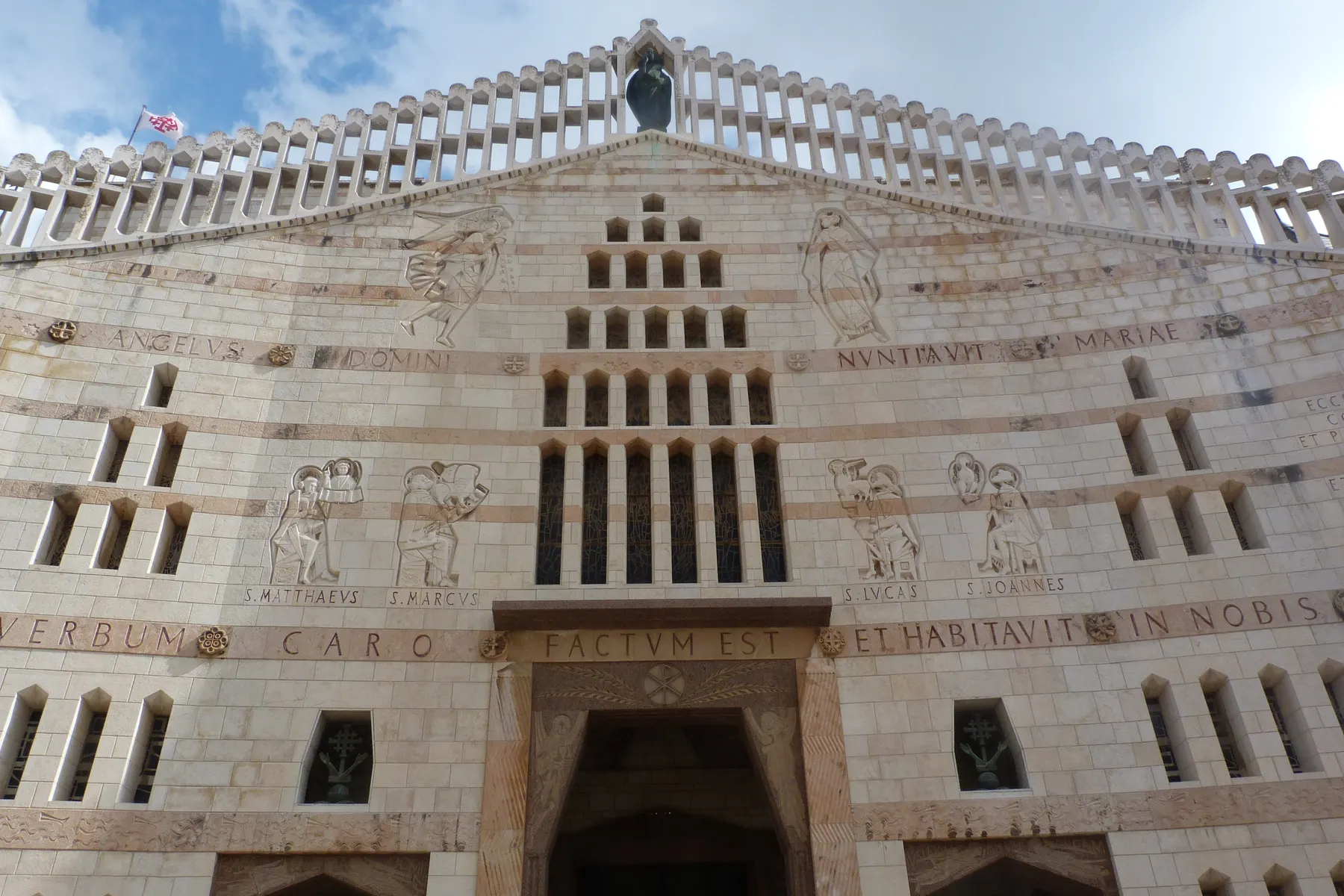
The Custody of the Holy Land dropped Antonio Barluzzi's design for this church and built Giovanni Muzio's instead: two churches stacked over one rock-cut cave, with the excavated village of Nazareth left open in the floor between them.
Museum
Nazareth Village
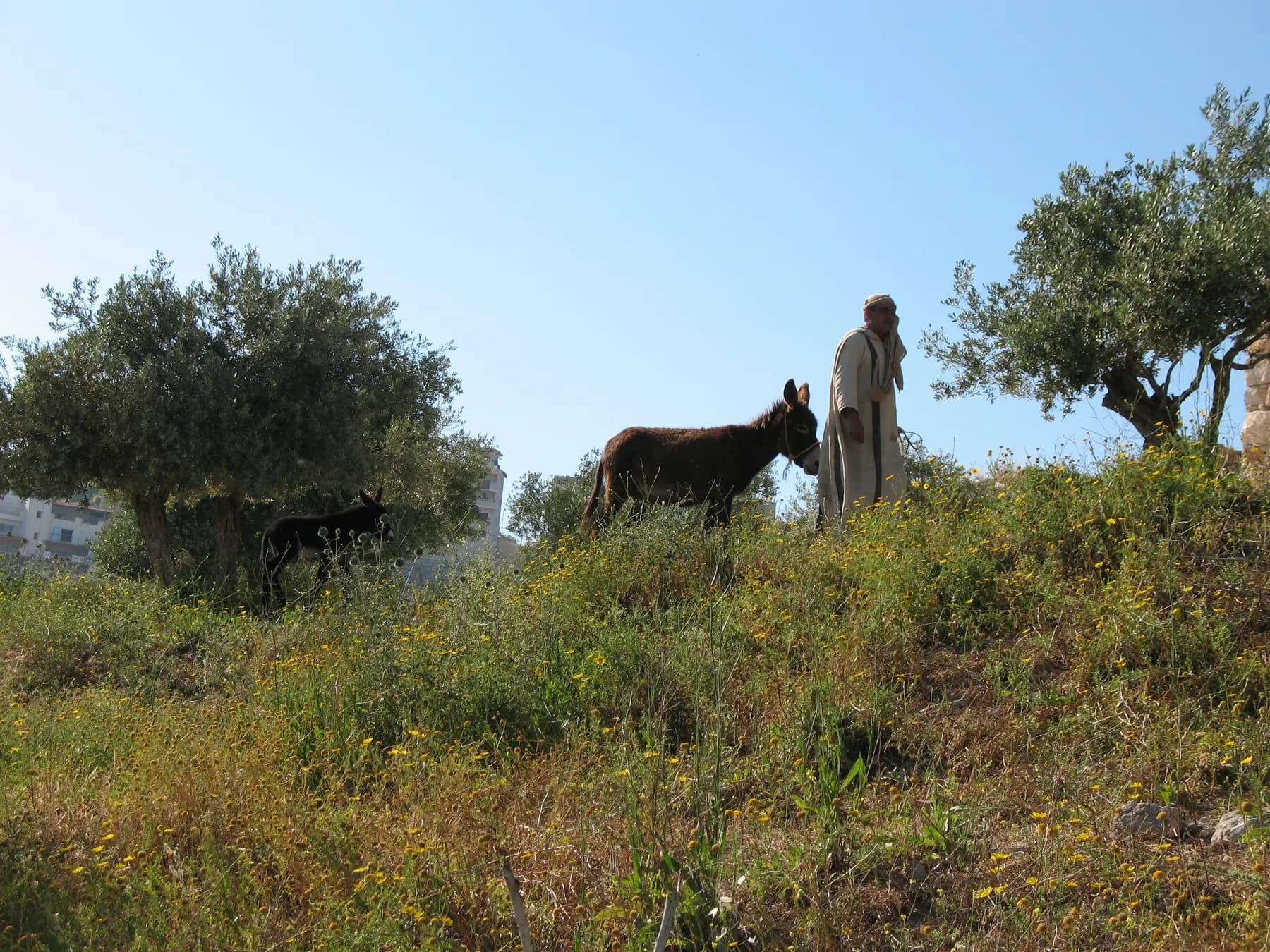
The hillside was quarried and farmed in the Late Hellenistic and Early Roman periods, and the wine press cut into its bedrock sits about 500 metres from the centre of the village Nazareth grew out of.
שלמה רודד / CC BY 2.5 · Wikimedia Commons
Archaeological site
Beit She'arim Necropolis
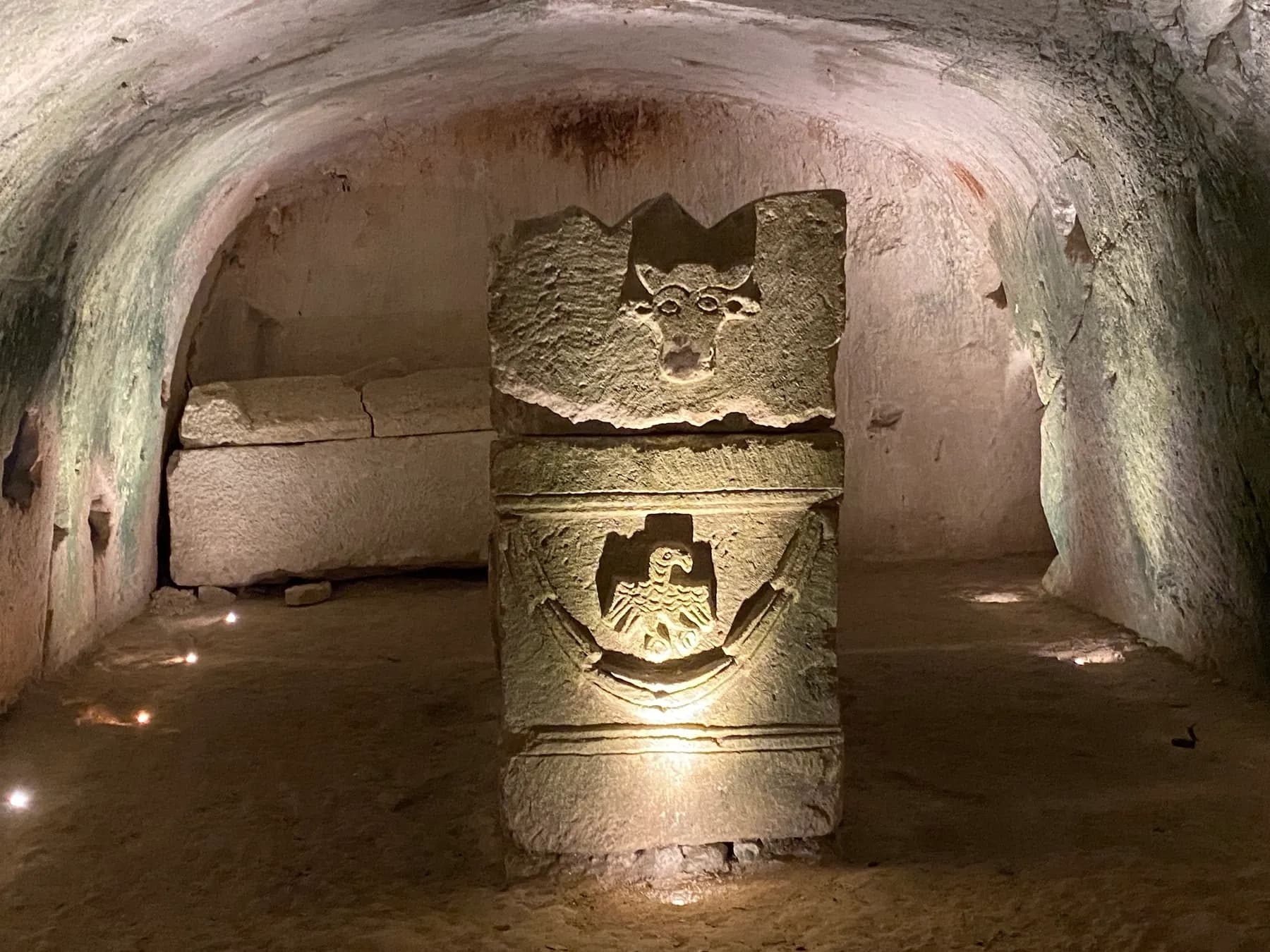
About thirty catacombs cut into the soft chalk of Sheikh Abreik hill, holding more than three hundred funerary inscriptions in Greek, Hebrew, Aramaic and Palmyrene, around the tomb attributed to Rabbi Judah ha-Nasi.
Sources and further reading
Every link below was opened and checked when this page was written. Official statements are marked as such: they are the subject's own account, not an independent one.
- OfficialIsrael Nature and Parks Authorityen.parks.org.ilZippori National Park
Summer and winter opening hours, the one-hour last-entry rule, the entrance fees of ₪31 adult, ₪16 child, ₪26 student and group adult, ₪14 group child and ₪16 Israeli senior, the facilities list, the telephone number and the Route 79 approach between kilometre stones 22 and 23
- OfficialIsrael Nature and Parks Authorityparks.org.ilגן לאומי ציפורי
The current site notices as of August 2026 that the reservoir is only partly open, the Orpheus mosaic lookout closed for safety work and the six-shaft tunnel reopened; the accessibility list; the fuller Hebrew price list including reservists at ₪23 and pupils at ₪8; the theatre at 4,500 seats; the eleven mosaic floors of the Nile House; and the suggestion that the priestly course of Yedaya lived in the quarter
- OfficialIsrael Nature and Parks Authoritystatic-en.parks.org.ilZippori National Park, visitor brochure
Research and text by Ze'ev Weiss and Tsvika Tsuk. The site history from 103 BCE to 1948, the excavation history from Waterman in 1931 onwards, the reservoir at 260 m and 4,300 cubic metres, the 235-metre shaft tunnel, the theatre seating and the note that surviving seats were not found in place, the fortress doorway by Daher el-Omar and its later use as a school, the synagogue at 7 by 15 metres, the park area of 16 square kilometres and its opening in 1992, and the site safety rules
- OfficialIsrael Nature and Parks Authorityen.parks.org.ilMoney Saving Tickets
The blue, green and orange multi-site cards at ₪90, ₪130 and ₪175, valid two weeks from the first visit, and the list of parks selling them, which includes Zippori National Park
- ReportingMiddle East Eyemiddleeasteye.netA place I do not recognise: Palestinians mark 70 years
Interviews with people displaced from Saffuriya: the bombing of the village in July 1948 as families broke the Ramadan fast, the expulsion at dawn, a village of more than 5,000, the levelling of the houses, and the pine forest later planted over the ruins beside moshav Tzipori
- ReportingHaaretzhaaretz.comThe Zippori National Park and its amazing mosaics
An independent visitor account of the site: the fifth-century synagogue floor, the Dionysus House dining-room mosaic and the woman named for the Mona Lisa, the theatre, the ritual baths, the Crusader Church of St Anne and a recommended three hours on site
- ReferenceZeev Weiss, Institute of Archaeology, Hebrew University of Jerusalemzeevweiss.huji.ac.ilSepphoris Excavations
The Hebrew University expedition working at the site since 1990 under Weiss, the grid street network with colonnaded cardo and decumanus laid out from the late first or early second century, the population estimate of roughly 15,000 to 20,000 at the city's height, and the count of more than 70 mosaics dating from the third to fifth centuries CE
- ReferenceInstitute of Archaeology, Hebrew University of Jerusalemarchaeology.huji.ac.ilUnique finds in Sepphoris excavations
The hundreds of Roman-period fresco fragments found in the summer of 2016 by the team under Zeev Weiss, dated to the early second century CE and identified as the earliest figurative wall painting at the site, about a century older than the mosaics
- ReferenceTsvika Tsuk, Ostracon, 2024frontinus.deThe Ancient Water System of Sepphoris (Land of Galilee 6)
The two arched reservoirs excavated between 2002 and 2018, their combined volume of 235 cubic metres, plaster dating their construction to the first or early second century CE, the shift of the system to the underground reservoir when the city grew in the first half of the second century, their abandonment in the sixth century, and the Byzantine winepress cut into the larger of them
- ReferenceEhud Netzer and Zeev Weiss, Biblical Archaeology Review 18:06 (1992), via the Center for Online Judaic Studiescojs.orgNew Mosaic Art from Sepphoris
The excavators' own account of the Nile Festival mosaic: the Nilometer marked at fifteen, sixteen and seventeen cubits, the gate of Alexandria and the Pharos, the hunting scenes, and the dating to the fifth or sixth century CE on comparison with mosaics at Antioch, Apamea and Beirut
- ReferenceHolyLandPhotosholylandphotos.orgSepphoris Nile Festival Building mosaics
The Nile Festival Building's plan around a central courtyard, its possible identification as a basilica, its construction around 400 CE and destruction by earthquake in the seventh century, and the identification of Netzer and Weiss as its excavators
- ReferenceEncyclopedia.com, from the Encyclopaedia Judaicaencyclopedia.comSepphoris
Sepphoris as capital of the Galilee from about 57 to 55 BCE, Herod's capture in 37 BCE, Antipas making it the ornament of all Galilee, the arrival of the Sanhedrin and Judah ha-Nasi, the editing of the Mishnah there, the 363 earthquake, and the more than twenty ritual baths found in the domestic quarter
- ReferenceBiblePlacesbibleplaces.comSepphoris
Josephus on the ornament of all Galilee, the attribution of the theatre to Herod Antipas that the Parks Authority's dating does not support, Waterman's 1931 excavation for the University of Michigan, Strange's survey from 1983, the Duke and Hebrew University team from 1985, and the Nile hunting scene and the triclinium mosaic
- ReferenceSee the Holy Landseetheholyland.netSepphoris
The Crusader Church of St Anne of the twelfth century over the traditional home of Joachim and Anne, the sequence of names from Zippori to Diocaesarea to Saffuriya, the theatre of 4,500 seats, and the note that Sepphoris never appears in the New Testament
Zippori National Park: common questions
What is Zippori National Park?+
It is the excavated Roman and Byzantine city of Sepphoris, capital of the Galilee, on a hill 289 metres above sea level about five kilometres north-west of Nazareth. The Israel Nature and Parks Authority runs it as a national park of 16 square kilometres, opened to the public in 1992. The main things to see are a Roman street grid, a theatre, a Crusader fortress, a fifth-century synagogue and a large group of mosaic floors.
What is the Mona Lisa of the Galilee?+
It is the head of a young woman in one medallion of the mosaic floor in the dining room of the Dionysus House, a mansion built in the third century CE and destroyed in the earthquake of 363. It was uncovered in the 1987 season of the joint Duke University and Hebrew University expedition. Who she represents is not known; the common suggestion that she is Venus rests on the cupid depicted beside her. The Parks Authority itself calls her the Mona Lisa of Zippori.
How much does it cost to get in?+
The Parks Authority publishes ₪31 for an adult and ₪16 for a child, with students and adults in groups at ₪26, children in groups at ₪14 and Israeli senior citizens at ₪16. Its Hebrew price list adds ₪23 for reservists, ₪16 for soldiers in compulsory or national service and ₪8 for school pupils. The multi-site tourist cards are sold here and valid here: ₪90 for three visits, ₪130 for six and ₪175 unlimited, each running two weeks from first use.
What are the opening hours?+
In summer the park opens 08:00 to 17:00 Sunday to Thursday and on Saturday, and 08:00 to 16:00 on Friday and holiday eves. In winter it is 08:00 to 16:00 and 08:00 to 15:00 respectively. On the eves of Rosh Hashanah, Passover and Yom Kippur it closes at 13:00. Entry to the park closes one hour before the stated closing time in every case.
How long do you need at Zippori?+
The Parks Authority's own touring route is written as three to four hours, and that is honest for a visit that includes the water system east of the ruins. Two hours covers the Dionysus House, the Nile House, the synagogue and the fortress at a brisk pace, without the reservoir. Anyone reading the interpretive signs on the Dionysus floor properly should budget the longer figure.
Can you actually walk through the underground reservoir?+
Yes, and it is the site's most unusual experience: a rock-cut chamber 260 metres long, between two and four metres wide and about ten metres high, walked below ground. It is not always open along its whole length. The Parks Authority's Hebrew page currently notes that the reservoir is only partly open, and the neighbouring 235-metre shaft tunnel was closed for conservation and safety works before reopening. Check the operator's page before travelling.
Is Zippori wheelchair accessible?+
Partly. The Parks Authority lists accessible parking near the main points of interest, an accessible entrance pavilion and service centre, paths of concrete, asphalt or timber, lavatories, shaded picnic areas and drinking fountains, viewpoints, a site model, a subtitled film watched seated and entry to part of the antiquities including the synagogue. Cars may be driven into the site as far as the main points of interest. The underground reservoir, the narrow shaft tunnel and the fortress roof lookout are not on that list, and there is a coordination form for visitors with disabilities.
Is Zippori the same place as Sepphoris?+
Yes. Zippori is the Hebrew name, Sepphoris the Greek and Latin form used in most scholarly writing, and Diocaesarea the name imposed after the Bar Kokhba revolt. The Crusaders called it Le Saphourie and the Arab village here was Saffuriyya. The Babylonian Talmud explains the Hebrew name by saying the city is perched on the mountain like a bird, though the Parks Authority notes that the real origin of the name is not clear.
Is it worth it if you have already seen mosaics at Caesarea or Beit She'an?+
Probably yes, because the reason to come here is the quality and the concentration rather than the fact of mosaic. Zeev Weiss, who has directed the excavation since 1990, counts more than seventy mosaics at the site, from the third to the fifth centuries, and the Dionysus, Nile and synagogue floors are figurative work of a different order from geometric paving. The Parks Authority's Hebrew page reports that many researchers regard the Dionysus floor as the high point of mosaic art in the country.
Is there shade, and does it matter which month you go?+
The main floors are under roofs and the picnic areas are shaded, but the streets, the theatre and the walk between them are open hillside with limited cover. In July and August the sensible plan is to be at the gate at 08:00 and do the exposed parts first, keeping the reservoir, which is cool underground, for the middle of the day. February to April is the pleasant season, and the underground reservoir is a reliable refuge whatever the month.