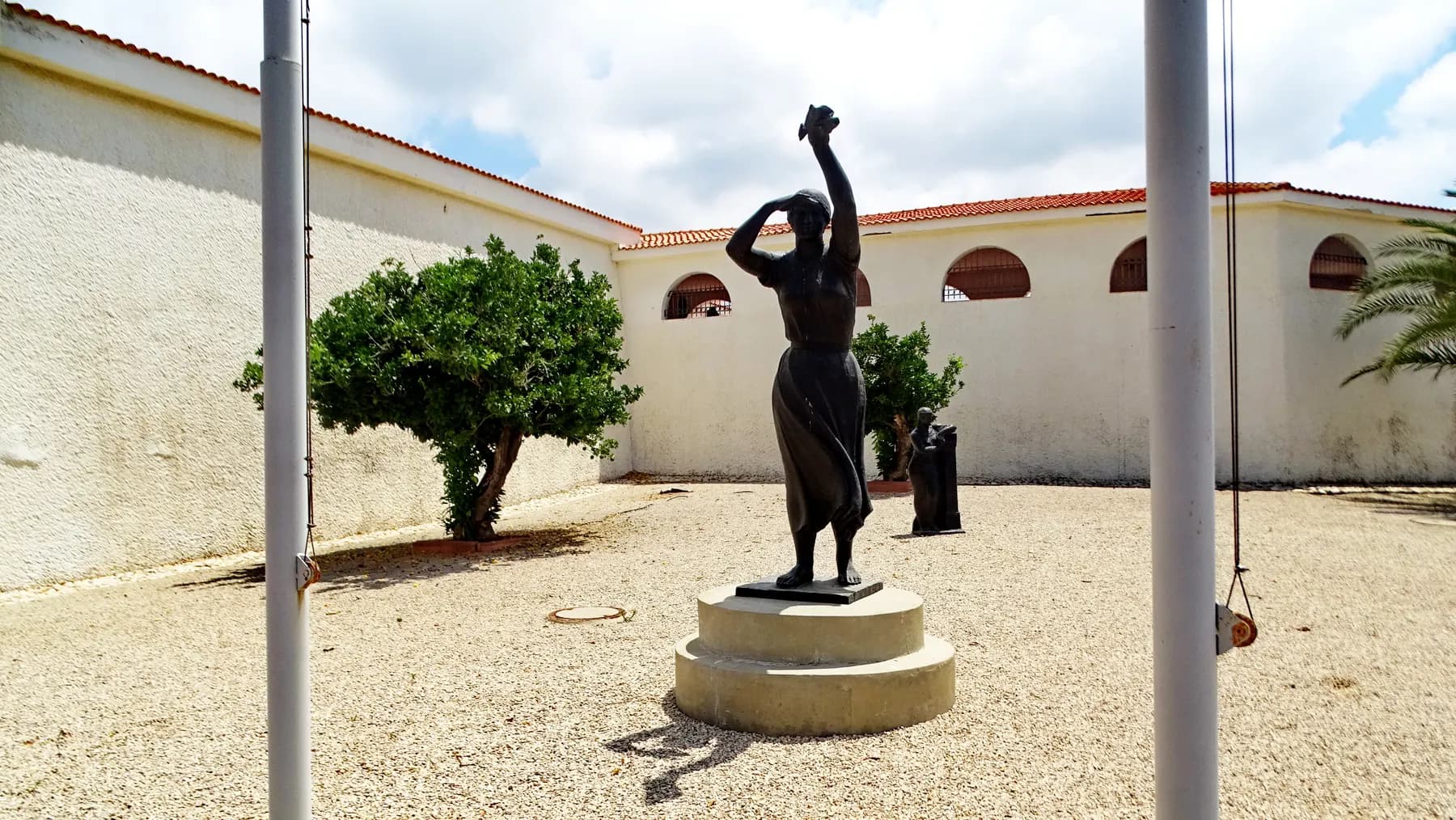
Museum · Caesarea
Ralli Museum
Two museums a retired banker built and endowed in the modern town above the ruins, both free to enter, one hung with Latin American surrealism and the other with European biblical painting of the sixteenth to eighteenth centuries.
israel zeller ישראל זלר / CC BY 2.5 · Wikimedia Commons
Admission
Free
at all five Ralli Museums, by the founder's rule
Buildings
Two
Ralli 1 opened 1993, Ralli 2 in 2007
Ralli 1
about 9,000 m²
five exhibition halls, figure from the foundation
Dali on permanent display
40 works
in the Salvador Dali hall at Ralli 1
In short
- How long to give it
- about 90 minutes for both buildings, longer with the grounds
- Monday, Tuesday, Thursday, Saturday
- 10:30 to 17:00
- All visitors, both buildings
- Free (₪0). The foundation publishes free entrance for every Ralli museum.
מוזיאון ראלי קיסריה
The Ralli Museum at Caesarea is a pair of privately endowed art museums that charge nothing to enter, standing in a park of lawn, palm, carob, citrus and olive in the modern town rather than in the national park down the hill. The Harry Recanati Foundation numbers them: Ralli 1, opened in 1993, and Ralli 2, opened in 2007. Between them they hold contemporary Latin American painting and sculpture, a hall given over to Salvador Dali, European biblical painting of the sixteenth to eighteenth centuries, and an archaeological exhibition about Caesarea itself.
The free entry is not an offer. Harry Recanati, a Salonika-born banker who was running what became the second largest bank in Israel before he was thirty five, left banking in 1980 and spent the rest of his life buying art and building museums to put it in. The foundation states the rule for all five of them in one line: all Ralli museums are open to the public free of charge. Its Caesarea pages list no shop, no cafe and no ticket desk.
It is also easy to drive past. Everything signposted at Caesarea is Roman or Crusader, and this is a late twentieth century complex in Spanish colonial and Moorish dress on Rothschild Boulevard, next to the water tower, shut on Sunday and Wednesday.
Orientation
One name over two buildings, with a park between them
Ralli Museum is a single name covering two separate buildings with two separate collections, and that is the first thing to get straight before arriving. The foundation's own pages number them. Ralli 1 opened in October 1993, the third museum of the group after Uruguay and Chile. Ralli 2 opened in April 2007. They share the same grounds, a short walk apart, and both are free.
The foundation puts Ralli 1 at about 9,000 square metres, with five exhibition halls and several octagonal patios, each with a fountain at its centre, under roofs of red terracotta tile. Ralli 2 has four floors, a Moorish exterior, and a central courtyard whose fountain is ringed by twelve stone lions, taken directly from the Court of the Lions at the Alhambra in Granada.
The size of the grounds is stated two ways by the operator and the two do not agree. The Caesarea page says the museums stand in a park of 40,000 square metres. The English About page for the same site calls it a 40 hectare sculpture garden, which would be ten times larger. The Hebrew record gives 40 dunams, which is 40,000 square metres, and that is the reading the smaller figure supports.
Sculpture is spread through the grounds rather than kept indoors: bronze, marble and acrylic, by European and Latin American hands, standing on lawn and gravel between the two buildings.
- Ralli 1: opened 1993, about 9,000 m², five exhibition halls
- Ralli 2: opened 2007, four floors, courtyard copied from the Alhambra
- Grounds: 40,000 m² of lawn, palm, carob, citrus and olive
- Admission: free at both buildings, on the founder's rule
Founder
The banker who decided art should not be sold a ticket
Harry Recanati was born in Salonika in 1918, into the Jewish community of that city. He joined the Tel Aviv bank his father Leon had founded in 1937, took it over at twenty six when Leon died in 1945, and by 1952 it was the second largest bank in Israel. The foundation's account of those seven years records more than forty branches opened and two local banks bought.
He moved to Geneva in 1952 and built private banking businesses in several countries. In 1962 he bought Ralli Brothers of London, a merchant house whose name the museums now carry. Business took him to Latin America repeatedly, and that is where the collecting started.
He bought two small banks from his brothers in 1969 and left banking altogether in 1980. The museums followed in order: Punta del Este in Uruguay in 1988, Santiago de Chile in 1992, Caesarea in 1993, Marbella in 2000, and the second Caesarea building in 2007. He set up the Harry Recanati Foundation so the museums would outlast him, and died in Israel on 18 December 2011.
What they are for is stated rather than implied. The foundation says its main aim is to acquaint the public with contemporary Latin American art, and that the museums are dedicated to the memory of the Jews expelled from Spain and Portugal during the Inquisition and of the Jewish community of Thessaloniki, which the Holocaust almost destroyed. Recanati came from that community.
Buildings
Spanish colonial on a coast that has none
Neither building pretends to be old and neither tries to blend into the Roman surroundings. The Hebrew record names Shaul Skolnik as the architect of the two. Both are done in a Spanish idiom: Ralli 1 in a colonial manner, Ralli 2 in a Moorish one, which is an unusual pair of references to find on the Israeli coast and a deliberate one given what the collections are about.
The device that does the work in both is the patio. Ralli 1 is organised around octagonal courts with a fountain at the centre of each, so the route through the halls keeps returning to open air and planting rather than running along a corridor. Ralli 2 puts one large courtyard at its heart and copies the Alhambra for it, fountain, lions and all.
Around that courtyard stand marble figures of Sephardi thinkers: Maimonides, Yehuda Halevi, Solomon ibn Gabirol and Spinoza. Putting them in a Granadan courtyard is the argument the building is making about where that tradition came from and what was done to it.
The planting is part of the design rather than a screen around it. The foundation lists palm, carob, citrus and olive across the grounds, and the sculpture is sited among them.
Ralli 1
Forty Dali works, a sculpture patio, and Herod's harbour downstairs
The permanent display at Ralli 1 comes in three parts. A hall given to Salvador Dali holds a collection of his sculpture, with forty of his works on permanent show. A sculpture patio carries the larger outdoor pieces, among them work by Auguste Rodin, Arman and André Masson. The remaining halls hang paintings and sculpture from the foundation's own holdings, all of them originals from the Ralli collection.
The core of that collection is Latin American and contemporary. The foundation is direct about what it thinks the interest is: work shaped at once by pre-Columbian culture, the Spanish conquest and European painting, which is why so much of it reads as surrealism. It also describes the Ralli holdings as one of the most important collections of contemporary Latin American art in the world, and that is the foundation's claim about itself rather than an outside judgement.
The third element is local and is the reason this museum belongs on a Caesarea itinerary rather than an art itinerary. Herod's Dream is an archaeological exhibition covering the city through the Hellenistic, Roman, Byzantine, Islamic and Crusader periods, with a section on Herod's harbour, Sebastos, following the description Josephus left. The foundation says the exhibition was produced in 1984 by the Smithsonian Institution and shown in the United States and Canada in 1988 and 1989 before settling here.
It works better as a first stop than a last one. Anyone who walks the national park afterwards has already seen the sequence of periods laid out in cases, which is exactly what the ruins then fail to label.
Ralli 2
Memory of Spain, hung with Old Masters
Ralli 2 is a different museum with a different subject, and visitors who assume it is an annexe of the first one miss most of it. It opened in April 2007 on the theme of Spanish Jewry, and its permanent collection is European painting of the sixteenth to eighteenth centuries on Old Testament subjects: Adam and Eve, Noah's ark, Abraham, Isaac, Moses.
The foundation is candid about how the pictures got here. They were acquired over the years, it says, having been forgotten for a long time, and needed a long process of recovery by professionals in the field. That describes a collection assembled from the neglected end of the market and restored, and the foundation names no individual artists on its own page for the exhibition.
Four floors is more building than most visitors budget for after the Dali halls. The courtyard is the part people photograph: the fountain with its twelve lions, and the philosophers in marble standing around it.
The two collections have almost nothing in common as art, which is the point of keeping them in separate buildings. What links them is the founder's own history, running from Granada in 1492 to Salonika in 1943 and out to Montevideo and Santiago, which is also the route the Ralli collection itself travelled.
In practice
Closed Sunday and Wednesday, which is the catch
The opening pattern is what catches people out. The foundation publishes the Caesarea museums as closed on Sunday and Wednesday, open 10:30 to 17:00 on Monday, Tuesday, Thursday and Saturday, 10:30 to 15:00 on Friday, and 10:30 to 12:30 on holiday eves. Sunday is an ordinary working day in Israel and a common day for a run up the coast, so the Sunday closure does more damage than the Wednesday one. Saturday opening, on the other hand, is unusual enough here to be worth planning around.
Entry is free and the foundation states the same for all five of its museums. Its Caesarea pages list no shop, no cafe, no guided-tour programme and no physical accessibility statement for the buildings. The address is Rothschild Boulevard, next to the water tower, and the telephone number it publishes is +972 4 626 1013.
This is not part of Caesarea National Park. The museums sit in the modern town, north-east of the ruins, under separate management and outside the park gates. A national park ticket has nothing to do with them, and their free entry has nothing to do with the park.
Budget more time than the buildings suggest from the road. Two museums and a sculpture park is more than an hour at a walk, and because there is no ticket there is nothing at the door to force a visitor to decide in advance how long to stay.
What to look for
Things not to walk past at Ralli Museum
The details that repay knowing about before you are standing in front of them.
The Salvador Dali hall
A hall at Ralli 1 given over to Dali sculpture, with forty of his works on permanent display. It is the part of the collection the museum leads with.
The sculpture patio
The larger outdoor pieces at Ralli 1, including work by Auguste Rodin, Arman and André Masson, set among octagonal courts with fountains at their centres.
Herod's Dream
An archaeological exhibition on Caesarea from the Hellenistic period to the Crusaders, produced by the Smithsonian Institution in 1984 and toured in North America in 1988 and 1989. Read it before walking the ruins, not after.
The Court of the Lions, again
Ralli 2's central courtyard copies the Alhambra: a fountain ringed by twelve stone lions, inside a building whose subject is the expulsion from Spain.
The philosophers in marble
Maimonides, Yehuda Halevi, Solomon ibn Gabirol and Spinoza, standing around the Ralli 2 courtyard rather than indoors.
The grounds
Palm, carob, citrus and olive across 40,000 square metres, with sculpture placed on the lawns and gravel between the two buildings. Free to walk even if the halls do not appeal.
The long view
Ralli Museum, in order
1918
Harry Recanati is born in Salonika, into the Jewish community of the city.
1937
He joins the Tel Aviv bank his father Leon Recanati founded.
1945
Leon dies and Harry, at twenty six, takes over the bank. By 1952 it is the second largest in Israel.
1962
He buys Ralli Brothers of London. The museums later take the name.
1980
He leaves banking altogether and collects art full time.
1988
The first Ralli Museum opens at Punta del Este in Uruguay.
1992
A second opens in Santiago de Chile.
October 1993
Ralli 1 opens at Caesarea, the third museum of the group.
2000
A museum opens at Marbella on the Costa del Sol.
April 2007
Ralli 2 opens at Caesarea, on the theme of Spanish Jewry.
18 December 2011
Harry Recanati dies in Israel. The Harry Recanati Foundation carries on the museums.
Practical
Visiting Ralli Museum
Where
Rothschild Boulevard, next to the water tower, Caesarea
What ticket you need
This is not inside Caesarea National Park and needs no park ticket. The museums are in the modern town on Rothschild Boulevard, north-east of the ruins, run by the Harry Recanati Foundation rather than by the Israel Nature and Parks Authority.
Opening hours
Admission
- All visitors, both buildings
- Free (₪0). The foundation publishes free entrance for every Ralli museum.source
Access
The foundation publishes no physical accessibility statement for the Caesarea buildings, so this cannot be answered from its own material. Ralli 1 has an upper floor with a covered balcony and Ralli 2 has four floors, and the ground between the two buildings is lawn and gravel rather than paving. Anyone who needs step-free access should ring +972 4 626 1013 before travelling. The approach itself is flat: this is a garden site in the modern town, not a climb.
On site
- Free entry
- Two exhibition buildings
- Sculpture garden
- No cafe or shop listed by the operator
Booking
No booking is published and no ticket is issued. The foundation gives a telephone number, +972 4 626 1013, for groups and enquiries.
Hours and prices are given as the operator publishes them and change without much notice, particularly around Shabbat and the festivals. Check the operator's own page before you travel for this.
Official page at rallimuseums.com →What people wish they had known
- Check the day before setting out. The museums are shut on Sunday and Wednesday, and Sunday is a normal working day in Israel, so a trip up the coast that starts the week arrives at locked gates.
- It is not in the national park. Drivers following signs for the harbour and the theatre end up at the wrong end of Caesarea; the address to give a satnav is Rothschild Boulevard, next to the water tower.
- There are two buildings, not one. Ralli 2, with the Alhambra courtyard and the biblical paintings, is a separate building from the Dali halls, and visitors who assume Ralli 1 was all of it leave having seen half.
- Friday is a short day at 10:30 to 15:00, and holiday eves are shorter still at 10:30 to 12:30. Neither leaves room for a leisurely lunch first.
- Bring water. The foundation lists no cafe and no shop at Caesarea, and the grounds are large and open.
- Take Herod's Dream before the national park rather than after. It sets out the Hellenistic to Crusader sequence in cases, which is the sequence the ruins then illustrate without labelling.
The figures
Ralli Museum by the numbers
Each figure carries the year it belongs to and links the source it came from.
| Measure | Figure | As of | Source |
|---|---|---|---|
| Admission | Free | 2026 | rallimuseums.com |
| Ralli 1 floor area | about 9,000 m² | 2026 | rallimuseums.com |
| Exhibition halls in Ralli 1 | five | 2026 | rallimuseums.com |
| Dali works on permanent display | 40 | 2026 | rallimuseums.com |
| Grounds | 40,000 m² | 2026 | rallimuseums.com |
| Lions round the Ralli 2 fountain | 12 | 2026 | rallimuseums.com |
| Ralli Museums worldwide | five | 2026 | rallimuseums.com |
| Days closed each week | two, Sunday and Wednesday | 2026 | rallimuseums.com |
While you are here
The rest of Caesarea
Everything else in this destination with a page of its own.
Beach
Caesarea Aqueduct and Aqueduct Beach
The arcade behind the sand north of the harbour is two Roman aqueducts built hard against each other, and in February 2026 three bodies signed a ₪39 million agreement to stabilise all 85 of its arches.
israel zeller ישראל זלר / CC BY 2.5 · Wikimedia Commons
Archaeological site
Crusader City and Ramparts
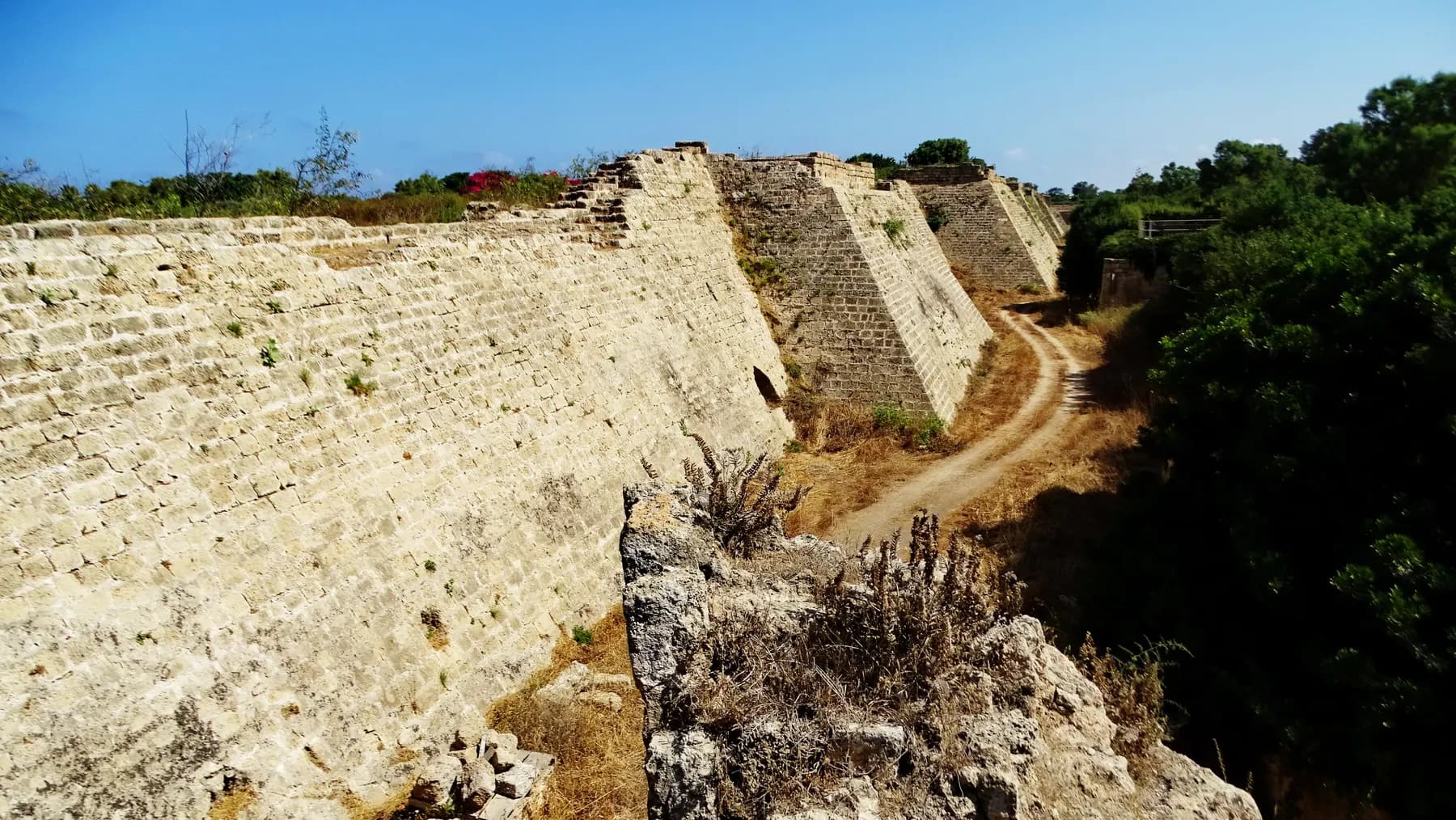
Louis IX of France walled a town of about 120 dunams here in 1251, a fraction of the Roman city, and cut a dry moat round it that the park's operator still measures at 8 to 10 metres deep.
Museum
Caesarea Harbour Visitors' Centre
Four of the fourteen Herodian vaults that carried the temple platform above the harbour were dug out, stabilised and opened to the public in June 2019, after about five years of work.
Sources and further reading
Every link below was opened and checked when this page was written. Official statements are marked as such: they are the subject's own account, not an independent one.
- OfficialHarry Recanati Foundationrallimuseums.comRalli Museums Caesarea
opening hours, free entrance, the address and the 40,000 m² park
- OfficialHarry Recanati Foundationrallimuseums.comAbout the Ralli Museums in Caesarea
the two buildings, 9,000 m², five halls, four floors, the twelve lions, the 1993 and 2007 openings
- OfficialHarry Recanati Foundationrallimuseums.comPermanent exhibitions, Caesarea
the Dali hall and its forty works, the sculpture patio, Rodin, Arman and Masson
- OfficialHarry Recanati Foundationrallimuseums.comHerod's Dream
the Smithsonian production of 1984 and the North American showing in 1988 and 1989
- OfficialHarry Recanati Foundationrallimuseums.comBible Stories
the Ralli 2 collection of sixteenth to eighteenth century biblical painting and how it was assembled
- OfficialHarry Recanati Foundationrallimuseums.comHarry Recanati
the founder's banking career, the five museums with their dates, and the free admission rule
- OfficialHarry Recanati Foundationrallimuseums.comRalli Museums
the foundation's stated aim and its four locations
- OfficialHarry Recanati Foundationrallimuseums.comContact, Ralli Museums Caesarea
address and telephone number, and the absence of any published cafe, shop or tour programme
- Officialharryrecanati.orgharryrecanati.orgHarry Recanati, biographical note
the banking chronology, independently of the museum pages
- ReportingThe Times of Israeltimesofisrael.com48 hours in Caesarea
an independent account of the Dali holdings and the harbour finds on display
- ReferenceWikipediaen.wikipedia.orgRalli Museum (Caesarea)
the twelve lions, Arman and Masson, and the Smithsonian archaeological collection
- ReferenceHebrew Wikipediahe.wikipedia.orgמוזיאון ראלי
the architect Shaul Skolnik, the October 1993 and April 2007 openings, and the garden given as 40 dunams
Ralli Museum: common questions
Is the Ralli Museum in Caesarea free?+
Yes. The Harry Recanati Foundation publishes free entrance for the Caesarea museums and states that all Ralli museums are open to the public free of charge. There is no ticket desk and no published booking requirement. The policy is the founder's, applied at all five museums in the group rather than being a local promotion.
What days is the Ralli Museum closed?+
Sunday and Wednesday. The foundation publishes opening at 10:30 to 17:00 on Monday, Tuesday, Thursday and Saturday, 10:30 to 15:00 on Friday, and 10:30 to 12:30 on holiday eves. Sunday is an ordinary working day in Israel, so the Sunday closure strands more visitors than the Wednesday one.
Is it inside Caesarea National Park?+
No. The museums stand in the modern town of Caesarea on Rothschild Boulevard, next to the water tower, outside the park and under separate management. A national park ticket does not cover them, and none is needed to visit them. The two can be done in the same day without difficulty.
What is the difference between Ralli 1 and Ralli 2?+
Different buildings, different collections. Ralli 1, opened in 1993, holds the Latin American collection, the Salvador Dali hall, the sculpture patio and the Herod's Dream archaeological exhibition across five halls. Ralli 2, opened in 2007, is four floors on the theme of Spanish Jewry, with European biblical painting of the sixteenth to eighteenth centuries and a courtyard modelled on the Alhambra.
How long does a visit take?+
About ninety minutes for both buildings at a normal pace, and longer if the sculpture garden is part of the plan. Ralli 1 has five exhibition halls and Ralli 2 has four floors, so treating it as a quick stop between the aqueduct and the harbour tends to fail.
Is there really a Dali collection?+
Yes. The foundation's permanent exhibitions page describes a collection of Dali sculpture at Ralli 1 with forty of his works on permanent display. Auguste Rodin, Arman and André Masson are also represented, mostly in the outdoor sculpture patio.
Is it worth it if Latin American art is not my thing?+
Probably, because two of the three permanent displays are not Latin American. Ralli 1 holds Herod's Dream, an archaeological exhibition on Caesarea produced by the Smithsonian Institution in 1984, and Ralli 2 holds European biblical painting of the sixteenth to eighteenth centuries. The buildings and the grounds are free to walk through in any case.
Is the Ralli Museum wheelchair accessible?+
The foundation publishes no physical accessibility statement for the Caesarea buildings, so the honest answer is that it cannot be confirmed from its own material. Ralli 1 has an upper floor and Ralli 2 has four floors, and the ground between them is lawn and gravel. Anyone who needs step-free access should ring +972 4 626 1013 before travelling. The site itself is flat, with no climb involved in reaching it.
Is there a cafe or a shop?+
The foundation lists neither on its Caesarea pages: no shop, no restaurant, no ticket desk. Bring water, particularly in summer, because the grounds are large and open. The restaurants are down at the harbour front, a few minutes away by car.