The Kinneret Rose 11cm in February and Stayed Below Its Bottom Red Line
A 12-cubic-metre-a-second flow down the Jordan River lifted Israel's national lake, but the Water Authority said only much heavier rain would close the gap.
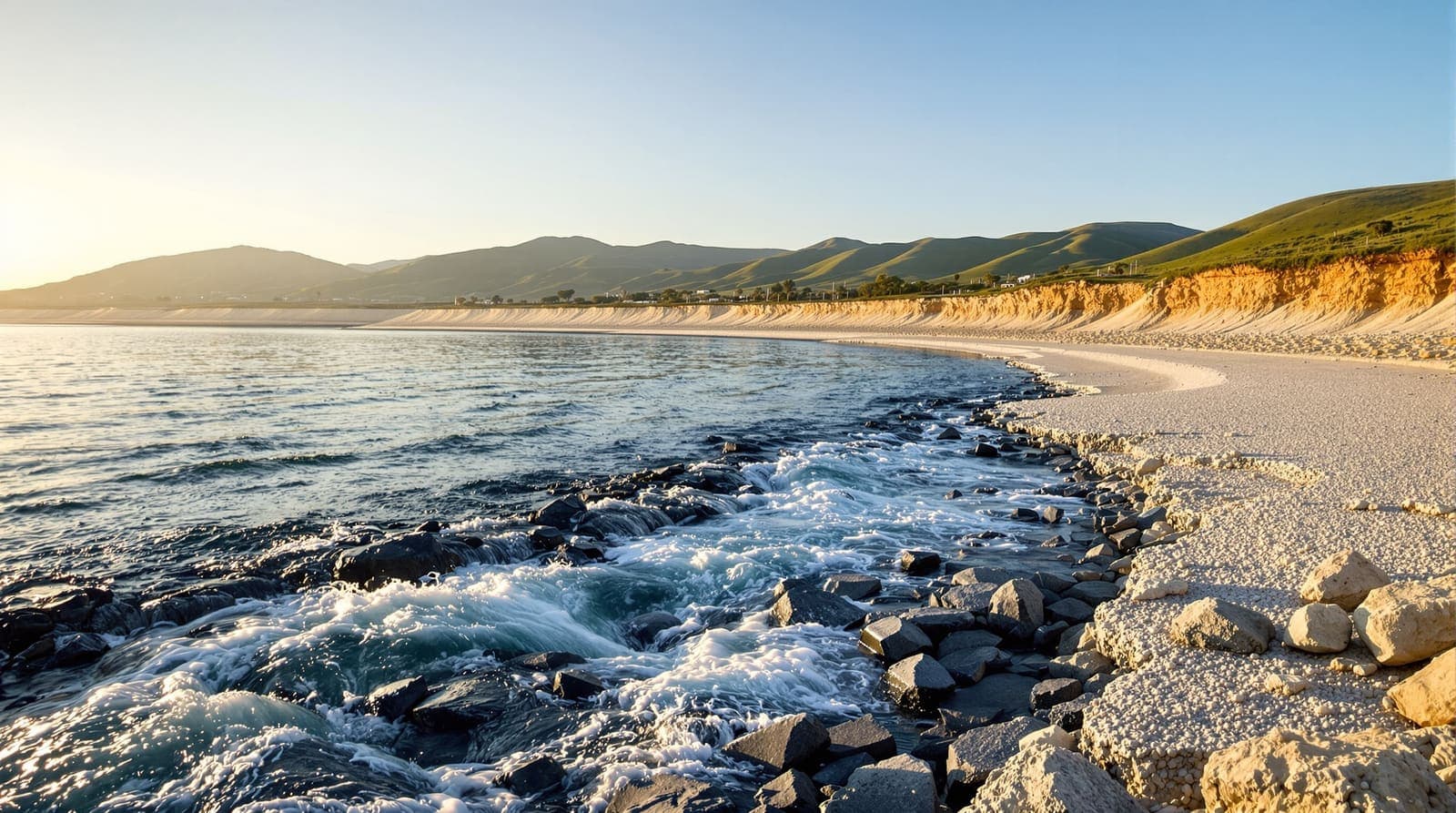
Illustration
The water level of the Sea of Galilee (the freshwater lake Israelis call the Kinneret, in the north of the country) rose 11 centimetres during February, the Israel Water Authority said in an update issued on 16 February 2026. The Authority put the rise down to a flow of 12 cubic metres per second coming down the Jordan River, together with recent rainfall in the north.
The Authority did not present the gain as a recovery. “A lot more rain and precipitation are needed to fill the gap in the national lake,” it said. The statement did not give the lake's actual level, and did not say how much of the month's rise came from rain falling directly on the water rather than from the river.
Why 11 centimetres barely moves the needle
Eleven centimetres sounds like progress until it is set against the hole the lake was in. Two weeks before the February update, the Jerusalem Post reported that the Kinneret was sitting 4.43 metres below its maximum level and 23 centimetres below the lower of its management thresholds, and that it had risen only 15 centimetres through the whole of January despite heavy precipitation nationally. A gain of 11 centimetres over the following month was therefore not enough to lift the lake back over that threshold. The Kinneret Authority's explanation, quoted in the same report, was that the winter's rain had fallen mainly on central and southern Israel rather than on the lake's northern catchment, and that streams running off a bed left dry by the previous year were soaking up much of what did fall.
The starting point was unusually low. In November 2025 Ynetnews reported that the lake had dropped to its lowest level since 1980, roughly 4.5 metres below capacity, and had been falling by more than 2.5 metres a year over the preceding two years, against a historic drought-year norm of 90 centimetres to 1.2 metres.
The red lines, and the black one below them
Israeli water managers track the Kinneret against three marks, as the news agency JNS set out in an October 2025 feature: an upper red line, above which the lake is effectively full and water is released downstream; a lower red line, below which pumping is meant to stop; and a black line, beneath which the damage to the lake is considered irreversible. The Jerusalem Post's February report put the lake 1.65 metres above that black line.
The lake matters far beyond the Galilee. It is Israel's largest body of fresh water and, since the 1960s, the starting point of the National Water Carrier, the pipeline and pumping system that moves water to the coastal plain and on to the Negev desert, according to Britannica.
Desalinated seawater now flows the other way
What has changed is that the Kinneret is no longer the tap it once was. Israel's drinking water now comes mainly from desalination plants on the Mediterranean coast, and a reversed section of the carrier lets the state pump treated seawater north into the lake instead of drawing water south out of it, a project JNS reported cost close to a billion shekels. Ynetnews reported in November 2025 that roughly 1,000 cubic metres an hour were being pumped in, with the head of the Kinneret Division calling the rate of decline “unprecedented and very worrying” and saying that stabilising the level would need several times that flow.
What happened after February
The rain the Authority asked for came late. Globes reported on 31 March 2026 that heavy precipitation in the final week of March had pushed the Kinneret back above the bottom red line, ending the month 20.5 centimetres above it and 3.995 metres short of full.
What the Water Authority did not say
The February statement gave no level in metres, no comparison with the same month in previous years, and no forecast. It did not say how long the 12-cubic-metre-per-second Jordan flow had been running or whether it was expected to hold. Nor did it address what the shortfall means for pumping restrictions, for farmers in the Jordan Valley, or for the lake's salinity.
Sources and further reading
Every link below was opened and checked when this page was written. Official statements are marked as such: they are the subject's own account, not an independent one.
- ReportingThe Jerusalem Postjpost.comKinneret remains below red line despite above average rainfall this winter
Lake level, red-line position and rainfall distribution as of 2 February 2026
- ReportingYnetnewsynetnews.comSea of Galilee water level falls to lowest point in decades, alarming Israeli experts
November 2025 record low, rate of decline and the pumping of desalinated water into the lake
- ReportingGlobesen.globes.co.ilKinneret ends March above bottom red line
Where the lake stood at the end of the 2025-26 rainy season
- ReportingJNSjns.orgRefilling the Kinneret: Israel's bold experiment in water security
The upper red, lower red and black lines, and the reversed carrier scheme
- ReferenceBritannicabritannica.comSea of Galilee
The lake's geography and its role as the head of the National Water Carrier
How we checked this
The 11-centimetre rise, the 12-cubic-metre-per-second Jordan River flow and the quoted appeal for more rain come solely from the Israel Water Authority statement of 16 February 2026 as carried in the original release. The surrounding figures on red lines, the record low and the reversed water carrier were taken from dated Jerusalem Post, Ynetnews, Globes and JNS reports and are attributed in the text; the lake's level was not independently measured.
Our sourcing and corrections policy →The week from Israel, in one email
The stories that mattered, sourced and checked by the Israel.com newsroom. Free, weekly, one-click unsubscribe.
One list, unsubscribe in a click. See our privacy policy.
More in Environment
All environment →
Latest
- IDF says Khan Younis strike killed Nukhba operative tied to Steinberg's death
- Yair Golan sues Sara Netanyahu for millions over Channel 14 remarks
- Ariel man, 53, found alive after entering Palestinian village overnight
- Houthi forces reported streaming into Yemen's port city of Mocha
- Israel says three Hamas weapons depots destroyed in strikes across Gaza
- Advisers warned Trump the Iran war could outlast his presidency