Buses Back to 45% and No Purim Night Lines Anywhere in Israel
The transport ministry said services would expand to about 45% of normal, with the Jerusalem and Tel Aviv light rail still shut and no special routes for Purim.
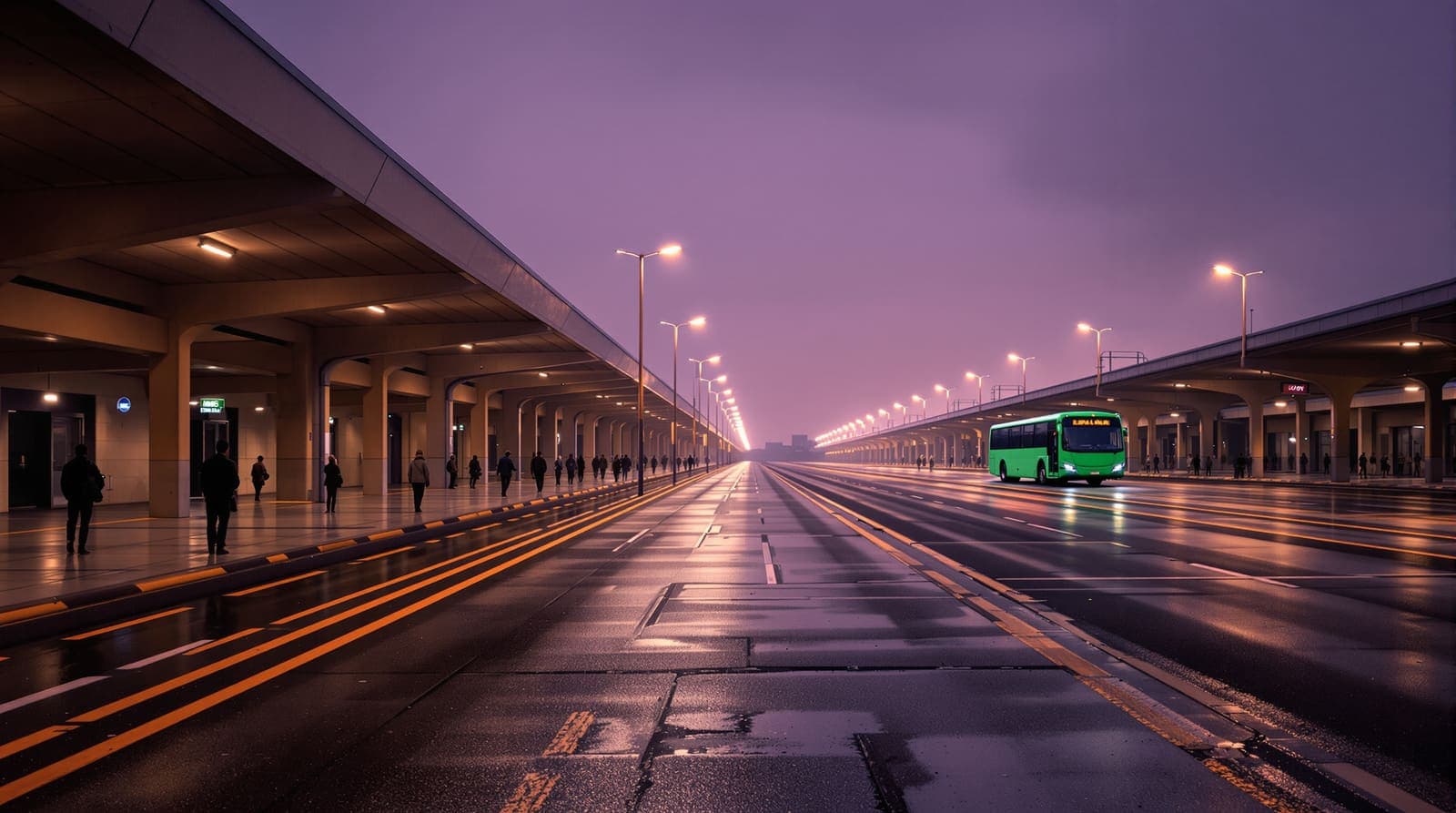
Illustration
Israel's Ministry of Transportation said on 1 March 2026 that public transport would continue running in an emergency format under the instructions of the Home Front Command and security officials, and that the following day the scope of service across all systems would be widened to roughly 45 percent of normal operations.
Israel Railways, the ministry said, was operating from concentrated hubs adapted to the emergency. On security instructions the light rail in Jerusalem and in Gush Dan (the Tel Aviv metropolitan area) and the Carmelit in Haifa were not running until further notice, and the “Al HaKav” public transport service centres were closed nationwide. The ministry asked the public to obey Home Front Command instructions and avoid non-essential travel, recommended checking apps and information sites before setting out, and gave *8787 as the number for the Public Transportation Service Center.
A holiday stripped back to the minimum
The notice covered two dates in the Jewish calendar. The Fast of Esther, a dawn-to-dusk fast on 2 March, precedes Purim, the carnival festival on 3 March that marks the rescue of the Jews of the Persian empire as told in the Book of Esther, normally the noisiest night of the Israeli year, with street parties, costumes and extra buses running late. The ministry said there would be no reinforcements to lines, no special holiday services, no night lines and no special Purim routes, unlike previous years; active lines would run their regular routes. Information about Shushan Purim in Jerusalem on 4 March, when the city marks the festival a day later, would follow according to the situation assessment.
Why the timetable was being set by the army
The emergency dated from 28 February 2026, when the United States and Israel launched a combined air campaign against Iran and Iran fired back at Israel and at American bases in the region, the Institute for the Study of War recorded. In Israel the practical consequence is that the Home Front Command, an IDF command, sets the rules for civilian life: what opens, how many people may gather, and how much of the transport network runs. Over Purim it banned gatherings outright, with an IDF spokesperson saying all gatherings were prohibited regardless of purpose or location; public readings of the megillah were cancelled and rabbis endorsed household and Zoom readings instead, The Times of Israel reported.
The dial moved later in the war
The 45 percent figure is a setting on a dial rather than a fixed policy. By early June 2026, under a Home Front Command “restricted activity” regime, public transport was running at about 75 percent of normal, trains and light rail were operating again and underground stations in the Dan Region had been opened as public shelters, while schools stayed shut and outdoor gatherings were capped at 200 people, The Jerusalem Post reported.
What is still unclear
The ministry gave no breakdown of the 45 percent (which lines, which regions, which hours) and did not say which railway hubs were in use. It did not say when the light rail systems or the Carmelit might resume, nor what conditions would trigger a further expansion or a cut. No figure was given for how many passengers the reduced network was carrying.
Sources and further reading
Every link below was opened and checked when this page was written. Official statements are marked as such: they are the subject's own account, not an independent one.
- ReportingTimes of Israeltimesofisrael.comFrom Zoom megillahs to sirens during reading, all you need to know about Purim at war
The gathering ban and how Purim 2026 was observed under it
- ReportingInstitute for the Study of Warunderstandingwar.orgIran Update Evening Special Report, February 28, 2026
The start of the emergency the transport measures respond to
- ReportingJerusalem Postjpost.comUnderground hospitals, no school: Israel transitions to restricted activity mode after Iran strikes
How the Home Front Command's restrictions and transport levels changed later in the war
How we checked this
The service levels, suspended lines and holiday arrangements are taken from the Ministry of Transportation's notice of 1 March 2026. The gathering ban over Purim comes from Times of Israel reporting of 2 March 2026, the start of the war from the Institute for the Study of War, and the later 75 percent figure from Jerusalem Post reporting in June 2026.
Our sourcing and corrections policy →The week from Israel, in one email
The stories that mattered, sourced and checked by the Israel.com newsroom. Free, weekly, one-click unsubscribe.
One list, unsubscribe in a click. See our privacy policy.
More in Transport
All transport →


Latest
- IDF says Khan Younis strike killed Nukhba operative tied to Steinberg's death
- Yair Golan sues Sara Netanyahu for millions over Channel 14 remarks
- Ariel man, 53, found alive after entering Palestinian village overnight
- Houthi forces reported streaming into Yemen's port city of Mocha
- Israel says three Hamas weapons depots destroyed in strikes across Gaza
- Advisers warned Trump the Iran war could outlast his presidency