Jerusalem Passes a Million, and Keeps Losing People to Other Towns
Israel's largest city counted 1,046,300 residents before Jerusalem Day 2025, even as 7,800 more people moved out to other Israeli towns than moved in.
Illustration
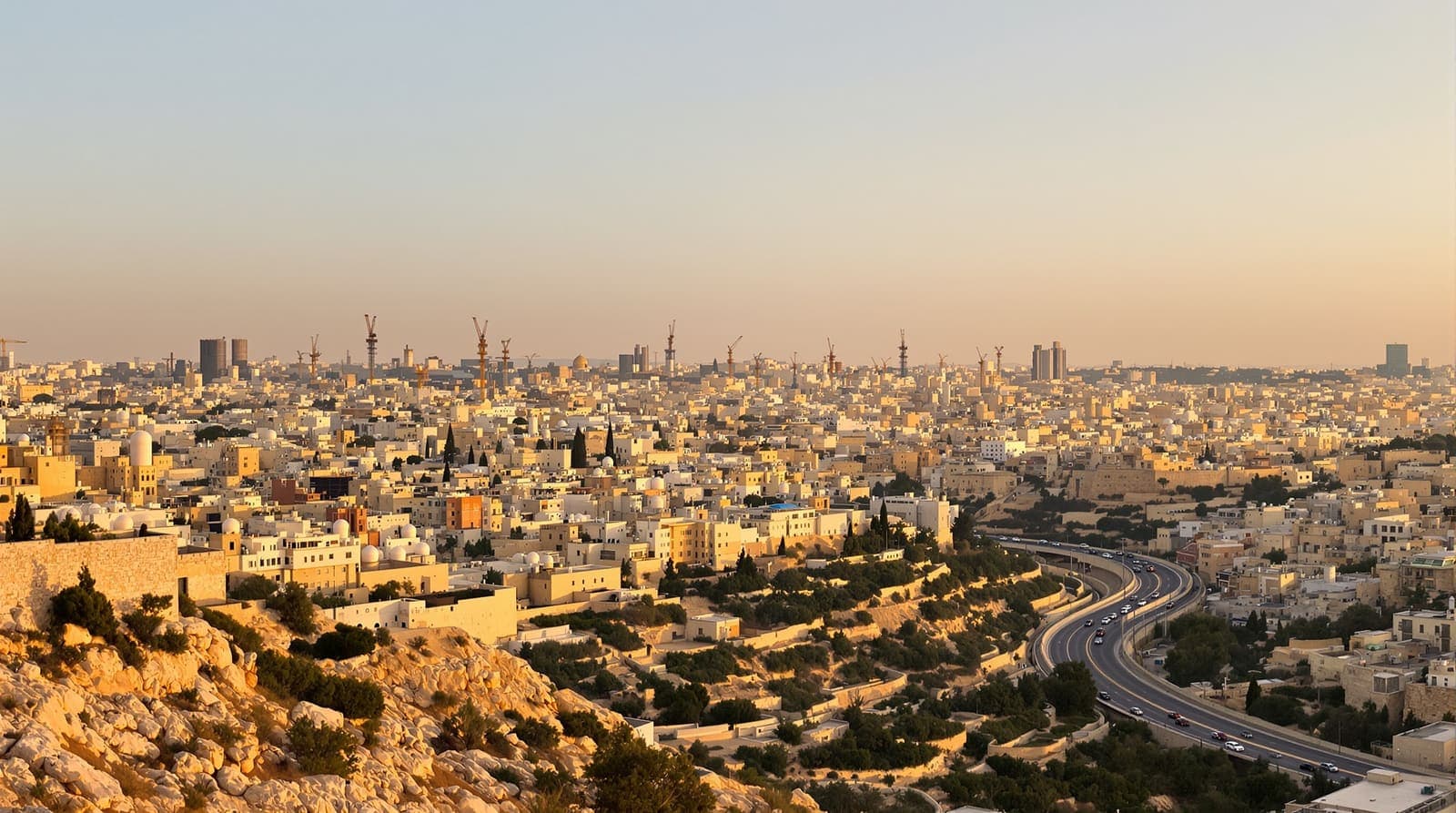
Jerusalem’s population was estimated at 1,046,300 ahead of Jerusalem Day 2025, making it comfortably Israel’s largest city, according to figures released by the Central Bureau of Statistics before the holiday began on Sunday night. At the end of 2024, 56.9 per cent of residents were Jews and others, 38.2 per cent were Arabs and 4.9 per cent were foreign nationals.
The city grew by roughly 17,900 people during 2024, but the composition of that growth is the interesting part. Some 21,500 were added by natural increase (births minus deaths) and about 1,500 by international migration, while 7,800 were subtracted by internal migration, because more people left Jerusalem for other places in Israel than moved to it. The foreign population rose by 3,700 compared with 2023. As of the end of 2023, about 29.5 per cent of all city residents were Haredi, or ultra-Orthodox, amounting to roughly half (51 per cent) of the Jews and others living there.
What Jerusalem Day marks
Jerusalem Day is an Israeli national day commemorating Israel’s capture of East Jerusalem, including the Old City, from Jordan during the Six-Day War in June 1967, an event Israel describes as the reunification of the city. It falls on 28 Iyar in the Hebrew calendar, usually in May. The Knesset established the day in 1968 and passed a Jerusalem Day Law in 1998, according to reference material on the holiday. Its most visible feature is the flag march through the city that ends at the Western Wall.
A younger, larger household than the rest of the country
Jerusalem’s demography diverges sharply from national averages. The total fertility rate (the average number of children a woman is expected to have) stood at 3.70 in Jerusalem against 2.87 nationally. Among Jewish and other women in the city it was 4.40, against 2.95 nationally; among Arab women it was 2.81, against 2.60. Mothers in Jerusalem have their first child about two years and ten months earlier than the national average, at 24.6 against 27.4. The average Jerusalem household contains 3.79 people against a national 3.18.
The labour figures move in the other direction. Only 51.7 per cent of Jerusalem residents participated in the labour force in 2024, against 62.7 per cent nationally, and 70.9 per cent of employed residents worked inside the city itself. For scale: Israel’s total population stood at 10.148 million in September 2025, of whom 78.6 per cent were classified as Jews and others and 21.4 per cent as Arab citizens, The Jerusalem Post reported from the bureau’s annual review. Jerusalem’s Arab share is therefore close to double the national one.
What the following year looked like
The pattern held. By Jerusalem Day 2026 the bureau put the city’s population at 1.063 million, with 56.6 per cent Jews and others, 38.4 per cent Arabs and 4.9 per cent foreign nationals, and about 29.2 per cent Haredi, JNS reported. The city added roughly 13,100 residents during 2025 (fewer than the year before), with natural increase of about 21,000 offset by an internal migration loss of 8,300, larger than 2024’s. The fertility rate edged down to 3.68.
What the figures do not tell you
The release did not say where the people leaving Jerusalem went, or why, and it offered no explanation for a labour force participation rate eleven points below the national figure. The data is also not all from the same moment: the Haredi share is measured to the end of 2023 while the population breakdown is measured to the end of 2024, and the headline total is a projection to Jerusalem Day itself. Detailed municipal data of this kind is compiled separately in the statistical yearbooks published by the Jerusalem Institute for Policy Research.
Sources and further reading
Every link below was opened and checked when this page was written. Official statements are marked as such: they are the subject's own account, not an independent one.
- ReportingJNSjns.orgJerusalem has 1.063 million residents
The Central Bureau of Statistics figures released for Jerusalem Day 2026
- ReportingThe Jerusalem Postjpost.comIsrael's annual stats: 2025 population, economy, society
National population totals and the Jewish and Arab shares for comparison
- DataJerusalem Institute for Policy Researchjerusaleminstitute.org.ilJerusalem Institute for Policy Research
Publisher of the statistical yearbooks covering the city in detail
- ReferenceWikipediaen.wikipedia.orgJerusalem Day
What the day commemorates and its status in Israeli law
How we checked this
Every 2025 figure in this article is from the Central Bureau of Statistics release issued before Jerusalem Day 2025 and reproduced in the original text. The 2026 update was checked against JNS reporting of the bureau's later release, and the national totals against Jerusalem Post coverage of the bureau's annual review of September 2025.
Our sourcing and corrections policy →The week from Israel, in one email
The stories that mattered, sourced and checked by the Israel.com newsroom. Free, weekly, one-click unsubscribe.
One list, unsubscribe in a click. See our privacy policy.
More in Israel
All israel →

Latest
- IDF says Khan Younis strike killed Nukhba operative tied to Steinberg's death
- Yair Golan sues Sara Netanyahu for millions over Channel 14 remarks
- Ariel man, 53, found alive after entering Palestinian village overnight
- Houthi forces reported streaming into Yemen's port city of Mocha
- Israel says three Hamas weapons depots destroyed in strikes across Gaza
- Advisers warned Trump the Iran war could outlast his presidency