

By Pesach Benson • June 1, 2026
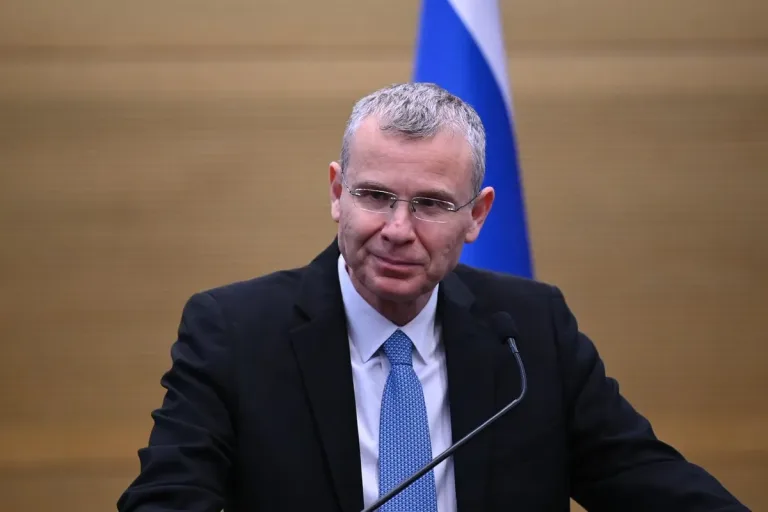
Jerusalem, 1 June, 2026 (TPS-IL) — Israel’s High Court on Monday ordered Justice Minister Yariv Levin to immediately convene the Judicial Selection Committee to resume the appointment of district court judges, in a ruling that sharply criticized the prolonged paralysis in judicial appointments and warned that the court system is under mounting strain.
The three-judge panel’s unanimous decision said the shortage of judges has “severely impacted the court system’s ability to ensure the law is enforced and to provide a high-quality, efficient service to the general public,” and instructed that priority be given to filling vacancies in Beer-Sheva and Haifa.
The ruling found that Levin has refused for approximately a year and a half to convene the committee due to a lack of broad agreement on candidates. It also noted that shortages now extend across “all tiers of the judicial branch,” and said the impact has become increasingly severe as caseloads rise. While the court clarified that Levin is not currently required to convene the committee for Supreme Court appointments due to a separate legal arrangement, it criticized the fact that the court has been operating with a partial bench for nearly three years.
The situation, combined with an increased workload, has caused “severe harm to the court’s ability to properly fulfill the duties imposed upon it,” the judges said, urging renewed efforts to fill four Supreme Court vacancies.
Under Israeli law, the Justice Minister chairs the Judicial Selection Committee and is responsible for convening it when judicial vacancies arise. According to the Attorney-General’s Office, roughly 44 judicial positions are currently vacant, with another 21 expected to open by the end of the year, bringing the total to around 65 — excluding new positions created under recent budgets. Without appointments, cases accumulate, hearings are delayed, and litigants wait longer for justice.
Levin rejected the ruling in unusually sharp terms, calling it “patently illegal” and accusing the judiciary of overreach.
He said the “judicial branch is taking over the Judicial Selection Committee, in express violation of the provisions of the law,” and added, “If any of the judges wish to manage the Judicial Selection Committee and determine its meeting dates, they are welcome to shed their judicial robes, run for the Knesset, try to get elected, and demand the portfolio of the Justice Ministry during coalition negotiations.” Levin further argued that “three judges have, with their own hands, manufactured an unprecedented constitutional crisis.”
Attorney-General Gali Baharav-Miara criticized Levin’s refusal to cooperate with Supreme Court President Yitzhak Amit, saying it undermines court functioning and public service delivery.
The Movement for Quality Government in Israel described the decision as “a total victory for the rule of law” and said the minister is “forbidden from continuing to abandon the judicial system,” pledging to monitor compliance and return to court if necessary.
Judicial Overhaul Debate
The government’s controversial judicial overhaul agenda includes changing the way judges are appointed, giving the Knesset the ability to override certain High Court rulings, restricting the ability of judges to apply the legal principle of “reasonableness,” and changing the way legal advisers are appointed to government ministries. The government is also advancing legislation to split the Attorney General’s responsibilities into three different roles.
Supporters of the legal overhaul say they want to end years of judicial overreach, while opponents describe the proposals as anti-democratic.
Also on Monday, Supreme Court President Yitzhak Amit used a Bar Association conference in Eilat to warn that public discourse surrounding Israel’s judiciary has deteriorated sharply, describing it as “at an unprecedented low point.” He said rhetoric against judges has escalated from institutional criticism to personal hostility, warning that “the path from rhetoric to action is very short.”
Amit added that “the spread of fake news is a direct danger to democracy and social cohesion,” arguing that misinformation creates “parallel lines that will not meet” and weakens public commitment to shared facts.
The Chief Justice addressed specific allegations circulating in public debate, including claims that the court intervened in the Israel Defense Forces’ open-fire policy near the Gaza perimeter. He said this was “an old cycle about petitions that were discussed back in 2018,” stressing that the court “did not order the IDF to change even a comma in the open-fire orders” and fully accepted the military’s position.
Amit also rejected claims about his own appointment, saying he was selected lawfully by the Judicial Selection Committee and did not participate in the vote. He added that the process was conducted with the knowledge of the justice minister and that multiple judicial appointments were made at the same session.
Levin responded later by attacking Amit’s remarks, saying, “Someone who was legally elected doesn’t need to explain so much that it was so,” and arguing that public trust “cannot be forced on the public by any order.” He accused Amit of showing “deep contempt for vast publics” and warned that ongoing legislative initiatives could fundamentally reshape Israel’s legal system.
At the same conference, Baharav-Miara warned that proposed coalition legislation and disputes over draft exemptions risk undermining the rule of law and equality of service.
“The law in Israel is clear – the obligation to enlist in the IDF applies to everyone,” and cautioned that failure to enforce court rulings could eventually lead to a situation where judicial decisions are no longer seen as binding by the public, she said.