
By Pesach Benson • July 7, 2026
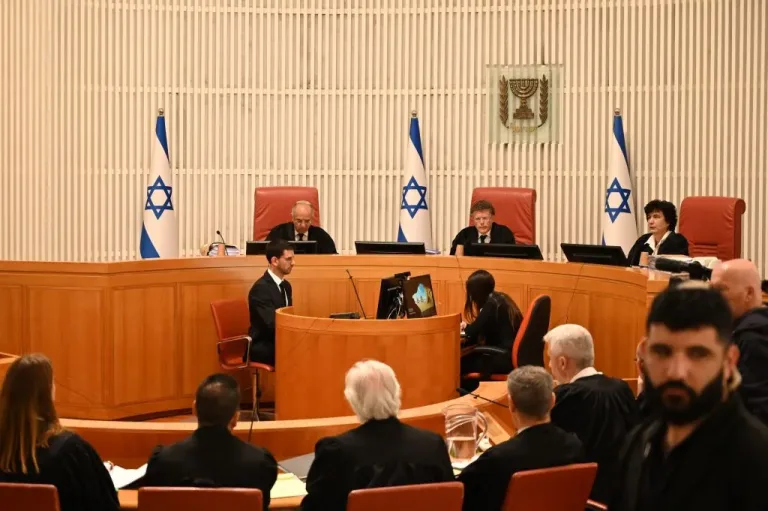
Jerusalem, 7 July, 2026 (TPS-IL) — Israel’s High Court of Justice on Tuesday condemned the government’s decision to disregard a court ruling regarding the Council of the Second Authority for Television and Radio, warning that elected officials and public servants must comply with judicial decisions and may face legal consequences if they fail to do so.
In a statement signed by Supreme Court President Yitzhak Amit and Justices Alex Stein and Ruth Ronen, the court said that refusing to honor a ruling by a government authority represents a serious threat to the rule of law.
“Failure to respect a court ruling by a citizen is a serious manifestation of a violation of the rule of law, and even more serious is the failure to respect a ruling by a government authority,” the judges wrote.
The court cited a previous ruling warning that “a country in which a governmental authority takes the law into its own hands and, at will, honors a judicial order given to it and, at will, ignores it — is a country in which the seeds of disaster and anarchy are sown.”
The judges emphasized that the obligation to follow the law applies equally to elected officials and government employees.
“These basic principles apply both to the actions of elected officials and to the actions of public servants, all of whom are required to act in accordance with the provisions of the law,” they stated.
The warning came after the government announced it would not recognize decisions, appointments or actions taken by the Second Authority Council unless the body met the legal threshold conditions established by lawmakers.
The dispute centers on Israel’s 1990 law governing the Second Authority for Television and Radio, the public body responsible for regulating Israel’s commercial broadcasting sector, including the licensing and oversight of television and radio stations. The government argues that the law clearly requires a minimum number of serving council members in order for it to function, while the High Court ruled that recent resignations should not be allowed to halt the council’s operations.
In June, the High Court issued a sharp ruling freezing parts of the government’s changes to the council’s composition while allowing it to continue working despite the reduced membership. The court said it suspected the resignations may have been intended to obstruct the regulator’s functioning and therefore should not automatically invalidate its authority.
Justice Minister Yariv Levin and Communications Minister Shlomo Karhi said the decision followed a June 17, 2026, ruling by the High Court that reinstated the previous council despite its membership falling below the minimum number required by law.
They added that the government would not accept claims by media companies or other parties that they relied on decisions made by a council the government considers legally invalid.
The High Court responded that officials who act contrary to judicial rulings could lose protection from personal liability.
“The actions of public servants in violation of judicial decisions may lead, in appropriate cases, to the fact that the personal immunity arrangement granted against tort claims will not apply,” the judges wrote.
President Isaac Herzog also criticized the government’s announcement, saying that declarations of disobedience toward Supreme Court rulings threaten national unity.
“Disobedience to a court ruling is a red line that must not be crossed under any circumstances,” Herzog said.
Deputy Attorney General Gil Limon called the government’s move “normalizing a systematic violation of the law,” warning it could set a precedent for officials to disregard legal decisions they oppose.