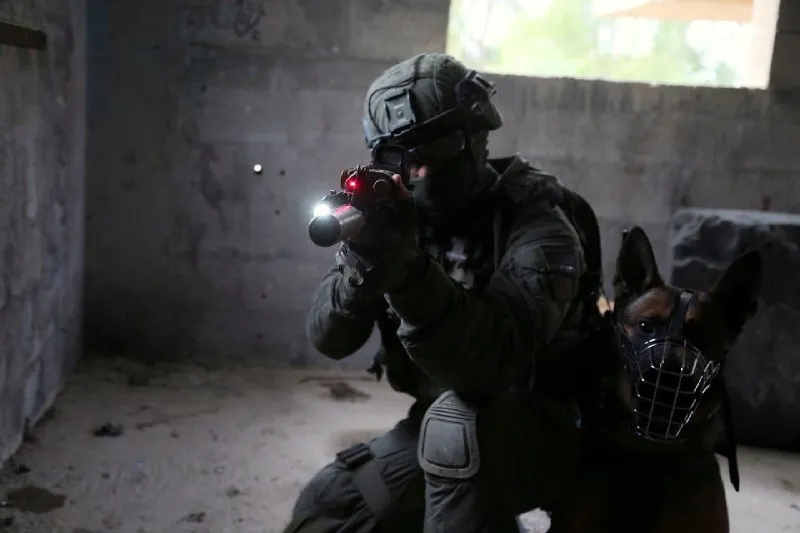

In the commando’s front lines, life is reversed – during the day, they are in combat procedures, situation assessments, and preparations, getting ready for the night. Then, as darkness falls, the small fire control center fills up completely, every chair is occupied, and the screens are lit – ready for the forces to deploy on operations deep in Lebanon.
This center is comprised of several modules, like all similar ones in the IDF. “Artillery and operations cells that deal with focused, pre-planned actions along with representatives from Intelligence and the Air Force, together with an attack cell that performs many rapid closure loops,” describes Major R., commander of the brigade’s support, commander of the module.
The mission: to provide direct support to the forces in the field, while maintaining continuous communication with them. Throughout the operational activity in southern Lebanon, as well as now during the ceasefire, the fire control center accompanies Maglan and Egoz in the sector. “The units are responsible for the challenging areas, thanks to their advanced capabilities – and we managed the effort from here.”

According to him, in combat like that in Lebanon, the module was a critical tool. The complex and mountainous terrain allowed Hezbollah to conceal weapons and combat systems, and to utilize the terrain to hide within the thickets or the winding, narrow valleys. “With the help of drones and UAVs, we were able to locate the terrorists and the infrastructure they established in the area and destroy them. It’s a bit like a game of whack-a-mole, where you have to hit them with a hammer when they pop out of their holes. Every time they emerged from their hole – they were hit.”
For example, when the brigade went out for an operation on the A-Taybeh ridge, intelligence indicated (which we will elaborate on soon) that there was an underground facility beneath the ridge, in which several Hezbollah terrorists were entrenched and conducting combat from. Simultaneously with the units operating at the site and searching for shafts, the fire control module prepared for the destruction of the facility and the elimination of the operatives using rockets and drones for reconnaissance.

Indeed, at a certain point, they identified a main opening leading to three smaller ones beneath it. After several checks, they realized the terrorists were hiding in the third tunnel: “We began to apply pressure there, including with D9 bulldozers operated by Egoz fighters, exposing the area above, and the shafts that were hidden by vegetation.”
The module’s drone team was called to the scene and deployed a drone into the third shaft for reconnaissance – and unequivocally, the terrorists were identified as they fired at the craft. “We understood they were about to exit the facility soon and try to escape north, through the steep side of the ridge, which can be clearly seen on the screens as a steep, mountainous slope that barely allows any movement,” explains Major R., “They tried to surprise us – no sane person would risk descending this mountain, but we managed to spot them.”

Immediately thereafter, the module entered an accelerated process with intelligence to analyze potential escape routes on the ridge. A few hours later, they began descending the ridge, with the entire module’s personnel monitoring them from above. “We could literally see them sticking almost exactly to the route we had analyzed,” the officer recalls, “and as we had predicted, at a certain point they got stuck near a large tree, beneath which is a cliff – preventing their movement.”
“We were ready, waiting for all the terrorists to reach the point and try to recalculate their route – then, we bombed them from above and eliminated 7 of them.” Hours later, 3 more infiltrated out of the facility, and the module locked onto them as well, ultimately eliminating 10.
And back to the present. The moment Major R. finishes recounting what happened during that operation, one of the soldiers from the exposure-attack team enters the module, interrupting our conversation for an urgent update. He displays on the screen before us a firing position that was just identified within a thicket by one of the drones, and the two decide to embark on a quick research process, at the end of which they present the findings and recommendation for an attack to the commander and the operational officer – until it was ultimately decided to destroy it.

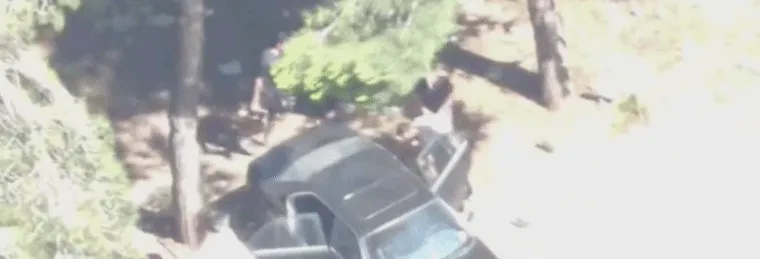
Another example of their rapid response capability and planning was recorded at the beginning of the month, when the commando’s drone team identified a suspicious vehicle onto which Hezbollah operatives were loading weapons. “We documented them loading several missiles from the rear door, and later another operative who placed two explosive drones in the trunk,” recalls Major R., “We immediately launched a drone that hovered over the vehicle for 27 hours, tracking them every moment.”
During this time, led by the attack cell, the module determined how to destroy the vehicle and the weapons within it – “Working together with the intelligence module, which provides us with the intelligence and additional information, we match the munition to the target,” he recounts, “Finally, we attacked it with a rocket, and because of all the extensive weaponry inside, we could also see a secondary explosion a few moments later.”
Now, the soldier from the drone team returns to the room. In a quick exchange, the attack on the firing position identified earlier is set, but now with more details: it is actually a hideout concealed under bushes and debris by Hezbollah terrorists, within IDF operational territory. There is a launcher, cameras, drones, and UAVs – all were destroyed minutes later.
“In moments like these, when the teams in Lebanon hear the sounds of our missiles in the background, or learn about Hezbollah infrastructure that we have destroyed, it strengthens their defense in the field, and we also understand this from their responses on the radio,” he adds, “We were all combat soldiers in the past, and we remember the feeling of security when you see that the command center behind you is also watching over you. And that’s why we are here.”