

By Pesach Benson • August 19, 2026
Jerusalem, 19 August, 2026 (TPS-IL) — Nearly all of Israel’s fresh produce is safe from excessive pesticide residue, according to a new government survey that found 93.2% of nearly 800 samples tested in 2025 met Israeli safety standards.
The findings carry weight beyond the breakfast table: as Israel expands testing to catch problems before they reach European buyers, the survey serves as both a public health checkpoint and a trade safeguard for the country’s agricultural exporters.
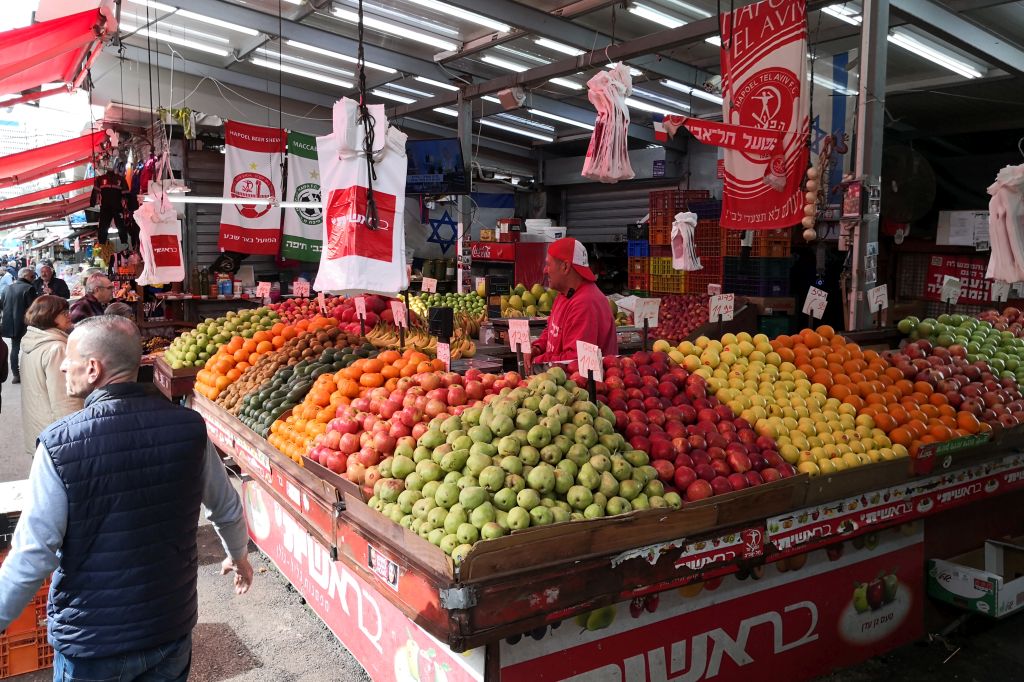
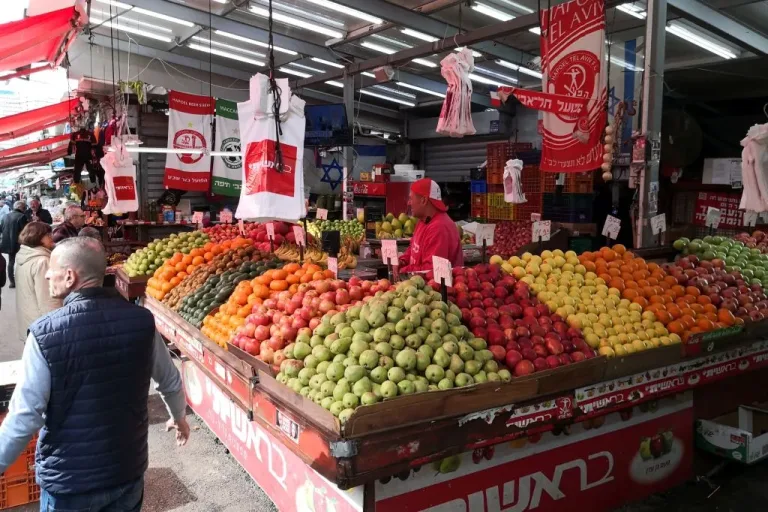
Fruit and vegetables at the Carmel Market in Tel Aviv on Jan. 27, 2020. Photo by Kobi Richter/TPS-IL
Shlomit Zioni, director of the Plant Protection and Inspection Services at the Ministry of Agriculture and Food Security, said the results “indicate a growing awareness among farmers of the proper use of pesticides and the protection of public health.”
Inspectors from her department collected the samples across 68 crops during the year, gathered from fields, packing houses and export inspection stations nationwide. The breakdown included 296 samples from the north, 232 from the center, Hadera and the Sharon region, 138 from the south and 131 from the Arava. By category, the samples included 388 fruits, 239 vegetables and field crops, 99 spices and 71 citrus.
The ministry said 45.4% of all samples were found completely free of pesticide residue, while 41 of the 68 crops tested showed no deviations at all, including avocado, watermelon, banana, carrot, tomato, potato, mango and corn, among others.
For the first time, the 2025 survey included a dedicated component testing fresh spices intended for export, aimed at identifying compliance gaps with European Union requirements before shipments face delays or rejection. The ministry said this addition significantly raised the overall deviation rate to 6.8%, while deviations in the ongoing survey of local produce alone stood at about 3.5%, with most exceptions tied to the new spice-export testing.
The ministry noted that most deviations were not due to elevated pesticide levels, but because a product used was not officially approved for that particular crop, a pattern especially common among spices. An analysis under European Union standards found that more than 70% of these cases would not have been classified as violations there. A smaller category of deviations, involving misuse such as excessive dosing or harvesting before the required waiting period, was recorded in 26 of 1,384 documented cases, about 2%.
The ministry stressed that regulatory deviations do not necessarily indicate a health risk, saying permitted residue levels are set with a wide safety margin, and that danger arises mainly from prolonged exposure to levels exceeding those limits rather than from isolated violations.
Zioni said the survey “makes it possible to monitor pesticide residues in local produce, detect abnormalities, promote informed use of pesticides, and formulate professional solutions based on scientific knowledge.”