Neighbourhood · The Galilee
Akko Old City
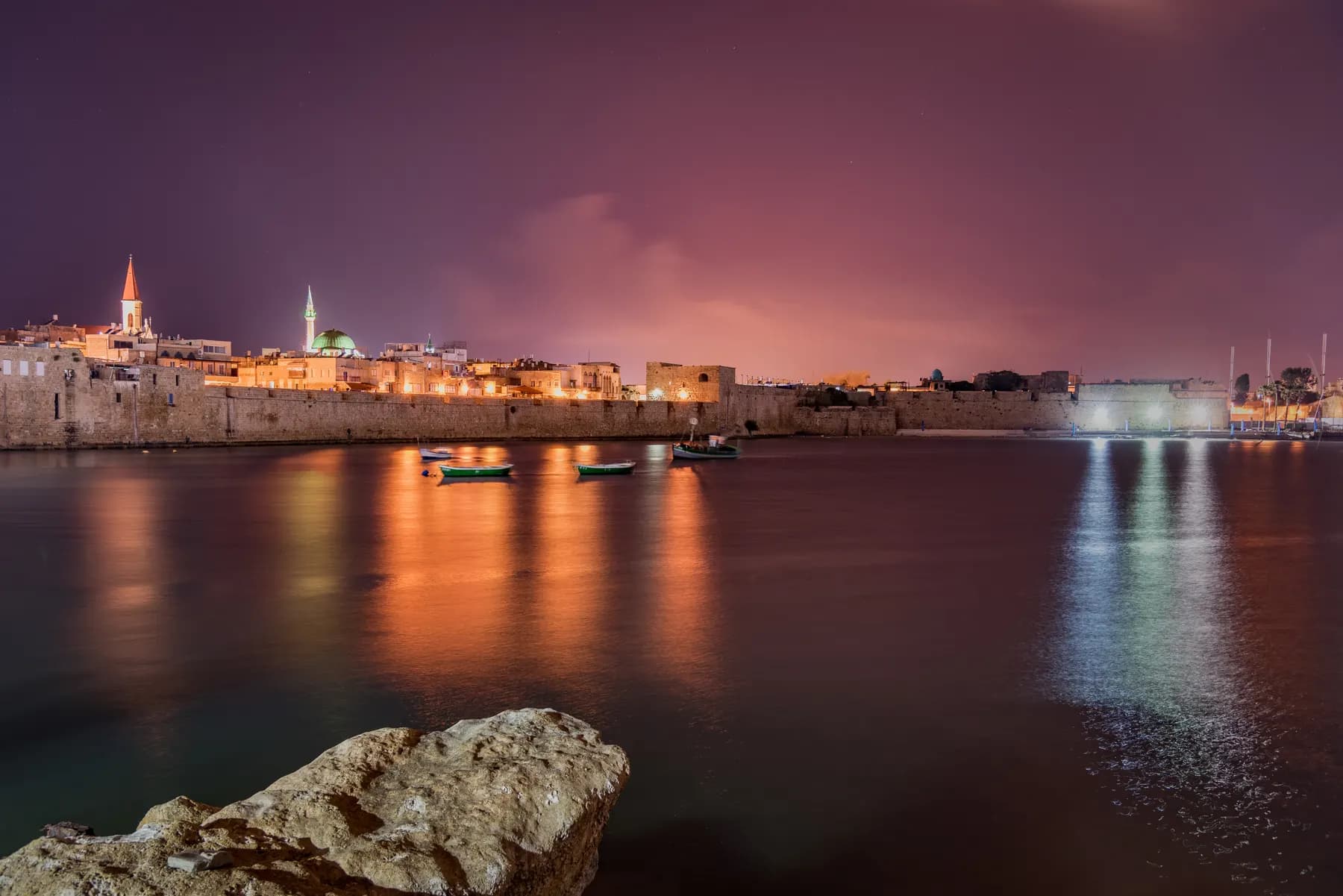
The Ottoman port town inside the walls stands roughly eight metres above the Crusader city it was built on, and one ticket of ₪55 opens six of the sites inside, including the Hospitaller Fortress and the Templars Tunnel.
ארז אשכנזי / CC BY-SA 4.0 · Wikimedia Commons
Combined ticket
₪55
one All Inclusive ticket to six sites, as published by the operator
Depth of the Crusader city
about 8 m
the drop from today's street to thirteenth-century ground level
Hospitaller compound
about 8,300 m²
of which roughly 5,000 m² has been excavated, the west wing not yet
World Heritage
inscribed 2001
a Crusader capital under an Ottoman walled town
In short
- How long to give it
- about 3 to 4 hours for the six ticketed sites at an unhurried pace, or about 90 minutes if only the Hospitaller Fortress and the Templars Tunnel are on the list
- Knights Halls, Templars Tunnel, Turkish Bath, Okashi Museum, Visitors Center: Sun to Thu and Sat
- 09:00–17:00
- All Inclusive ticket, per person
- ₪55
עכו העתיקה · عكا القديمة
Akko Old City is the walled Ottoman port town on the northern arm of Haifa Bay, and what makes it unlike anywhere else on this coast is what sits underneath it. When the Mamluks took Akko in 1291 the Crusader capital was wrecked but not carted away, and when Ottoman governors rebuilt the town in the eighteenth century they built on top of the rubble rather than clearing it. Wikipedia's account of Acre puts the present street level about eight metres above the Crusader one. The medieval city is therefore not a ruin field beside the town: it is a basement under it, reached by stairs from a courtyard behind the market.
The sites inside the walls are run by the Old Akko and Nazareth Development Company, which sells a single All Inclusive ticket at ₪55 per person covering the Knights Halls of the Hospitaller Fortress, the Templars Tunnel, the Turkish bath, the Ramchal Synagogue and Jewish Heritage Center, the Okashi Museum of Modern Art and the Ethnographic Museum known as Treasures in the Wall. Each of those has its own street door in a different part of the old city, so the ticket is less a gate than a licence to wander. Entry to the Enchanted Garden and the visitor centre comes with a Hospitaller Fortress ticket at no extra cost.
None of this is a heritage park with a perimeter fence. The walls enclose a working town with a fish market, a fruit and spice souk, a fishing harbour and several thousand residents, and the tour of the underground halls surfaces into it repeatedly. The operator's tours are self-guided, with audio devices in about ten languages at the Knights Halls and the Turkish bath, so the pace is the visitor's own.
Layers
An Ottoman town standing on the roof of a Crusader one
The Crusaders took Acre in 1104, after a siege Wikipedia's account dates across four years, and Britannica records that they named it St Jean d'Acre and made it their last capital. It fell to Saladin in 1187 after Hattin and was retaken in 1191 by Richard the Lionheart and Philip Augustus during the Third Crusade. Because Jerusalem was not recovered, Akko became the capital of the second Crusader kingdom and the main gate to the Holy Land, and by the thirteenth century, with the new Montmusard quarter added to the north, the account published by the Jewish Virtual Library gives it a population of about 40,000, the largest city of the Crusader Kingdom.
It ended on 18 May 1291, when the Mamluk sultan al-Ashraf Khalil took the city. That date closes the Crusader presence in the Holy Land, and it also closes the archaeological layer: what stood was pulled down to roughly the height of the vaults, and the vaults themselves, being solid and full of debris, stayed where they were.
The revival came four and a half centuries later, under Zahir al-Umar and then Ahmad Pasha al-Jazzar, who governed from 1775 to 1804. They rebuilt a port town on the same peninsula, and the choice not to dig out the medieval remains is the reason there is anything to visit. UNESCO inscribed the Old City on the World Heritage List in 2001, at the committee's twenty-fifth session, for exactly this doubling: a virtually intact Crusader town preserved under a fortified Ottoman one with its citadel, mosques, khans and baths.
The practical consequence for a visitor is that the sequence of a visit is vertical rather than chronological. A morning here goes down into the thirteenth century, up into the eighteenth, along a nineteenth-century wall walk and back into a market that is trading now.
The fortress
Sugar pots, a refectory and a thirteenth-century latrine block
The Knights Halls are the headquarters compound of the Order of St John, and the operator's own history dates the order's first property in Akko to 1110, when Baldwin I allowed the Hospitallers to hold buildings north of the Cathedral of the Holy Cross. When the cathedral was extended northward in 1135 and damaged some of those buildings, the order moved to the north-western corner of the city and started again. The new centre is first documented in 1149, under Queen Melisende, when the church of St John was built to its south. A pilgrim named Theodoric, visiting in 1169, described it as a structure only the Templar fortress could be compared to.
What a visitor now walks through is the ground floor, because the upper storeys were destroyed. The central court covers 1,200 square metres and has two wells: a four-metre well to the north with two shallow plastered pools beside it, and a second to the south with a deeper plastered pool built like a bathtub, which the operator reads as drinking and laundry water at one end and washing at the other. The northern hall is one space divided into six by arched walls under a barrel vault ten metres high, its outer walls 3.5 metres of hewn stone because they doubled as the city wall.
Two halls are the reason people come. The Columns Hall, probably the refectory, carries eight groin vaults on three round columns about three metres across, with capitals cut in flower garlands and fleur-de-lys; the operator describes it as one of the buildings that marks the transition from Romanesque to Gothic. The Pillars Hall next door runs to about 1,300 square metres in roughly fifteen identical bays of eight-metre vaulting on square pillars, and served as a meeting and storage hall.
The odder rooms are the ones that explain how the place worked. A three-storey building held the public toilets: a room ten metres by five under a groin vault, with four rows of eight seats draining through pipes in the walls into a collection chamber and out into a municipal conduit one metre wide and one and a half metres tall that crossed the city to the sea. The operator notes that a complete system of this kind is rare, with few parallels outside monasteries and hospitals in thirteenth and fourteenth century England and Wales. Next to it, the Sugar Bowl Hall was found stacked with hundreds of cone-shaped pottery moulds and molasses jars, the equipment of a sugar industry that made the order a great deal of money.
- Central court: 1,200 m², two wells, plastered pools drained by a canal
- Northern hall: six bays under a 10 m barrel vault, outer walls 3.5 m thick
- Columns Hall: eight groin vaults on three columns about 3 m in diameter
- Pillars Hall: about 1,300 m² in roughly 15 bays of 8 m vaulting
- Latrine block: 32 seats over a collection chamber and a municipal sewer
- Sugar Bowl Hall: sugar moulds and molasses jars found stacked in rows
The tunnel
The passage that was found because a drain blocked
The Templars held the south-western corner of the city after 1187, and cut a passage from their fortress east to the port, crossing the Pisan quarter on the way. Its lower half is carved into the natural rock and its upper half is built of hewn stones closed with a semi-barrel vault. It was forgotten for seven centuries.
It came back in 1994, and the discovery is not a story of excavation. BibleWalks records that a woman living above the tunnel complained about blocked sewage, and the search for the blockage found the passage. The Akko Development Company and the Antiquities Authority cleared it out; the western section opened to the public in August 1999, and after eight more years of work on the eastern section the whole length was opened in 2007.
How long it is depends on who is asked, and the gap is large enough to be worth stating. The Old Akko operator's own page gives the tunnel as about 150 metres, twice, on the page it publishes about the site. BibleWalks gives 350 metres. Nothing consulted here reconciles the two, and the likeliest explanation is that one figure counts the section a visitor walks and the other the full run from fortress to port, but that is a guess rather than a finding.
The Templar fortress at the western end is gone. What survives of it is a description, quoted by the operator from a Templar who was in Akko during the siege of 1291: an entrance protected by two towers with walls 28 feet thick, two smaller towers beside them, and a gilded lion on top of each.
Above ground
Jazzar Pasha's city, and the siege that paid for the walls
The town at street level is an eighteenth and nineteenth century one. Wikipedia's account of Acre puts the present walls between 1750 and 1814: Zahir al-Umar built the first circuit in 1750 and 1751, Jazzar Pasha reinforced it between 1775 and 1779, and further work ran on until 1814. The operator's own page for the Ethnographic Museum tells it differently, saying the walls were initially built by al-Jazzar after Napoleon's attempt on the city in 1799. Both cannot be right about the beginning, and a visitor standing on the rampart is looking at masonry that accumulated across at least two of those campaigns.
Napoleon is the reason the fortifications got the money they did. Britannica records that al-Jazzar's garrison withstood the siege of 1799; Wikipedia dates it to March and May and says Napoleon was repulsed after two months. Under al-Jazzar the town became, on Wikipedia's figures, the third largest city in Ottoman Syria with some twenty thousand inhabitants, and the buildings that give the skyline its shape date from those decades: the el-Jazzar Mosque of 1781, built partly from marble and granite robbed out of Caesarea, Atlit and medieval Acre, and Khan al-Umdan by the port, built in 1785.
Two of the ticketed sites are Ottoman rather than Crusader. Hammam al-Basha was built by al-Jazzar at the end of the eighteenth century and originally called the New Hammam; it ran as a working bath house for about 150 years, and the visit now is a multimedia piece called The Story of the Last Bath Attendant, walked through the dressing room, four intermediate rooms and the hot room. The Ethnographic Museum, Treasures in the Wall, is installed inside the arched halls of the Burj al-Commander in the north-eastern wall, rooms that once quartered the Ottoman garrison.
The citadel that al-Jazzar raised over the Crusader compound had a long afterlife of its own. It became the main prison for northern Palestine under the British Mandate, and on 4 May 1947 the Irgun broke into it and freed underground prisoners. The Ministry of Defence museum that tells that story sits directly above the Hospitaller halls, and it is not part of the ₪55 ticket.
Restoration
Which of this is thirteenth-century stone, and which was put back
Work on the compound has run in two long campaigns. Parts were uncovered in the 1950s and 1960s, and the operator credits the excavation of the Columns Hall specifically to the Nature and Parks Authority in the 1960s. The second campaign was forced rather than chosen: in the early 1990s cracks opened in the vaults of the Pillars Hall and material began falling into the space below. State funding followed in 1993, and the Israel Antiquities Authority excavated from 1992 to 1999, financed by the Ministry of Tourism, with the Old Acre Development Company running the conservation.
The operator is unusually direct about method. It describes an approach ranging from minimal conservation to full reconstruction, using both original Crusader technique and modern materials, naming fibreglass pins and reinforced concrete structures among them. On the Pillars Hall it says the main section of the cruciform vaulting is preserved in its original Crusader form while the ceilings at the northern and southern ends collapsed and have been restored. That is the honest reading of the whole site: the plan, the walls and most of the vaulting are thirteenth-century, and the parts that fell in have been rebuilt with visible modern help.
The compound is also not finished. The western wing has never been excavated, though Gothic capitals recovered from a collapse there, some carved with human figures, suggest it was the living quarters and stood at least two storeys. The Hospitaller hospital south of St John's Church is likewise unexcavated, and the church itself is now a municipal community centre inside an Ottoman saraya building.
Even the size of the place is unsettled. The conservation project page gives the Hospitaller compound as about 8,300 square metres; the site page says about 5,000 square metres has been excavated to date; the Jewish Virtual Library's archaeological account gives the headquarters as roughly 4,500 square metres with a 1,200 square metre courtyard. The figures are measuring different things, and none of the three pages says which.
What to look for
Things not to walk past at Akko Old City
The details that repay knowing about before you are standing in front of them.
The Columns Hall
Eight groin vaults resting on three round columns roughly three metres across, ten metres up, with capitals cut in flower garlands and fleur-de-lys. The operator describes it as a building that marks the shift from Romanesque to Gothic.
The latrine block
Four rows of eight seats over a drainage chamber that fed a municipal sewer running the length of the city to the sea. Complete medieval systems of this kind barely survive anywhere.
The Sugar Bowl Hall
Hundreds of cone-shaped pottery moulds were found stacked in rows on the floor here, with straw packed between them. They are the working kit of the Hospitallers' sugar business.
The Templars Tunnel
A rock-cut passage from the Templar fortress to the port, lost after 1291 and found in 1994 when a resident reported a blocked drain. The full length has been open since 2007.
Hammam al-Basha
Al-Jazzar's bath house, in use for about 150 years, now walked through as a multimedia piece told by its last attendant. The dressing room, the four intermediate rooms and the hot room are all intact.
Treasures in the Wall
The ethnographic collection is installed in the arched halls of the Burj al-Commander, inside the north-eastern wall itself, in rooms built to hold the Ottoman garrison.
The long view
Akko Old City, in order
1104
The Crusaders take Acre and rename it St Jean d'Acre.
1110
Baldwin I grants the Hospitallers their first property in the city, north of the Cathedral of the Holy Cross.
1149
The order's new north-western centre is first documented, under Queen Melisende, when the church of St John is built beside it.
1187
Akko falls to Saladin after the defeat at Hattin.
1191
Richard the Lionheart and Philip Augustus retake the city, which becomes the capital of the second Crusader kingdom.
18 May 1291
Al-Ashraf Khalil takes Akko, ending the Crusader presence in the Holy Land.
1750–51
Zahir al-Umar builds the first circuit of the present walls.
1775–1804
Ahmad Pasha al-Jazzar governs Akko, reinforcing the walls and building the mosque of 1781 and Khan al-Umdan in 1785.
1799
Napoleon besieges the city for two months and is repulsed.
4 May 1947
The Irgun breaks into the British Mandate prison in the citadel and frees underground prisoners.
1960s
The Columns Hall of the Hospitaller compound is excavated by the Nature and Parks Authority.
1992–1999
The Israel Antiquities Authority excavates the Hospitaller compound, funded by the Ministry of Tourism, after cracks appear in the Pillars Hall vaults.
1994
The Templars Tunnel is rediscovered during a search for a blocked drain.
August 1999
The western section of the Templars Tunnel opens to the public.
2001
UNESCO inscribes the Old City of Acre on the World Heritage List at its twenty-fifth session.
2007
The full length of the Templars Tunnel opens after the eastern section is cleared.
Practical
Visiting Akko Old City
Where
Visitors Center and the Knights Halls, Weizmann St 1, Old Akko. The Templars Tunnel is at Asher St 37 and the Ethnographic Museum at Weizman St 2.
What ticket you need
This is not one gate but six doors on one ticket. The ₪55 All Inclusive ticket covers the Knights Halls, the Templars Tunnel, the Turkish bath, the Ramchal Synagogue and Jewish Heritage Center, the Okashi Museum and the Ethnographic Museum, each with its own entrance in a different part of the old city. It does not cover the Al-Jazzar Mosque or the Ministry of Defence's Museum of Underground Prisoners, which sits directly above the Hospitaller halls.
Opening hours
- Knights Halls, Templars Tunnel, Turkish Bath, Okashi Museum, Visitors Center: Sun to Thu and Sat
- 09:00–17:00source
- The same sites, Friday and holiday eves
- 09:00–16:00source
- Ramchal Synagogue and Jewish Heritage Center
- 09:00–17:00, closed on Saturdays and holidays; 09:00–16:00 Friday and holiday evessource
- Ethnographic Museum, summer
- 09:30–17:30 Sun to Thu and Sat, 09:30–16:00 Friday and holiday evessource
- Ethnographic Museum, winter
- 09:00–17:00 Sun to Thu and Sat, 09:00–16:00 Friday and holiday evessource
- Ticket office and last entry
- The ticket office closes 60 minutes before closing timesource
Admission
- All Inclusive ticket, per person
- ₪55source
- All Inclusive Akko and Rosh Hanikra
- ₪90source
- Enchanted Garden and the Visitors Center
- No extra cost with a Hospitaller Fortress ticketsource
- Markets, marina and Argaman Beach
- Freesource
- Al-Jazzar Mosque and the Museum of Underground Prisoners
- Not included in the ticket; each charges separatelysource
Access
Mostly, with one clear exception. The operator states that its sites are accessible and lists accessible parking beside the Visitors Center and the fortress, lifts, ramps and standard handrails for the changes of level, accessible lavatories in the Enchanted Garden and at the Ramchal visitor centre, tactile maps, vocal signage systems and subtitles or sign language on some of the films. The Knights Halls are described as wheelchair accessible except for the escape tunnel and the Prisoners Hall. The Templars Tunnel is the exception: the operator states that it is temporarily not accessible to disabled visitors, and separately that the lift there is out of service. Anyone who needs an accessible route should telephone the visitor centre before arriving, which the operator asks for explicitly while its own accessibility survey is under way. Beyond the ticketed sites, the old city is stone lanes, steps and market crowds.
On site
- Visitors Center in the Enchanted Garden
- Audio guides in about 10 languages
- Accessible lavatories
- Free car park at the moat
- Eucalyptus car park
- Ticket machines and box office on site
- Markets, restaurants and the fishing harbour inside the walls
Booking
Tickets can be bought online in advance, at the on-site box office or from the ticket machines at the visitor centre. The operator recommends buying ahead during holidays and festival periods but does not require it. Private guides are arranged through the visitor centre in advance; the standard visit is self-guided with an audio device.
Hours and prices are given as the operator publishes them and change without much notice, particularly around Shabbat and the festivals. Check the operator's own page before you travel for this.
Official page at akko.org.il →What people wish they had known
- Do not buy one site and decide later. The All Inclusive ticket at ₪55 is the operator's only published price for the six sites, and they are scattered across the old city with separate doors, so a visitor who pays at the fortress and then wants the tunnel is not obviously better off.
- Arrive earlier than the closing time suggests. The operator asks visitors to come two hours before closing because of how much there is to read and watch, and the ticket office shuts a full 60 minutes before the sites do.
- Check which door closes when. The main table gives every site 09:00 to 17:00, but the Ethnographic Museum publishes its own summer hours of 09:30 to 17:30 on its own page, and the Ramchal Synagogue is shut on Saturdays and holidays, so a Saturday ticket buys five sites rather than six.
- Anyone who needs step-free access should ring ahead rather than turn up. The operator states that the Templars Tunnel is temporarily not accessible to disabled visitors and that the lift there is out of service, and it asks visitors to consult the visitor centre in advance about routes.
- Budget for the two sites that are not in the ticket. Al-Jazzar's mosque and the Museum of Underground Prisoners, which occupies the Ottoman citadel above the Crusader halls, each charge on their own account.
- Come by train if the car is optional. The operator's own advice is that trains run roughly hourly from central Israel and Ben Gurion Airport, that Tel Aviv is about an hour and twenty minutes, and that the station is about fifteen minutes on foot from the old city, which avoids the parking problem entirely.
The figures
Akko Old City by the numbers
Each figure carries the year it belongs to and links the source it came from.
| Measure | Figure | As of | Source |
|---|---|---|---|
| All Inclusive ticket, per person | ₪55 | 2026 | akko.org.il |
| All Inclusive Akko and Rosh Hanikra ticket | ₪90 | 2026 | akko.org.il |
| Hospitaller compound, as the conservation project gives it | about 8,300 m² | 2026 | akko.org.il |
| Area excavated to date, as the site page gives it | about 5,000 m², with the western wing untouched | 2026 | akko.org.il |
| Height of today's street above the Crusader city | about 8 m | 2026 | en.wikipedia.org |
| Templars Tunnel length, as the operator gives it | about 150 m | 2026 | akko.org.il |
| Templars Tunnel length, as BibleWalks gives it | 350 m | 2026 | biblewalks.com |
| Population of Crusader Akko in the thirteenth century | about 40,000, the largest city of the Crusader Kingdom | 2026 | jewishvirtuallibrary.org |
While you are here
The rest of The Galilee
Everything else in this destination with a page of its own.
Natalinasser / CC BY-SA 4.0 · Wikimedia Commons
Nature reserve
Rosh Hanikra Grottoes
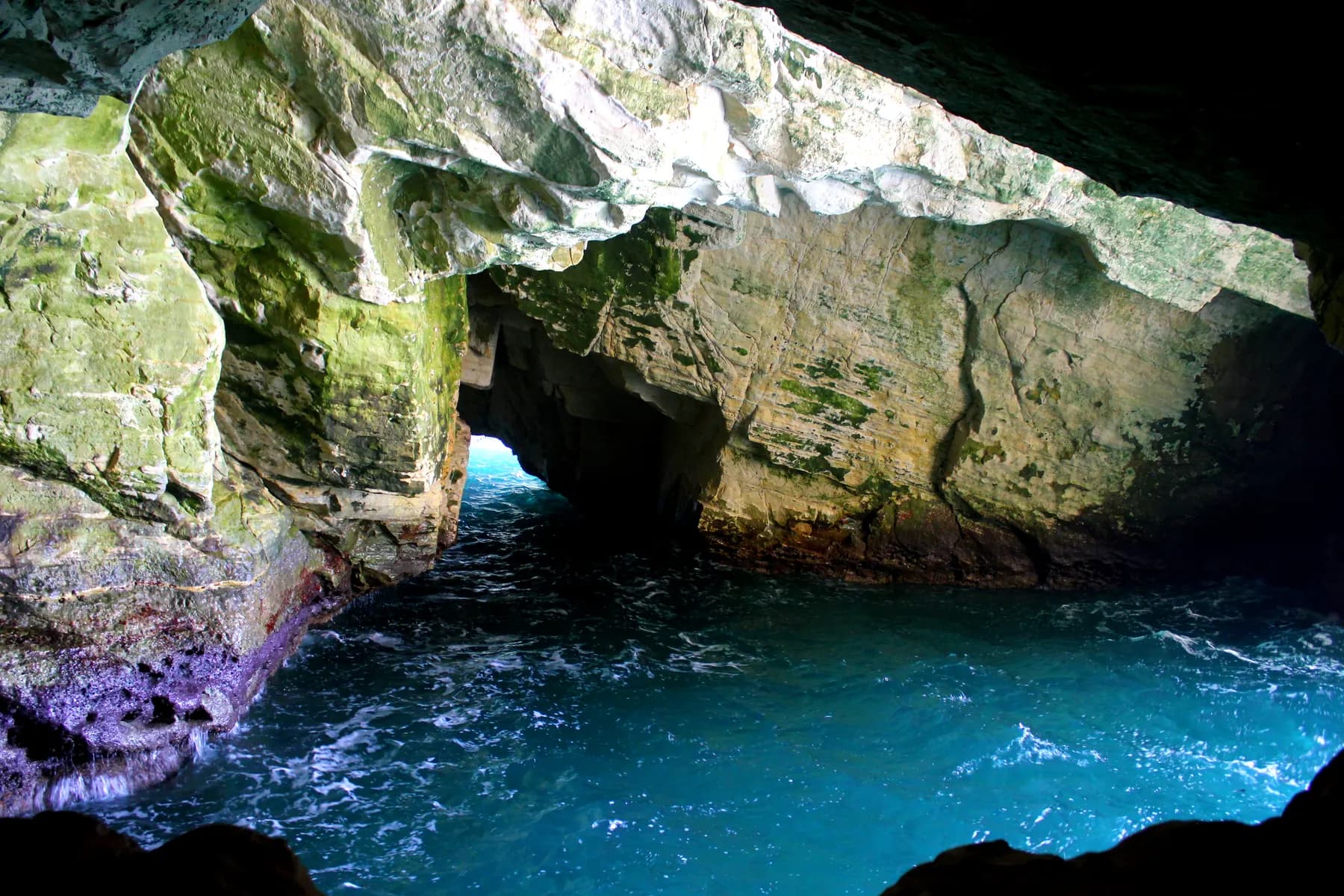
The sea cut these caves out of soft chalk at the top of Israel's coast, and until a 400 metre tunnel was driven through the ridge in 1968 the only way into them was to swim.
Archaeological site
Montfort Castle
The Teutonic Order bought this spur above Nahal Kziv from the de Milly family in 1220 and moved its archive and treasury here in 1229, out of reach of the Templars and Hospitallers in Acre.
שלמה רודד / CC BY 2.5 · Wikimedia Commons
Archaeological site
Beit She'arim Necropolis
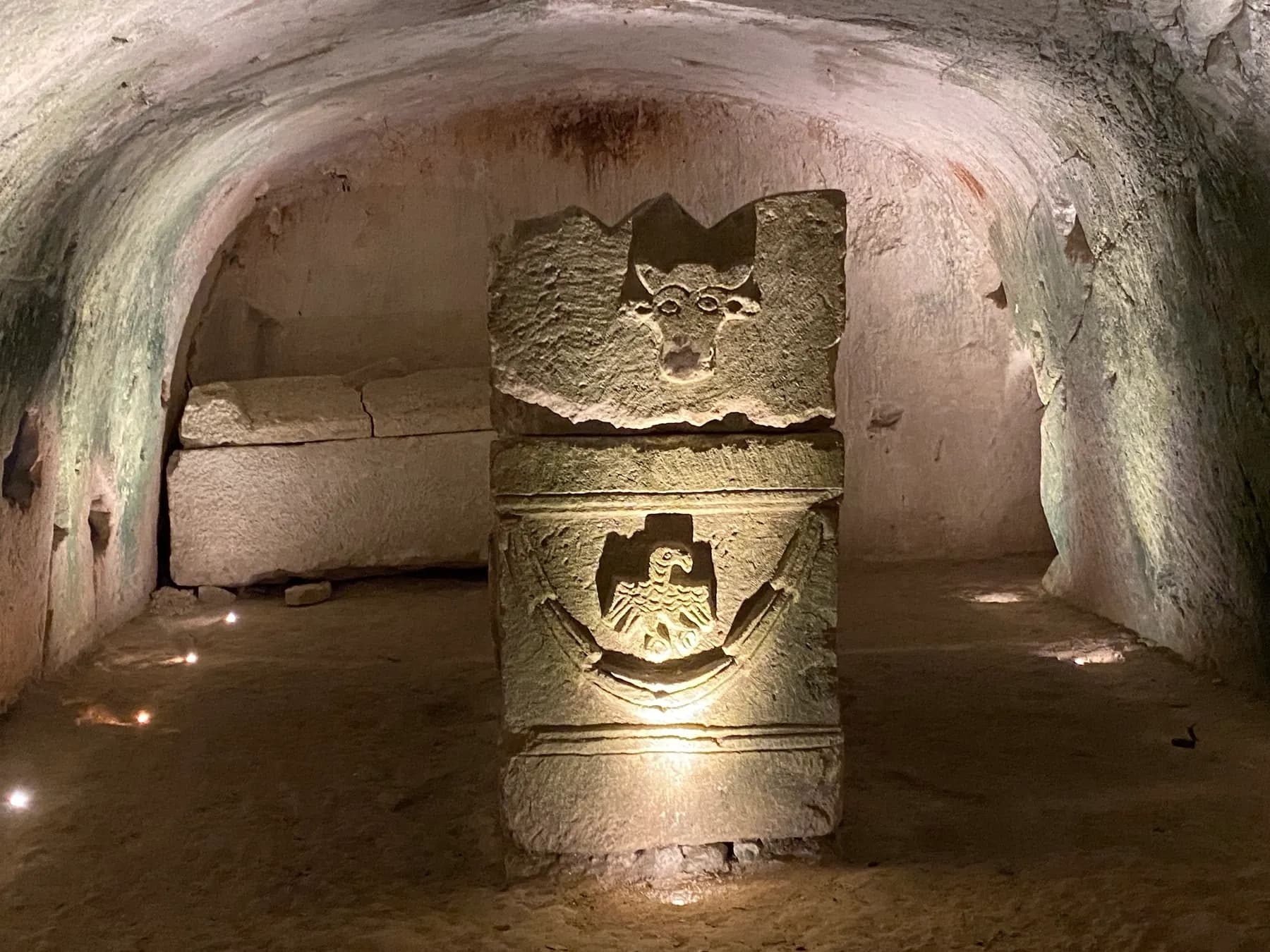
About thirty catacombs cut into the soft chalk of Sheikh Abreik hill, holding more than three hundred funerary inscriptions in Greek, Hebrew, Aramaic and Palmyrene, around the tomb attributed to Rabbi Judah ha-Nasi.
Sources and further reading
Every link below was opened and checked when this page was written. Official statements are marked as such: they are the subject's own account, not an independent one.
- OfficialOld Akko and Nazareth Development Companyakko.org.ilOld Akko: home and attractions
The All Inclusive ticket at ₪55 per person, the Akko and Rosh Hanikra combination at ₪90, the notice that the lift at the Templars Tunnel is out of service, and the list of routes including the free Walls Route and Jewish Route
- OfficialOld Akko and Nazareth Development Companyakko.org.ilOpening Hours
The summer and winter tables, 09:00 to 17:00 Sunday to Thursday and Saturday and 09:00 to 16:00 Friday and holiday eves, the Ramchal Synagogue closed on Saturdays and holidays, the ticket office closing 60 minutes before the sites, and the recommendation to arrive two hours before closing
- OfficialOld Akko and Nazareth Development Companyakko.org.ilFAQ
What the combined ticket includes and excludes, the free Enchanted Garden and Visitors Center with a fortress ticket, the address at Weizmann St 1, the parking options including the free moat car park, and the self-guided audio devices in about ten languages
- OfficialOld Akko and Nazareth Development Companyakko.org.ilThe Knights Halls
The Hospitallers' property of 1110, the move after 1135, the centre documented in 1149, Theodoric's account of 1169, the 1,200 m² court, the northern hall with 3.5 m walls, the Columns Hall excavated by the Nature and Parks Authority in the 1960s, the Pillars Hall at about 1,300 m², the latrine block and municipal sewer, the Sugar Bowl Hall, the unexcavated western wing, and about 5,000 m² excavated to date
- OfficialOld Akko and Nazareth Development Companyakko.org.ilThe Templars Tunnel
The tunnel given as about 150 metres, the route from the Templar fortress to the port across the Pisan quarter, the rock-cut lower half and vaulted upper half, the discovery in 1994, the western section opened in August 1999 and the full length in 2007, and the eyewitness description of the Templar fortress at the 1291 siege
- OfficialOld Akko and Nazareth Development Companyakko.org.ilThe Turkish Bath House
Hammam al-Basha built by Jazzar Pasha at the end of the eighteenth century as the New Hammam, in use for about 150 years, and the multimedia presentation told by the last bath attendant through the dressing room, four intermediate rooms and the hot room
- OfficialOld Akko and Nazareth Development Companyakko.org.ilThe Ethnographic Museum, Treasures in the Wall
The museum inside the Burj al-Commander in the north-eastern wall, the claim that al-Jazzar built the walls after Napoleon's attempt of 1799, and the museum's own opening hours of 09:30 to 17:30 in summer and 09:00 to 17:00 in winter
- OfficialOld Akko and Nazareth Development Companyakko.org.ilAccessibility
Accessible parking by the Visitors Center and fortress, lifts, ramps and handrails, accessible lavatories in the Enchanted Garden and at the Ramchal centre, tactile maps and vocal signage, the statement that the Templars Tunnel is temporarily not accessible to disabled visitors, and the request to telephone ahead while the accessibility survey runs
- OfficialOld Akko and Nazareth Development Companyakko.org.ilThe Akko Citadel Conservation Project
The compound at about 8,300 m², the cracking of the Pillars Hall vaults in the early 1990s, state funding in 1993, the Israel Antiquities Authority excavation of 1992 to 1999 financed by the Ministry of Tourism, and conservation ranging from minimal intervention to full reconstruction using fibreglass pins and reinforced concrete
- OfficialOld Akko and Nazareth Development Companyakko.org.ilTrip Tips
Roughly hourly trains from central Israel and Ben Gurion Airport, about an hour and twenty minutes from Tel Aviv, the station about fifteen minutes' walk from the old city, the Egged bus lines, and the seasonal advice on when to come
- ReferenceEncyclopaedia Britannicabritannica.comAcre
The Crusader capture of 1104 and the name St Jean d'Acre, the fall to al-Ashraf Khalil in 1291, Ottoman rule from 1516 to 1918, Ahmad Pasha al-Jazzar's governorship from 1775 to 1804 and his garrison withstanding Napoleon's siege of 1799, and the British capture of 1918
- ReferenceJewish Virtual Libraryjewishvirtuallibrary.orgArchaeology in Israel: Ancient City of Akko
Tel Akko east of the present city and the Hellenistic move to the peninsula, thirteenth-century Akko with about 40,000 people as the largest city of the Crusader Kingdom, the fall on 18 May 1291, and the Hospitaller headquarters given as roughly 4,500 m² with a 1,200 m² courtyard, excavated in the 1950s and 1960s and again in the 1990s
- ReferenceWikipediaen.wikipedia.orgAcre, Israel
The four-year siege ending in 1104, Saladin in 1187 and the Crusader return in 1191, the walls built between 1750 and 1814 with Zahir al-Umar's first circuit of 1750 to 1751 and al-Jazzar's reinforcement from 1775, the el-Jazzar Mosque of 1781 and Khan al-Umdan of 1785, Napoleon repulsed after two months in 1799, the Irgun prison break of 4 May 1947, the UNESCO inscription of 2001 at the twenty-fifth session, and the present street level about eight metres above the Crusader one
- ReferenceBibleWalksbiblewalks.comAcre: Templars tunnel
The tunnel given as 350 metres, the accidental discovery in 1994 when a resident living above it reported blocked sewage, the clearing of more than 800 years of fill, and the opening to the public in 1999
Akko Old City: common questions
What is Akko Old City?+
It is the walled Ottoman port town at the northern end of Haifa Bay, built in the eighteenth and nineteenth centuries directly on top of the Crusader capital of the Kingdom of Jerusalem. Wikipedia's account puts today's street level about eight metres above the medieval one, so the Crusader city survives as a set of vaulted halls and passages beneath the present town. UNESCO inscribed it on the World Heritage List in 2001 for that combination.
How much does it cost to visit Akko Old City?+
The Old Akko and Nazareth Development Company sells one All Inclusive ticket at ₪55 per person. It covers the Knights Halls of the Hospitaller Fortress, the Templars Tunnel, the Turkish bath, the Ramchal Synagogue and Jewish Heritage Center, the Okashi Museum of Modern Art and the Ethnographic Museum. A combined ticket with Rosh Hanikra is published at ₪90, and the markets, the marina and Argaman Beach are free.
What are the opening hours?+
The operator's table gives the Knights Halls, Templars Tunnel, Turkish Bath, Okashi Museum and Visitors Center 09:00 to 17:00 from Sunday to Thursday and on Saturday, and 09:00 to 16:00 on Friday and holiday eves, in both its summer and winter listings. The ticket office closes 60 minutes before the sites do. The Ethnographic Museum publishes different hours on its own page, opening at 09:30 and closing at 17:30 in summer.
How long do you need in Akko Old City?+
Three to four hours covers the six ticketed sites without hurrying, and the operator itself recommends arriving at least two hours before closing. A visitor with only the Hospitaller Fortress and the Templars Tunnel in mind can do it in about ninety minutes. Adding the souk, the sea wall and lunch at the fishing harbour makes it a full day.
Is Akko Old City wheelchair accessible?+
Largely, with one stated exception. The operator lists accessible parking by the fortress, lifts, ramps and handrails, accessible lavatories in the Enchanted Garden and at the Ramchal centre, tactile maps and vocal signage, and describes the Knights Halls as accessible apart from the escape tunnel and the Prisoners Hall. The Templars Tunnel is currently not accessible to disabled visitors and its lift is out of service. Outside the ticketed sites the old city is stone lanes and steps.
Can you visit on Saturday?+
Yes, and the sites keep their normal Saturday hours of 09:00 to 17:00, which is unusual in Israel. The one exception inside the ticket is the Ramchal Synagogue and Jewish Heritage Center, which is closed on Saturdays and holidays. Friday and holiday eves close an hour earlier, at 16:00.
How long is the Templars Tunnel?+
The published figures disagree. The Old Akko operator's own page gives it as about 150 metres, and BibleWalks gives 350 metres. Either way it runs from the site of the Templar fortress in the west to the port in the east, cut into the rock below and vaulted in hewn stone above, and the full length has been walkable since 2007.
Is the Al-Jazzar Mosque included in the ticket?+
No. The operator states plainly that the combined ticket does not cover the Al-Jazzar Mosque or the Museum of Underground Prisoners, along with several attractions outside the walls. The mosque, built in 1781, charges its own entry, and the prisoners museum in the Ottoman citadel is run by the Ministry of Defence.
Is Akko Old City a museum or a real town?+
A real town. The walls enclose a working fishing harbour, a fish market and a fruit and spice souk, and the underground sites open off streets where people live and trade. That is part of what UNESCO recognised in 2001: an Ottoman walled town still functioning as one, with a Crusader capital preserved beneath it.
Is it worth it if I have already seen Crusader Caesarea?+
Yes, because the two show opposite halves of the same story. Caesarea preserves Crusader fortifications standing in the open with the town inside them gone; Akko preserves the town, its halls, refectory, sewers and storerooms, because an Ottoman city was built on the roof rather than through the middle. Akko is also the capital rather than a provincial port, which is why the Hospitaller headquarters is here at all.