Nature reserve · The Galilee
Agamon Hula
A one square kilometre lake that KKL-JNF put back forty years after draining the valley, ringed by an 8.5 kilometre flat circuit and stocked every winter with 2 to 3 tonnes of maize a day to keep the cranes off the farmers' fields.
זאב שטיין / CC BY 2.5 · Wikimedia Commons
Adult admission
₪35
the operator's own published entrance fee, read from the Agamon Hula price list in 2026
The circuit
8.5 km
KKL-JNF describes its own trail round the water as easy and flat
Maize scattered daily in winter
2 to 3 tonnes
spread on open ground from early December to mid-March under the crane project
Cranes wintering in the valley
about 15,000 to about 50,000
the counts for 1999 and for 2019, before feeding was cut back
In short
- How long to give it
- About 90 minutes for the loop in a hired electric cart, which is exactly what the hire covers. Two to three hours on a bicycle or on foot with stops at the viewpoints, and half a day if a sunrise wagon tour is booked as well.
- Sunday to Thursday, on the operator's English page
- Entry 08:00 to 16:00, everyone out by 17:00
- Adult
- ₪35
אגמון החולה
Agamon Hula, published in English as Hula Lake Park, is a shallow artificial lake of about one square kilometre in the middle of the Hula Valley, with a ticketed visitor site built round it and an 8.5 kilometre track running the whole way round the water. It is not a surviving fragment of the old Lake Hula. It is ground that KKL-JNF drained in the 1950s and then, four decades later, deliberately flooded again, and almost everything a visitor walks past on the circuit was built after that decision.
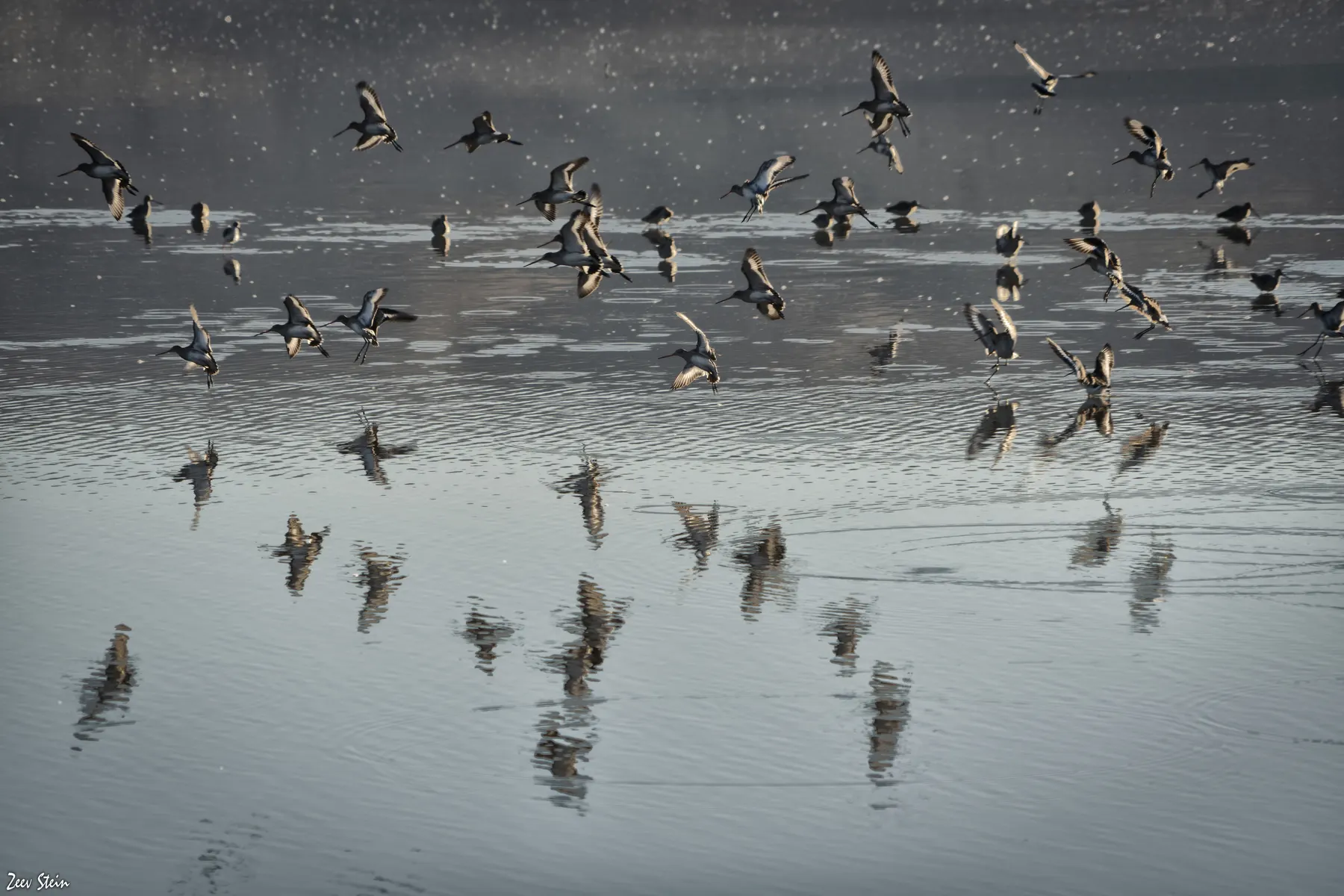
What the flooding produced was a wintering ground. Grey cranes on the flyway between Eurasia and Africa began stopping in the valley in numbers from the early 1990s, and from 1999 they have been fed on purpose, on open ground, to keep them out of the surrounding crops. That feeding is the reason the birds stand where visitors can see them, and it is also the single most argued-over thing about the site: the 2021 avian influenza outbreak that began here spread into poultry houses across northern Israel, and the Israel Nature and Parks Authority has since been reducing the feed and the wintering flock with it.
Practically, the ticket buys the circuit, the visitor centre, the botanical garden and the roadside viewpoints. Private cars stay outside, so the loop is done on foot, on a hired bicycle, in a hired electric cart or on a booked tractor-drawn wagon. Two of the hides, the Water Fowl and the Crane lookouts, are closed to the public for security reasons on the operator's own current notice, which is worth knowing before planning a day round them.
Undoing
A lake put back forty years after it was taken out
The Hula Valley runs about 25 kilometres by 6 and covers roughly 177 square kilometres. Before 1951 its southern end held a lake of about 14 square kilometres with some 31 square kilometres of swamp round it. KKL-JNF drained the lot between 1951 and 1958, cutting more than 40 kilometres of canals across roughly 62,000 dunams, and the reclaimed ground became farmland and the basis for Kiryat Shmona.
The reasons for undoing part of it were practical rather than sentimental. Exposed peat caught fire and burned underground, fertiliser-laden water ran downstream into the Sea of Galilee, and some of the reclaimed land turned out to be poor for cultivation as the groundwater sank. In the early 1990s KKL-JNF decided that a flooded surface was worth more to the valley than a cultivated one, largely to stop the pollution reaching the lake. Hebrew Wikipedia's account puts 80 million shekels into the project and says it took two years of controlled flooding to finish.
What came out is an engineered pond rather than a restored wetland: roughly one square kilometre of water, dotted with islands used as protected nesting sites, sitting on former fields. Nothing here is the original swamp. The remnant of genuine papyrus wetland is a separate place three quarters of an hour to the south, the Hula Nature Reserve, run by the Israel Nature and Parks Authority behind its own gate and its own ticket. Confusing the two is the commonest mistake made in planning a day in this valley, and the two operators do not sell a joint ticket.
The cranes
Why five bodies pay to feed wild birds by the tonne
Until the middle of the twentieth century only a few cranes wintered in Israel at all. Numbers in the low thousands began staying from the mid-1970s, mostly in the Jezreel and Hefer valleys, and by the early 1990s the Hula Valley had become the main wintering site while the others emptied. The pull is a combination of things: a position on a central migration axis, the new lake and the neighbouring nature reserve as safe roosts, drainage canals that make water and food easy to reach, and peanuts left in the fields after the summer harvest, which stay edible until the first rains soak them.
That combination cost the valley's farmers heavily through the 1990s. The damage fell on winter crops sown straight after the first rains, exactly when the crane count peaks and the peanuts stop being worth eating, and chickpeas, peas and potatoes are all good crane food. In 1999 the response was to build the birds somewhere better to eat. From early December, once most of the passage birds have gone south, 2 to 3 tonnes of maize are scattered daily across a designated open area, not from feeders but off the back of farm vehicles, and the feeding runs until the middle of March, when the wintering flock leaves north. KKL-JNF's own English page for the park describes it as two tonnes a day. Between late September and mid-November the cranes are left to work the harvested fields, where they do some good by clearing volunteer peanut seed.
The arrangement is a joint one and its membership explains a lot about the site's politics: KKL-JNF, the Society for the Protection of Nature in Israel, the Ministry of Agriculture and Rural Development, the Ministry of Environmental Protection and the farmers of the Hula Valley, with research by KKL-JNF and the Society funded by the United States Forest Service. The feeding is simultaneously crop protection, conservation and the main tourist attraction on the site, and those three purposes do not always want the same thing.
On the ground
Everything built since 2001, and the two hides that are shut
The visitor centre is the largest structure on the site and the newest. KKL-JNF's own project page describes about 3,000 square metres over two levels, built in partnership with JNF Canada, with a wall of live camera feeds from around the lake, an auditorium and cinema for nature films, a gallery floor, a shop and cafe, and an observation deck over the wetland. It gives January 2009 as the start of construction and lists no final cost. Hebrew Wikipedia, citing a ynet report, puts the opening in 2019 after ten years of building, names the centre for the former Canadian prime minister Stephen Harper and gives a figure of about 130 million shekels; that cost has only the one source and should be read as such.
The botanical garden is older and much quieter. The operator dates it to 2009, gives its size as about 30 dunams and says it holds roughly 100 species of marsh and water plants, assembled both to show what grew here in the days of the lake and to keep rare and threatened wetland plants going. It is one of the few parts of the site with a genuinely accessible path.
Two research operations sit alongside the tourism. The Hula Birding Centre was set up in 2001 by the Society for the Protection of Nature in Israel, and runs a bird ringing station jointly with KKL-JNF along with surveys and public tours. The wildlife acclimation centre opened in 2020, a joint venture of KKL-JNF and Tel-Hai Academic College led by Yaron Cherka, KKL-JNF's chief ornithologist, and the veterinarian Rona Nadler Valency: a clinic with chick cages and acclimation cages that gives first treatment to injured wild animals from the Galilee and the Golan before they go on to the wildlife hospital at Ramat Gan, and returns recovered ones to the wild.
Against all that, note what is not open. The operator's English page states that the Water Fowl and the Crane lookouts remain closed to the public for security reasons, and that two-person vehicles are not available for hire until further notice. The site itself was shut during the fighting in the north from 2023 and reopened in December 2024; the 10 shekel reopening rate advertised on the same page expired on 31 March 2025 and had not been taken down when the page was read in August 2026, which is a fair warning about how current the English text is.
- Visitor centre: about 3,000 sq m on two levels, live camera wall, auditorium, gallery, observation deck
- Botanical garden: about 30 dunams, roughly 100 marsh and water plant species, from 2009
- Ringing station, run with the Society for the Protection of Nature in Israel since 2001
- Wildlife acclimation centre, with Tel-Hai Academic College, since 2020
- Water Fowl and Crane lookouts: closed to the public for security reasons
Disputed
Bird flu, and the case for feeding fewer cranes
At the end of 2021 avian influenza broke out among the cranes at Agamon Hula and spread into poultry houses across northern Israel. The Times of Israel later put the crane deaths at an estimated 8,000 and noted the true figure could be higher. Zoologists quoted in Haaretz argued that the density of birds packed round a feeding ground had sharply accelerated the infection, and the outbreak produced immediate calls to reconsider whether the flock should be fed at all.
The Israel Nature and Parks Authority's answer has been to shrink the operation rather than end it. Feeding now starts at the end of December instead of early December, finishes at the end of February instead of running through March, and the quantity has been cut by about a tenth. The wintering count fell with it, from roughly 40,000 birds to somewhere between 18,000 and 25,000 by the winter of 2022 to 2023. Ohad Hazofe, the Authority's avian ecologist, framed the calculation as a balance between tourism, the farmers' needs and the obligation to do what is best for the birds. A five-year phase-out was agreed with the farmers, but the government fell before compensation for the crop damage that would follow was settled, and the ecologist Yifat Artzi has pointed out that the falling numbers describe the birds that stay the winter, not the far harder to count birds passing through at night.
The row is older than the outbreak. Feeding cost about 5 million shekels a year by 2019, when the wintering flock had reached some 50,000 against about 15,000 twenty years earlier. In December 2019 farmers began driving cranes off the area with lights, under a permit from the Parks Authority; KKL-JNF, which runs the site, called it a breach of trust, froze its working relationship with the Authority including the crane project budget, and the Authority then froze its own permit. The parties made up. The questions underneath, who pays and what to do about a flock that keeps growing, were not settled, and researchers and managers still differ over them.
The circuit
Eight and a half kilometres, flat, and no private cars
KKL-JNF gives the circuit round the lake as 8.5 kilometres and calls it easy and flat, running beside the water and through orchards past a series of viewpoints. Private vehicles are barred from the interior, with an exception for a licensed vehicle carrying a disabled permit, so the loop is walked, cycled, driven in a hired electric cart or ridden in a booked wagon. On foot it is a two to three hour proposition with stops; the hire terms are built round shorter visits than that.
Bicycles go out for three hours, which the operator calls the right amount of time for the site: ₪51 for a single, ₪43 for a child's bike for ages 8 to 12, and ₪71 to ₪192 for the four-wheeled BERG machines, single up to four-seater. Electric carts go for an hour and a half, ₪200 for four seats and ₪261 for six. Helmets are compulsory on the bicycles. Personal electric bicycles, electric scooters and any other electric device are banned outright, which regularly catches out visitors who assume the rule cannot apply to them because the site hires out electric carts itself.
The tractor-drawn hiding wagon is the thing most people book and the reason to arrive before dawn. It is a covered wagon that goes into closed ecological areas shut to walkers, letting passengers get close to the flocks without scattering them. The sunrise tour runs about an hour and a half to two hours and includes tea and biscuits at ₪86 for an adult and ₪65 for a child; the daytime tour is about an hour at ₪60 and ₪51; sunset is about an hour and a quarter at ₪65 and ₪55; a photographers' sunrise runs about two hours at ₪150 and comes without a guide talking over it. Twilight and night tours run in summer. All of them require booking in advance.
The rest of the tariff is small and worth knowing: ₪25 for binoculars with guidance, ₪20 for the virtual reality flight with the cranes, ₪400 for a private nature guide for two hours. Pets are not admitted for ecological reasons, and drones and balloons are banned.
What to look for
Things not to walk past at Agamon Hula
The details that repay knowing about before you are standing in front of them.
The hiding wagon at sunrise
A covered tractor-drawn wagon that enters ecological areas closed to walkers and gets within a short distance of the flocks. Booking is compulsory and the sunrise run is the one that fills.
The feeding ground in December and January
The maize is scattered off farm vehicles onto open ground rather than dropped in feeders, so the birds gather in the open in daylight. This is the whole reason the cranes are visible at all.
The botanical garden
About 30 dunams laid out in 2009 with roughly 100 species of marsh and water plants, both as a record of the vegetation of the old lake and as a refuge for rare wetland species.
The live camera wall in the visitor centre
KKL-JNF pipes feeds from cameras round the lake onto a wall inside the centre, which is the only way to watch the closed areas and a reasonable fallback on a wet afternoon.
The ringing station
Run since 2001 by the Society for the Protection of Nature in Israel with KKL-JNF, it does the surveys and the ringing behind the visitor numbers. Note that it has neither accessible parking nor accessible toilets.
The islands on the water
The lake was built with islands in it, used as protected nesting sites. They are the clearest sign that this is an engineered pond rather than a surviving piece of the old swamp.
The long view
Agamon Hula, in order
1951 to 1958
KKL-JNF drains Lake Hula and its swamps, cutting more than 40 kilometres of canals across roughly 62,000 dunams of the valley floor.
1964
The Hula Nature Reserve, a papyrus remnant set aside during the drainage works, opens as Israel's first nature reserve. It is a separate site from Agamon Hula and remains so.
Early 1990s
KKL-JNF floods part of the reclaimed ground on purpose, mainly to stop fertiliser-laden run-off reaching the Sea of Galilee. Hebrew Wikipedia puts the cost at 80 million shekels over two years of controlled flooding.
1999
The crane project begins: alternative feeding areas are created to draw the wintering flock, then about 15,000 birds, away from the valley's winter crops.
2001
The Society for the Protection of Nature in Israel establishes the Hula Birding Centre, with a ringing station run jointly with KKL-JNF.
January 2009
Construction begins on the visitor centre, about 3,000 square metres over two levels, in partnership with JNF Canada. The botanical garden opens the same year.
2019
The visitor centre opens. In December farmers drive cranes off the area under a Parks Authority permit; KKL-JNF freezes cooperation and the permit is withdrawn. The wintering flock stands at about 50,000 and feeding costs about 5 million shekels a year.
2020
KKL-JNF and Tel-Hai Academic College open a wildlife acclimation centre on the site, led by Yaron Cherka and Rona Nadler Valency.
Late 2021
Avian influenza breaks out among the cranes and spreads to poultry houses across northern Israel. An estimated 8,000 cranes die.
2023
The site closes during the fighting in the north.
December 2024
Agamon Hula reopens, initially at a 10 shekel entrance fee that ran to 31 March 2025.
Practical
Visiting Agamon Hula
Where
Hula Valley, Upper Galilee, off Route 90 between Yesod HaMa'ala and Kiryat Shmona. Enquiries on 04-6817137 or agamon@agamon-hula.co.il.
What ticket you need
Agamon Hula is a KKL-JNF site with its own gate and its own ticket, and it is not inside a larger ticketed park. It is also not the Hula Nature Reserve, which is a different wetland about three quarters of an hour to the south, run by the Israel Nature and Parks Authority behind a separate gate and a separate fee. Nothing bought at one covers the other, and the national parks annual pass does not cover Agamon Hula.
Opening hours
- Sunday to Thursday, on the operator's English page
- Entry 08:00 to 16:00, everyone out by 17:00source
- Friday and Saturday, on the operator's English page
- Entry 06:30 to 16:00, everyone out by 17:00source
- Sunday to Thursday, on the operator's Hebrew price list
- Entry 09:00 to 16:30, everyone out by 18:00source
- Friday, on the operator's Hebrew price list
- Entry 08:00 to 16:00, everyone out by 17:30source
- Saturday, on the operator's Hebrew price list
- Entry 08:00 to 16:30, everyone out by 18:00source
- Which set to trust
- The operator's English and Hebrew pages did not agree when both were read in August 2026, and the English page still carried a promotion that expired in March 2025. Hours also move with the season. Telephone before planning a late afternoon, and note that sunrise wagon tours run well before the published entry times and are booked separately.source
Admission
- Adult
- ₪35source
- Child, ages 5 to 18
- ₪21source
- Senior citizen
- ₪18, on presentation of a senior citizen cardsource
- Soldier
- ₪21, on presentation of a recruitment certificatesource
- Student
- ₪30, on presentation of a student cardsource
- Visitor with a disability
- ₪18, on presentation of a disability certificatesource
- Eastern Galilee cluster resident
- ₪10, on presentation of an identity cardsource
- Annual membership
- ₪150 individual, ₪400 family, ₪60 for an Eastern Galilee familysource
- Bicycle hire, three hours
- ₪51 single, ₪43 child's bike for ages 8 to 12, ₪71 to ₪192 for the four-wheeled BERG machines, ₪15 for a child seatsource
- Electric cart hire, ninety minutes
- ₪200 for four seats, ₪261 for sixsource
- Hiding wagon tours
- Sunrise ₪86 adult and ₪65 child, daytime ₪60 and ₪51, sunset ₪65 and ₪55, photographers' sunrise ₪150source
- Extras
- Binoculars with guidance ₪25, the virtual reality crane flight ₪20, a private nature guide ₪400 for two hourssource
Access
Better than most nature sites in the north, and far from step-free everywhere. The operator's accessibility statement lists disabled parking at the visitor centre with continuous accessible routes to the desk, the auditoriums, the toilets and the lifts, accessible toilets on both floors, audio wayfinding and hearing loops, and accessible parking and paths at the Crane Observatory, the Cormorant Observatory, the botanical garden and the Pergola viewpoint. It also states plainly what is not covered: the Water Bird Observatory has no accessible toilets and the ringing station has neither accessible parking nor accessible toilets. The 8.5 kilometre circuit itself is flat and unmade rather than paved, and is not presented as a wheelchair route. A licensed vehicle with a disabled permit is the one exception to the ban on private cars inside the site. Electric mobility scooters are prohibited along with all other personal electric devices, which is a real problem for some visitors and worth telephoning about first.
On site
- Visitor centre with cafe and shop
- Auditorium and nature cinema
- Live camera wall
- Accessible toilets on both floors of the centre
- Bicycle hire
- Electric cart hire
- Hiding wagon tours, booked in advance
- Botanical garden
- Roadside viewpoints with benches and picnic tables
- Binocular hire
- Car park outside the loop
Booking
Wagon tours and bicycle hire are booked in advance through the operator's site, and the sunrise slots are the ones that sell out. Entry itself is ticketed on the gate. Pets are not admitted for ecological reasons, and drones and balloons are banned.
Hours and prices are given as the operator publishes them and change without much notice, particularly around Shabbat and the festivals. Check the operator's own page before you travel for this.
Official page at agamon-hula.co.il →What people wish they had known
- Come at first light in winter, and book the wagon before travelling. The sunrise tour is the one thing here that cannot be improvised on the day, and it is the only way into the closed areas where the flocks stand.
- Do not assume the site is closed to electric transport but open to yours. The operator hires out electric carts and bans every personal electric device, including e-bikes and scooters, which is the rule visitors most often arrive having ignored.
- This is not the Hula Nature Reserve. That is a separate wetland to the south run by the Israel Nature and Parks Authority, with its own gate and fee, and a national parks pass buys nothing at Agamon Hula.
- Check the hours by telephone rather than off the website. The operator's English and Hebrew pages gave different entry and exit times when both were read in August 2026, and the English page still advertised a rate that expired in March 2025.
- Plan round the two closed hides. The Water Fowl and Crane lookouts are shut to the public for security reasons on the operator's own notice, so a route built round them will not work.
- Judge the season honestly. The cranes are here roughly from December to mid-March, which is when the feeding runs. Outside that the loop is a pleasant flat cycle through orchards past water birds, and not the spectacle the photographs sell.
The figures
Agamon Hula by the numbers
Each figure carries the year it belongs to and links the source it came from.
| Measure | Figure | As of | Source |
|---|---|---|---|
| Adult admission | ₪35, with a child at ₪21 and an Eastern Galilee resident at ₪10 | 2026 | agamon-hula.co.il |
| The circuit round the lake | 8.5 kilometres, described by KKL-JNF as easy and flat | 2026 | kkl.org.il |
| Area of the lake | about one square kilometre, with islands used as protected nesting sites | 2026 | en.wikipedia.org |
| Maize scattered for the cranes | two tonnes a day through the winter on KKL-JNF's figure, 2 to 3 tonnes daily on the crane project's own description | 2026 | kkl-jnf.org |
| Cranes wintering in the valley | about 15,000 in 1999, about 50,000 in 2019 | 2019 | he.wikipedia.org |
| Cranes wintering after feeding was cut | between 18,000 and 25,000, down from roughly 40,000 | 2023 | timesofisrael.com |
| Cranes lost to avian influenza | an estimated 8,000, and possibly more | 2022 | timesofisrael.com |
| The botanical garden | about 30 dunams holding roughly 100 species of marsh and water plants, laid out in 2009 | 2026 | agamon-hula.co.il |
While you are here
The rest of The Galilee
Everything else in this destination with a page of its own.
שלמה רודד / CC BY 2.5 · Wikimedia Commons
Nature reserve
Tel Dan Nature Reserve
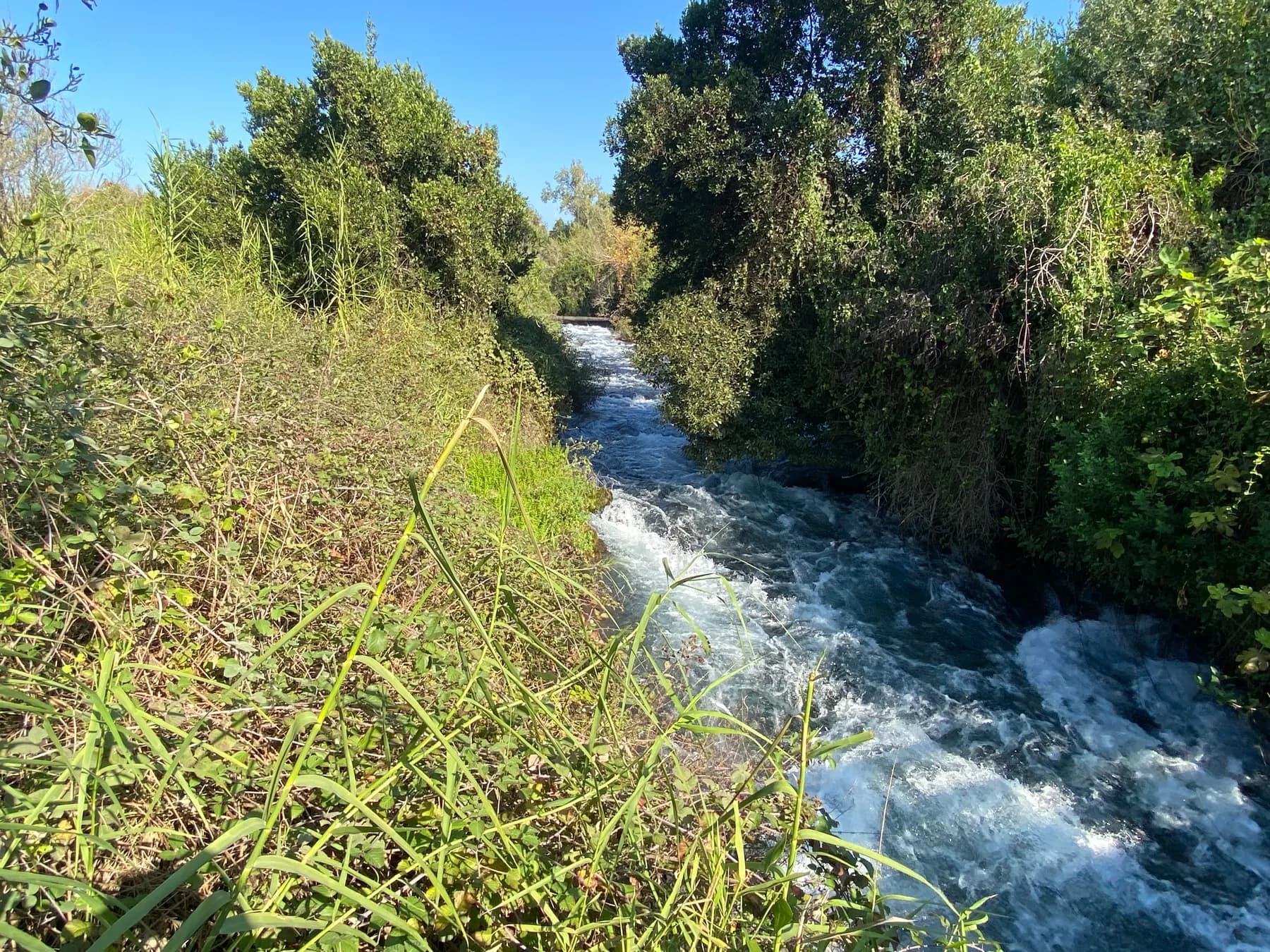
The largest of the Jordan River's three headwaters rises inside this 48 hectare reserve, and the trail that follows it ends at a mudbrick city gate of about 1750 BCE that still stands seven metres high.
זולטן קלוגר - לעמ / Public domain · Wikimedia Commons
Neighbourhood
Safed Old City and Artists' Quarter
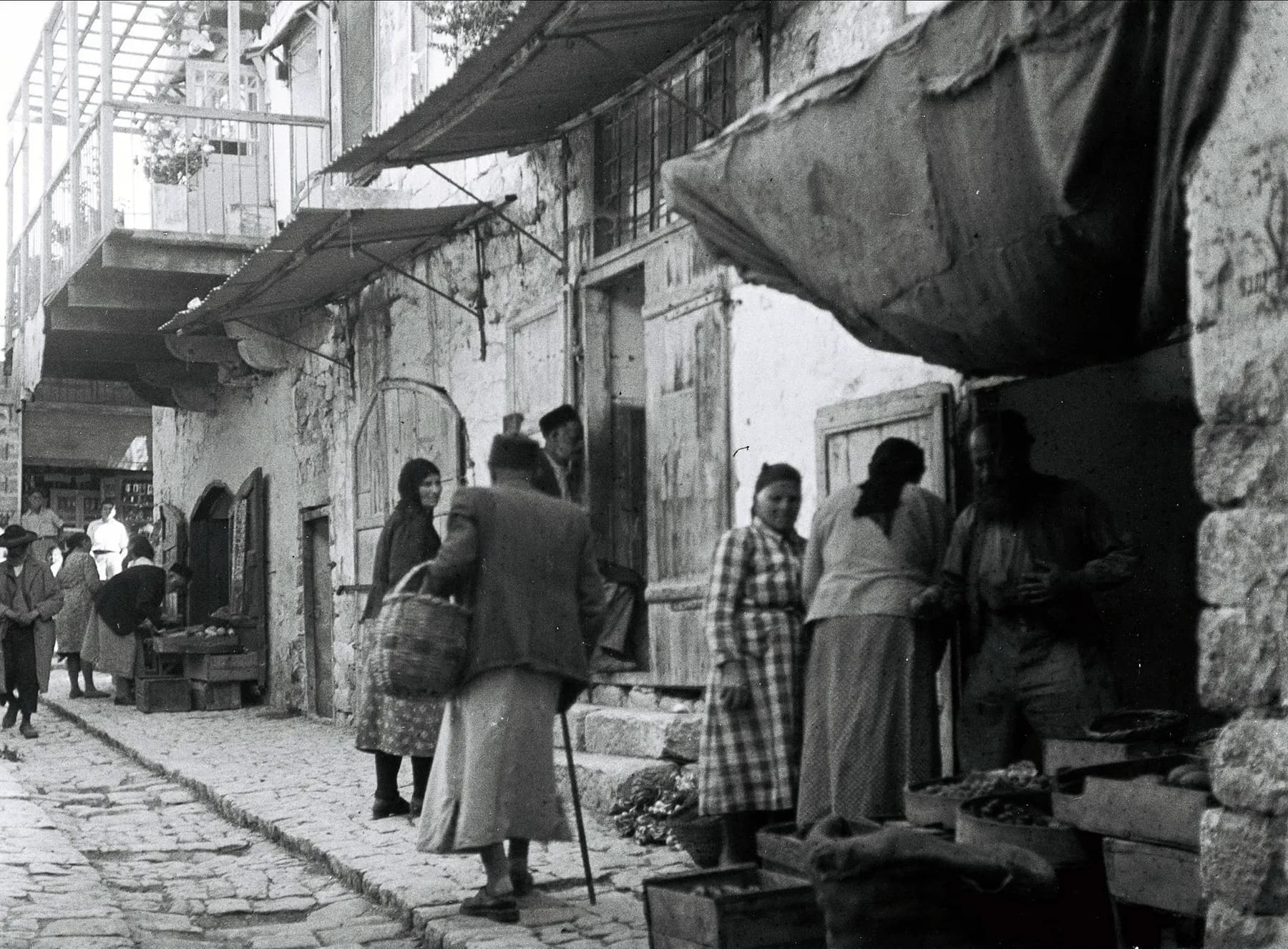
The synagogue quarter and the artists' quarter sit on one slope, divided by a broad flight of stairs the British Mandate authorities cut through the town to keep two populations apart.
Archaeological site
Montfort Castle
The Teutonic Order bought this spur above Nahal Kziv from the de Milly family in 1220 and moved its archive and treasury here in 1229, out of reach of the Templars and Hospitallers in Acre.
Sources and further reading
Every link below was opened and checked when this page was written. Official statements are marked as such: they are the subject's own account, not an independent one.
- OfficialAgamon Hula (KKL-JNF), site operatoragamon-hula.co.ilAgamon Hula, visitor information in English
Operating hours in English, the full entrance price list from ₪35 adult to ₪10 for an Eastern Galilee resident, the ban on private vehicles and pets, the notice that the Water Fowl and Crane lookouts are closed for security reasons, and the reopening rate of ₪10 that expired on 31 March 2025
- OfficialAgamon Hula (KKL-JNF), site operatoragamon-hula.co.ilPrice list (מחירון)
The Hebrew tariff and its opening hours: entrance categories, annual memberships at ₪60 to ₪400, bicycle hire for three hours, electric carts for ninety minutes, wagon tour prices, binoculars and guiding
- OfficialAgamon Hula (KKL-JNF), site operatoragamon-hula.co.ilHiding wagon tours (עגלות מסתור)
What the covered tractor-drawn wagon does, the closed ecological areas it enters, the length of the sunrise, daytime, sunset, photographers' and summer night tours, and the requirement to book
- OfficialAgamon Hula (KKL-JNF), site operatoragamon-hula.co.ilThe botanical garden (גן בוטני)
Laid out in 2009 by KKL-JNF over about 30 dunams with roughly 100 species of marsh and water plants, to record the vegetation of the old lake and shelter rare wetland species
- OfficialAgamon Hula (KKL-JNF), site operatoragamon-hula.co.ilAccessibility statement (הצהרת נגישות)
What is accessible at the visitor centre, the Crane and Cormorant observatories, the botanical garden and the Pergola viewpoint, and the explicit gaps at the Water Bird Observatory and the ringing station, plus the ban on electric mobility devices
- OfficialAgamon Hula (KKL-JNF), site operatoragamon-hula.co.ilBicycle hire (השכרת אופניים)
Three hour hire as the intended visit length, compulsory helmets, the flat terrain, and the outright ban on personal electric bicycles, scooters and other electric devices
- OfficialKKL-JNF (Jewish National Fund), site operatorkkl-jnf.orgHula Lake Park
The operator's English account of the site: the 1951 drainage as the state's first national engineering project, two tonnes of maize scattered daily in winter, the visitor centre, bicycle and cart hire and the camouflaged wagon
- OfficialKKL-JNF (Jewish National Fund)kkl.org.ilAgamon Hula trail (אגמון החולה)
The circuit round the lake given as 8.5 kilometres and described as easy and flat, running beside the water and through orchards, walked or cycled or driven by electric cart
- OfficialKKL-JNF (Jewish National Fund)kkl.org.ilAgamon Hula visitor centre project
About 3,000 square metres over two levels, built with JNF Canada, construction begun in January 2009, with a live camera wall, an auditorium and cinema, a gallery floor, shop, cafe and observation deck, and no final cost published
- ReportingThe Times of Israel (21 March 2023)timesofisrael.comNumber of overwintering cranes in Hula Valley drops as authorities reduce feeding
The wintering count falling from about 40,000 to between 18,000 and 25,000, feeding started later and ended earlier with quantity cut by a tenth, an estimated 8,000 cranes lost to avian influenza, the five-year phase-out agreed with farmers, and comment from the Parks Authority's avian ecologist Ohad Hazofe and the ecologist Yifat Artzi
- ReferenceEncyclopaedia Britannicabritannica.comHula Valley
The valley at about 25 by 6 kilometres and 177 square kilometres, the former lake of about 14 square kilometres with 31 of swamp, drainage from 1951 to 1958 with more than 40 kilometres of canals, and farmland made unusable by sinking groundwater by the early 1990s
- ReferenceWikipediaen.wikipedia.orgLake Hula
The pre-drainage lake at 5.3 by 4.4 kilometres, the peat fires and fertiliser run-off into the Sea of Galilee, the reflooding of the early 1990s, and the resulting park of about one square kilometre with islands used as protected nesting sites
- ReferenceHebrew Wikipediahe.wikipedia.orgAgamon HaHula (אגמון החולה)
The 62,000 dunams drained in the 1950s, the 80 million shekels and two years of controlled flooding, the 2019 visitor centre named for Stephen Harper, the wildlife acclimation centre opened in 2020 with Tel-Hai Academic College under Yaron Cherka and Rona Nadler Valency, the late 2021 avian influenza outbreak reported by Haaretz, and the closure in 2023 with reopening in December 2024
- ReferenceHebrew Wikipediahe.wikipedia.orgThe crane project at Agamon Hula (פרויקט העגורים באגמון החולה)
The 1999 decision to create alternative feeding grounds, 2 to 3 tonnes of maize scattered daily from early December to mid-March by farm vehicles rather than feeders, the partners including two government ministries and the valley's farmers, research funded by the United States Forest Service, about 15,000 wintering cranes in 1999 against 50,000 and 5 million shekels a year by 2019, and the December 2019 dispute between the farmers, KKL-JNF and the Parks Authority
Agamon Hula: common questions
What is Agamon Hula?+
It is an artificial lake of about one square kilometre in the Hula Valley with a ticketed visitor site round it, run by KKL-JNF. The water sits on ground that the same organisation drained in the 1950s and deliberately flooded again four decades later. It is best known as a wintering ground for grey cranes, which are fed on the site to keep them off the surrounding farmland.
How much does it cost to get in?+
The operator publishes ₪35 for an adult and ₪21 for a child aged 5 to 18. A senior citizen or a visitor with a disability pays ₪18, a soldier ₪21, a student ₪30, and a resident of the Eastern Galilee cluster ₪10, each on presentation of the relevant card. Bicycles, electric carts and wagon tours are all charged separately on top.
What are the opening hours?+
The operator's English page gives entry from 08:00 to 16:00 Sunday to Thursday and from 06:30 to 16:00 on Friday and Saturday, with everyone out by 17:00. Its own Hebrew price list gives different times: entry 09:00 to 16:30 Sunday to Thursday with exit by 18:00, and earlier on Friday. The two pages did not agree when both were read in August 2026, so telephone before relying on either.
When is the best time to see the cranes?+
Roughly December to the middle of March, and at dawn. Organised feeding starts at the end of December and now finishes at the end of February, having previously run from early December into March, and the birds concentrate where the maize is spread. Numbers have fallen deliberately since the 2021 avian influenza outbreak, from about 40,000 wintering birds to between 18,000 and 25,000.
How long does the loop take, and can it be walked?+
The circuit is 8.5 kilometres and KKL-JNF calls it easy and flat, so it walks in two to three hours with stops. A hired bicycle goes out for three hours and an electric cart for an hour and a half, which is the pace most visitors take. There is no shortcut back, so plan the full ring before starting it.
Is Agamon Hula wheelchair accessible?+
Partly, and the operator is unusually specific about which parts. The visitor centre has disabled parking, continuous accessible routes to the desk, auditoriums and lifts, and accessible toilets on both floors, and there are accessible parking and paths at the Crane Observatory, the Cormorant Observatory, the botanical garden and the Pergola viewpoint. The Water Bird Observatory has no accessible toilets and the ringing station has neither accessible parking nor accessible toilets, and the 8.5 kilometre circuit is a flat unmade track rather than a paved wheelchair route. Electric mobility scooters are banned along with all personal electric devices.
Is it the same place as the Hula Nature Reserve?+
No, and the two are often confused. The Hula Nature Reserve preserves a remnant of the original papyrus swamp, opened in 1964 as Israel's first nature reserve and run by the Israel Nature and Parks Authority. Agamon Hula is a KKL-JNF site on re-flooded farmland about three quarters of an hour to the north. Separate gates, separate tickets, and no combined pass.
Can you drive your own car round the lake?+
No. Private vehicles are prohibited inside the site, with one exception for a licensed vehicle carrying a disabled permit. The alternatives are walking, a hired bicycle, a hired electric cart, or a booked seat on the tractor-drawn hiding wagon. Cars stay in the car park at the entrance.
Is it worth going outside crane season?+
It depends on what is expected. Between spring and autumn the site is a flat 8.5 kilometre cycle beside water and through orchards with water birds, a botanical garden of about 100 wetland plant species and a substantial visitor centre, which makes an agreeable half day. It is not the winter spectacle, and the photographs used to sell the place are almost all taken between December and March.
Do the tours need booking in advance?+
Yes for the hiding wagon and it is strongly advised for bicycles. The operator states that reservation is required for the wagon tours and recommends booking bicycle hire ahead, and the sunrise slots are the first to go. Entry itself is bought at the gate.