Hundreds of Officers Move on Tzur Misgavi, an Outpost of 25 Families
Hundreds of Border Police and Civil Administration personnel moved to evacuate an unauthorised hilltop settlement north of Metzad in eastern Gush Etzion.
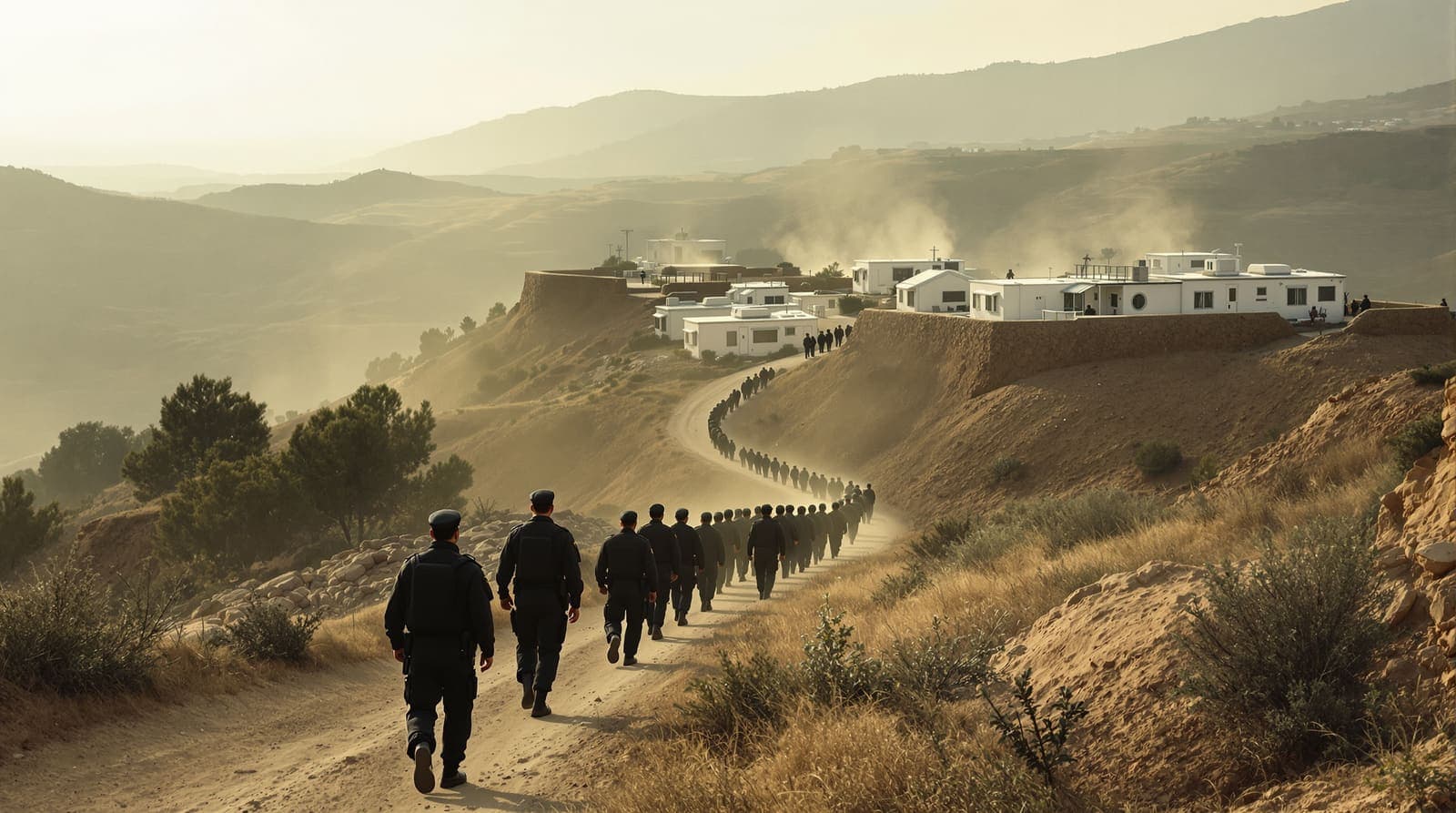
Illustration
Hundreds of Israeli Border Police and Civil Administration personnel were working on the morning of 17 November 2025 to evacuate the settlement point, or outpost, on the hill known as Tzur Misgavi, north of the town of Metzad in eastern Gush Etzion. The site was home to 25 families along with a number of boys and girls, according to the report from The Press Service of Israel.
Tzur Misgavi was an expansion of Metzad that did not receive legal status before it was established. Gush Etzion is a bloc of Israeli towns in the West Bank, just south of Bethlehem, named after the German-Jewish businessman Shmuel Zvi Holzmann, who helped fund the first town there a century ago: Holzmann means “wood” in German, “etz” is Hebrew for tree or wood, and “gush” is Hebrew for bloc.
What an outpost is, in Israeli law
The distinction the statement draws (a “settlement point” that never received legal status) is the whole story. Israeli settlements in the West Bank require government authorisation and planning approval; outposts are built without it and are therefore illegal under Israeli law, even though successive governments have funded them through various ministries and have retroactively legalised many. The Israeli anti-settlement group Peace Now counted 86 new outposts established during 2025, a record, against an average of six a year between 1991 and 2022, 32 in 2023 and 62 in 2024, The Times of Israel reported in February 2026. The same tally recorded 54 settlements approved by the government in 2025, of which 26 were outposts granted retroactive legal status. Outside Israel the distinction between authorised settlements and unauthorised outposts carries no weight: UN Secretary-General António Guterres restated in July 2026 that settlements and outposts alike have “no legal validity and constitute a flagrant violation of international law”, according to UN News.
Who does the clearing
Two bodies were named in the statement. The Border Police is the gendarmerie arm of the Israel Police, used for public-order operations and deployed heavily in the West Bank. The Civil Administration is the Israeli military body that administers planning, building permits and demolition orders in Area C, the roughly 60 percent of the West Bank under full Israeli civil and security control, which is why it, rather than a municipality, issues the paperwork behind an eviction like this one.
What other outlets reported that day
The Jerusalem Post reported the same day that the evacuation and demolition were carried out under an order signed by the head of the IDF's Central Command, that confrontations broke out with “hilltop youth” activists, that several Border Police officers were hurt by thrown stones and objects and that six people were detained. It also reported that the Gush Etzion Regional Council had appealed to Finance Minister Bezalel Smotrich in September over what it described as growing anarchy, arguing that unauthorised construction consumes land needed for approved development, according to its account. None of that appears in the release this article is based on.
What is still unclear
The statement was issued while the operation was under way and says nothing about how it ended: whether the structures were demolished, where the 25 families went, or whether anyone was hurt or arrested. It does not say who ordered the evacuation or why it was carried out on that date, and it carries no comment from the residents, the regional council or the security forces involved.
Sources and further reading
Every link below was opened and checked when this page was written. Official statements are marked as such: they are the subject's own account, not an independent one.
- OfficialUN Newsnews.un.orgGuterres: Fast-tracking West Bank outposts is a 'flagrant violation' of international law
The international-law position on settlements and outposts, for contrast with Israeli law
- ReportingTimes of Israeltimesofisrael.com2025 was record year for settlement expansion, construction and planning, NGO finds
Peace Now's count of new and retroactively legalised outposts, and their status in Israeli law
- ReportingJerusalem Postjpost.comWATCH: Hilltop Youth, security forces clash during demolition of illegal settlement extension
Same-day account of the Tzur Misgavi operation, the detentions and the council's earlier appeal
How we checked this
The location, the 25 families, the forces involved and the outpost's lack of legal status are as given in the Press Service of Israel report of 17 November 2025, filed while the operation was under way. The outpost figures for 2025 come from Peace Now via Times of Israel reporting in February 2026, and the detail on detentions and the demolition order is attributed to the Jerusalem Post's separate account of the same day.
Our sourcing and corrections policy →The week from Israel, in one email
The stories that mattered, sourced and checked by the Israel.com newsroom. Free, weekly, one-click unsubscribe.
One list, unsubscribe in a click. See our privacy policy.
More in Security
All security →

Latest
- Houthi forces reported streaming into Yemen's port city of Mocha
- Israel says three Hamas weapons depots destroyed in strikes across Gaza
- Advisers warned Trump the Iran war could outlast his presidency
- Iranian agency reports explosions near Jask and the port of Sirik
- Drone sirens sound in Galilee Panhandle, then declared a false identification
- Netanyahu visits Mount Hermon inside Syria; Damascus calls it illegal