Netanyahu and Congo's Tshisekedi agree to deepen economic and security ties
An Israeli government release says the prime minister and President Felix Tshisekedi met and agreed to tighten economic and security cooperation, with few details published.
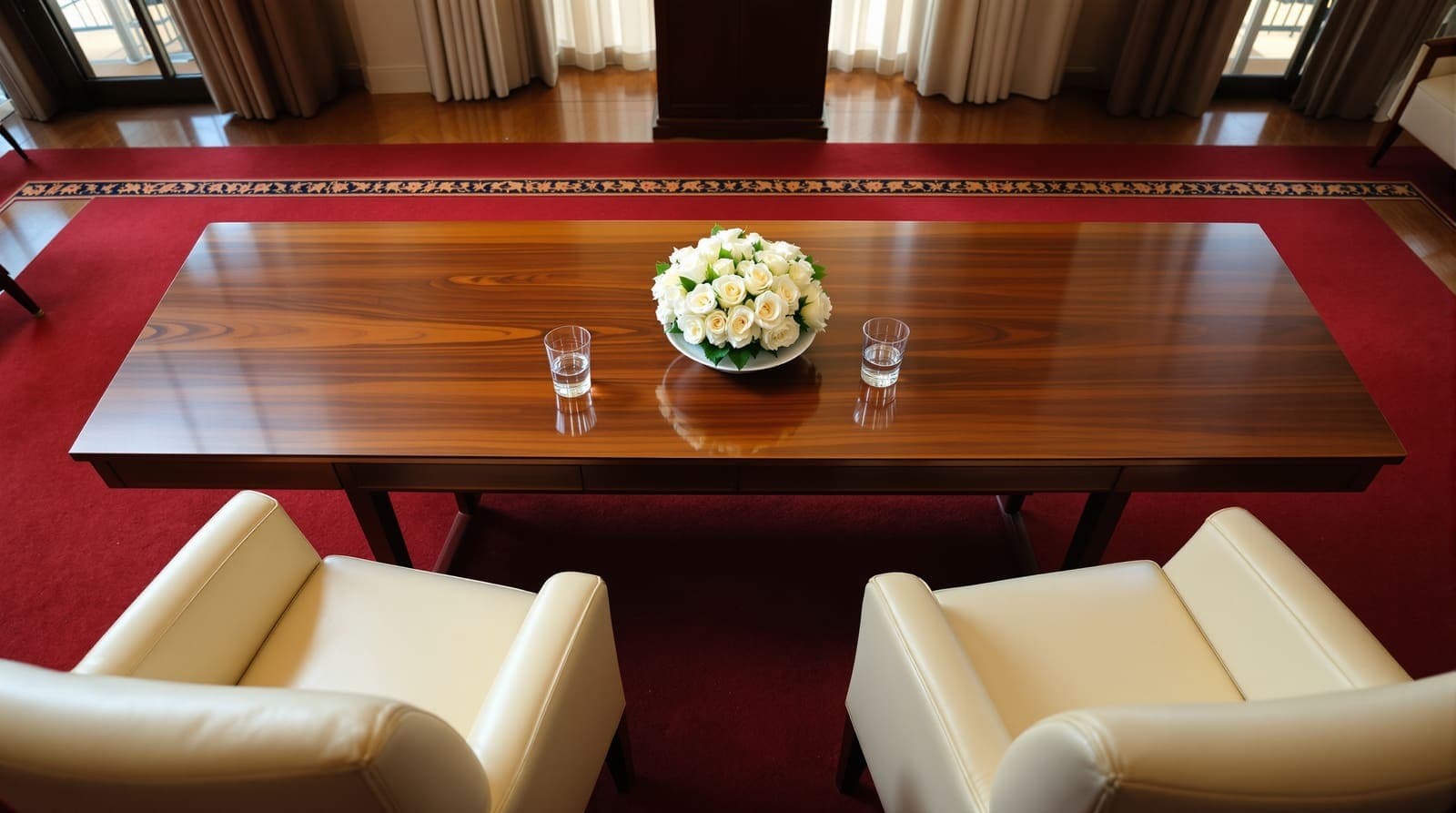
Illustration
Prime Minister Benjamin Netanyahu met President Felix Tshisekedi of the Democratic Republic of the Congo, and the two agreed to tighten the economic and security ties between their countries, according to a notice published by the Israeli government on its official portal.
The notice is brief. It carries a photograph credited to Ma'ayan Toaf of the Government Press Office, a one-line summary of what the two leaders agreed, and a short set of remarks by Netanyahu welcoming his guest. In those remarks, quoted in Hebrew in the release, the prime minister called the visiting president "our good friend" and said the visit would help strengthen what he described as a great friendship. No joint statement, agenda or list of agreements was published alongside the item.
On the ground

Prime Minister Benjamin Netanyahu met today with the President of the Democratic Republic of the Congo Félix Tshisekedi. During their meeting, the Prime Minister and the President agreed to strengthen the economic and security relations between the two countries.
What the Israeli government portal is
The item appeared on gov.il, the central website of the Israeli government, in the section used for events and speeches. Entries there are official communications rather than journalism: they are produced by government offices and, in the case of the prime minister's meetings, typically by the Government Press Office, known by its Hebrew acronym LAPAM, which distributes photographs and transcripts of official engagements. The release is filed under the 37th Government, the designation of the coalition Netanyahu has led since its formation. Material of this kind is usually the first and sometimes the only public account of a leader-level meeting held without a press conference.
Where the Democratic Republic of the Congo fits
The Democratic Republic of the Congo is a large state in central Africa, with its capital at Kinshasa. It is distinct from the neighbouring Republic of the Congo, whose capital is Brazzaville, and the two are frequently confused in international coverage. That distinction matters in this case: the headline of the Israeli release names the Democratic Republic of the Congo, while the Hebrew text of Netanyahu's welcome, as published, refers to the president of the Republic of Congo. The release does not explain the discrepancy, and it is reproduced here rather than resolved.
Felix Tshisekedi is named in the release as the visiting head of state. The notice does not say how long he was in Israel, which officials accompanied him, or whether other Israeli ministers took part in the meeting.
Why economic and security language is the substance here
The single substantive line in the release is that the two leaders agreed to strengthen economic and security relations. Both words are doing work, but neither is defined. In Israeli government usage, an agreement to deepen economic ties can cover anything from trade delegations and agricultural technology to water management or energy projects, while security cooperation can range from police and civil defence training to intelligence contacts or defence procurement. The release specifies none of these, and no memorandum, contract or figure is mentioned.
Israel has pursued closer relations with African states for years, and leader-level visits to Jerusalem are one of the visible markers of that effort. A meeting recorded on the government portal signals that the relationship is being publicised by the Israeli side, but the notice on its own does not establish what changes in practice.
The quoted remarks
The remarks attributed to Netanyahu in the release are short and ceremonial. He said he was glad to receive the visiting president, described the relationship between the two countries in warm terms, and said the visit itself would help reinforce it, closing with a welcome to his guest. The release quotes only Netanyahu. No statement by Tshisekedi is included, and there is no indication in the item whether the Congolese president spoke to the press.
What the release does not say
A single official notice leaves most of the obvious questions open. It does not say where the meeting took place, how long it lasted, or who else was present. It does not describe any agreement in writing, name any sector, project or sum of money, or state whether officials were tasked with follow-up work. It does not say whether the visit included other stops in Israel or meetings with the president of Israel, the foreign minister or the defence establishment. It gives no indication of whether Israeli or Congolese officials plan to publish more detail later.
Because the account rests on one government release, the characterisation of the meeting as a friendly one and the claim that ties will be tightened are the Israeli government's own. Israel.com has not independently confirmed the content of the discussion, and no second organisation's account of the meeting was available for this report.
Sources and further reading
Every link below was opened and checked when this page was written. Official statements are marked as such: they are the subject's own account, not an independent one.
- Officialgov.ilgov.ilIsraeli government press release
How we checked this
This report is based on a single official Israeli government release published on gov.il, which is the only account of the meeting available to us; its description of what the leaders agreed remains attributed to the Israeli government and has not been independently verified.
The account of the incident itself rests on the official statement and has not been independently confirmed by Israel.com. Where the statement is silent, this page says so rather than filling the gap.
Our sourcing and corrections policy →The week from Israel, in one email
The stories that mattered, sourced and checked by the Israel.com newsroom. Free, weekly, one-click unsubscribe.
One list, unsubscribe in a click. See our privacy policy.
More in Economy
All economy →


Latest
- IDF says Khan Younis strike killed Nukhba operative tied to Steinberg's death
- Yair Golan sues Sara Netanyahu for millions over Channel 14 remarks
- Ariel man, 53, found alive after entering Palestinian village overnight
- Houthi forces reported streaming into Yemen's port city of Mocha
- Israel says three Hamas weapons depots destroyed in strikes across Gaza
- Advisers warned Trump the Iran war could outlast his presidency