Israel Approves 30,551 Homes, Most of Them in One Negev Town
A ministerial committee cleared four fast-track schemes in Kiryat Malachi, Rehovot and Netivot, with more than 22,000 of the new flats going to Netivot alone.
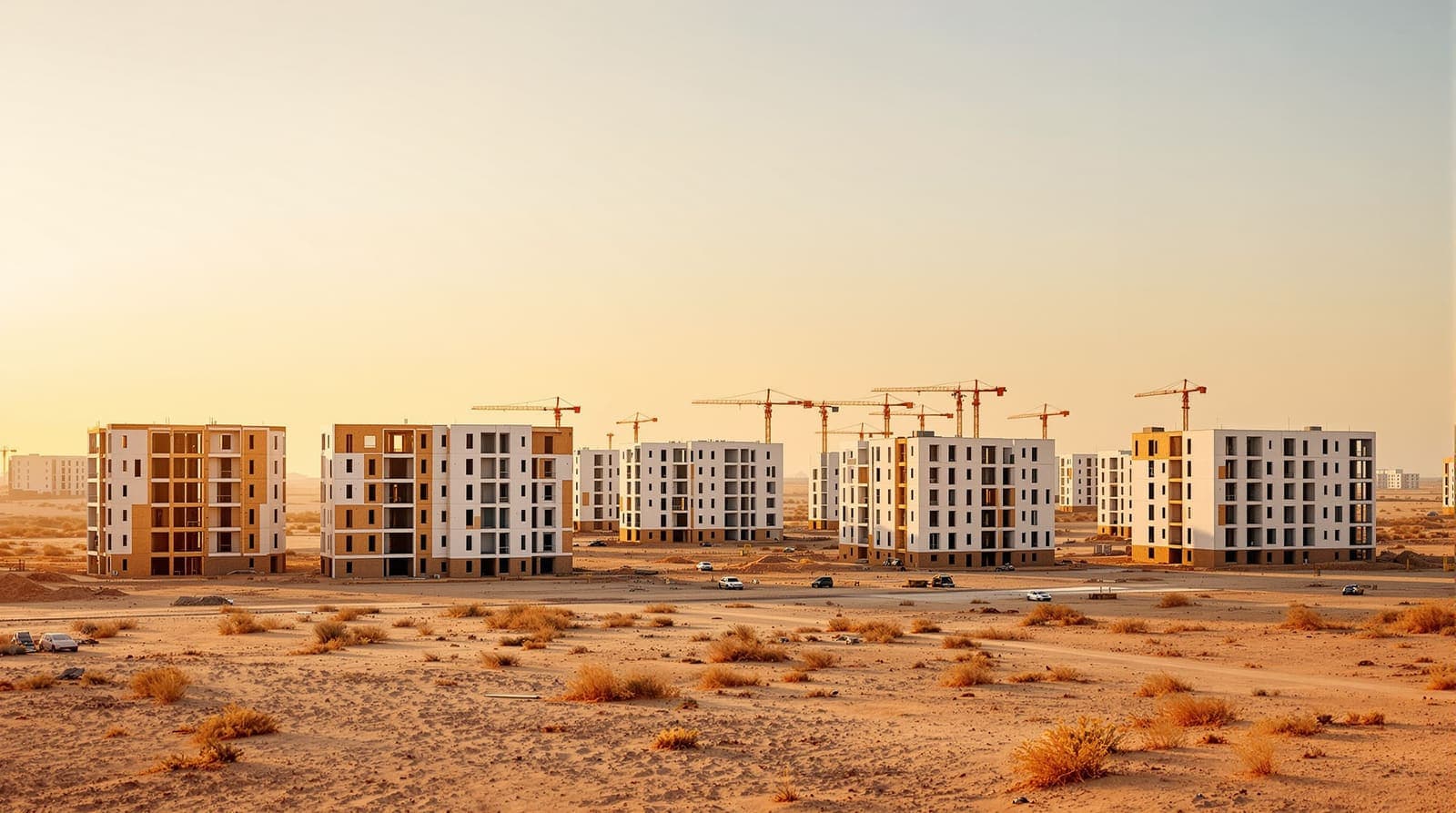
Illustration
Israel's Ministerial Committee for Interior Affairs approved a package of measures on 21 October 2025 to push forward tens of thousands of new homes and a set of urban renewal schemes, according to the announcement. In total, 30,551 additional housing units were cleared for accelerated development across the country.
The units sit in four complexes. In Kiryat Malachi, a town roughly 50 kilometres south-east of Tel Aviv, the committee declared the Hala District a preferred housing complex of 6,080 homes alongside 450,000 square metres of employment and commercial space. In Rehovot, about 20 kilometres south-east of Tel Aviv, the TAMAL Center announcement was amended to widen the plan area and add 2,035 homes as part of a renewal of the city centre. The two largest are both in Netivot, about 20 kilometres north-west of Be'er Sheva and close to the Gaza Strip: a large evacuation-and-construction plan of 13,000 homes in the old city, and an amendment to the TML/2027 plan expanding it by a further 750 dunams (some 75 hectares) for 9,436 more homes, in cooperation with the Israel Land Authority. Netivot and Kiryat Malachi, the announcement noted, are both traditionally lower-income, developing areas.
What a “preferred housing complex” actually is
The phrase is a legal designation, not a marketing one. It routes a plan to a national fast-track planning body set up in 2014 under a temporary order (known by its Hebrew acronym Vatmal, the Committee for Preferred Housing Sites), which can approve large schemes in areas the government designates while bypassing the layers of district and local planning that would normally apply. By 2021, the Times of Israel reported, it had cleared more than 200,000 homes, against roughly 700,000 approved by the ordinary committees over the same decade. Environmental groups have argued that speed comes at the cost of open and agricultural land, and mayors have complained that the homes arrive faster than the roads, sewers, schools and public transport meant to serve them.
That argument attached itself to this package almost immediately. Ynet reported that opponents of the Kiryat Malachi scheme said it took in open farmland and that a legal team had begun work on a petition to the High Court of Justice, and that the neighbouring Be'er Tuvia regional council had put forward an alternative layout it said would sharply cut the agricultural land consumed.
Evacuation and construction, in plain English
The 13,000-home Netivot plan uses the mechanism Israelis call pinui-binui, evacuation-and-construction: old low-rise blocks are demolished and rebuilt at much higher density, with existing residents moved out during the works and given a new, larger flat in the finished development. It is the main tool Israel now uses to add homes inside built-up areas rather than on open ground, and it is doing a great deal of the work: Ynetnews reported that half of all housing units approved in Israel in 2025 came through urban renewal.
Why so much of it lands in the south
The geography of the package is not an accident. Ynetnews reported that Israel approved 223,164 housing units in 2025, against a government target of 125,000, and that the Southern District took the largest share of any district at 27,478 units, including 17,500 in the western Negev towns of Sderot, Netivot and Ofakim, the communities closest to the Gaza border.
Development towns and the gap that persists
Israel's Central Bureau of Statistics sorts local authorities into ten socio-economic clusters, one being the lowest. Netivot, Kiryat Malachi and Ofakim were all placed in cluster three, the Times of Israel reported in 2019, in a piece that also recorded a roughly 20 per cent gap in average wages between the development towns and the country as a whole, persisting over two decades. In the ranking reported in July 2024 by Globes, Kiryat Malachi slipped from the fourth cluster to the third.
Approvals are not apartments
The gap between a plan approved and a family moving in is where Israeli housing policy tends to fail. Ynetnews reported that even with approvals running at 180 per cent of the annual target in 2025, professionals in the sector identified execution rather than planning as the bottleneck, with construction timetables continuing to stretch. The demand side does not wait: on figures reported by the Times of Israel in 2019, the national plan called for about 65,000 homes a year, on top of a shortfall then put at around 150,000 flats. Prices have since softened rather than fallen away: a Times of Israel housing snapshot published in May 2026 put the average flat at about NIS 2.33 million in the first quarter of 2026, down 1.2 per cent year on year, with a record stock of unsold new-builds.
What the announcement did not say
The committee's statement set out unit counts and plan areas but no timetable, no budget and no construction start dates. It did not say how many of the 30,551 homes would be sold at subsidised prices or reserved for existing residents of the neighbourhoods being cleared, nor what infrastructure (schools, clinics, roads, rail) would accompany them. It also gave no indication of where residents of the Netivot old city would live during the demolition and rebuilding.
Sources and further reading
Every link below was opened and checked when this page was written. Official statements are marked as such: they are the subject's own account, not an independent one.
- ReportingThe Times of Israeltimesofisrael.comGreen bodies slam decision to extend mandate of fast-track planning committee
What the Vatmal fast-track committee is, when it was created and the criticism of it
- ReportingYnetynet.co.ilThe state approved construction of 30,000 apartments - some opponents are preparing to file a High Court petition
Objections to the Kiryat Malachi scheme and the planned legal challenge
- ReportingThe Times of Israeltimesofisrael.comWhy the left keeps failing in the pro-Likud periphery, home to 25% of Israelis
CBS socio-economic cluster three for Netivot and Kiryat Malachi, and the wage gap, as of 2019
- ReportingThe Times of Israeltimesofisrael.comWith its population set to double in 30 years, how will Israel cope?
The 65,000-homes-a-year national plan and the housing shortfall, as put in 2019
- DataYnetnewsynetnews.comIsrael approves 80% more homes than planned in 2025
2025 approval totals, the southern district share, western Negev units and the execution bottleneck
- DataGlobesen.globes.co.ilJerusalem bottom in socioeconomic ranking
The CBS ranking reported in July 2024 and Kiryat Malachi's move from the fourth cluster to the third
- DataThe Times of Israeltimesofisrael.comHousing snapshot May 2026: home prices rise 0.3% in February-March
Average apartment price and the annual price change reported by the CBS in 2026
How we checked this
Every number attached to the decision itself (30,551 units in total, 6,080 in Kiryat Malachi, 2,035 in Rehovot, 13,000 and 9,436 in Netivot, and the 450,000 square metres and 750 dunams) comes from the announcement of 21 October 2025 as issued. The planning system, the 2025 approval totals, the socio-economic rankings and the price figures are drawn from dated Times of Israel, Ynet, Ynetnews and Globes reports and are attributed in the text.
Our sourcing and corrections policy →The week from Israel, in one email
The stories that mattered, sourced and checked by the Israel.com newsroom. Free, weekly, one-click unsubscribe.
One list, unsubscribe in a click. See our privacy policy.
More in Government
All government →

Latest
- IDF says Khan Younis strike killed Nukhba operative tied to Steinberg's death
- Yair Golan sues Sara Netanyahu for millions over Channel 14 remarks
- Ariel man, 53, found alive after entering Palestinian village overnight
- Houthi forces reported streaming into Yemen's port city of Mocha
- Israel says three Hamas weapons depots destroyed in strikes across Gaza
- Advisers warned Trump the Iran war could outlast his presidency