The People Who Stayed in Kiryat Shmona Through 23 Sirens in a Day
Israel's northernmost city has largely emptied under Hezbollah fire, but some residents will not go: for work, for a sick spouse, or because they lost one home already.
Illustration
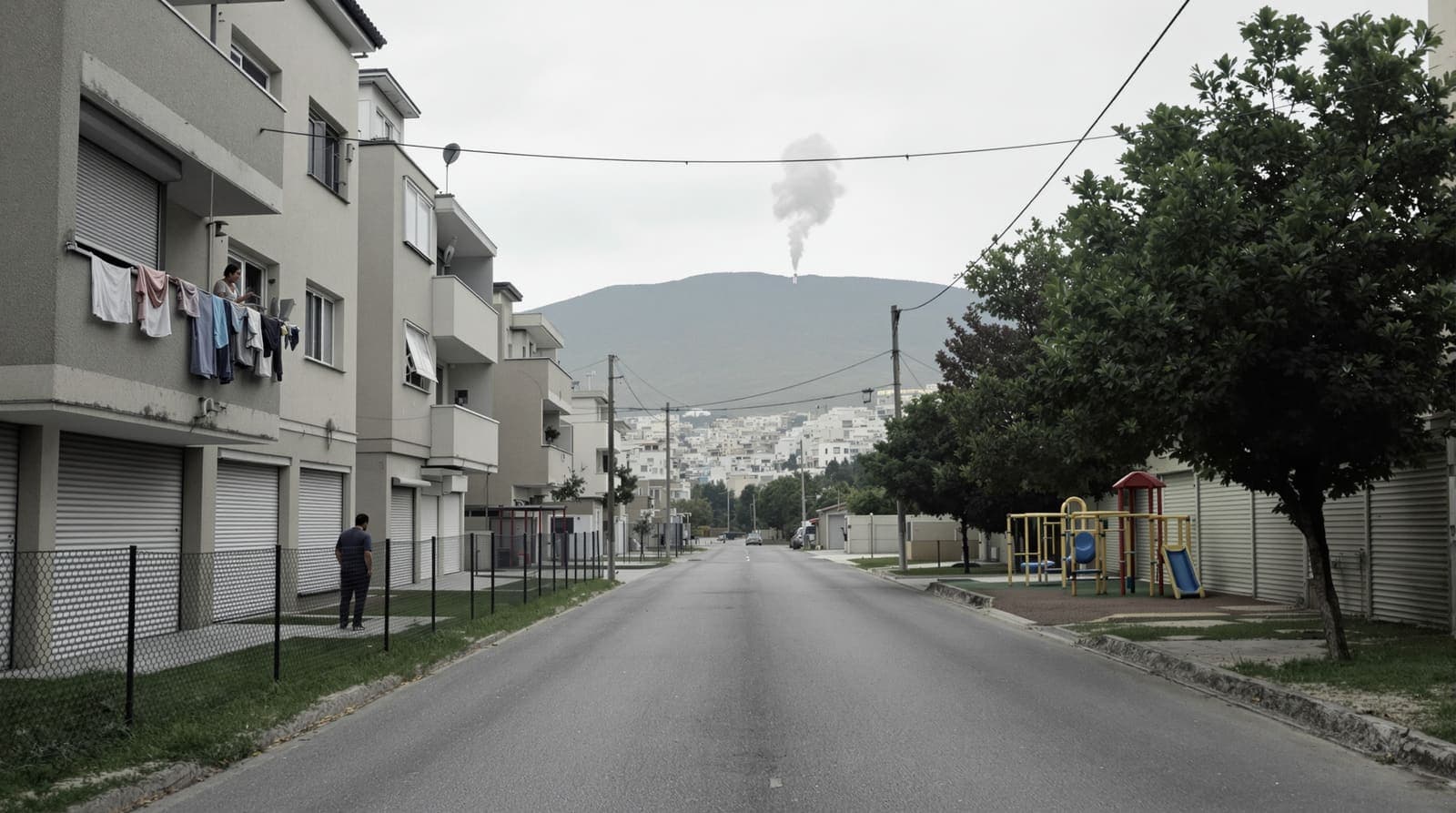
What is missing in Kiryat Shmona is louder than what remains. Cars, children in the playground, the ordinary rhythm of a working town: all gone, according to a visit to the city reported by the Tazpit Press Service. The city, long one of the Israeli communities most exposed to fire from Lebanon, has been largely emptied by months of Hezbollah attacks. Some residents have stayed on anyway, refusing to become displaced people inside their own country.
Their reasons are not one reason. Some stay for work, some because someone at home is ill, some because they have already lost a home once and will not do it twice. Others stay for smaller things: a prayer at 5.30 in the morning, a business they are trying to keep alive, a dog that depends on them. Silvia Dahan, who said she stayed because her husband was undergoing cancer treatment and could not easily be moved, told the reporter that her home had no reinforced safe room and that when the immediate alert sounded the family had only seconds to run. “Yesterday, there were 23 sirens,” she said. “We just put our hands over our heads and pray.” The streets are largely deserted; a scooter now and then; a dusty military vehicle waiting at a green light where family cars used to queue; a truck carrying a tank along the main road. In one street half a residential building has been destroyed, and a Home Front Command rescue unit trains there in evacuating casualties through the rubble. Overhead, an Apache helicopter fires flares. Hours later it becomes clear that Hezbollah has launched a heavy barrage and the helicopters have been scrambled to help forces under attack.
A town that has been shelled since 1974
Kiryat Shmona sits on the western slopes of the Hula Valley, roughly five kilometres from the Lebanese border, which makes it the northernmost city in Israel; its population was recorded at about 24,400 in 2024, according to a reference profile of the city. Its history is a ledger of cross-border attacks: eighteen residents killed in a 1974 attack on the town, Katyusha salvoes in the 1980s and 1990s, Hezbollah rockets during Operation Grapes of Wrath in 1996, and 1,012 Katyushas landing on the city during the 2006 Lebanon War, when most residents left and about 5,000 stayed on in shelters. The elderly man in the account who remembers Menachem Begin promising that no Katyusha would fall, and who counts the rounds of fighting since, is describing a documented sequence rather than a mood.
The evacuation that emptied the north
The current emptiness has a bureaucratic history. Israel evacuated about 60,000 people from 32 northern communities after Hezbollah began firing in October 2023. Government housing subsidies for those evacuees ended on 7 July 2025, and the return was uneven: 41% of all buildings in Kiryat Shmona had been damaged, including 300 houses that took direct hits, and the city estimated that up to 20% of its residents would never come back, the Times of Israel reported at the time.
Then the fighting resumed. the Associated Press reported from Kiryat Shmona on 18 March 2026 that residents who had only recently returned were again living under round-the-clock sirens, and that at least half of the original evacuees had never come back at all. A wider timeline of the 2026 Lebanon war dates the renewed cross-border fire to 2 March 2026.
The neighbours who lost a home in Lebanon first
The account describes young people from families linked to the former South Lebanon Army, the Israeli-backed militia that held the “security zone” in southern Lebanon until Israel withdrew in May 2000. When the zone collapsed, roughly 1,500 militia members and their dependants (about 6,420 people in all) crossed into Israel, which had expected only a few hundred and granted them temporary residency and work permits, according to a US Congressional Research Service report written weeks after the withdrawal. Two generations on, some of their children are living through a second displacement in the same hills.
Learning the weapons by ear
Residents in the account say they can tell outgoing Israeli artillery from incoming Hezbollah fire by sound alone. That is a skill the geography demands. Hezbollah holds several thousand anti-tank guided missiles, of several types, according to a March 2026 assessment published on 5 March by the Alma Research and Education Center: Kornet missiles reach 5.5 kilometres, improved versions up to ten, and the Iranian-made Almas as far as 16 kilometres with a fire-and-forget guidance system. A town five kilometres from the border sits comfortably inside all of those envelopes, and such weapons arrive without the warning time a rocket allows.
What is still unclear
The account is a reporter's visit, not a census: it does not say how many people remain in Kiryat Shmona, and several residents are identified only by first name. It gives no date for the barrage described, and no figure for casualties or damage on that day. It also does not say what, if any, compensation or protection the residents who stayed are receiving.
Sources and further reading
Every link below was opened and checked when this page was written. Official statements are marked as such: they are the subject's own account, not an independent one.
- OfficialUS Congressional Research Serviceeverycrsreport.comThe South Lebanon Army (SLA): History, Collapse, Post-Withdrawal Status
How many former militia members and dependants crossed into Israel in 2000
- ReportingAssociated Pressnaharnet.comIsraelis had just returned to Kiryat Shmona, now rockets are flying again
Conditions in the city in March 2026 and how many evacuees never returned
- ReportingTimes of Israeltimesofisrael.comWith end to housing subsidies, evacuated northern residents return home, still unsettled
Evacuation numbers, damage figures and the end of government housing support
- ReportingAlma Research and Education Centerisrael-alma.orgHezbollah's Anti-Tank Missile Arsenal: Capabilities and Threat Assessment
Ranges of the missile types that put border towns within reach
- ReferenceWikipediaen.wikipedia.orgKiryat Shmona
Location, population and the city's record of rocket attacks since 1974
- ReferenceWikipediaen.wikipedia.orgTimeline of the 2026 Lebanon war
Start date and early course of the renewed fighting
How we checked this
Every detail about the residents, their quotes and the scenes in the city comes from the Tazpit Press Service report of 29 March 2026 and has not been independently verified. The city's location, population, attack history, evacuation figures, the South Lebanon Army numbers and Hezbollah's missile ranges were researched separately and are cited in the text.
Our sourcing and corrections policy →The week from Israel, in one email
The stories that mattered, sourced and checked by the Israel.com newsroom. Free, weekly, one-click unsubscribe.
One list, unsubscribe in a click. See our privacy policy.
More in Security
All security →
Latest
- Houthi forces reported streaming into Yemen's port city of Mocha
- Israel says three Hamas weapons depots destroyed in strikes across Gaza
- Advisers warned Trump the Iran war could outlast his presidency
- Iranian agency reports explosions near Jask and the port of Sirik
- Drone sirens sound in Galilee Panhandle, then declared a false identification
- Netanyahu visits Mount Hermon inside Syria; Damascus calls it illegal