Israel's military runs surprise "Breaking Dawn 2.0" multi-front drill
The IDF says its General Staff and all regional commands were placed on alert in an unannounced exercise, while a police official told the Jerusalem Post the force was left out.
Illustration
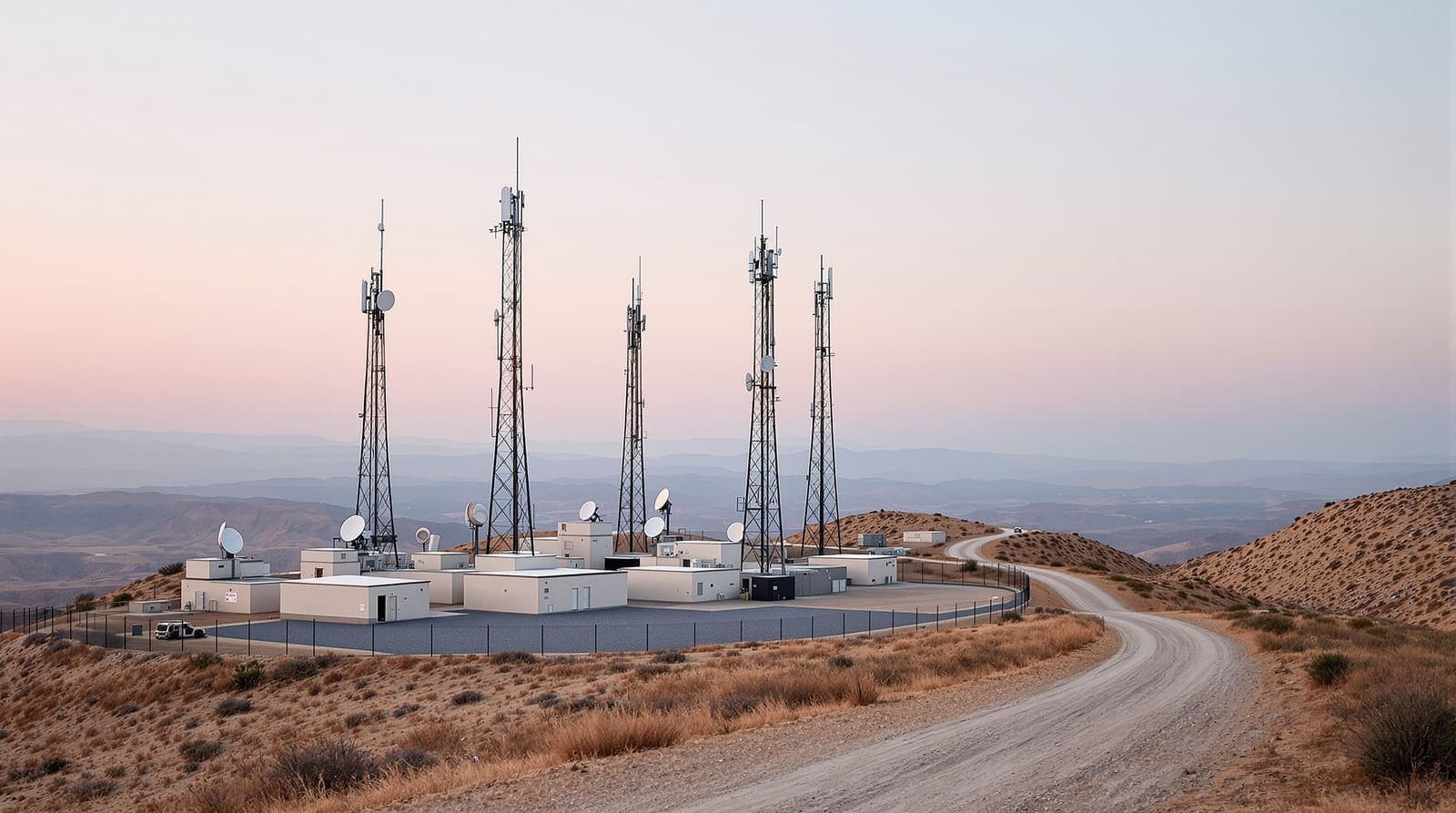
The Israel Defense Forces (IDF) said it carried out an unannounced exercise to test the alertness of its General Staff and main headquarters, designed to examine how the military would respond to a sudden, complex and large-scale event on several fronts at once. According to the IDF spokesperson, the drill was named "Breaking Dawn 2.0", was conducted under the Chief of the General Staff, and took place on Sunday.
During the exercise, the military said, the headquarters of all regional commands, directorates and branches were placed on alert. The IDF described the aim as assessing readiness for a sudden multi-front scenario, without detailing in the published summary which scenarios were played out.
What the Israeli military means by a "multi-front" scenario
The IDF is organised around regional commands, each responsible for a geographic area, alongside functional directorates and service branches. A multi-front event, in Israeli military language, is one in which more than one of those arenas becomes active simultaneously, forcing the General Staff to allocate forces, intelligence and air defence across theatres at the same time rather than concentrating on a single border.
The Chief of the General Staff is the most senior uniformed officer in the Israeli military and reports to the defence minister. Exercises held at his level are aimed less at individual units than at the command apparatus itself: whether headquarters can be reached, whether alerts propagate, and whether decisions can be taken quickly under an unexpected trigger. A drill described as a surprise means the participating headquarters were not told in advance, which is the mechanism used to test the alert chain rather than a rehearsed plan.
The police complaint
The Jerusalem Post reported criticism from within the Israel Police over the force's exclusion from the security drill, publishing the remark "We learned nothing" from a police official in its account of the exercise. The newspaper framed the complaint as being about the police being left out of the military's exercise.
The Israel Police is a civilian national force under the National Security Ministry, separate from the IDF chain of command. In a large-scale emergency, however, police officers are among the first responders in towns and communities, and questions of coordination between the military and the police have been a recurring theme of Israeli readiness work. A drill that exercises the General Staff and military headquarters does not, by itself, exercise that civilian interface.
Parallel readiness work
A photograph published with the Jerusalem Post report was credited to the Israel Police Spokesperson's Unit and captioned as showing Israel Police and IDF readiness drills continuing as part of operations named Advancing the Wall and Southern Wind, described as preparation in case of future October 7-style attacks, dated September 7, 2026. That caption indicates that police and military drilling has been taking place under named operational frameworks alongside the General Staff exercise, though the reports do not explain how, or whether, those frameworks connect to "Breaking Dawn 2.0".
Where the two accounts sit against each other
The military's own summary and the newspaper's report are not in direct factual conflict. The IDF statement describes what was tested and who was placed on alert; the Jerusalem Post report carries a grievance about who was not included. Neither account, as available, contains a military response to the police criticism, and neither states whether police participation was considered and rejected or simply not part of the exercise design.
What the reports do not say
The published material does not identify the fronts or adversaries simulated, does not say how long the exercise lasted, and does not give the number of headquarters or personnel involved. It does not name the police official quoted or that person's rank or unit. It does not say whether other emergency bodies, such as civilian rescue services or local authorities, took part.
The IDF summary as circulated does not include conclusions or findings from the exercise, and there is no indication in the material of when, or whether, such findings will be published. The relationship between the surprise General Staff drill and the separately named police and military operations mentioned in the photo caption is likewise unstated. Readers should treat the criticism of the exclusion as attributed to a single news organisation, and the account of the exercise itself as the military's own description of its activity.
Sources and further reading
Every link below was opened and checked when this page was written. Official statements are marked as such: they are the subject's own account, not an independent one.
- Officialidft.meIDF spokesperson
- Reportingjpostjpost.comThe Jerusalem Post
How we checked this
The exercise details come from the IDF spokesperson's own published summary; the criticism over police exclusion is reported by the Jerusalem Post and attributed to an unnamed police official. Israel.com has not independently verified either account.
The account of the incident itself rests on the official statement and has not been independently confirmed by Israel.com. Where the statement is silent, this page says so rather than filling the gap.
Our sourcing and corrections policy →The week from Israel, in one email
The stories that mattered, sourced and checked by the Israel.com newsroom. Free, weekly, one-click unsubscribe.
One list, unsubscribe in a click. See our privacy policy.
More in Security
All security →

Latest
- Houthi forces reported streaming into Yemen's port city of Mocha
- Israel says three Hamas weapons depots destroyed in strikes across Gaza
- Advisers warned Trump the Iran war could outlast his presidency
- Iranian agency reports explosions near Jask and the port of Sirik
- Drone sirens sound in Galilee Panhandle, then declared a false identification
- Netanyahu visits Mount Hermon inside Syria; Damascus calls it illegal