Trains Pull Back to Emergency Hubs as the War With Iran Begins
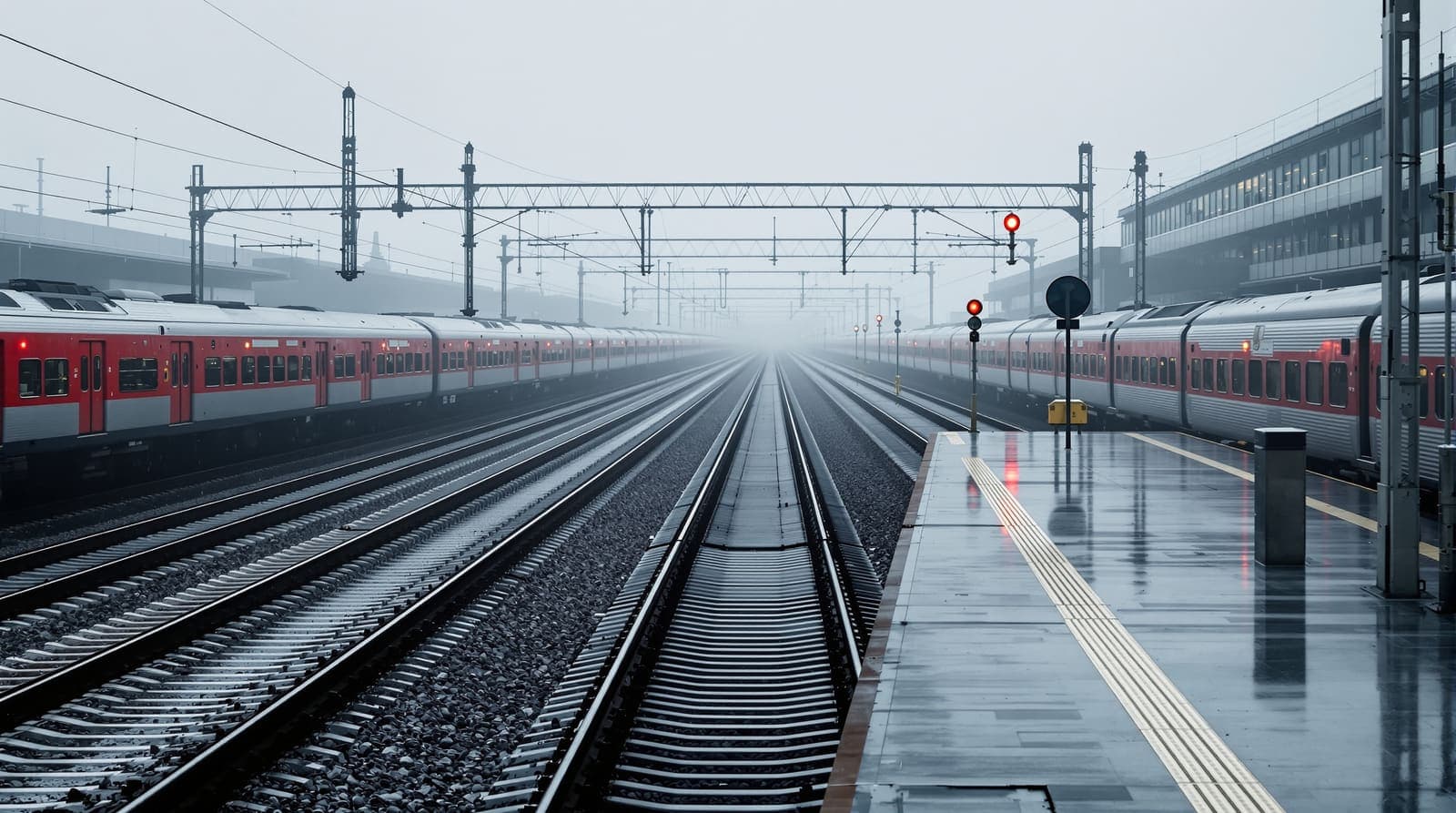
Israel Railways fell back to concentrated emergency hubs and the light rail in Jerusalem, Gush Dan and Haifa's Carmelit stopped running until further notice.
Illustration
Israel's Ministry of Transportation announced on the evening of 28 February 2026 that public transport had moved to an emergency format under the instructions of the Home Front Command and the security authorities. Israel Railways would operate from concentrated emergency coordination hubs. On security instructions the light rail in Jerusalem and in Gush Dan (the Tel Aviv metropolitan area) and the Carmelit in Haifa would not run until further notice, and the “Al HaKav” public transport service centres were closed across the country.
The ministry added an unusual warning: the information shown in travel apps and on public transport websites did not reflect which lines were actually running, so passengers should check line by line with the operators' own telephone centres. It gave *8787 as the number for the Public Transportation Service Center, for general information and to identify the relevant operator, and said further information would follow according to developments and Home Front Command instructions.
The night the notice went out
That evening was the opening of a war. On 28 February 2026 the United States and Israel launched a large combined air campaign against Iran; American officials counted roughly 900 strikes in the first twelve hours, with the IDF striking around 500 targets across 17 Iranian provinces, and Iran fired back with about 170 ballistic missiles and drones aimed at American bases in the region and at Israel, the Institute for the Study of War reported the same day.
What 'emergency format' means on the ground
The Home Front Command is the IDF command in charge of civil defence, and in an emergency its instructions govern ordinary life: schooling, workplaces, gatherings and transport. For the railway, the emergency format means abandoning the normal timetable and running instead between a small number of hubs judged defensible, so that trains are not strung out across open track when sirens sound. For the light rail systems (street-running networks with above-ground stops in Jerusalem and across the Tel Aviv area) and for the Carmelit in Haifa, it meant stopping altogether.
How tight the restrictions were
The transport notice was one thread of a much wider shutdown. Within days the Home Front Command had banned public gatherings outright: over Purim in early March an IDF spokesperson said all gatherings were prohibited regardless of purpose or location, and even public readings of the Book of Esther were cancelled in favour of household or Zoom readings, The Times of Israel reported. The restrictions were later loosened in stages; by early June 2026, under a “restricted activity” regime, public transport was back to roughly 75 percent of normal and underground light rail stations in the Dan Region had been opened to the public as shelters, The Jerusalem Post reported.
What is still unclear
The ministry did not say which railway hubs were operating, how many lines were running or at what proportion of normal service. It gave no expected duration for the suspensions, no criteria for resuming the light rail or the Carmelit, and no guidance for passengers already mid-journey when the notice was issued.
Sources and further reading
Every link below was opened and checked when this page was written. Official statements are marked as such: they are the subject's own account, not an independent one.
- ReportingInstitute for the Study of Warunderstandingwar.orgIran Update Evening Special Report, February 28, 2026
What happened on the day the emergency transport notice was issued
- ReportingTimes of Israeltimesofisrael.comFrom Zoom megillahs to sirens during reading, all you need to know about Purim at war
The scope of Home Front Command restrictions in the days that followed
- ReportingJerusalem Postjpost.comUnderground hospitals, no school: Israel transitions to restricted activity mode after Iran strikes
How transport levels and restrictions were eased later in the war
How we checked this
The service changes and the *8787 information line are taken from the Ministry of Transportation notice of 28 February 2026. The military events of that day are dated to the Institute for the Study of War's report of 28 February 2026, and the later easing of restrictions to Jerusalem Post reporting in June 2026.
Our sourcing and corrections policy →The week from Israel, in one email
The stories that mattered, sourced and checked by the Israel.com newsroom. Free, weekly, one-click unsubscribe.
One list, unsubscribe in a click. See our privacy policy.
More in Security
All security →
Latest
- Houthi forces reported streaming into Yemen's port city of Mocha
- Israel says three Hamas weapons depots destroyed in strikes across Gaza
- Advisers warned Trump the Iran war could outlast his presidency
- Iranian agency reports explosions near Jask and the port of Sirik
- Drone sirens sound in Galilee Panhandle, then declared a false identification
- Netanyahu visits Mount Hermon inside Syria; Damascus calls it illegal