A 2,200-year-old gold ring found beneath a floor in the City of David
Israel's Foreign Ministry says the tiny Second Temple period ring was found with other jewellery under the floors of a wealthy Jerusalem home, and may have been placed there deliberately.
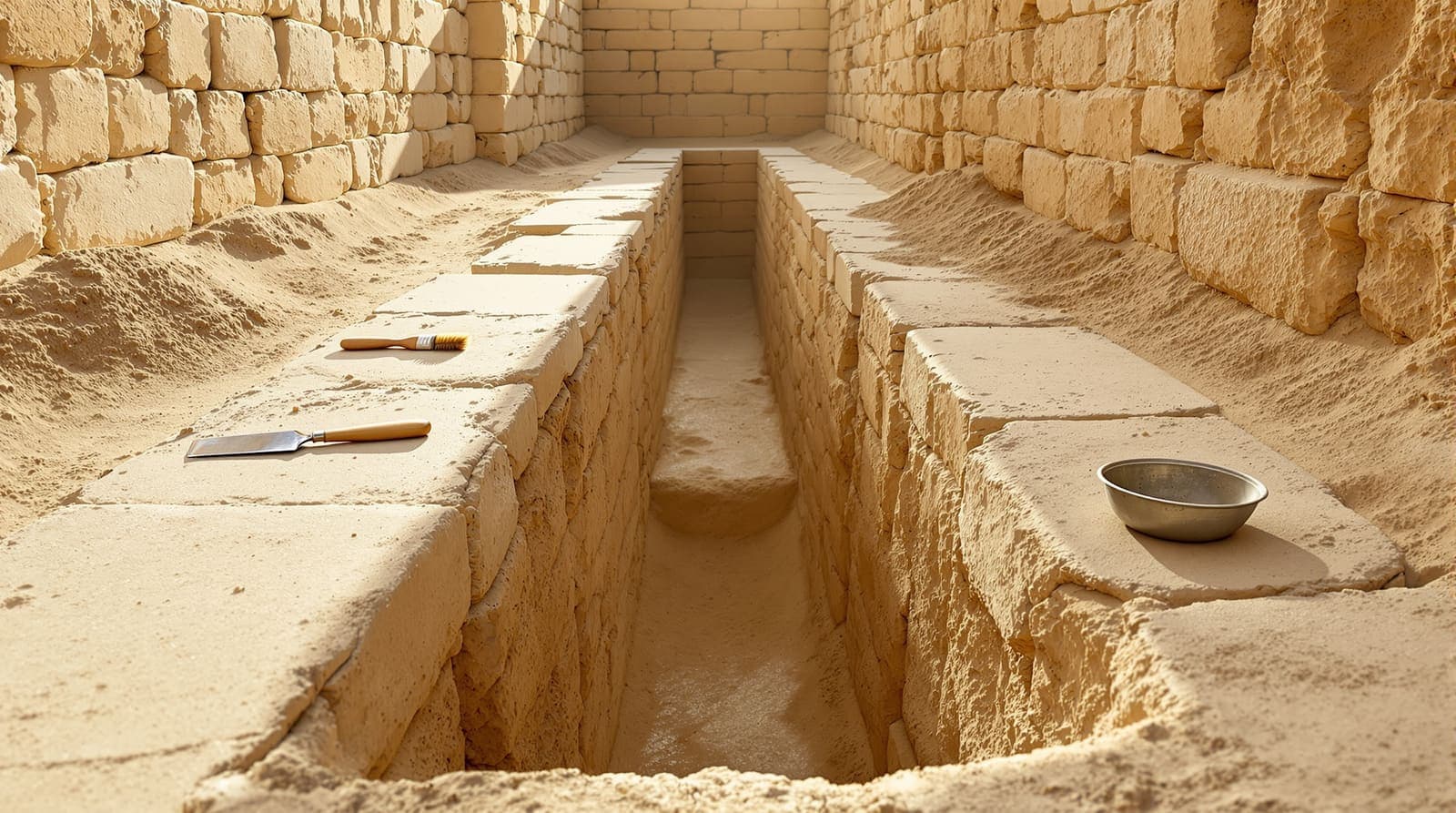
Illustration
A small gold ring dating to the Second Temple period has been found in the City of David in Jerusalem, according to a post published by the Israeli Foreign Ministry on X. The ministry described the object as 2,200 years old and said it was recovered together with other items of jewellery from beneath the floors of what excavators identified as the home of a wealthy family.
The ministry credited the images to the Israel Antiquities Authority and the City of David, and said researchers working on the find believe the valuables may have been put under the floor on purpose, as part of a repeated custom, rather than concealed by owners trying to keep them safe. The ministry presented the ring as material that could shed light on daily life in Jerusalem during the era of the Jewish temple.
What the sources posted


💍🇮🇱 A tiny gold ring may reveal the life in Jerusalem at the time of the Jewish temple. Dating to the Second Temple period, the 2,200-year-old ring was discovered in the City of David alongside other jewelry beneath the floors of a wealthy family home. Researchers believe the Show more

Where the City of David is
The City of David is an archaeological site on a narrow ridge running south from the walls of Jerusalem's Old City, outside the present Ottoman-era walls and adjacent to the Palestinian neighbourhood of Silwan. It is identified by archaeologists as the oldest settled core of Jerusalem, the area where the city stood long before it expanded to the west and north. Because occupation there has been continuous for millennia, excavation typically cuts through stacked layers, and finds are dated by the stratum in which they sit as well as by the objects themselves.
The site is also among the most politically contested excavation areas in the country, sitting inside East Jerusalem, which Israel captured and later annexed in a move not recognised by most of the international community. Digs there are conducted under the authority of the state, and their findings are frequently publicised by Israeli government bodies, as in this case.
What the Second Temple period means
The Second Temple period refers to the centuries in which the rebuilt Jewish temple stood in Jerusalem, from its construction after the return from Babylonian exile until its destruction by Rome. It spans the Persian, Hellenistic and Roman phases of the city's history, and covers the Hasmonean dynasty, the Jewish priest-kings who ruled an independent state in Judea. A find described as roughly 2,200 years old falls within the earlier, Hellenistic part of that span rather than the later Roman decades most familiar from the New Testament and from the writings of the historian Josephus.
The distinction matters for interpretation. Jerusalem in the earlier Second Temple period was a considerably smaller city than the one that existed at the time of the temple's destruction, and evidence of household wealth from that phase is comparatively scarce. That is part of why gold jewellery from a private dwelling is of interest to researchers rather than only to museum visitors.
The Israel Antiquities Authority
The Israel Antiquities Authority is the government body responsible for archaeological excavation, licensing, conservation and the national collection of finds in Israel. It carries out salvage digs ahead of construction, runs long-term research excavations, and is the institution that normally announces and publishes archaeological discoveries. Its credit on the images accompanying the Foreign Ministry's post indicates the excavation was conducted under its authority, together with the City of David site operators.
Deliberate deposit or hidden hoard
The claim that draws the most attention in the announcement is interpretive rather than descriptive. Jewellery found beneath a floor is often read as a cache, valuables buried by residents in a moment of danger and never retrieved. The Foreign Ministry said researchers instead believe these objects may have been placed there intentionally as part of a recurring practice. It did not describe the reasoning behind that reading, or say what kind of custom is meant.
What has not been said
The material available gives no excavation director, no named researcher and no institution beyond the Israel Antiquities Authority and the City of David. It does not say when the ring was found, how many other pieces of jewellery were recovered with it, what those pieces are, or how the ring itself is made and decorated. There is no indication of whether the findings have been published in a peer-reviewed journal or presented at a conference, and no description of the house beyond the statement that it belonged to a wealthy family. The dating is given only as an approximate age, without an explanation of how it was established. All of the above rests on a single official post; no independent archaeological report has been reviewed for this account.
Sources and further reading
Every link below was opened and checked when this page was written. Official statements are marked as such: they are the subject's own account, not an independent one.
- Officialmfax.comIsrael Foreign Ministry on X
How we checked this
Every detail here comes from a single official post by the Israeli Foreign Ministry, which credited the Israel Antiquities Authority and the City of David. We have not seen an excavation report or independent confirmation of the dating or interpretation.
The account of the incident itself rests on the official statement and has not been independently confirmed by Israel.com. Where the statement is silent, this page says so rather than filling the gap.
Our sourcing and corrections policy →The week from Israel, in one email
The stories that mattered, sourced and checked by the Israel.com newsroom. Free, weekly, one-click unsubscribe.
One list, unsubscribe in a click. See our privacy policy.
More in Archaeology
All archaeology →
Latest
- IDF says Khan Younis strike killed Nukhba operative tied to Steinberg's death
- Yair Golan sues Sara Netanyahu for millions over Channel 14 remarks
- Ariel man, 53, found alive after entering Palestinian village overnight
- Houthi forces reported streaming into Yemen's port city of Mocha
- Israel says three Hamas weapons depots destroyed in strikes across Gaza
- Advisers warned Trump the Iran war could outlast his presidency