1.81 Million Muslims in Israel, and a Falling Birth Rate
Israel's statistics bureau counted 1.809 million Muslim residents at the end of 2024, 18% of the population, with fertility declining every year since 2001.
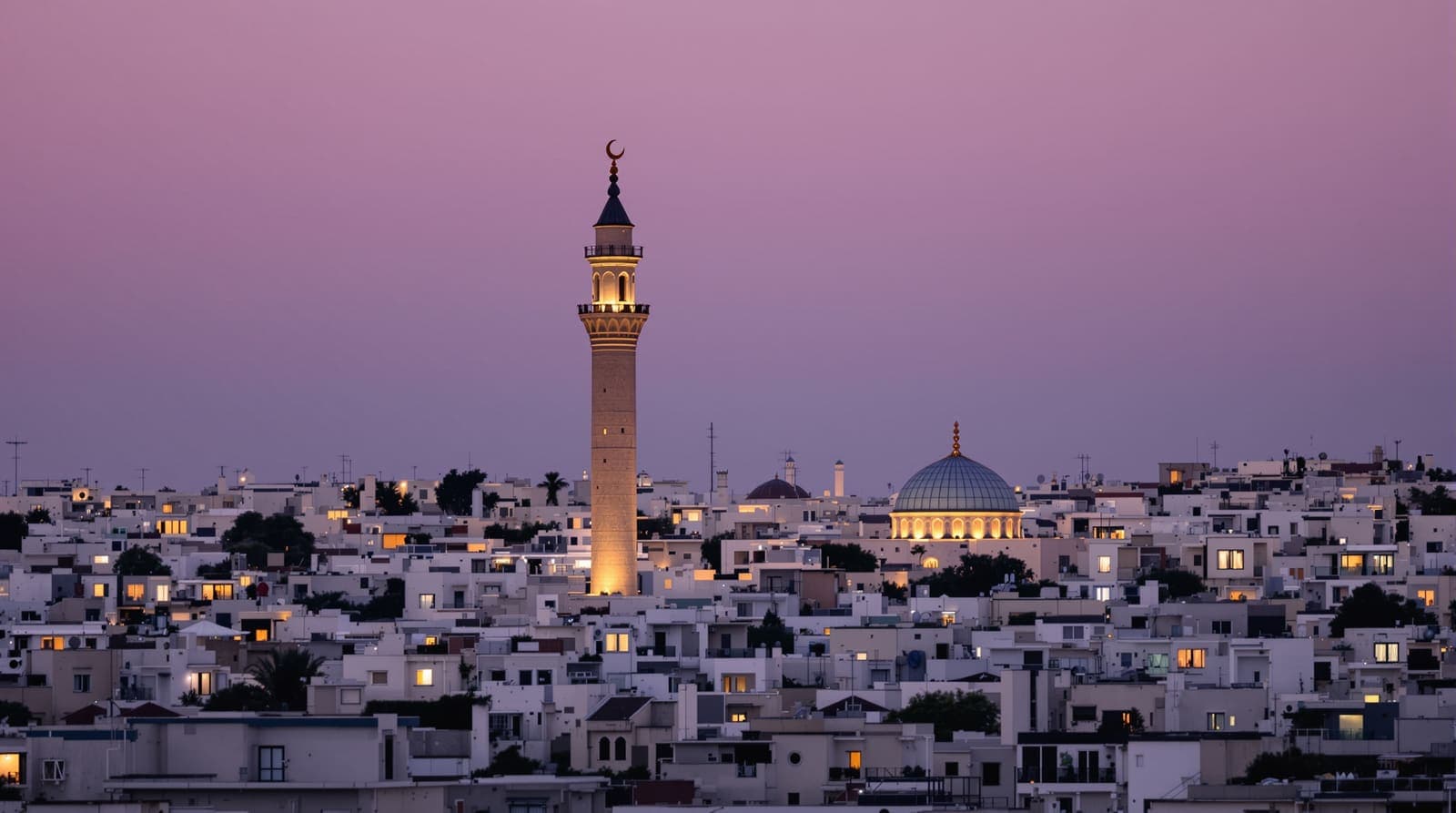
Illustration
Israel's Muslim population was estimated at approximately 1.809 million people at the end of 2024, or 18 per cent of all Israeli residents, according to data the Central Bureau of Statistics released ahead of Eid al-Adha. That was an increase of about 35,100 residents on the end of 2023, an annual growth rate of 2 per cent.
The bureau, which is the Israeli government's official statistics agency, times the release each year to the Muslim festival, which the statement rendered by its English name, the Feast of the Sacrifice, and which began on the Friday night after publication. Britannica describes it as one of the two major festivals in Islam, falling on the 10th of Dhu al-Hijjah and lasting three or four days, and marking the culmination of the hajj pilgrimage rites near Mecca.
Jerusalem holds the largest Muslim community
Jerusalem had more Muslim residents than any other Israeli city: 386,000 people, which the bureau put at 21.4 per cent of all Muslims in Israel and 36.9 per cent of Jerusalem's own residents.
Muslims make up the great majority of Israel's Arab citizens rather than a separate population. The Israel Democracy Institute, using end-of-2022 data, found that 83.2 per cent of Arab citizens were Muslim, 9.1 per cent Druze and 7.7 per cent Christian, with about half of the Arab population outside East Jerusalem living in northern Israel and the rest concentrated in the Negev and the central Triangle area.
A young population, but the families are getting smaller
The age profile in the release is that of a young population. Children aged 0 to 14 made up 31.2 per cent of Israel's Muslims, while those aged 65 and over accounted for just 5.1 per cent. Household size followed: about 27 per cent of households headed by a Muslim contained six or more people, against roughly 10 per cent of households headed by a Jew.
The direction of travel, though, is downward. The bureau said the total fertility rate among Muslim women has been falling since 2001 and reached 2.75 children per woman in 2024. That put it below the Jewish rate of 3.06 and above the Druze rate of 1.66, the Christian rate of 1.61 and the rate of 1.13 among women with no religious classification. Marriage patterns are shifting too: 9.2 per cent of Muslim women aged 45 to 49 were single, against 4.7 per cent of Muslim men in the same age band.
These numbers sit inside a wider national picture. Israel's overall fertility rate is the highest in the Organisation for Economic Co-operation and Development, reported in 2024 at about 2.9 children per woman against an OECD average of 1.5, so a Muslim rate of 2.75 is low by Israeli standards and high by almost anyone else's.
What the next year's release showed
The trend the 2024 data pointed to continued. When the bureau published the equivalent figures a year later, JNS reported in May 2026 that the Muslim population had reached about 1.849 million at the end of 2025, growth had slowed further to 1.8 per cent, and Jerusalem's Muslim population had risen to roughly 395,200.
The story behind the festival
The statement noted that the Feast of the Sacrifice commemorates the occasion on which Muslims believe Abraham was told by God to sacrifice his son, and that where the Bible names Isaac, Muslim tradition names Ishmael. Britannica gives the same divergence and adds that in the Islamic account a ram was substituted at the last moment.
What the release did not say
The bureau's holiday releases are demographic snapshots, not social surveys: this one did not address employment, income, education or housing among Israel's Muslim residents. It did not explain why fertility has been falling since 2001. And it did not separate out East Jerusalem residents, who hold Israeli residency rather than citizenship, from the wider count.
Sources and further reading
Every link below was opened and checked when this page was written. Official statements are marked as such: they are the subject's own account, not an independent one.
- ReportingJNSjns.orgIsrael's Muslim population reaches 1.85 million ahead of Eid al-Adha
The following year's CBS release, showing the trend continuing
- ReportingThe Times of Israeltimesofisrael.comIsrael's birth rate remains highest in OECD by far, at 2.9 children per woman
Israel's fertility rate in international context
- ReferenceIsrael Democracy Instituteen.idi.org.ilArab Society in Israel: Statistical Report 2023
Religious composition and geography of Israel's Arab citizens
- ReferenceBritannicabritannica.comEid al-Adha
Timing and meaning of the festival the data release was pegged to
How we checked this
All figures for end-2024 are from the Central Bureau of Statistics release of 5 June 2025 as carried in the original statement. The comparison with the following year's release comes from JNS reporting of May 2026, the composition of Arab society from the Israel Democracy Institute's 2023 statistical report, and the description of Eid al-Adha from Britannica.
Our sourcing and corrections policy →The week from Israel, in one email
The stories that mattered, sourced and checked by the Israel.com newsroom. Free, weekly, one-click unsubscribe.
One list, unsubscribe in a click. See our privacy policy.
More in Society
All society →
Latest
- IDF says Khan Younis strike killed Nukhba operative tied to Steinberg's death
- Yair Golan sues Sara Netanyahu for millions over Channel 14 remarks
- Ariel man, 53, found alive after entering Palestinian village overnight
- Houthi forces reported streaming into Yemen's port city of Mocha
- Israel says three Hamas weapons depots destroyed in strikes across Gaza
- Advisers warned Trump the Iran war could outlast his presidency