
By Pesach Benson • April 23, 2026
Jerusalem, 23 April, 2026 (TPS-IL) — Israel’s High Court of Justice on Thursday heard petitions demanding the establishment of a state commission of inquiry into the failures surrounding the Hamas-led October 7, 2023, attack, in one of the most sensitive legal disputes since the war began.
The hearing was held before an expanded panel of seven justices and was partially closed to the public at the start due to concerns over possible disruptions. Outside the courthouse in Jerusalem, bereaved families supporting and opposing an inquiry demonstrated.
At the center of the hearing is whether the court can compel the government to establish an independent commission. Representing the state, attorney Michael Rabelo rejected that possibility. “In any case, the court has no authority to compel the government to establish a commission of inquiry,” he said. “That does not exist in any court in the world.”
He added that the decision lies solely with the executive branch. “The government discussed it and decided not to establish a commission of inquiry,” Rabelo said. “So what are the petitioners asking — that your honors replace the government?”
But justices questioned the government’s position. Justice Yael Willner asked whether the circumstances could be excluded from judicial review. “All the rulings of the High Court establish that the court has authority to intervene in extreme cases. Is this not such a case?” she said.
The petitions, filed by civil society groups and supported by bereaved families, argue that only a state commission can ensure an independent investigation into the deadliest attack in Israel’s history, in which about 1,200 people were killed and 251 taken hostage.
The High Court has already issued a conditional order requiring the government to justify its refusal. In its response, the state said there is “no legal basis whatsoever” for judicial intervention and described the request as “an extreme and unprecedented act.”
National Divide Deepens
Outside the courtroom, tensions escalated as bereaved families from opposing camps confronted each other.
“It is not appropriate to let the High Court create an inquiry commission,” said the father of a soldier Killed In the attack, opposing judicial involvement. Protesters held signs criticizing the judiciary and chanted against Supreme Court leadership.
Families supporting an inquiry described frustration and a lack of answers. Hagit Chen, mother of Staff Sgt. Itay Chen, said, “You cannot bury our children together with the truth.”
Opposition figures used the hearing to intensify criticism of the government. Opposition Leader Yair Lapid accused it of avoiding accountability, while Yisrael Beytenu chairman Avigdor Liberman pledged that a future government would immediately establish an inquiry.
Former military Chief of Staff Gadi Eisenkot, whose son was killed during fighting in Khan Yunis in December 2023, said the dispute was deepening national fractures. “Instead of uniting us, the government is pushing bereaved families into conflict with one another,” he said.
Prime Minister Benjamin Netanyahu has resisted calls for a formal state commission of inquiry, calling it “politically biased.” Such commissions, led by senior Supreme Court justices, can summon witnesses, collect evidence, and make recommendations, though the government is not required to follow them. The government has proposed an alternative politically-appointed committee. The opposition has boycotted Knesset activities related to that initiative.
The Israel Defense Forces has released a series of detailed internal probes examining how roughly 5,000 terrorists from Hamas and Palestinian Islamic Jihad were able to storm Israeli communities and overrun military positions. However, the military probes only address operational, intelligence, and command issues — not decisions made by the political echelon.
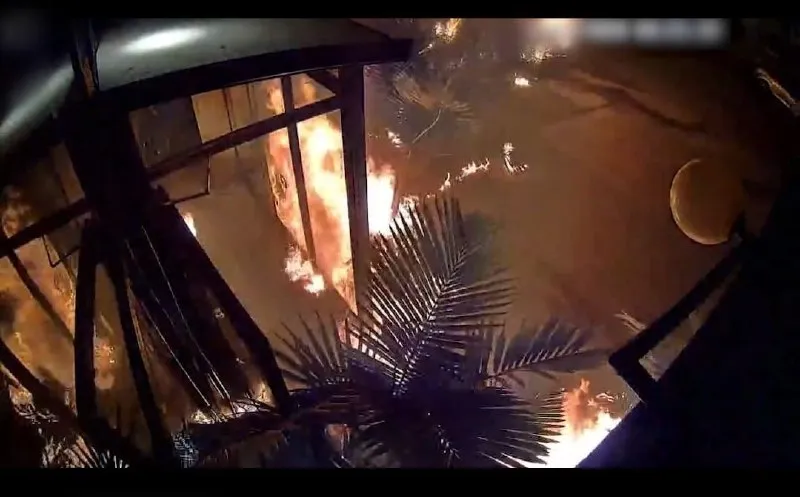
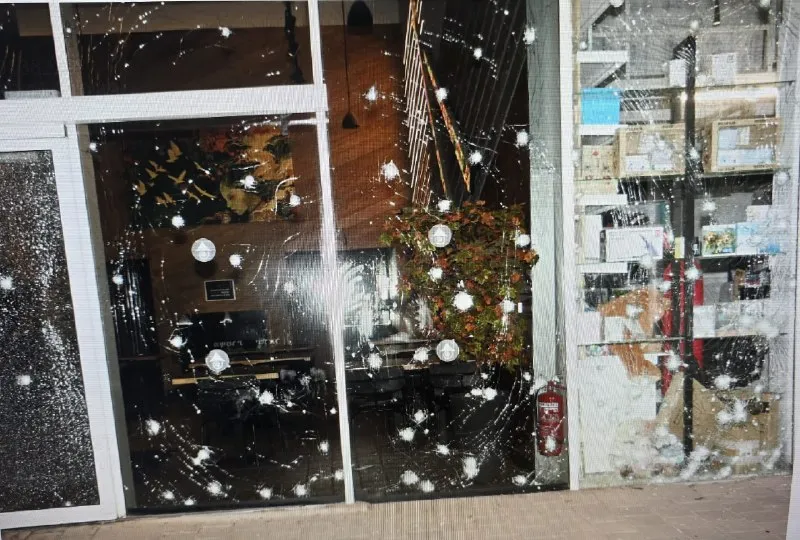
Around 1,200 people were killed, and 252 Israelis and foreign nationals were taken captive by Hamas during the October 7, 2023, attack on southern Israel. Most were freed in a series of exchanges with Hamas as part of a ceasefire.
Israel’s last commission of inquiry investigated the deaths of 45 people in a 2021 stampede at Mount Meron. That commission ultimately held Netanyahu personally responsible in 2024.