
When looking today at the combat map of the Golani Brigade in Lebanon, one can easily identify several familiar points: Beaufort, Litani, Saluki, and Mount Yoḥmor. A third of a year deep into the territory, the fighters encounter these familiar sites under new circumstances – which do not look the same from the perspective of every battalion.
While the Golani Reconnaissance Battalion was at the forefront of the capture of Beaufort and operated independently on the Litani, Battalion 12 advanced from Al-Taiba to Mount Yoḥmor, and Battalion 13, among the first forces to cross the border, advanced through Qantara to the Saluki. As explained by the Operations officers, although the battalion missions were geographically and operationally different – they were all part of the same brigade effort.

At the tip of the spear towards the Litani and Beaufort – The Reconnaissance Battalion
Only when they first stood on the banks of the Litani did the realization dawn on the reconnaissance fighters about the journey they had made for months, since the order ‘Enter Lebanon’ was given. But to understand how they got there, we need to go back a bit.
“I remember the moment of decision very well,” begins Captain A’, who until a few weeks ago was the Operations Officer of the reconnaissance battalion. “We were in Rafah, still deep in the pursuit mission of what remained of the terror nests in the southern Gaza Strip, and one could say we felt the change approaching.” As a generation that grew up on stories of heroism from the Security Zone, the operational anticipation merged with deeper feelings.

A.’s responsibility was immense: as the unit’s Operations Officer, he was responsible for planning and managing operations from beginning to end. When I ask him to outline the route that led to the ‘big’ objectives, he chooses to go in chronological order, right from the first entry into the village of Al-Taiba, located not far from Misgav Am.
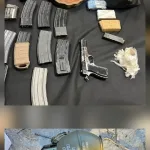
“That was the first brigade battle,” he recalls, “a full capture of the village, engagements, destruction of the Kasbah with the terrorists and the infrastructure built within it.” There, they began to understand a pattern that would repeat itself – the terror was hidden within the houses, in places considered civilian. “You enter and encounter a lot of weaponry, quantities that are impossible to explain, and many signs of Hezbollah.”

After completing their mission in Al-Taiba, they continued to the village of Dir Siryan, located south of the Litani, as part of the preparation for the operation beyond the river itself. Already on the way, they experienced battles that in retrospect can be defined as among the most complex the reconnaissance battalion had seen in recent years.
After Dir Siryan came Marjeyoun and Qantara in southern Lebanon. The entry into Qantara was received with very short notice, as part of the decision to expand the area of control. One of the findings that remained etched in the memory of the Operations Officer from that operation was weaponry hidden inside an ambulance. “It’s not really surprising anymore, but each time you get the same slap in the face. To understand how much moral distortion there is here, and especially a gap of heaven and earth between us and them.”

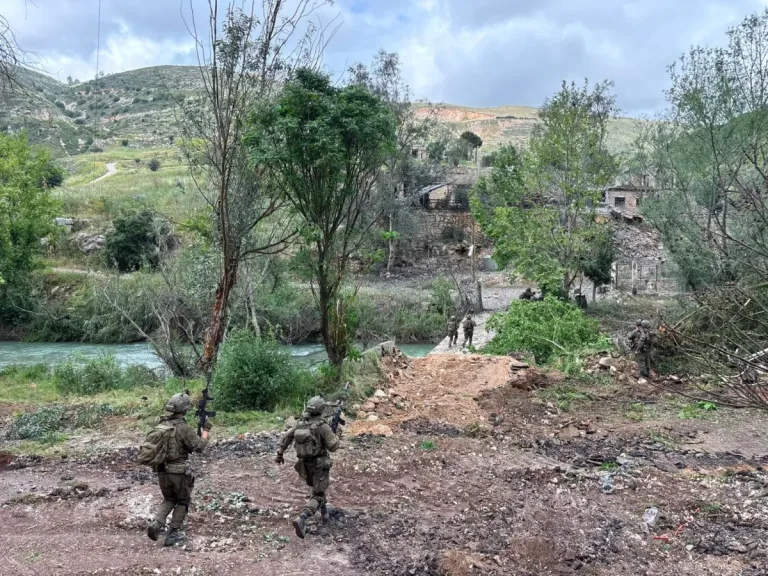
At a certain stage, the reconnaissance battalion approached one of the sites it had aimed for from the beginning – the Litani River. “The movement was very complex. Not just walking, but opening routes through dense thickets and identifying threats along the way. Every meter was planned in advance. After about 36 hours, when we were facing the water – it was among the most powerful moments I felt as a fighter and a person.”
Despite the significant milestone, it was by no means the end point: “Already the next morning we were in an engagement with 2 terrorists, and later in another battle of many hours against 5 who were entrenched in an underground complex.” After establishing a presence on the riverbanks, came the stage of preparing crossings for armored vehicles, and the preparations for the capture of Beaufort.

The operation was led by the entire brigade combat team, but the reconnaissance battalion was tasked with capturing the fortress itself. “We advanced through Yoḥmor, dealing with incessant fire from explosive drones and mortars, and on the way, we also eliminated 2 terrorists who were waiting about 150 meters from the walls.” In the complex itself, all signs of a long presence of Hezbollah forces were found, from prepared fighting positions to mattresses and food, but the terrorists themselves had already fled.
At the end of our conversation, Captain A’ asks to shine a spotlight also on those for whom and by whose light they operate: “It is important for me to mention the fallen of the unit, the wounded, the bereaved families, and our families who support us with great encouragement. For months now, everything we do is for one thing – to protect the residents of the North, and to ensure that the next time they return home, they will do so in a different reality.”
The only infantry to climb Mount Yoḥmor – Battalion 12
From Al-Taiba, through Dir Siryan, to the Litani and Mount Yoḥmor – for 4 months, Battalion 12 has been operating almost non-stop, leading a series of offensive and defensive missions deep in southern Lebanon. “12 doesn’t say no to missions,” states Captain Sh’, the battalion’s Operations Officer, “that’s a sentence the Battalion Commander told me at the start of the fighting, and it became our way of life. First, we say yes – then we figure out how to execute.”
For him, the entry into Lebanon came shortly after he took up his post. “It was very abrupt,” he recalls, “suddenly you find yourself responsible for coordinating all the operational activity of the battalion, how all the forces connect so that the operation succeeds from the first moment to the last.”


The fighters’ first objective was the village of Al-Taiba, located near the border, with a long history of battles. Here too, the same pattern repeated itself: complexes that Hezbollah had developed over years, with no distinction between ‘civilian’ and ‘military,’ and their dismantling step by step, day by day. The same operations continued in the village of Dir Siryan, and in fact, almost everywhere they advanced.
Already in the first week of fighting, the battalion encountered one of its significant engagements. “8 terrorists were eliminated in that incident, with no casualties to our forces,” recalls Captain Sh’, “it was a very precise closing of a circle, but beyond that, it showed us what fighting in Lebanon looks like – with the enemy hiding and trying to attack from a distance.”
Later, Battalion 12 fighters reached the Litani River. There, the mission changed from purely continuous attack to holding and defending the area – proactive raids and securing the routes that enabled the brigade’s continued advance. “In an attack, you constantly know where you are advancing,” explains the Operations Officer, “in defense, the work is even more complex. You must know every house, hill, and route, and reach a state where there is no point from which the enemy can surprise you.”


The next mission was also one of the most historic – Mount Yoḥmor. “We were the first battalion to reach there,” he says proudly, “and also the only one to climb it on foot. It was a very complex advance, in difficult terrain, but for us, it was another link in the chain that began months earlier in Al-Taiba.”
For him, the story of the battalion, and perhaps of the entire brigade, is not measured only by ‘big’ battles. “People remember Mount Yoḥmor or the Litani and Beaufort, but in the end, the real challenge is to get up every morning and do the same thing with seriousness and thoroughness. Another raid, another search, another complex to clear – there were days when we went through 15 to 20 different locations. This is how Golani changes the reality on the ground, and does everything so that the residents of the North can return to a safer home.”