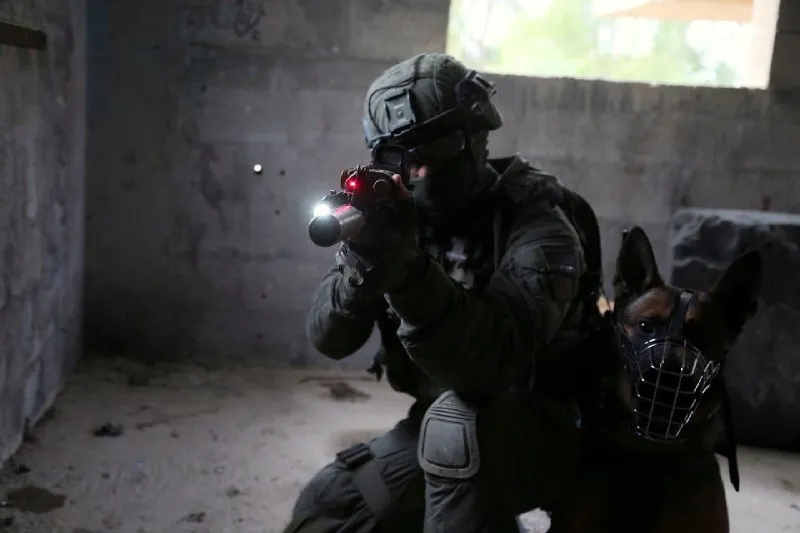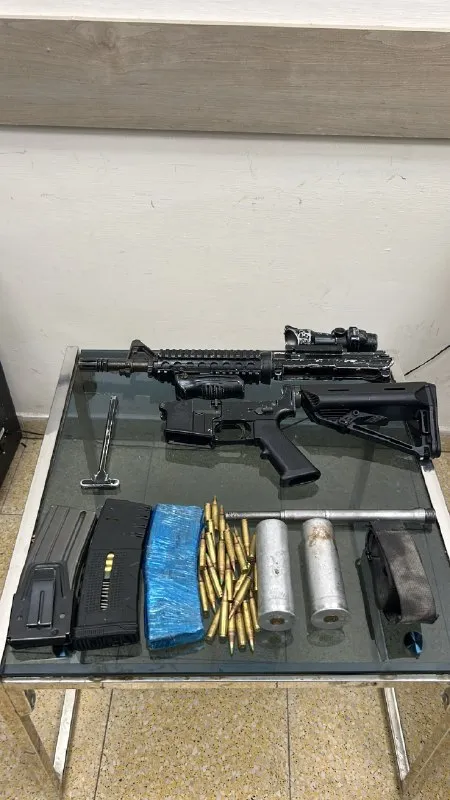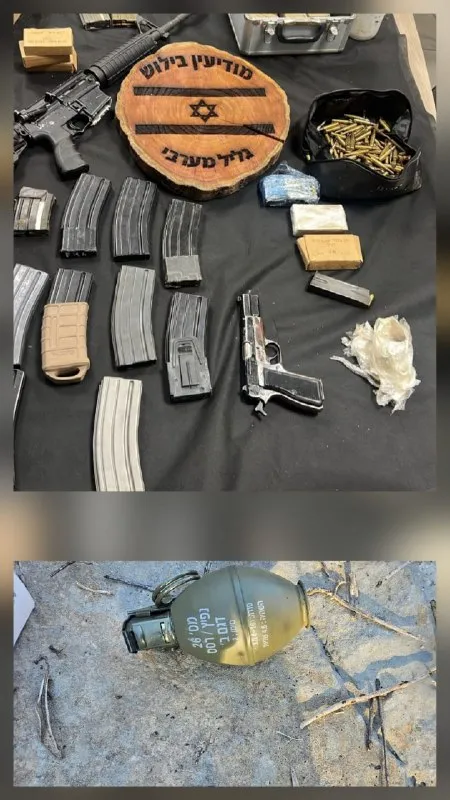

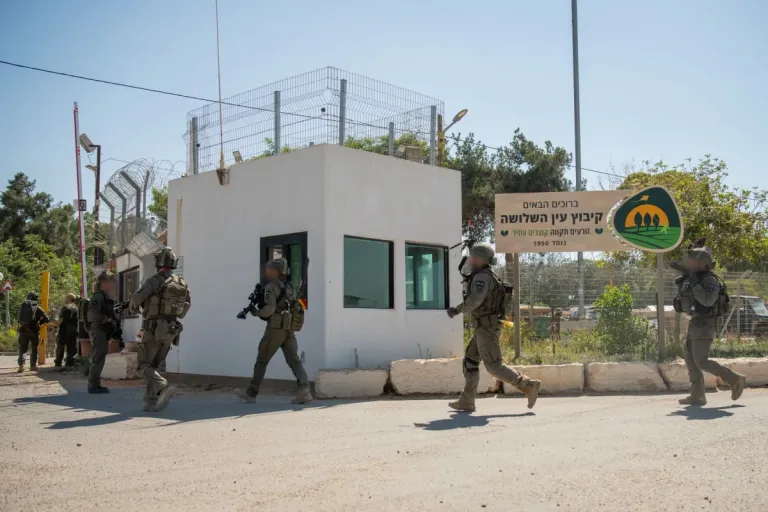
A simulated infiltration scenario of dozens of terrorists, which gradually spread to several civilian and military focal points, led to the rapid deployment of over 100 Gaza Counter-Terrorism Unit (LOTAR) fighters – directly into a large-scale, ongoing exercise.
Within seconds of receiving the alert, the forces began moving towards the various arenas, with a clear objective: to respond in real-time to a developing incident and manage multiple missions concurrently with the unfolding events.

The opening shot of the exercise, which took place in the Western Negev region under the command of the Gaza Division, was a radio call reporting two simultaneous attacks – in a civilian community and a military base. The unit was split into two missions: while one force operated in the civilian area alongside defense platoons and divisional forces, another force was dispatched to the outpost, and the unit’s command post managed both arenas.
“The exercise essentially simulates a combined edge event and tests how the unit handles it in cooperation with additional forces in the sector,” explains Major L., the unit’s combat officer. “Ultimately, we are measured and fulfill the unit’s purpose in moments when everything happens at once – in multiple locations, with many variables, and a short time to make fateful decisions.”

The Gaza LOTAR unit was established about two years ago following the lessons learned from October 7th, and as part of strengthening the defensive response in the Western Negev region. The idea behind the unit was to create an available initial response force that would quickly integrate into developing incidents and operate alongside the division’s forces and local defense platoons. Its fighters are reservists from elite units who themselves live in or near the Gaza envelope, and are well acquainted with the terrain and its unique challenges.
For this reason, the element of surprise is crucial in the exercise. “This unit is an edge unit. Its role is to be constantly ready to go from zero to 100 in seconds,” explains Major L.

After neutralizing the ‘threat’ in the first two areas, the forces were called to the next challenge – a scenario simulating a large-scale infiltration of dozens of ‘dirtied’ individuals into several points in the area. During the operation, the fighters practiced moving between open, complex, and built-up areas, alongside dealing with complex scenarios: these included treating casualties, terrorists barricading themselves, and also rescuing hostages from a civilian building.
“At this stage, the exercise is no longer a single event,” describes the combat officer. “It’s a situation where a new complex challenge can arise at any moment, and as a fighter, you must know how to react quickly and keep going until you have achieved all your objectives.”

Once these were completed, the fighters gathered to debrief and analyze how each scenario was handled. “After two years in which the unit has been operating and conducting a wide range of training, its operational capability is very high – and this was evident in the exercise as well,” testifies Major L.
According to him, the unit embodies the concept of ‘defending the home’ in practice. “In the end, the fighters live here day by day and know every path and corner. This affects both their connection to the mission and their response time. This is one of the most special things about us: the fighters in the unit are truly part of the human fabric of the Gaza envelope. They understand the residents better than anyone, feel their pain, and grow from it together with them.”

Moving forward, the unit is expected to expand, and accordingly, increase the number of training courses and exercises to acquire the necessary skills. “The ‘why’ behind our actions is very clear,” states the combat officer. “Therefore, we are mainly focused here on the ‘how’: how to reach the highest professional level, how to improve continuously, and how to best defend our home.”