

By Eitan Elhadez-Barak • April 28, 2026
Jerusalem, 28 April, 2026 (TPS-IL) — A four-kilometer walk through the rolling hills above the Sea of Galilee leads to the tomb of Nabi Shuaib, the holiest site in the Druze faith and a major annual pilgrimage destination for Druze communities in Israel and across the region.
The path passes fields already turning golden at the height of spring. The occasion is the Nabi Shuaib pilgrimage, a key Druze religious holiday. But for many of the pilgrims, the spiritual significance of the five-day holiday is inseparable from growing concern over developments just across the border in southern Syria.
“There is not a single person in the community who is not following what is happening. What happens there affects every home here,” Sadeq Azzam told The Press Service of Israel at the entrance to the tomb. Azzam is from the Galilee village of Abu Sanan.
Sadeq described a grim situation in Syria since the rise of the Turkish-backed government of Ahmed al-Sharaa. In July 2025, government forces attacked Druze communities in southern Syria, massacring an estimated 5,000 people and wiping out 36 villages. Estimates suggest that around 187,000 Syrians, mostly Druze, remain displaced. There have also been steady reports of kidnappings and sexual violence against the Druze.
“It was October 7 on steroids,” Sadeq said bitterly, referring to Hamas’ 2023 attack on southern Israel. “Just replace the Assad regime with the Julani [al-Sharaa] regime.”
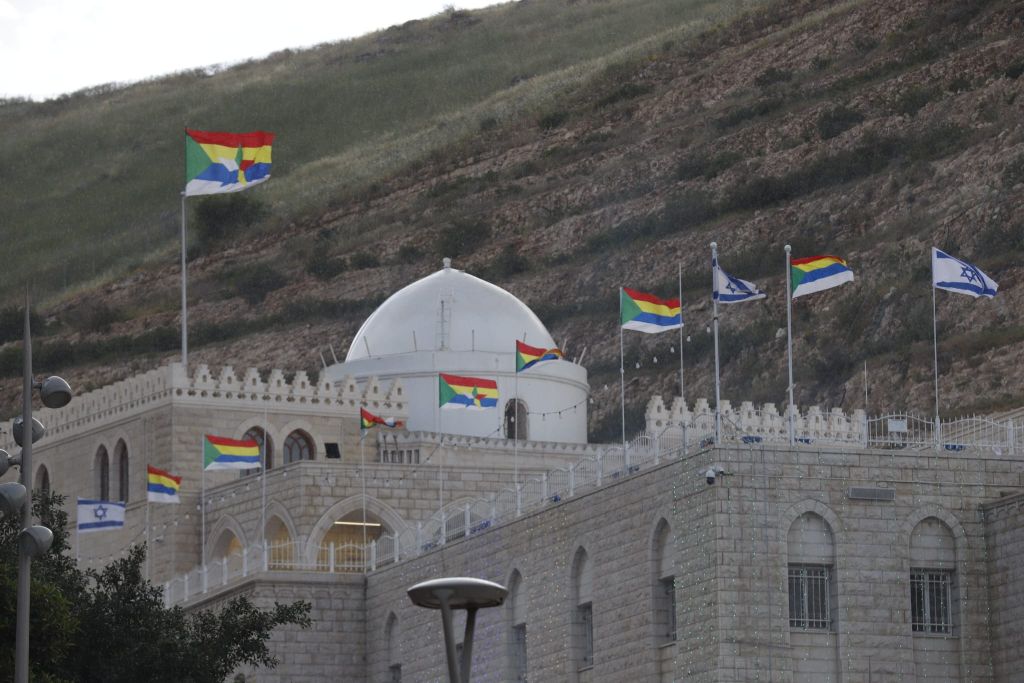
The Galilee Tomb of Shuaib, also known as the Biblical figure Jethro on April 27, 2026. Photo by Eitan Elhadez-Barak/TPS-IL
Another Druze visitor, Safadi, also from Abu Sanan, told TPS-IL his extended family remains in the predominantly Druze city of Suweida in southern Syria.
“The Druze are like a silver platter,” he said. “If you strike one point on the platter, the whole platter will tremble and make a sound. That’s how we are. A strike on a Druze in Syria shakes the heart of a Druze in Israel.”
Israel’s Druze community of 152,000 has been calling on the government to take stronger measures to protect their co-religionists in southern Syria. Around 40,000 Druze live in the southern Syrian provinces of Quneitra, Da’ara and Suweida under Israeli protection. Netanyahu has called for the demilitarization of southern Syria.
While stressing that Israel should avoid ground involvement, Sadeq said there is an expectation among some Druze leaders for expanded humanitarian assistance and air and artillery support.
“We don’t want Israeli soldiers to die there,” Sadeq explained.
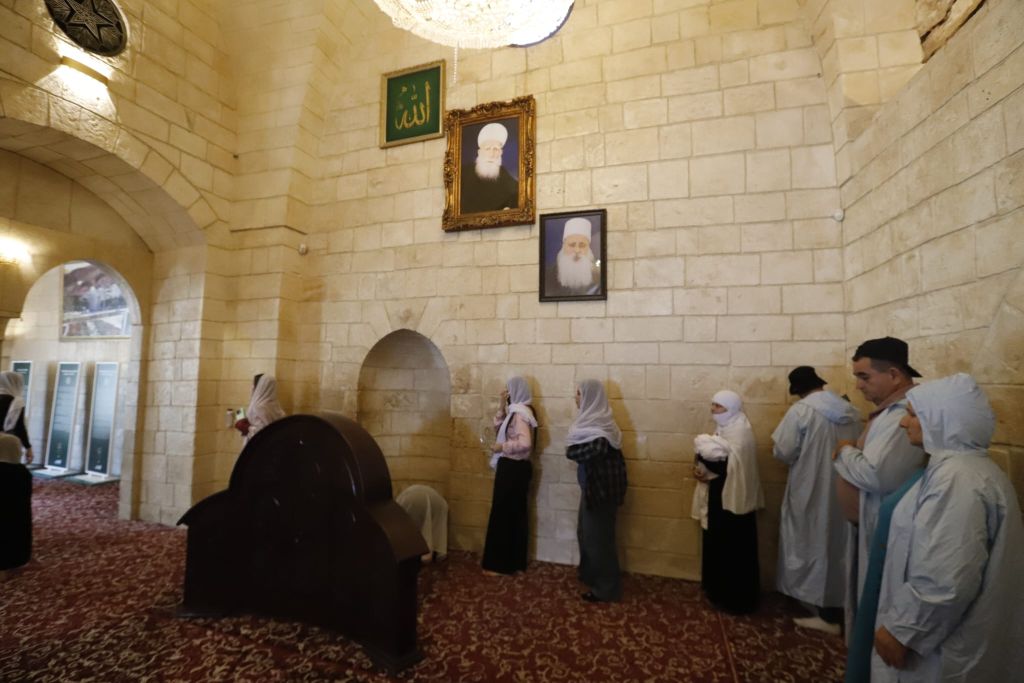
Israeli Druze move through designated prayer areas at the tomb of Shuaib, also known as the Biblical figure Jethro, on April 27, 2026 during the five-day holiday of Nabi Shuaib. Photo by Eitan Elhadez-Barak/TPS-IL
The close ties felt across borders by Druze communities stem from a unique religious and historical tradition that dates back centuries.
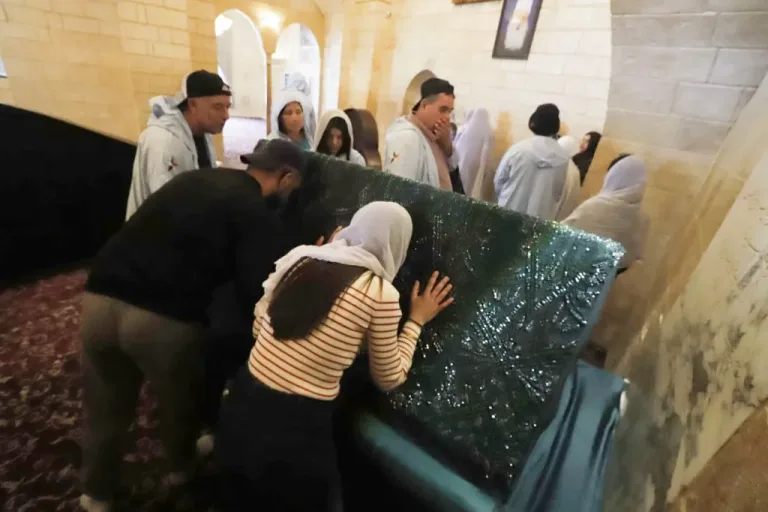
The Druze trace their ancestry back to the Biblical figure Jethro, whom they call Shuaib. According to Druze tradition, his burial site was identified following a dream attributed to Saladin. Inside the complex is the cenotaph traditionally associated with Nabi Shuaib, covered in green cloth. Pilgrims take part in prayer rituals and move through designated prayer areas, including a niche believed by tradition to mark a footprint associated with Shuaib.
The Druze living in the Galilee and Mount Carmel areas sided with the Jews in 1948 during Israel’s War of Independence, opting to be part of Israeli society and establishing themselves in all areas of public life. When Israel captured the Golan Heights during the Six-Day War of 1967, the Golan Druze refused Israeli offers of citizenship, believing Syria would recapture the plateau. But attitudes have changed since the Syrian Civil War broke out in 2011.
In Israel, the Druze serve in senior positions in public and military life, and the bond between Jewish and Druze soldiers is referred to as the “covenant of blood.”