

By Pesach Benson • May 3, 2026
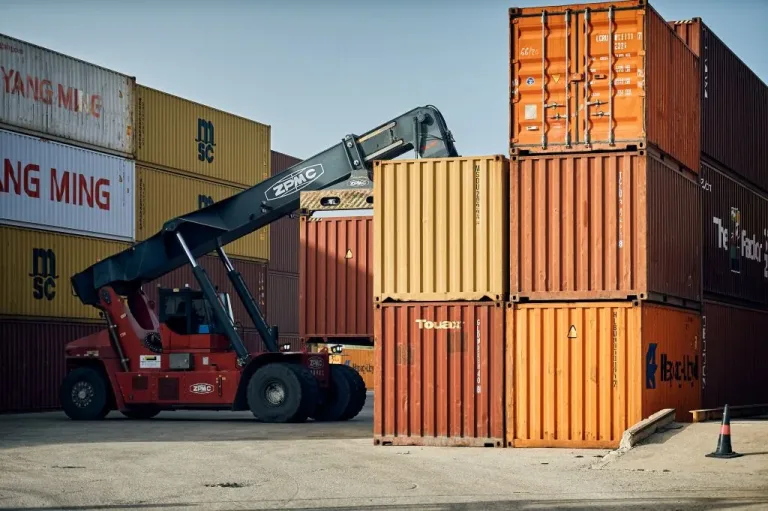
Jerusalem, 3 May, 2026 (TPS-IL) — The Israeli government on Sunday approved a proposal by Transport and Road Safety Minister Miri Regev to establish inland cargo ports across the country, a move officials say will reduce congestion at seaports, lower transportation costs and strengthen Israel’s supply chain resilience.
The initiative is intended to create inland logistics hubs connected to Israel’s seaports through rail and road infrastructure. The facilities would handle cargo storage, customs clearance and distribution operations that are currently concentrated at crowded coastal ports. The move is expected to shorten delivery times and reduce operating costs.
“Approval of the Ministry of Transport’s proposal to promote inland ports is a historic strategic move that is expected to significantly improve the State of Israel’s supply chain,” Transport Minister Miri Regev said.
“This is a revolutionary step, which brings the sea to the land,” she added. “The establishment of inland ports will allow us to streamline processes, shorten transportation times and reduce costs, thus contributing directly to the fight against the high cost of living.”
Under the decision, the Israel Ports Company was authorized to begin preparations for the project, including identifying suitable locations, conducting feasibility studies, and developing operational and financial models for the planned facilities.
According to the Transport Ministry, professional studies found that inland ports could reduce bottlenecks at seaports, decrease heavy truck traffic on major roads, and improve the efficiency of the national economy.
The inland port model has already been implemented in several countries worldwide. Officials cited Duisburg in Germany, which serves as a logistics center linked to the ports of Rotterdam and Antwerp, as well as similar facilities operating in Texas and Georgia in the United States. India and China have also developed extensive inland port networks as part of broader trade and transportation systems.
Transport Ministry Director General Moshe Ben Zaken said the move also carries strategic importance during emergencies.
“This is a national initiative that will improve Israel’s logistical efficiency and reduce congestion at bottlenecks,” Ben Zaken said. “But no less important, it will strengthen the resilience of the State of Israel’s supply chain both in routine times and during emergencies.”
He added that dispersing logistics operations inland and increasing connections to rail infrastructure would “enable operational flexibility and ensure regular supply to the economy and the public in any situation.”
Hezi Halavia, chief executive officer of the Israel Ports Company, added that the project would also support economic growth outside central Israel.
“The move will accelerate economic development, with an emphasis on strengthening the periphery, and will contribute to the creation of thousands of new jobs,” Halavia said.