
By TPS-IL • May 20, 2026
Jerusalem, 20 May, 2026 (TPS-IL) — When large-scale crises such as war disrupt national systems, local communities often become the backbone of daily life. Israeli researchers from Hebrew University and Ben-Gurion University found that residents and neighborhood organizations frequently step in to maintain essential services when formal governance structures are under strain.
The study found that evacuees from the Gaza and northern border areas, as well as the cities that absorbed them, developed significantly stronger civic engagement in terms of volunteerism.
“What we saw is that in cooperation with local authorities, communities created a kind of substitute for the state in order to preserve continuity, and in many places they succeeded far more than the state in doing so,” lead researcher Dr. Noam Brenner told The Press Service of Israel. “And what is especially important is that these communities did not merely survive the impact of the war. We actually see them becoming stronger as a result of the war.”
The findings, published in the peer-reviewed journal, Urban Studies, point to the growing importance of what he described as “urban citizenship,” a form of civic participation that emerges when ordinary governance mechanisms begin to falter, particularly in crisis situations such as war or mass displacement.
The study was based on a national survey of 906 residents across 88 Israeli cities and towns, along with 24 in-depth interviews with community leaders involved in local emergency responses during the war.
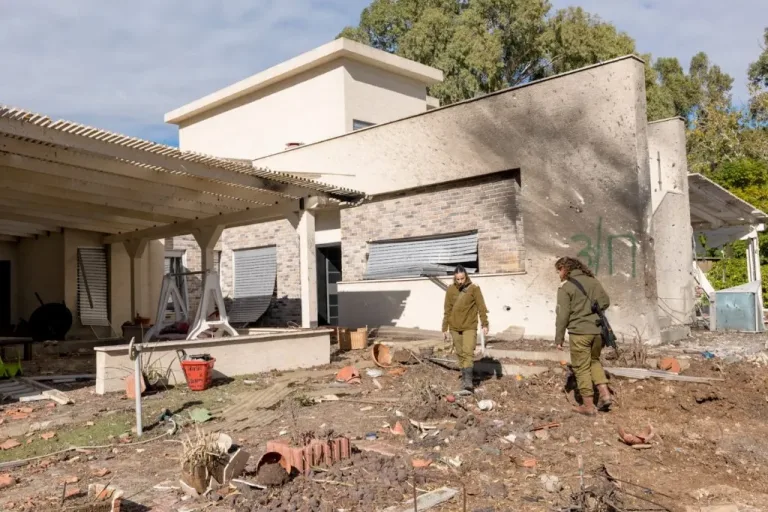
Following the October 7 Hamas attack, tens of thousands of Israelis from border communities near Gaza and Lebanon were evacuated from their homes, many for months. Municipalities, community centers and volunteer groups across the country were forced to improvise solutions for housing, education, childcare, food distribution and psychological support while government agencies struggled to respond. A State Comptroller’s report released in February found that without the mobilization of volunteers, authorities in several cities would have been unable to meet evacuees’ most basic needs.
The study found that displaced residents demonstrated a 15% to 20% increase in community involvement compared to populations in areas that were not evacuated.
Contrary to expectations that displacement would weaken social structures, researchers found that many communities actually became more cohesive during the crisis.
“When governance fails, local communities are capable of entering the vacuum and helping maintain essential functions. The state is very broad, while local communities are better positioned to identify and respond to specific needs during emergencies,” Brenner said.
Researchers identified two different patterns of mobilization. Communities near conflict zones tended to focus on immediate survival needs such as childcare, local security and emergency logistics. By contrast, cities in central Israel that hosted evacuees emphasized volunteerism and broader support efforts aimed at displaced families.
Brenner told TPS-IL that one community coordinator up north told the researchers, “People were coming to us saying, ‘Give me something to do. I want to be part of this.’ The need to connect was everywhere, it was like a physical urge.”
The study argues that these responses amounted to more than temporary volunteer initiatives. Instead, local institutions effectively became substitute governance systems, especially in the field of security and activities for evacuated families.
A central role in that process was played by Israel’s network of community centers, which rapidly adapted to wartime conditions by coordinating volunteers, organizing services and acting as local hubs for displaced populations.
According to the study, the findings suggest that community centers should not be viewed merely as recreational or service institutions, but as critical civic infrastructure during emergencies.
The paper pointed to similar patterns seen during the 2015 European refugee crisis, when municipalities expanded protections for migrants, and in U.S. cities where local authorities and community groups often lead responses to natural disasters before federal systems mobilize.
“More authority and funding should be allocated to local communities. It helps everyone,” said Brenner.