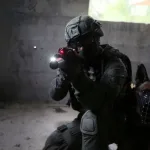

Since the IDF launched Operation ‘Lion’s Roar’, the 401st Brigade has been at the forefront of the maneuver in southern Lebanon. In recent months, as its battalions have operated along the sector, the fighters have taken control of key points in the area, struck enemy infrastructure, and worked to remove the threat from northern communities.
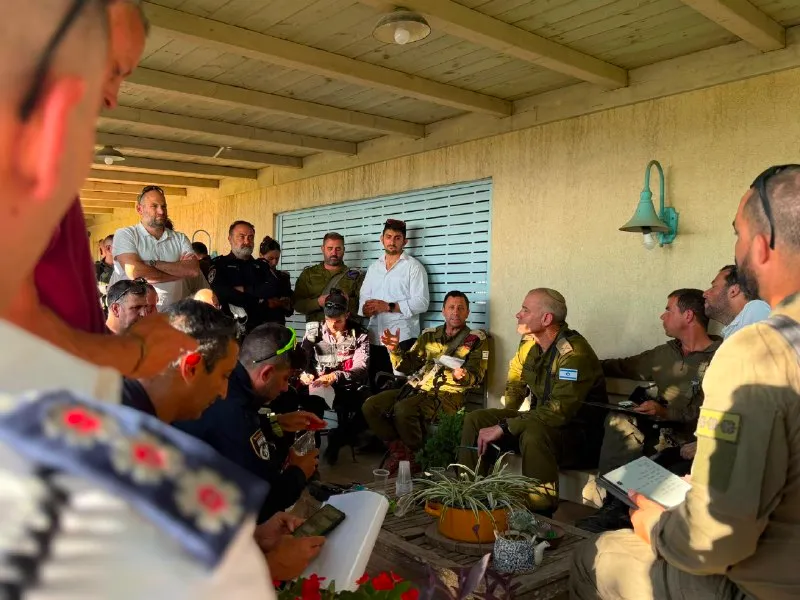
 401st Brigade operating in southern Lebanon
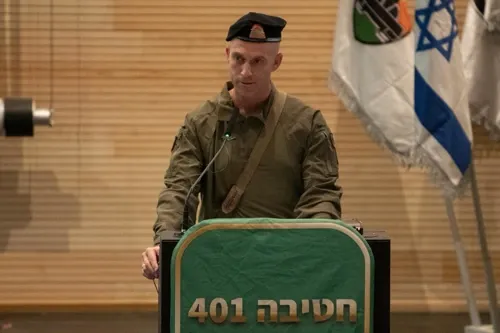
After the previous brigade commander, Colonel Meir Biderman, was seriously wounded during an operational activity in the area, Colonel Yoav Schneider took over as the new brigade commander over two weeks ago.
 Colonel Yoav Schneider at the handover ceremony
“I took command when the brigade was in continuous combat routine,” he states, “with clear operational achievements and with commanders and fighters who continue to operate with strength. The 401st is battle-hardened and has experienced crises, but it is also experienced in how to move forward towards the objective, with extraordinary resilience.”
He describes how the achievements are evident in southern Lebanon: “The enemy has been hit and continues its attempts. It is broken, it is damaged, and we are pushing it back. We are ready and prepared to continue doing whatever is necessary.”
 401st Brigade operating in southern Lebanon
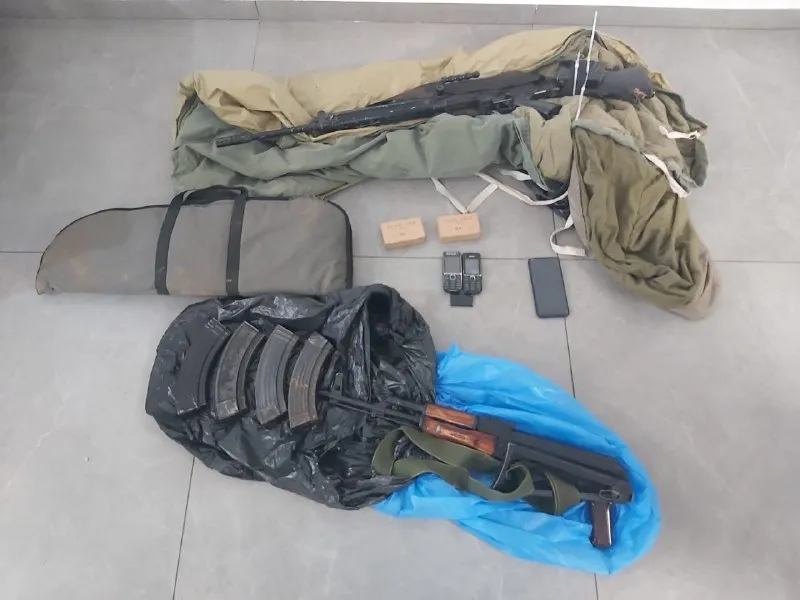
Alongside the ceasefire, the brigade commander emphasizes that in the recent period, the brigade has operated in Lebanese territory primarily to remove threats and Hezbollah’s terror infrastructure. “We have reached tens of kilometers into Lebanon,” he recounts, “pushing the threat back, and we stand firm between the northern communities and the enemy.”
On a personal level, returning to the northern sector represents a full circle for him. About 20 years ago, during the Second Lebanon War, when he was a platoon commander, he was seriously wounded and lost his three soldiers and tank crewmates in an anti-tank missile strike. Despite being seriously wounded in battle and despite the great loss, he is operating today with the brigade in the same area.
But behind the round-the-clock operations stands a heavy price paid by the brigade throughout the war. “In October ’24, we lost our brigade commander, Colonel Ehsan Deksa, may he rest in peace, and another brigade commander was wounded alongside him, and other commanders and soldiers were injured in various significant operations, which we carried out on both the southern and northern fronts.”
 Colonel Ehsan Deksa, may he rest in peace
Just last week, the brigade faced another great loss – when the commander of the 52nd Battalion, Lieutenant Colonel Dor Ben Simchon, may he rest in peace, fell in battle alongside three of his command post soldiers, Sergeant Major Noam Habshush, Sergeant Major Liav Kababia, and Sergeant Major Yoav Klein, may their memory be a blessing. “Every loss of a subordinate or a friend is a very great crisis, and the choice to move forward is not natural, it is complex and difficult,” he describes.


From right to left: Lt. Col. Dor Ben Simchon, may he rest in peace, Sgt. Maj. Noam Habshush, may he rest in peace, Sgt. Maj. Yoav Klein, may he rest in peace, and Sgt. Maj. Liav Kababia, may he rest in peace
“My connection with him was very special,” he elaborates when mentioning the battalion commander, “but I think anyone you ask about their relationship with ‘Dovesh’ (Lt. Col. Dor Ben Simchon, may he rest in peace) will tell you that they felt there was something unique between them. Simply a person you connect with immediately,” he recalls.
Indeed, their acquaintance spans many years: during the period when he commanded the 532nd Battalion under the Armored Corps’ training brigade, Lt. Col. Ben Simchon, may he rest in peace, commanded one of the companies under him. Later, their military paths crossed again – when Colonel Schneider took on his current role, he was once again under his command, this time as a battalion commander.
“He is moderately cynical, a bit mischievous, and has a smile that you immediately fall in love with,” he pauses for a moment and continues, “On the other hand, very mission-oriented, and possessed a fighting spirit that served as a role model for both his subordinates and myself. I felt that together we were forging a very significant path, and it was a privilege for me to command him both as a battalion commander and as a brigade commander.”
“Even when I was seriously wounded, after I picked up the pieces and returned to believe wholeheartedly in the values for which I am here – it was clear to me what I needed to do,” he shares with pride.
 401st Brigade operating in southern Lebanon
But alongside all the sorrow, he emphasizes that the goal for which they are in the battlefield is constantly before their eyes: “This is what those who fell would have wanted. It hurts very much, but we must move forward, embrace the families, hold our heads high, and puff out our chests – until we complete the mission with all our might.”
“The fighting we have been engaged in for almost two and a half years,” Colonel Schneider concludes, “has built the brigade’s ethos and trained a generation of fighters. The brigade and its soldiers should be proud of what they are doing and the values we uphold. We are operating here as required, day and night, to remove the threat from the border and prevent it from reaching the communities. Our mission is to ensure your security, and we will not rest until we achieve that.”