
By Pesach Benson • May 3, 2026
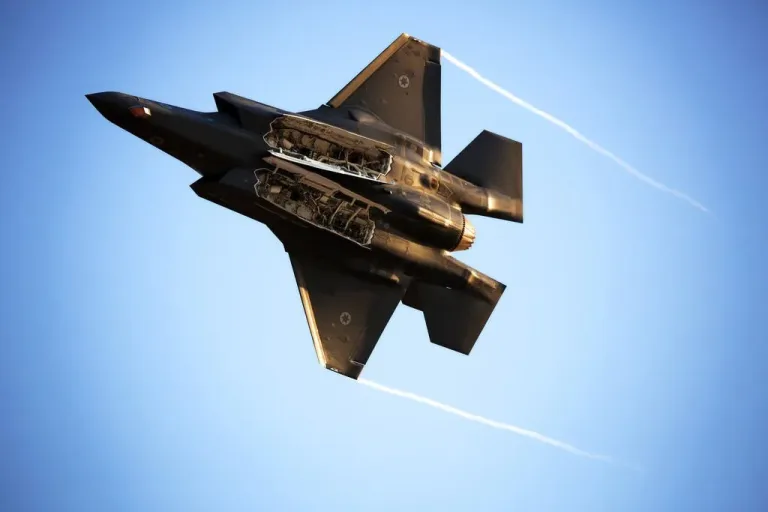
Jerusalem, 3 May, 2026 (TPS-IL) — An Israeli committee on Sunday approved a multi-billion-dollar Defense Ministry plan to expand the Israeli Air Force over the coming decade, including the purchase of additional F-35I and F-15IA fighter jets.
Prime Minister Benjamin Netanyahu, speaking at the weekly government meeting in Jerusalem on Sunday, said Israel must maintain long-term military superiority while reducing dependence on foreign supply chains.
“Israel is stronger than ever, and Israel must always be significantly stronger than our enemies,” Netanyahu said.
He described the procurement as part of a dual strategy of strengthening military capabilities while increasing self-reliance.
“Regarding strengthening: We are acquiring two squadrons of advanced aircraft – the F-35 and the F-15IA,” Netanyahu said, adding that Israeli pilots are capable of operating “in any point in the skies of Iran” if required.
The plan, approved by the Ministerial Committee on Procurement, calls for the Israeli Air Force to acquire two new fighter squadrons, including F-35I aircraft from Lockheed Martin and F-15IA jets from Boeing, both U.S.-based defense contractors.
The F-35I is a customized Israeli version of Lockheed Martin’s fifth-generation stealth fighter.
The deals, valued at tens of billions of shekels, include aircraft procurement, integration into the Air Force, and long-term maintenance, spare parts, and logistical support. The decision forms part of a broader force buildup plan spanning the next decade, backed by an NIS 350-billion ($118 billion) defense budget framework approved by the government.
Push for Greater Defense Self-Reliance
Netanyahu also announced plans for expanded domestic weapons production.
“Over the coming decade, we will add NIS 350 billion to the defense budget to manufacture these munitions here in Israel, ensuring Israel is not dependent on foreign suppliers,” Netanyahu said.
Defense Minister Israel Katz said the acquisitions were shaped by lessons learned during Israel’s direct military confrontation with Iran in March.
“The lessons of that campaign require us to keep pressing forward on force buildup, to ensure air superiority for decades to come,” Katz said.
Israeli officials have increasingly emphasized preparedness for a potential direct confrontation with Iran following months of regional escalation.
According to the Defense Ministry, the new procurement will eventually expand Israel’s F-35I fleet to around 100 aircraft and its F-15IA fleet to 50.
Israel currently operates 48 F-35Is. Additional F-35 aircraft already ordered are expected to begin arriving in 2028, while deliveries of the F-15IA are scheduled to start in 2031.
Officials said the acquisitions are intended to maintain Israel’s long-term regional air superiority.
The purchases also come amid broader Israeli efforts to reduce long-term dependence on U.S. military aid structures while deepening defense-industrial cooperation with Washington.
The Press Service of Israel reported in 2025 that Jerusalem is laying the groundwork to phase out a longstanding U.S. foreign aid model in favor of a framework based on joint investments, innovation and equal partnership, focusing on binational funds and large-scale strategic projects.
Retired diplomat and former Israeli Ambassador to the U.S. Yoram Ettinger told TPS-IL that the evolving relationship reflects mutual strategic interests.
“These are not handouts. Israel is not a foreign aid recipient. It’s a battlefield laboratory for the U.S. defense industry,” Ettinger said. “Every dollar ‘given’ to Israel returns hundreds in value to American taxpayers.”
He pointed to data from U.S. defense contractors Lockheed Martin and Boeing showing that Israeli feedback from combat use of American systems shortens research and development timelines, improves weapon effectiveness, and drives U.S. defense sales.