
By Pesach Benson • March 16, 2026
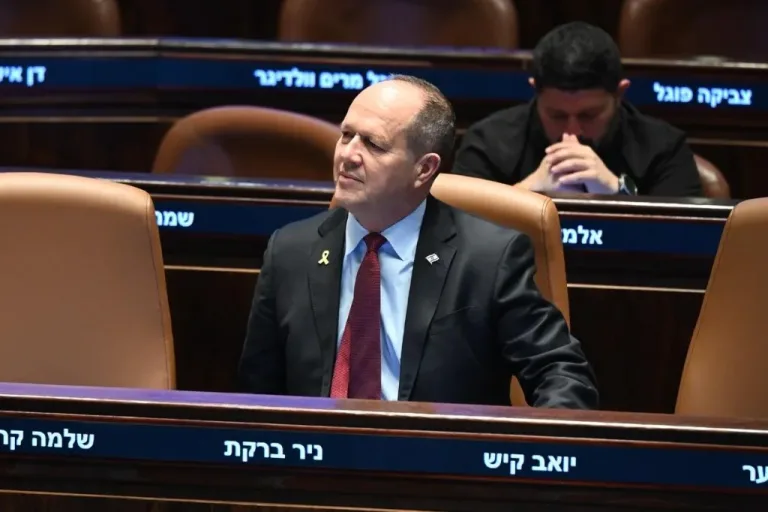
Jerusalem, 16 March, 2026 (TPS-IL) — Israel’s Investment Authority spearheaded more than NIS 4 billion ($1.28 billion) in private-sector investment in 2025, reinforcing the country’s position as a hub for innovation and the high-tech industry, Minister of Economy and Industry Nir Barkat said on Monday.
“The Investment Authority is a tremendous growth engine for Israel,” said Barkat. “Every shekel from the state raised another four from the private market. We do not hand out grants — we generate productivity, exports, and growth, strengthen the north, south, and periphery, and build national resilience. This level of private-sector engagement reflects strong confidence in Israel’s economy.”
The Authority’s programs focused on boosting exports, strengthening peripheral regions, and advancing sustainable and knowledge-intensive industries.
Shlomo Atias, Director of the Investment Authority, said 2025 was marked by strategic, targeted decisions. “We invested where the national impact is greatest — in restoring the north, raising productivity, developing human capital, and leading industry into sustainability and innovation,” he said. “Over 400 aid programs and grants totaling more than NIS 1.1 billion ($350 million) allowed rapid emergency responses while laying the foundation for long-term growth.”
Under the Law to Encourage Capital Investments, dozens of plans were approved for factories in peripheral regions, totaling NIS 692.5 million ($222 million) in investment and NIS 138.5 million ($44.4 million) in grants. Residential rental construction also benefited from 48 approved projects. Advanced manufacturing shifted toward deeper technological investments, with plans totaling NIS 173 million ($55.5 million) and grants of NIS 47 million ($15 million).
Infrastructure for industrial clusters was another priority. Nine programs worth NIS 188.5 million ($60.4 million) were approved to strengthen regional ecosystems and encourage collaboration.
The Authority also responded to security-related challenges in northern Israel, rolling out a dedicated aid package of NIS 241.5 million ($77.5 million). This included grants to restore business activity, automate packing houses, and support employment in border communities.
Efforts to boost human capital and integrate diverse populations included grants totaling NIS 35 million ($11.23 million), with dedicated programs for Druze and Circassian communities. Israel also advanced the green and circular economy, approving programs for carbon tax adaptation, circular economy initiatives, and energy efficiency projects totaling hundreds of millions of shekels.
“The Authority’s performance proves it can act with flexibility and speed,” said Moti Hagay, Director General of the Ministry of Economy and Industry. “From emergency response to deep investments in productivity and technology, the Ministry and its Authority remain a key engine of growth, strengthening Israel’s economic resilience and building infrastructure for a cleaner, more efficient industry.”