
“Already in the preparations for the operation in the town, we knew it was an area saturated with Hezbollah operatives, and we prepared for many face-to-face encounters and prolonged firefights,” recounts the Fire Control Officer of the Givati Brigade, Lieutenant D., about the engagement in which 23 operatives were eliminated a month ago. “The government hospital was one of Hezbollah’s most significant strongholds in the area, and entering it had great tactical importance.”

“We identified Hezbollah activity in the area and within the facility at an early stage, but at first, we decided not to operate inside, as the place still contained patients,” he explains. “I sat with the infantry company commander at the command post, and together we began to build a joint operational plan in Bint Jbeil,” continues the armored corps company commander who participated in the battle, Major (Res.) D. “From the beginning of our stay there, we had to deal with a car bomb and many explosives.”

At a certain point, the division identified operatives inside, observing from one of the hospital windows, and immediately two of them opened fire towards the soldiers on the ground. “We understood that this battle was forced upon us, and we launched a rapid response, simultaneously developing a quick tactic on the move,” the armored corps officer continues.

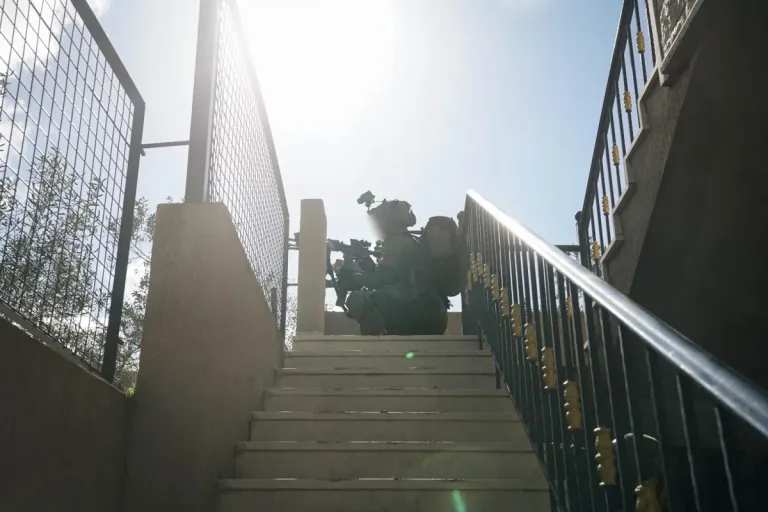
“Immediately after the firing, we moved to surround the hospital, with the engineering forces assisting us in clearing blockades and routes. We advanced until we finally entered,” he continues. “After some time of fighting, when we had already managed to formulate a relatively clear operational plan, we decided to raid directly into the center of gravity of the building, where most of the enemy operatives were concentrated, and from there launch more surgical attacks to the other floors and rooms.”

Amidst all this, the soldiers of the brigade’s fire control element were required to act quickly and precisely, in cooperation with intelligence personnel who were very familiar with the area. They operated in two ways: defending the forces moving on the battlefield, while simultaneously eliminating operatives and destroying infrastructure themselves. In retrospect, the command post was responsible for a significant portion of the eliminations in that campaign.

The support envelope provided to the forces also included backup from the Air Force and artillery fire. “We rapidly analyzed in real-time where there was a higher risk of threat to the forces, and while supporting the fighting forces on the ground, we formulated responses to possible scenarios, for example, if the soldiers were hit by an anti-tank missile or mortar fire,” the Fire Control Officer demonstrates. “We adapted the various assets at our disposal to each stage of the mission, despite the time constraints.”

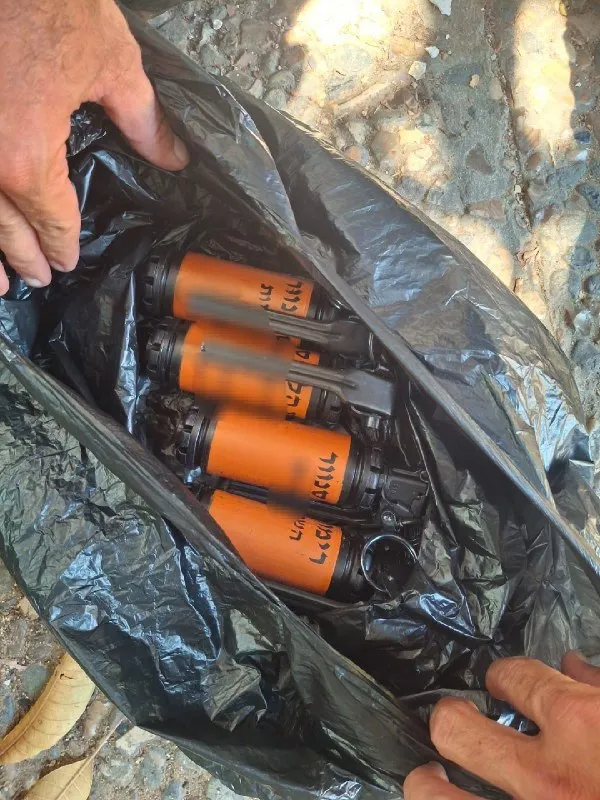
During the battle, alongside numerous engagements with the enemy, the Givati soldiers also uncovered advanced weaponry and infrastructure. “There were missile and rocket launchers there, many Kalashnikov rifles, missiles, and a lot of military equipment like body armor and ammunition,” the company commander details. “During this, we understood firsthand how significant the structure was to Hezbollah.”

Indeed, beyond exploiting the civilian institution as a hiding place, the organization had established a veritable staging point there, in preparation for carrying out terror attacks. “There was significant operative movement around the complex, on a main route connecting the hospital to the town,” the Fire Control Officer describes. “We identified disorganized movement of ambulances transporting enemy squads to the center of the fighting – exploitation at this level.”

Whether within the fire control element or facing the walls that concealed the terror activity under the guise of ‘medical,’ after the battle concluded, the strategic importance of taking control of the site became even clearer to the involved soldiers. In approximately 12 hours, they dismantled another significant center of gravity for Hezbollah, delivering a particularly strong blow to a place that had once been their stronghold.