

By Pesach Benson • March 23, 2026
Jerusalem, 23 March, 2026 (TPS-IL) — Israel’s economy grew faster in 2025 than the year before, inflation fell back within target and the stock market posted one of its strongest years on record — but the cumulative toll of more than two years of war left output nearly $47 billion below where it would otherwise have been, the Bank of Israel said in its annual report released on Monday.
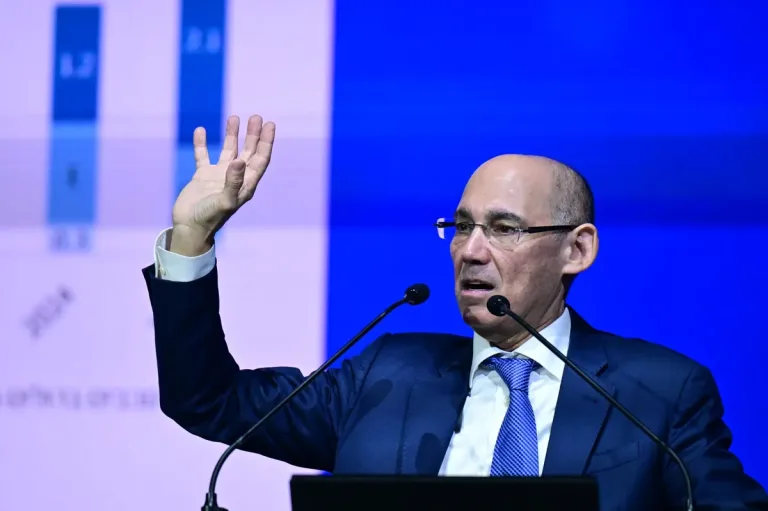
“The economy’s resilience was evident this year, given the continuation of the war and the challenges it posed: growth accelerated, inflation moderated and entered the target range, unemployment remained very low, the risk premium declined to close to its pre-war level, and particularly positive results were recorded in capital markets,” Governor Amir Yaron wrote in his foreword to the report.
GDP expanded 2.9% last year, up from 1% in 2024, and the business sector grew 3.2%. The Tel Aviv 125 index surged roughly 50%, which the report described as exceptional by global standards. The shekel strengthened against the dollar.
However, the bank calculated that cumulative output loss since October 2023 — measured against the economy’s pre-war growth trend — reached 8.6% of annual GDP, or approximately NIS 177 billion. Per capita income fell. The debt-to-GDP ratio rose for the third consecutive year, reaching 68.5%.
The report identified the shortage of available workers as the primary brake on faster growth. Large-scale reserve military call-ups kept tens of thousands of Israelis out of the civilian workforce for extended periods throughout the year. Palestinian laborers, who had accounted for roughly 30% of the construction workforce before the war, remain largely barred from entering Israel. The bank said the labor market was tight for most of the year — unemployment was low and job vacancies were high — but that tightness reflected constrained supply rather than broad economic strength, pushing up wages in the business sector without a corresponding increase in output.
Those conditions shaped monetary policy. The Bank of Israel’s monetary committee kept its benchmark Interest Rate at 4.5% for most of the year, citing inflation above the upper bound of its 1–3% target range and persistent supply constraints. The bank said faster rate cuts would have done little to stimulate growth under those conditions while risking a more significant rise in inflation. Following a ceasefire in Gaza in October and a subsequent easing of inflation expectations, the committee cut rates to 4.25% in November and to 4.0% in January 2026. Annual inflation for 2025 came in at 2.6%.
Financial markets showed signs of recovery. Credit to the business sector expanded, including a significant increase in corporate bond issuance. Venture capital fundraising in the technology sector rose. Loan delinquency rates remained low.
The fiscal position improved modestly but remained strained. The budget deficit narrowed to 4.7% of GDP, aided by tax increases worth roughly 1.5% of GDP enacted in the 2025 budget and a better-than-expected performance from direct tax revenues. Defense spending remained roughly level with 2024. The structural deficit, however, stood at an estimated 3.7% of GDP — above the level the bank said would be needed to stabilize the debt ratio.
The bank credited the economy’s pre-war foundations — low debt, large foreign currency reserves, a persistent trade surplus and a stable financial system — with providing the cushion that allowed it to absorb two years of conflict without fracturing. But the bank said those cushions are thinner now. Debt has risen sharply, the structural deficit remains too large to bring it back down, and the government has yet to produce the multi-year fiscal plan the central bank is explicitly demanding.
“Continuing to preserve these assets is vital for ensuring the economy’s resilience — but looking forward, this is not sufficient given the challenges facing the economy,” Yaron wrote. “The war’s consequences for the coming years, including the high level of defense spending expected to persist over time and the rising burden of military service, are added to the economy’s fundamental challenges.”