

By Pesach Benson • June 14, 2026
Jerusalem, 14 June, 2026 (TPS-IL) — Transportation Minister Miri Regev has warned Prime Minister Benjamin Netanyahu that failure to resolve a severe aircraft parking shortage at Ben Gurion Airport could lead to the cancellation of more than 2.4 million airline tickets for the summer and upcoming holiday season.
The warning comes ahead of a Tuesday, June 16 deadline set by the Airports Authority, after which airlines would be required to notify passengers of potential mass cancellations if no solution is reached. The crisis centers on aircraft parking constraints at Ben Gurion Airport and Ramon Airport, which Regev says are nearing full capacity.
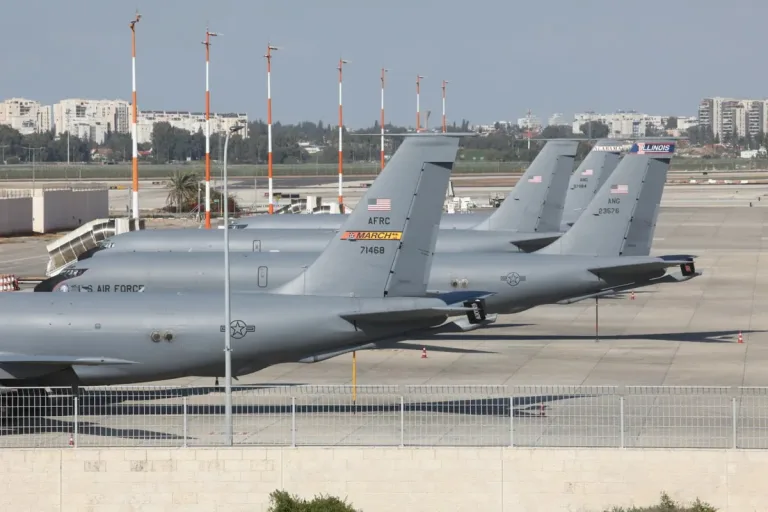
At the center of the dispute is the continued presence of American refueling aircraft stationed in Israel, which Regev says are occupying critical parking space. According to Regev’s letter, “approximately 72 of the partner’s refueling planes are parked at Ben Gurion Airport and occupy more than half of the parking capacity,” while “approximately 26 additional planes are parked at Ramon Airport, occupying approximately 90% of the parking spaces at the airport.”
She warned, “If half of the refuelers are not evacuated by Tuesday (June 16, 26), we will notify over 2 million citizens whose flights during the summer, including the Breslov Hasidim trip to Uman on Rosh Hashanah, are canceled.”
According to Regev, a continued impasse will cause “direct economic damage of billions of shekels to airlines, the tourism industry, and the economy.”
She further warned that “a mass cancellation of flights for summer vacations and holidays at a time when the Israeli public needs calm and normality more than ever will harm national morale and civic resilience.”
Regev has proposed relocating some of the aircraft to Israel Air Force bases or alternative civilian airfields to ease congestion. She also pointed to ongoing discussions with the United States regarding possible relocation abroad, though she said these solutions are not expected to be implemented quickly enough to resolve the immediate crisis.
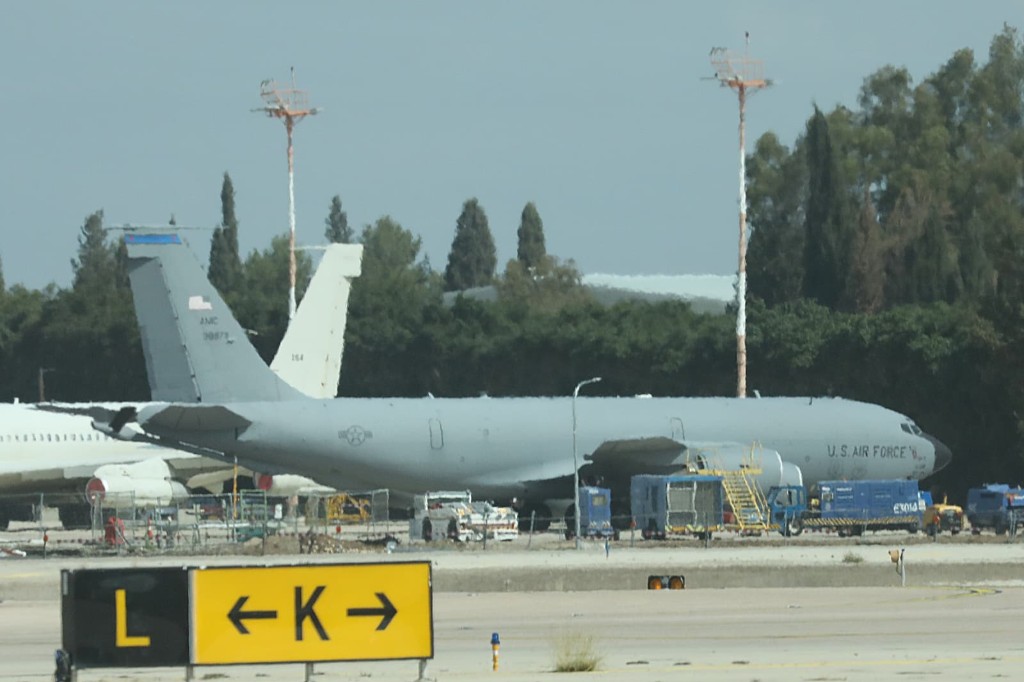
U.S. Air Force KC-135 refueling aircraft park at Israel’s Ben Gurion Airport, as part of an extensive American deployment on Feb. 25, 2026. Photo by Gideon Markowicz/TPS-IL
Neither the Prime Minister’s Office nor the airlines have responded. The Israel Airports Authority has not publicly outlined a contingency plan.
In May, Regev and Civil Aviation Authority Director General Shmuel Zakai issued a similar warning in May.
Israeli airspace fully reopened following a ceasefire that ended a period of escalation earlier in 2026. Although local carriers have restarted operations, many European airlines have kept suspensions in place and some U.S. carriers are postponing their return until September.
The limited recovery in international traffic has already tightened seat availability, contributing to higher fares as demand rises toward the summer holidays.
Israeli airlines say this has significantly reduced their ability to base aircraft at their home airport.
Speaking at the Knesset Economic Affairs Committee in May, Israir CEO Uri Sirkis said his airline has been sharply restricted. “We are currently allowed to have four overnight parking spaces at Ben Gurion Airport because of the U.S. planes, and we were supposed to keep 17 planes in Israel,” he said.
He added that the shortage forces airlines into inefficient scheduling. “If we don’t have an overnight parking space, we need to park the plane in Rome and carry out the schedule in reverse,” Sirkis explained, which creates operational and financial challenges.