
The ministry of Education announced in a discussion that Israel will not participate in the upcoming OECD PISA tests on financial literacy. “We preferred not to introduce this pressure into the system. With a delay of 20 years, we are introducing financial education as a mandatory subject in the 9th grade starting next year, and we can wait for PISA in three years.”
The Education, Culture, and Sports Committee held a discussion today (Tuesday) on financial education in the education system. The Ministry of Education presented the financial education plan, which is built on four main content axes: conscious consumption, the world of money and banking, the labor market in a changing world, and investments and savings. It includes practical topics such as budget building, understanding payslips, introduction to the capital market, and dealing with the impact of AI on employment.
Dr. Tali Yaniv, Chair of the Pedagogical Secretariat at the Ministry of Education: “Starting next year, financial education will become a mandatory subject in the 9th grade. One of our challenges is recruiting teachers – in the first year, we need 1,200 teachers for all sectors across the country.” According to Yaniv, no additional study hours were allocated for the subject, and it will be taught at the expense of some geography lesson hours. “It’s not that geography was canceled, but rather that a part of it was taken,” she explained.
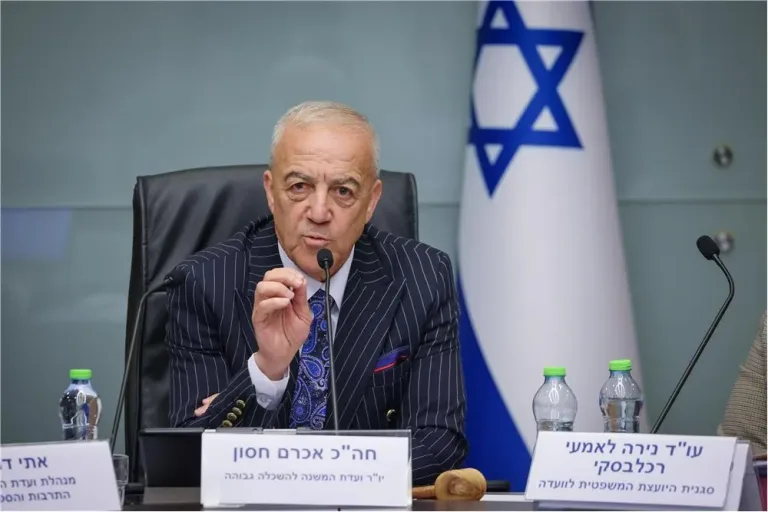
Acting Chair of the Education Committee, MK Akram Hasson, requested “not to leave the weak behind. First, start financial education studies in the periphery and among weaker sectors such as the Haredi, Arab, and Druze communities, because if not, the gaps will widen and we will pay social prices.” The Ministry of Education representative, Yaniv Yerucham Singer, was asked about digital learning in the Haredi sector and admitted there is a challenge: “In the Haredi sector, they will not transition to digital learning. There is a challenge, and there will be tools for learning there – without digital.”
In the committee discussion, the Ministry of Education announced for the first time that Israel will not participate in the upcoming OECD PISA tests on financial literacy. Yaniv Yerucham Singer, Director of the Department of Elective and Interdisciplinary Programs at the Ministry of Education, stated: “With a delay of at least 20 years, we are introducing financial education as a mandatory subject in the 9th grade starting next year, and we can wait for PISA in three years. We preferred not to introduce this pressure factor into the system.”
Criticism arose against the decision not to participate in the upcoming PISA test on financial literacy. The representative from the Bank of Israel, Nurit Plater, said, “If we don’t participate in the PISA test, we won’t be able to improve.” The CEO of the Capital Markets Authority, Gal Yaacobi, added, “PISA is the right thing, international professional measurement, and not just internal measurement. We will be ready to fund this important matter.”
The representative of the National Student and Youth Council, Mika Shlomovitz, welcomed the decision to make the subject mandatory and said, “If you ask my friends at school what inflation is, they will think it’s a term in physics. Many of us lack a lot of financial knowledge.”