
By Shalhevet Eyal • May 5, 2026
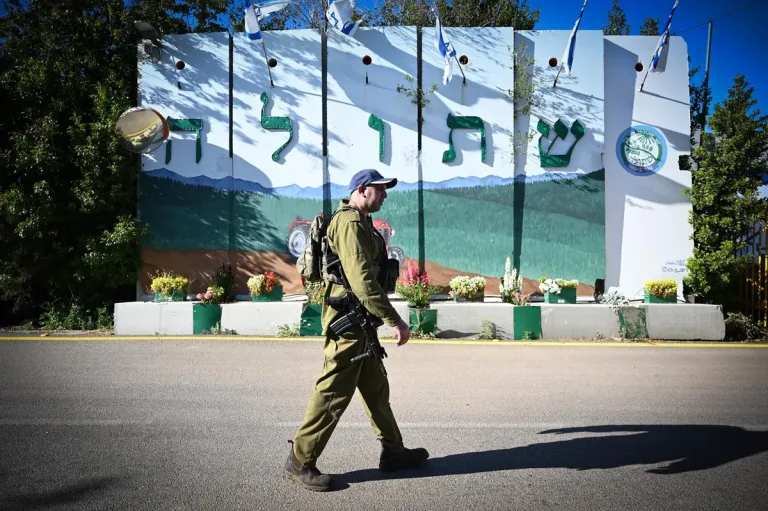
Jerusalem, 5 May, 2026 (TPS-IL) — From the winding road leading up the mountain to Kibbutz Adamit, a pastoral scene spreads out below. Even beyond the Lebanese border fence, rolling green hills stretch as far as the eye can see.
But despite the calming view, the realities of war repeatedly intrude.
Kibbutz Adamit sits near Israel’s border with Lebanon, where the Iran-backed Hezbollah terror group has disrupted daily life with near-daily rocket and drone attacks since the aftermath of Hamas’s October 7 assault.
“I wake up every morning and say — I’m in paradise, really,” said Yael, a mother of three. “I’m sitting here and saying — I’m in paradise. Until the siren and the explosions shake my soul.”
While some residents living along the northern border have not returned to their communities since the attacks began in 2023, many others have come back to rebuild their lives. But they told The Press Service of Israel that exhaustion has become part of daily life.
“This is not normal — it’s almost impossible,” Yael said.
She said her older children, already shaped by COVID-era isolation, spent much of the war at home attending school remotely.
“Last year, while everyone else in central Israel returned to routine, we were still on Zoom,” she said. “People ask why my children are still home. They don’t understand what we go through here.”
Life Between Sirens
For many residents, maintaining routine has become both a necessity and a form of resilience.
Miko Levi, a farmer from nearby Moshav Shtula, continues working despite the danger. “I work every day, even now during the war,” Levi said while transporting eggs by truck. “This is essential — it’s everyone’s livelihood.”
Levi described repeated close calls and direct damage to his chicken coops.
“Shells have fallen near me more than once, just tens of meters away,” he said. “One hit my coop and the entire flock was wiped out. I repaired it and kept working.”
Despite the war, nearly every resident interviewed described the area as “heaven.”
Misha Nitishinsky, who immigrated to Israel with his family from Russia, said settling in Shtula was a deliberate decision rooted in long-term considerations.
“We love northern Israel and the rural atmosphere here,” he said. “This area is very beautiful, very different from the rest of the country.”
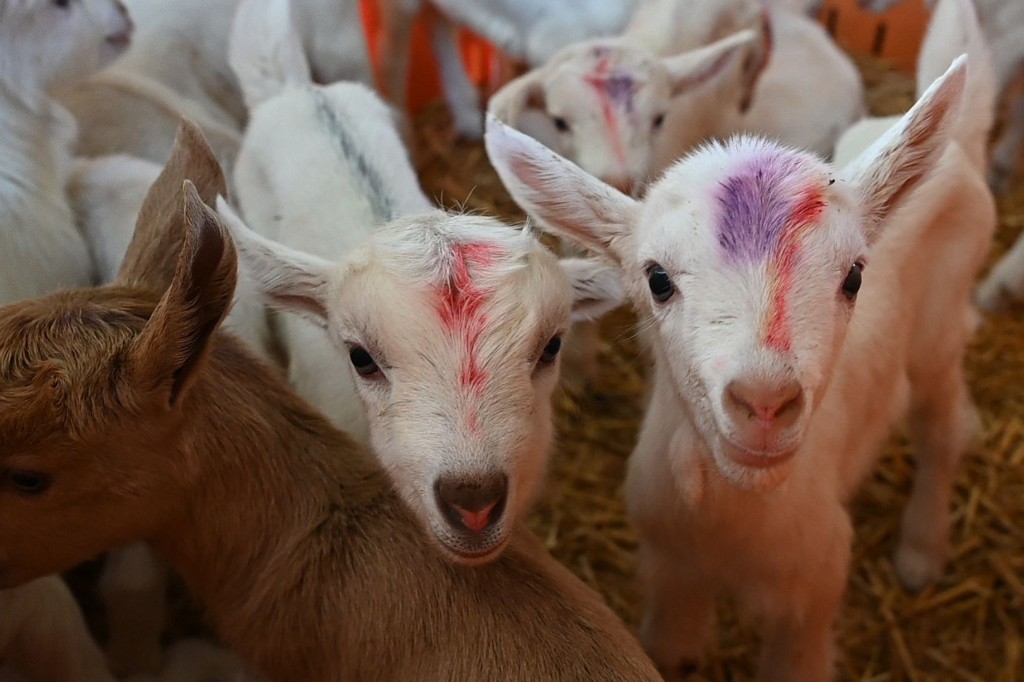
Baby goats in a pen at Moshav Shtula, near the Lebanon border on April 30, 2026. Photo by Yoav Dudkevitch/TPS-IL
For long-time residents, the current situation is part of a broader historical pattern.
Elisheva Cohen-Razi of Moshav Even Menachem, Yael’s mother, described a recurring cycle of violence that has shaped life in the region for decades.
“I have memories from when I was three — digging trenches in the yard, running to shelters at night, studying for exams in shelters, losing family members,” Elisheva told TPS-IL. “And now it’s happening again. You don’t believe you’re still in this situation.”
‘I Fell in Love With This Place’
Months-long evacuations uprooted many residents, forcing families into hotels and temporary housing far from the border communities they describe as home.
Shuli Or of Adamit said she was evacuated twice to Petah Tikva.
“People told me, ‘You’re crazy, why are you living here by yourself?’” Or said. “But this place has the best air and an incredible panoramic view.”
To support herself, she began renting out her home to visitors.
“People came and enjoyed the house, the view and the air,” she said.
Then her voice grew heavier.
“It’s complicated,” Or said with a sigh.
“At my age, I’ve already lived my life,” she explained. “But I ask myself, ‘What — there’s no future, no hope, no dream?’ I’m sorry I’m not more optimistic, but it’s hard to be optimistic.”
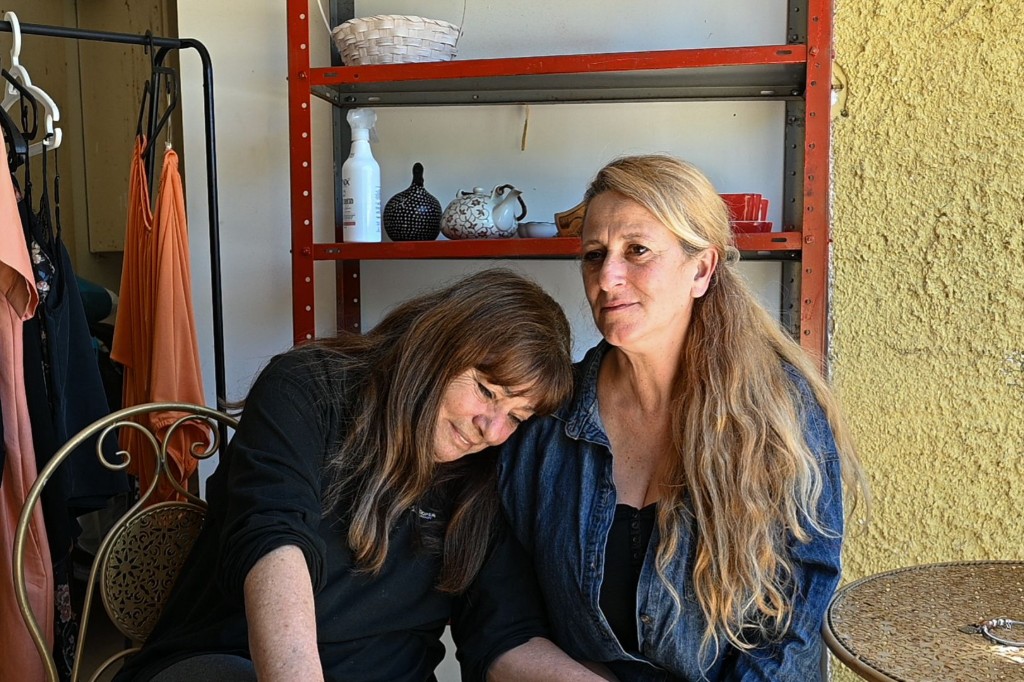
Shuli Or (left) of Kibbutz Adamit visits Zivit Malka at her new second-hand clothing store in Moshav Shtula on April 30, 2026. Photo by Yoav Dudkevitch/TPS-IL
On the opening day of her second-hand clothing shop in Adamit, Zivit Malka greeted visitors warmly as colorful clothing swayed from hangers and decorative bells tinkled softly in the breeze.
After struggling for 20 years to have children, Malka and her husband moved to Adamit. Soon afterward, they welcomed a baby boy.
“I fell in love with the place and the amazing people here,” she said.
“You used to wake up in the morning, go to work and come home to the kids. It was routine,” Malka said. “Today, you don’t know what’s happening. You wake up and there’s a siren or no siren, school or no school. Everything is uncertain, and with all this, I still need to keep the business running.”
Making a hammering gesture with her hand, Malka added, “You feel like a schnitzel they keep pounding flatter and flatter. Even though I’m supposed to be happy, there are days when it’s really hard.”
As Or and Malka embraced while sharing their stories, a loud boom suddenly shook the store.
The women gripped each other’s hands tightly.
“There might be a siren,” Malka said calmly.
“I hope it didn’t land in this area,” Or quietly replied.
Despite the uncertainty, Yael still holds onto hope for the future.
“In my fantasy, there’s peace with Lebanon,” she said. “We go eat hummus in Beirut.”