

By Pesach Benson • May 17, 2026
Jerusalem, 17 May, 2026 (TPS-IL) — Ahead of the Jewish holiday of Shavuot, which traditionally sees a surge in dairy consumption, Israel’s Ministry of Agriculture and Food Security published new 2025 data showing continued gains in dairy-sector efficiency alongside evolving consumption trends.
Shavuot, which marks the giving of the Torah at Mount Sinai, begins at sundown on Thursday. A widespread custom is to consume dairy foods during the holiday period, which typically drives a sharp seasonal rise in demand.
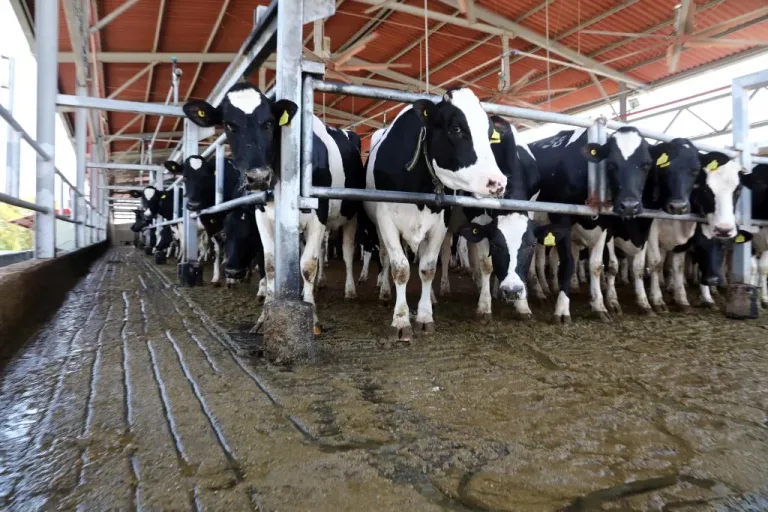
According to the ministry’s figures, average dairy consumption in Israel reached about 157 liters per person in 2025, measured in milk-equivalent dairy products. At the same time, average milk yield per cow rose to approximately 12,600 liters annually, or about 34.6 liters per day. The average dairy farm produced roughly 2.7 million liters.
The ministry said the data reflects “continued strong productivity in the Israeli dairy sector under complex conditions,” attributing the gains to ongoing investment in technology, herd management and planning.
Seasonal demand ahead of Shavuot remains a significant driver of short-term consumption patterns. The ministry reported a 63% increase in dairy demand in the period leading up to the holiday.
Ministry of Agriculture and Food Security also noted that the Knesset Economics Committee recently approved updated dairy industry planning regulations promoted by the ministry. Officials said the measures are intended to strengthen supply stability and reduce the risk of shortages, particularly during peak demand periods.
At the same time, the sector continues to face multiple pressures, including rising feed costs linked to Russia’s war in Ukraine, volatility in global dairy commodity markets, and domestic drought conditions affecting feed crops. Climate change is also increasing operational challenges, including higher cooling requirements and impacts on herd fertility.
Despite these constraints, long-term productivity trends remain positive. Average production per dairy farm has increased by 44% since 2016, rising from 1.873 million liters to 2.694 million liters, indicating significant efficiency gains across the sector.
On the consumption side, overall demand for locally produced dairy products rose by 1.2% in 2025 compared to 2024. However, per capita consumption declined by around 0.6%, a divergence that likely reflects population growth and shifting product preferences within the market.
The ministry also highlighted the continued expansion of plant-based dairy alternatives. Between 2004 and 2025, per capita consumption of plant-based substitutes increased fivefold. In 2025 alone, approximately 35.3 million liters of plant-based milk alternatives were sold in retail chains, led by oat, soy and almond beverages.
Retail dairy sales reached an estimated NIS 11.4 billion ($3.9 billion) in 2025, averaging about NIS 216 million ($74 million) per week. In the week leading up to Shavuot, sales rose sharply to NIS 353 million ($120.9 million), with the strongest increases recorded in cream, specialty cheeses and soft cheeses.