
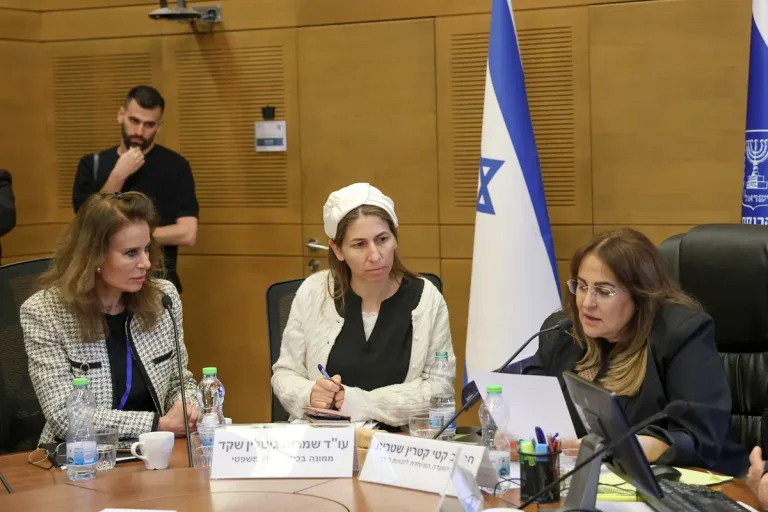
The Committee on the Rights of the Child, headed by MK Keti Shitrit, convened today (Wednesday) for a heated discussion on the topic of protection and ensuring intergenerational connection in family disputes. According to the State Comptroller’s report for 2024 and professional assessments, there are currently over 30,000 children in Israel experiencing parental alienation and painful family estrangement, which not only affects relationships with parents but also leads to severe damage to the bond between grandparents and their grandchildren. The Comptroller’s report revealed a severe shortage of therapeutic support infrastructure, with only 66 contact centers operating in 257 local authorities across Israel – facing particularly acute distress in the periphery – meaning only about 4,200 children actually participate in these protected meetings. During the discussion, difficult personal testimonies from victims of the phenomenon were revealed: “Children experiencing parental alienation completely black out one side of the family.”
The committee chair, MK Keti Shitrit, opened the discussion and warned of the lack of therapeutic and legal action: “Children have become easy victims in disputes between adults. According to estimates from 2020, there are over 30,000 alienated children in Israel – it is understandable that the current figures are several times higher. The damage is not limited to relationships between parents and their children, but also includes painful estrangement between grandparents and their grandchildren, creating a ‘legacy of disconnection’ passed down through generations. The Legal Capacity and Guardianship Law grants courts the authority to determine contact with grandparents, and there is a procedure requiring urgent discussion of requests within 14 days, but in practice, the procedures are not sufficiently enforced. Immediate action must be taken to expand the network of contact centers in the periphery, extend operating hours, effectively enforce court procedures, and even consider allowing private entities to establish state-supervised centers. Behind every number is a child, and every child deserves the right to grow up with a stable and healthy intergenerational connection.”
Actress Rubi Porat Shuvil, who has been leading an extensive public and media campaign in recent years due to a painful and ongoing estrangement from her two grandchildren, which she claims resulted from a severe family dispute, attended the discussion. Porat Shuvil tearfully described the psychological devastation experienced by the children and families: “Behind every alienation is an adult conflict over money or revenge that uses the child. Good memories are erased, and the child perceives the alienated parent as absolutely evil; because they cannot cope with this, they become filled with guilt, and this is a growing cycle. Alienated parents are walking dead. A home with alienation operates like a cult, and the damage to the child caught within it is sometimes irreversible. Children are not weapons or bargaining chips, and they must be removed from all conflict. When children experiencing parental alienation draw a family tree, they completely erase and black out one side of their family; this is very difficult for the child’s psyche.”
Advocate Romy Kanbal, Chair of the Central District of the Israel Bar Association, described the situation as a deep systemic failure: “This is a phenomenon that crosses sectors, ages, and education levels – it is a national plague that the legal system has no way to deal with. These children are kidnapped, and the figures mentioned are just the tip of the iceberg, as many cases do not reach the definition of alienation because the alienated parent goes through a difficult process until they give up. In divorce proceedings, judges need broader tools to stop this phenomenon in time. The current tools are limited; clear timelines must be given to judges and the welfare system so that years of processes do not pass until the child becomes entrenched in their position. If you miss the window of opportunity at the beginning of the estrangement – the contact centers will no longer help. The law today speaks of 60 days for a procedure, which is a lot of time. A judge should see the case within a week at most.”
MK Dvorah Biton addressed the lack of action by the legal authorities and shared: “Even judges struggle with this issue. The problem begins with the conflict between parents, with children falling in the middle, and according to the data, half of foster children are placed in foster families due to parental disputes over money, alimony, and revenge. Judges can see children from the age of 6 and talk to them, but they do not use this tool. I tell the professionals – listen to the child and hear the small things that indicate parental alienation.”
On the other hand, MK Iman Khatib Yassin presented a position warning against premature legal involvement: “It all depends on the case, and it is not appropriate to take the child to a judge and talk to them a few days after a separation. Therapeutic procedures must be exhausted before reaching legal authorities, and a therapeutic process must come first. Of course, if there is a case of violence, immediate legal intervention is necessary, but this is a matter of life and death, and one must be cautious.”
Advocate Gadi Elbaz, representative of the Courts Administration, presented the system’s data and explained the source of delays: “Parental alienation is, for us, a paramount issue at the top of our priorities, and it has been determined that a decision must be made within 14 days. In 2025, 19 requests for urgent relief were filed, and according to our data, only in two cases were the set deadlines not met. When we checked with the judges what was delaying processes, we understood that it sometimes stems from not receiving timely reports from professionals. The court’s support system is not keeping up with the set timelines, and therefore it delays the judges.”
Matzada Shenler, representative of the Ministry of Welfare, reinforced the need for professional caution and presented the ministry’s data: “This is a very complex and painful issue. Disconnection and family conflict primarily harm children, and we try to establish initial contact through agreements, which often leads to significant re-establishment of contact, but when there are no agreements, it is difficult for us to help. The number of cases we have for defined intergenerational alienation stands at about 50 cases. Most of our work, about 77%, deals with various difficulties in family relationships, especially with parents and children and intergenerationally. Within these difficulties, there is a spectrum of disconnections and coping – not everything is parental alienation, and one must be careful before rushing to court.”
The discussion concluded with the personal testimony of Rabbi Menachem Sukkot, a father dealing with family estrangement, who shared a shocking insight into the world of children caught in conflict: “I received permission from my daughter to speak on her behalf after years of no contact, and I have other children with whom I am not in contact. My daughter told me that during the years we were estranged, I used to send her letters around special occasions; she told me that if I had sent a letter, she would have thrown it away, but if I hadn’t sent one – she would have been truly hurt and even hated me. This shows how much the children are caught in the middle between adults, experiencing such difficult feelings in vain.”