














Indictment: 4 Negev Residents for Espionage, Arms Offenses
Four Negev residents indicted for espionage and arms offenses, including drone smuggling from Egypt, highlighting a rise in illegal weapons posing security.
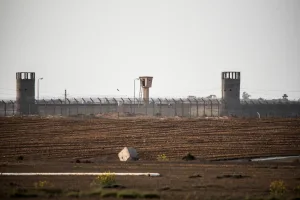


Four Negev residents indicted for espionage and arms offenses, including drone smuggling from Egypt, highlighting a rise in illegal weapons posing security.
The indictments, filed by Adv. Assaf Bar Yosef from the Southern District Attorney’s Office, reveal that since 2020 there has been a steady increase in smuggling attempts and seizures of weapons smuggled into Israel through the borders with Jordan and Egypt. In 2024, drones began to be widely used for the import of weapons and drugs. According to the allegations, “flooding” the State of Israel with illegal weapons poses a real risk both criminally and in terms of security, enabling terrorist activity, assisting Terrorist Organizations and their operatives in carrying out attacks, and seriously endangering the security of the country’s citizens, partly due to a significant decrease in the prices of weapons.
During November 2024, Saleh Jerjoui conspired with an individual from the Egyptian side for the purpose of importing weapons via drones, and offered the other defendants to join the activity. For this purpose, the defendants purchased drones at a cost of hundreds of shekels. On several different occasions, the defendants acted to import weapons from the Israel-Egypt border using a drone flown from Egyptian territory, with one of them serving as a lookout. The defendants moved in the border area equipped with communication devices, collected the weapons, and transported them into Israeli territory, aware that their actions could harm the country’s security.
In another case, on one occasion in the evening hours, Sami Sarhin listened to the IDF communication network and sent Saleh Jerjoui a recording containing reports from observers who identified the drone smuggling and the directing of forces to the area.
The defendants were charged with weapons offenses and Espionage.
The case was investigated by the Shin Bet and the Negev Counter-Terrorism Unit of the police.
Israeli Security Forces uncover a drone-based weapons smuggling network in the Negev, arresting four citizens. Drones from Sinai ferried arms; one downed.
By Pesach Benson • January 1, 2026
Jerusalem, 1 January, 2026 (TPS-IL) — Israeli security agencies said Thursday they had uncovered a weapons smuggling network in the Negev desert that used Drones to ferry arms across Israel’s southern border from Egypt’s Sinai Peninsula.
In a joint statement, the Israel Security Agency (Shin Bet), the Israel Defense Forces (IDF), and Israel Police said four Israeli citizens from the Bedouin community of Masoud al-Azazma in southern Israel were arrested about a month ago and are now facing charges.
According to investigators, the suspects were involved in multiple attempts to smuggle weapons into Israel using drones launched from the Sinai. During one such attempt, IDF forces shot down a drone carrying four machine guns, which were seized at the scene.
“The investigation revealed significant weapons smuggling activity using drones along the southern border,” a security official said. Another official noted that the suspects also “monitored IDF communications as part of their smuggling operations,” an act that could have compromised military activity in the area.
Prosecutors filed an indictment in the Beers-Sheva District Court on Thursday.
“Smuggling weapons across Israel’s borders serves as a supply pipeline for terrorist organizations and can cause serious harm to national security,” the joint statement said.
In November, Defense Minister Israel Katz changed the army’s rules of engagement, while the National Security Council is pushing to classify the smuggling as a terror threat — a legal designation that officials say will give security bodies broader tools to counter the threat.
During a three-month period in 2025, nearly 900 drone smuggling attempts from Egypt were recorded, authorities told the Knesset’s Foreign Affairs and Defense Committee in mid-October. That number almost doubled the 464 attempts reported in the same period in 2024.
Five Israeli cars torched in Lehavim, a suspected retaliatory arson attack linked to escalating tensions amid a Bedouin crime crackdown in Negev communities.
By Pesach Benson • December 31, 2025
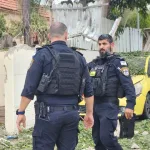
Jerusalem, 31 December, 2025 (TPS-IL) — Five vehicles were set ablaze overnight in the southern Israeli town of Lehavim in what Police are investigating as a retaliatory arson attack linked to escalating tensions in nearby Bedouin communities of the Negev. The flames, which engulfed cars parked at a gas station near the town’s entrance, were extinguished by fire crews early Wednesday, and no injuries were reported.
Authorities described the attack as a “price tag” operation — a term usually associated with retaliatory acts by Israeli settlers but increasingly applied to incidents involving Bedouin residents seeking revenge for Police actions. “The rules have changed,” a senior Police official said. “They don’t understand that they won’t scare us. We will intensify the measures.” Another official added, “The Shin Bet must get involved.”
The Lehavim blaze comes just days after a large-scale Police operation was launched in the nearby Bedouin town of Tarabin al-Sana, following a series of violent clashes between law enforcement and residents. Hundreds of officers have been deployed to Tarabin in a crackdown on rising organized crime activity and weapons trafficking.
During the Tarabin operation, police established roadblocks around the town and arrested at least 27 people, including four minors. The raids followed weekend unrest in which masked residents from Tarabin allegedly vandalized vehicles in the Jewish communities of Giv’ot Bar and Mishmar Hanegev. At least two cars were set on fire and dozens more damaged, apparently in retaliation for prior police activity.
“The activity is being carried out with the aim of enforcing the rule of law,” police said in a statement at the time, “and responding decisively to any attempt at serious criminal activity.” Officials characterized the Lehavim arson as a continuation of this cycle of revenge.
Firefighters who responded to the scene said they received the emergency call at 1:48 a.m. “Upon arrival, teams identified five burning vehicles and acted quickly to extinguish the fires,” a fire service spokesperson said. “We isolated energy sources and conducted a thorough search to prevent the flames from spreading. Fortunately, there were no injuries.”
While the Lehavim fire did not result in casualties, officials warn that the confrontation could escalate further if retaliation continues. “We will intensify the measures,” the senior police official reiterated. “We are committed to maintaining security and will respond decisively to any acts of revenge.”
Israel approves a $31.8M boost for Negev cities, fueling housing, R&D, and airport plans. The investment drives economic growth and attracts population to the
By Pesach Benson • December 11, 2025
Jerusalem, 11 December, 2025 (TPS-IL) — Israel is set to invest $31.8 million in eastern Negev cities as part of a new plan to boost economic growth and population in the south, the prime minister’s Office and Finance Ministry announced Thursday. Cabinet approval is scheduled for a special session in Dimona on Sunday.
The 2026 budget targets key sectors including infrastructure, public safety, transportation, energy, environmental projects, and innovation. Among the initiatives, plans for the Mitzpe Ramon airport are moving forward, a hub for advanced energy technologies is being established, and Yeruham will expand R&D for unmanned aerial vehicles.
“In recent months, my government has advanced unprecedented national plans for Negev communities: government decisions for the ‘envelope of the envelope’ communities totaling NIS 3.2 billion [$1 billion],” Prime Minister Benjamin Netanyahu said. He highlighted efforts to develop Beer-Sheva into a “metropolitan center” and strengthen Dimona “as a leading city in the Negev’s development,” alongside thousands of new housing units.
Netanyahu described the upcoming budget as “a significant and essential step toward completing the vision and national policy of developing the Negev and attracting population to the south.”
Finance Minister Bezalel Smotrich praised the ministries’ work, saying, “The Negev’s development is a central national interest of the State of Israel. … This is practical Zionism, bringing real opportunities, quality employment, and a high quality of life to the periphery.”
The plan comes on the heels of the government’s November approval of an NIS 1 billion plan to develop Beer-Sheva and the wider Negev region. That initiative aims to expand the ecosystem connecting academia, industry, and the military while promoting innovation, cyber technologies, employment, tourism, and the revitalization of Beer-Sheva’s Old City as a hub for young residents and tourists.
Archaeologists uncovered a 2,500-year-old burial site in the Negev Highlands, shedding light on ancient trade routes that connected cultures from Yemen, Phoenicia, Egypt, and beyond, the Israel Antiquities Authority announced on Wednesday.

Jerusalem, 5 February, 2025 (TPS-IL) — Archaeologists uncovered a 2,500-year-old burial site in the Negev Highlands, shedding light on ancient trade routes that connected cultures from Yemen, Phoenicia, Egypt, and beyond, the Israel Antiquities Authority announced on Wednesday.
The site, south of Beer-Sheva, contains dozens of tombs believed to belong to individuals from caravans that passed through the region, highlights the Negev’s role as an international crossroads during the 7th to 5th centuries BCE.
Archaeologists found copper and silver jewelry, alabaster items used for incense preparation, amulets, beads, and vessels likely used to transport incense resins.
“The discovery is unique and it points to wide-reaching cultural interchange between southern and northern Arabia, Phoenicia, Egypt and southern Europe,” said excavation director Dr. Martin David Pasternak.
They also found arrowheads made of flint, a material associated with ancient trade from Yemen and Oman, with traces of ochre.
“The presence of ochre on these arrowheads may indicate their religious or cultic significance as having special value,” explained Dr. Jacob Vardi, an Antiquities Authority specialist in flint tools.
The tombs raise intriguing questions about their purpose and the nature of the trade caravans that used the route.
Pasternak said the tombs could have served as a long-term burial site for caravans passing through the area, or they may mark the mass burial of a caravan that came under attack. Despite their location at a remote junction in the desert, the site’s strategic position along key trade routes makes it a plausible resting place for travelers engaged in long and perilous journeys across difficult terrain. These traders were likely involved in the transport of valuable goods such as frankincense and myrrh, prized commodities from southern Arabia.
The findings also suggest a more complex social dynamic among the caravans.
Dr. Tali Erickson-Gini, a senior researcher, pointed to the presence of artifacts that may indicate the involvement of women in these trade networks. Texts from the period describe the purchase of women as part of the caravan trade, and an inscription found in Yemen records the purchase of 30 women from Gaza. Additionally, an amulet depicting the Egyptian god Bes was found among the burial items. Bes was often associated with the protection of women and children, suggesting that many of the deceased may have been women. This raises the possibility that the caravans could have been involved in human trafficking, a practice documented in ancient texts.
“The discovery emphasizes the central role of the Negev in antiquity as an international crossroad and as a gateway for trade and a meeting place of cultures,” said Antiquities Authority director Eli Escusido. “The discovery is unique and it enables us to touch small but important historical moments of the people who traversed the desert through this place centuries ago.”