










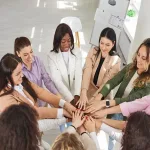

Purple Card Debuts In Health System: A Joint Project
On the International Day for the Elimination of Violence Against Women, Israel launches the "Purple Card" to revolutionize healthcare for sexual assault


On the International Day for the Elimination of Violence Against Women, Israel launches the "Purple Card" to revolutionize healthcare for sexual assault
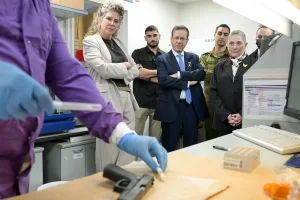
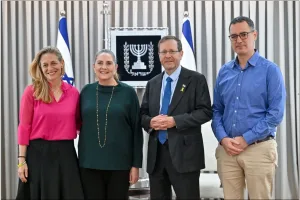
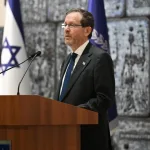
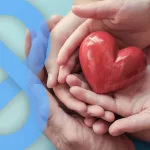
Today, marking the International Day for the Elimination of Violence Against Women, Mrs. Michal Herzog, the first lady, hosted the launch event for the **”Purple Card.”** This joint project, spearheaded by the Ministry of Health, the Briah Foundation, and the Israeli Society for the Promotion, Diagnosis, Treatment, and Prevention of Sexual Harm, aims to fundamentally change healthcare treatment for sexual assault survivors and enhance their care experience.
The card’s launch signifies a major step toward integrating the principle of **”Trauma-Informed Care”** in Israel, a concept receiving particular emphasis since the events of October 7. This approach stresses a deep understanding of how trauma impacts reactions during medical encounters and promotes respectful, safe treatment tailored to the specific needs of all patients.
The Purple Card enables people who have experienced sexual trauma to non-verbally communicate their history to medical teams, especially when direct conversation is difficult or impossible. Presenting the card guides medical staff to proceed with awareness, sensitivity, and personalized care, which improves the treatment experience, increases patient trust, and helps prevent triggering events during medical intervention. A pilot conducted in women’s wards at Israeli hospitals has already demonstrated the card’s effectiveness in enhancing the patient experience and fostering care based on understanding, empathy, and sensitivity.
The Purple Card was initially developed by the Briah Foundation and HIPAM in consultation with sexual harm survivors and in collaboration with medical, therapeutic, and social professionals. The Ministry of Health joined the initiative to provide national oversight and support its system-wide implementation.
The Purple Card is currently being implemented throughout the healthcare system.
To download the card and for more information: www.briah.org/pcard
First Lady Michal Herzog: ״The Purple Card initiative we are launching here today was born from listening to sexual assault survivors who frequently encounter immense difficulty in interactions with the healthcare system. This challenge creates intense vigilance and the dangerous potential for re-traumatization when medical staff lack awareness, sensitivity, or attention to the patient’s wounded emotional state. This card acts as a voice in moments when speech is impossible, providing words where they are so difficult to articulate. It is a simple yet profoundly innovative tool that signals a revolution for survivors—promoting beneficial and tailored communication between patients and medical teams.
It is necessary to eradicate violence through enforcement, by imposing severe and deterrent punishments on offenders, and by strictly safeguarding the lives of survivors, among many other tools. However, the bright message emerging today reminds us of the immense power of human compassion, solidarity, tenderness, and goodness—the power of dispelling darkness by increasing the light.”
Moshe Bar Siman Tov, Director General of the Ministry of Health: “I will begin by thanking the First Lady and the Office of the President. Your commitment to health is evident through real actions, not just words, and has been sustained throughout your tenure, making a tangible contribution to the field. Thank you very much to both you and the president.
Two core principles are reflected here. The first is creating a system adapted to the needs of every individual. The healthcare system is vast and complex, and for years, we have strived to place the patient at the center—organizing the system around the patient’s needs, rather than the system’s own requirements. This effort is embodied by the Purple Card, which helps us provide care that is not just fast and efficient but perfectly tailored to the patient’s needs. This personalization is crucial for their ability to heal, recover, and move forward with their lives.
The second principle is collaboration. Systemic change can only be achieved through partnerships—with the First Lady, the Briah Foundation, HIPAM, and the professional community represented here. This collective approach generates a deep understanding of the need for change and provides the ability to implement it, which is the driving force behind this entire initiative.
The Purple Card, launched here today, is the beginning of a long journey. The next step is deep implementation within hospitals through direct interaction between staff and patients. This direct engagement will ensure real change, moving the initiative beyond mere policy or statement.
Looking ahead, I would like to see more men in the audience. While women are disproportionately exposed to violence and sexual harm, the responsibility for eradication and response is not theirs alone; it must be shared by men and viewed as a national mission.
Referencing the First Lady’s quote, “Where there is shadow, there is also light”—The light is you and your strength to carry out this mission. We are in complex times; the war continues to affect us, and we are waiting for the return of two hostages. Amidst this uncertainty, we are proud of the healthcare system for continuing to handle both urgent and essential missions. Thank you for your year-round work, which ensures the public maintains trust in the healthcare system.
I want to thank the Briah Foundation and HIPAM. Special thanks to Dr. Yael Gur, Director of the National Service for Social Work, and Dr. Zohar Saar Lavi, Director of the Ministry’s Department for the Treatment of Domestic Violence and Sexual Harm, who championed the launch of the Purple Card within the Ministry and the healthcare system. Thank you also to Dr. Ricardo Nachman for his work over the past two years, especially in recent weeks.”
Dr. Inbal Brenner, Chairperson of the Israeli Society for the Promotion, Diagnosis, Treatment, and Prevention of Sexual Harm (HIPAM): “The card was born from a need expressed by both patients and therapists and has evolved into a powerful collaboration between professional and activist organizations. The Ministry of Health‘s adoption of this tool is an exciting milestone and proof of its genuine necessity.”
Sara Tankman, CEO of the Briah Foundation: “Sexual harm is an often-invisible trauma that impacts all aspects of life, including the ability to access healthcare services. The Purple Card enables people to communicate this difficulty non-verbally to medical teams and receive trauma-informed care. This marks the start of a revolution where all medical teams will receive training for this sensitive and tailored treatment. Thank you to the First Lady, the Director General of the Ministry of Health, and all our partners who made this possible. The road ahead is long, but we will continue to work together so the Purple Card becomes a shared language and the change transforms into a new reality.”
Ministry of Health warns against weight-loss capsules falsely linked to Prof. Itamar Raz. Stay informed and safe! #WeightLoss #ItamarRaz #PublicHealth
The Ministry of Health warns the public about social media posts falsely claiming that weight loss capsules were developed or approved by Prof. Itamar Raz.
These products are not registered or approved in Israel and may contain harmful substances. Prof. Raz has no connection to them.
The ministry also warns against dietary supplements—pills, powders, teas, ointments, or tonics—promoted as cures or disease preventatives. Such claims can give a false sense of treatment and may lead people to skip necessary medical care, putting their health at risk.
Purchases should be made only through pharmacies or reputable retail chains. Avoid buying medications or supplements from social media or unknown websites.
For safe weight loss or supplement use, consult a licensed nutritionist, exercise regularly, and maintain a healthy diet. Only approved medical products can be relied on for treatment or prevention.
For more information, contact our hotline at *5400 or visit the Ministry of Health Committee for Public Deception Review.
Leket Israel and BDO Decade Report reveals staggering 211 billion ₪ in food waste over the past decade in Israel, impacting economy, environment, and health.
The Decade Report of Leket Israel and BDO (Hebrew), in collaboration with the ministry of Environmental Protection and the Ministry of Health, is being released today, indicating that over the past decade, the Israeli economy has lost food with a cumulative value of 211 billion ₪.
Although the Israeli consumer wastes less food, registering a 13.3% decrease in per capita loss, from 300 to 260 kg per year, the rise in the cost of living and population growth ensure that the overall volume of loss remains exceptionally high.
In 2024 alone, 2.6 million tons of food were discarded in Israel, valued at 26.2 billion ₪. This quantity represents 39% of all food produced in Israel – equivalent to 1.3% of the Gross Domestic Product (GDP). In the household consumption segment alone, this constitutes a loss of 10 billion ₪, an annual cost of 10,785 ₪ per household. This occurs while approximately 1.5 million residents in Israel, representing some 485,000 households, live in conditions of food insecurity and are uncertain whether they will be able to afford proper and healthy food until the end of the month.
The scope of food loss in Israel is not only economic; it exacts a heavy environmental and health price. According to the report, the environmental cost of food loss is estimated at approximately 4.2 billion ₪ annually, which includes wasted water and land resources, pollutant emissions, and waste treatment.
Concurrently, the health cost resulting from food insecurity stands at 5.8 billion ₪ per year, approximately 4% of national health expenditures, posing increasing challenges to the healthcare system.
Since the publication of the State Comptroller’s Report in 2015, which pointed to the absence of a comprehensive policy on the matter, the Leket Israel organization has led a fundamental change in policy and public awareness. Over the past decade, the Law for the Encouragement and Rescue of Food was amended, food rescue and food security issues were integrated into the National Food Security Program, and food rescue was included in the Ministry of Welfare’s support criteria, establishing principles for inter-ministerial measurement and action.
In 2025, a governmental program for the reduction of food loss and waste was published for the first time, led by the Ministry of Environmental Protection and in collaboration with the Ministry of Agriculture. The program presents clear channels of action for addressing the challenge and, for the first time, also includes national targets for reducing loss and rescuing food. The totality of these actions is designed to stop the loss of billions of shekels and benefit the public in the middle and lower socio-economic strata who bear a very heavy financial burden.
Idit Silman, Minister of Environmental Protection: “The food loss report presents a bleak picture that must now be changed. The Ministry of Environmental Protection, in cooperation with the Ministry of Agriculture, recently published a National Program for the Reduction of Food Loss and Waste in Israel. The program outlines the path for confronting food loss in Israel and provides an environmental, socio-economic response to one of the greatest challenges facing Israel’s food systems. Food rescue is a fundamental step in building a sustainable food economy, one that will reduce the burden on households, narrow social gaps, and minimize Israel’s environmental footprint. The Ministry will continue to work toward implementing the program through budgetary anchoring and inter-ministerial and multi-sectoral cooperation for the benefit of Israel’s citizens”.
Gidi Kroch, CEO of Leket Israel: “211 billion ₪ worth of food was discarded in one decade. This is a national failure with no moral, environmental, social, or economic justification. After a decade of awareness, the time has come for action. We must stop throwing food away and start rescuing it. Leket Israel, the national food rescue organization, has proven for years that the solution exists – it is possible to rescue viable food, turn waste into a resource, and connect abundance with scarcity. For 22 years, the organization has been working with thousands of farmers, producers, retail chains, and volunteers to rescue high-quality, viable food, which is distributed to hundreds of thousands of families in Israel. According to the report’s data, every shekel invested in food rescue yields a value of 10.7 ₪ to the national economy – a cost-effective, immediate, and sustainable solution. The State must act to provide adequate funding in order to achieve the single, clear national goal: Israel without food loss”.
Dr. Moran Blaychfeld Magnazi, Director of the Nutrition Division at the Ministry of Health: “The Ministry of Health views the reduction of food loss and food rescue as highly important for confronting food insecurity and promoting healthy and sustainable nutrition. Increasing the consumption of fruits and vegetables among these populations can lead to a significant improvement in their health, and in addition to improving quality of life, also save the economy considerable costs. The Ministry is a partner in formulating the National Food Security Program and in drafting the National Outline for Food Security, and it works to reduce food waste by integrating the issue into public procurement and educational programs within local government and educational settings”.
Chen Herzog, Chief Economist at BDO and Editor of the Report: “Food loss amounting to 26 billion ₪ in the last year constitutes severe damage to food security, the cost of living, and the quality of the environment. During the war period, the Israeli economy paid a price due to the growth in the scope of food loss, primarily in the agricultural segment. The cost of food loss is ultimately passed on to the consumer, and it is one of the factors behind the approximately 15% rise in fruit and vegetable prices since the start of the war. The confrontation-line areas in the Gaza Envelope and the North are responsible for approximately 30% of agricultural output, and the economic plans for the rehabilitation of the North and South and the return of the economy to growth following the war must include an operative national policy for reducing food loss and increasing the scope of rescue.
“Since the publication of the first Food Loss Report by Leket Israel and BDO 10 years ago, the annual cost of food loss to the economy has grown by 45%, from 18 billion ₪ in 2015, to 26 billion ₪ this year. The absence of national policy and budgets for the reduction of food loss is an ongoing failure. The State Budget for 2026 must be updated to include funding for the implementation of a national food rescue program this year”.
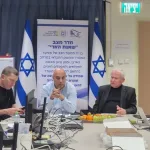
First working meeting of the 2026 Health Basket Board led by Director-General of the Ministry of Health, Moshe Bar Siman-Tov, and Prof. Dina Ben Yehuda, with
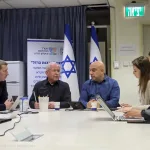
The meeting was led by the Director-General of the Ministry of Health, Moshe Bar Siman-Tov, Board Chair Prof. Dina Ben Yehuda, and members of the Health Basket Board.
This year, the board for expanding the health services basket received over 1,000 requests for medications and technologies totaling more than 3 billion NIS. The board has a budget of 650 million NIS for 2026.
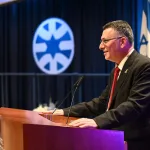
Moshe Bar Siman-Tov, Director-General of the ministry of Health: “These are very complex decisions that need to be taken. As every year, the decisions are becoming more complicated. We must carefully balance needs and values to ensure the Israeli health basket remains up to date. At the end of your process, patients and healthcare providers should know they are receiving and giving the best possible care. This is not something we take for granted.
We balance different technologies and values, including saving lives and improving quality of life. The board’s members reflect the diversity of Israeli society. Transparency and your work build public trust. Decisions made in this room—intentionally in a transparent building—determine important outcomes. At the end of the process, we will tell the public that thorough, professional work was done, considering all relevant factors with ongoing public dialogue and complete transparency. This is the foundation of trust, which is crucial for the success of our work.
There is a professional infrastructure built over decades, with extensive support for the board. Every detail is considered, and improvements have been made compared to last year, led by Prof. Osnat Luxenburg and Dr. Tal Morgenstein, who dedicate almost the entire year to this work. This is a peak moment in the process, and I thank them sincerely.
I also thank Prof. Dina Ben Yehuda, leading the board for the fourth consecutive year, combining the highest professionalism with compassion and patient connection, and often continuing her clinical work after board meetings. Thank you for taking on this task.
Thank you to the board members. This is an important and noble task, a great privilege, but also challenging. You are volunteering or performing this alongside other responsibilities. The eyes of the Israeli public are on you to ensure the best work is done, maintaining the excellence of the Israeli health system and advancing the national health basket.”
Prof. Dina Ben Yehuda, board chair: “The public board faces a complex and sensitive challenge—deciding which medications, medical technologies, and new services will be added to Israel’s health basket. Our decisions directly affect the lives and health of hundreds of thousands of citizens.
We operate in a difficult reality. While the recent fighting has ended, many are still facing the aftermath. Almost no household or family was untouched. These challenges affect public systems and the health system.
We are aware of new and special needs: expanding health services, physical and mental rehabilitation for those affected, and support for families who lost loved ones. Many patients feel uncomfortable discussing their pain or fears, surrounded by people who endured the cost of war. I remind them that they fought for the right to live here in security, health, and hope.
Board members, together with Prof. Osnat Luxenburg and Dr. Tal Morgenstein, approach our work with a strong sense of mission, transparency, fairness, and professionalism. We strive to allocate public resources wisely and compassionately to benefit the maximum number of Israeli citizens, considering the unique needs of different patient groups and populations.
Prof. Ben Yehuda concluded with a personal reflection on the mission of medicine, quoting a prayer: “Merciful and gracious God, I thank You for allowing me to serve as Your instrument in medicine, helping patients and easing their suffering… Please, God, strengthen me and give me the power to continue helping.”