

















Breaking Update
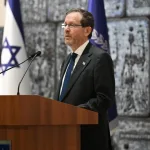
Prime Minister Netanyahu’s Remarks at the special Knesset session marking 77 years since its establishment
PM Netanyahu, marking the Knesset's 77th anniversary, urges restoring the balance between government branches to sustain Israeli democracy and protect.
“Honorable Speaker of the Knesset, Amir Ohana,
Ministers of the Government,
Members of the Knesset past and present,
distinguished attendees.
I hope that in the coming year, we will overcome all obstacles and reach understandings. The understandings can be achieved with goodwill, if it exists. It certainly exists on my part. And I am saying, from our perspective, we want to reach the same understandings that guided the State of Israel for decades. There was no shortage of profound disagreements, but we knew we were operating within a democratic framework – and I will elaborate on this further. I believe this has been eroded. A large part of the nation is pained by this, is crying out over this. We must find the way to restore the balance between the three branches of government. This, alongside majority rule, is the key to sustaining a democracy. It is the way to preserve individual rights alongside majority rule, and the way to ensure that no single branch overpowers another. This balance existed here, and this balance, with God’s help, will return here.
I must tell you that a few months ago, I had the opportunity to take a journey through time – a journey back to the early years of the Knesset, at the Knesset Museum here in Jerusalem.
Mr. Speaker, you were there with me, and with much excitement, we jointly inaugurated the new museum at Froumine House on King George Street. This special building served the Knesset for 16 years. I remember it well from my youth. It stood at the heart of what I call ‘the Jerusalem of old’ – the divided Jerusalem. Before the Six-Day War, it was small, and curious citizens used to gather there around the building. There was also a café across from it. They watched the elected officials making their way in and out. What was the saying in the early days of the Knesset? ‘The daily routine of the MKs is legislation’.
That is true. To legislate your own laws means to be the master of your own fate – and we do so to this day, or at least try to do, with success that is being eroded. This is apropos of my opening remarks.
I also had another privilege which concerns the Froumine House: when I was Finance Minister, over 20 years ago, I acted to save this historical asset from demolition. We secured funding, ensured its preservation, and paved the way for the commemoration of the Knesset’s history, in light of it being the focal point of our democracy, as the people – the sovereign – elect their representatives freely.
The Knesset here represents the people. The people elect their representatives here, and their representatives here proceed with our parliamentary system – they swear in the government. And also here – at least that, in part, used to be the practice – the judiciary was chosen.
The Knesset operated in Tel Aviv, and later in Jerusalem, with the repercussions of the War of Independence in the background. The uplifted spirit of our people, who reclaimed their national freedom after long generations, coincided with the daunting challenge of shaping the country’s foundations. And again, it must be known: arguments and wrangling already existed then. Sometimes those arguments were very poignant – no less than today. I must tell you, I think the style then was a bit more refined and ultimately more effective. Now it is louder and more turbulent. But even at the flashpoint of disagreement, no matter the subject, one thing was clear to everyone: ensuring the existence of the nation is the top-priority task.
Israel, from its very first day, has been a democracy with a sword in its hand. We are surrounded by enemies. All around us, dangers lurk, and tyrannical forces that do not reconcile with our existence seek to tighten the noose on our neck. And even against this backdrop, the Israeli democracy maintains resilience and stability.
Israel is one of the more robust democracies in the West. You might say it’s imperfect. Is there a democracy that is perfect? Does such a thing exist? Is there a democracy which faces as many challenges as we do? I know of no other democracy that stands in such frequent – and significant – trials as the State of Israel.
True: I have said that the Knesset is wild and noisy, sometimes even screaming. As far as that depends on me, I would not tell you to tone down the debate. Let’s tone down the language of the debate; at least that is how I try to conduct myself. But in my opinion, this is not as important, and I will tell you why. Such a Knesset is always preferable to parliaments where representatives are barred from speaking out or the representatives are silenced, or the public is silenced in the media. That is the end of democracy. It is about both electing representatives and having the freedom to speak and the freedom to think. This is the foundation of democracy.
In this house, we have disagreements on fundamental issues. Disagreements on the path, on ideology, on vision. These differences of opinion are not a flaw in democracy. They are an advantage in democracy; they are the essence of democracy.
It is not about everyone sitting down and everyone being in agreement. Absolutely not. Different opinions must be presented to the public, and the public decides. Where does it decide? At the ballot box. And if there are differences of opinion here, either the majority decides, or another thing is done – compromises are reached, understandings are reached. This is what I hope and yearn for, and to the extent that I am able to, I will act to bring about these understandings regarding the fundamental questions pertaining to the balance between the branches of power.
Israel is a parliamentary democracy. We act in accordance with the basic, most essential principle in a democracy, majority rule – and concurrently, the individual rights are preserved. This equilibrium – I will say that once again and repeat endlessly until this is internalized – this equilibrium can only be achieved in one way: through checks and balances between the branches, the Legislative, the Executive, and the Judicial. Each branch and its authority, each branch and its role.
And I want to clarify: there is no ‘super-government’ in a democracy. There is an elected government, and each of the branches has a role, and each of them must have at least ‘notches’ or gears within the other branches. That is how it was at the dawn of Israel’s independence, and that is how it should be today.
Regrettably, there are people who think that the greatest danger to democracy is democracy itself, and therefore the will of the majority must be neutralized. ‘So what if you were elected?’ The Knesset, the Government… pardon the expression: ‘Who do you think you are? There are those who are above the people, and we will decide.’
This, perhaps, is what Plato was thinking when he abolished democracy in Athens, because he saw the disaster of his beloved teacher Aristotle, and this idea was evolving through the generations, reaching the Middle Ages and somehow reaching modern times.
So when they said ‘there are those who are above the people’ and went to America, to George Washington – he was actually ‘above the people’, by the way, he was over 1.90m. And they said to him, ‘We had a king.’ That is what his veterans said. He threw them out. ‘But you are above the people,’ they said. He replied, ‘There is no such thing.’
And then three people who were truly ‘above’, the geniuses: Jefferson, Madison, and Hamilton, wrote the American Constitution. So they were told: ‘Maybe we should create a caste here of those who are above the people, and they will decide for the others.’ These geniuses, they kicked them out from every slope, every stairway and every cliff. They said, ‘There is no such thing. There are balances, there are checks and balances.’
The essence of democracy is majority rule, with the checks and the balances that guarantee individual rights. The essence of democracy is not abolishing the democracy. The greatest danger to democracy is the abolition of democracy. And it can be returned to the proper course because it used to be here; it was here a few decades ago, with judges whose integrity was not questioned by anyone. I am actually not talking about personal integrity, it’s not about that. There was an understanding that each branch has its own part; no one overpowers and no one is being overpowered, no one intends to overpower and no one intends to become overpowered.
I believe this can be restored, and once again, to the extent that this is possible, to the extent that I am legally allowed to do so, I will do it, because it is necessary. No need to go from here to there; there used to be a middle ground, a golden path which Israel walked on for decades, and we will return to it.
Distinguished attendees, Israel emerged from the War of Redemption stronger than ever. We are a regional power that is constantly gaining strenth; in some areas, we are approaching the capabilities of global powers. Our democracy, which has encountered immense pressures, was also reinforced during the war. We made fateful decisions: decisions that are transforming the Middle East before our eyes. I can tell you that despite the constraints, I made sure to attend every important debate in the Knesset. Many times – I say this to the dear audience here – standing in the gallery right before my eyes were the families of the hostages, both the living hostages and the deceased. And many times, I promised from this podium that we would bring everyone back, and so we did. We brought back all the hostages, down to the last one!
During the months of the war, world leaders spoke in the Knesset – first and foremost, President Trump, the President of the United States. There were other speeches here that also touched our hearts very much. The President of Paraguay, Santiago Peña. The President of Argentina, Javier Milei. The Prime Minister of Albania who visited us last week, Edi Rama. Each of them delivered wonderful speeches before this audience. My heart, at the very least, was very happy to see that we were united. Both the opposition and the coalition, everyone stood as one man to honor these people who are honoring us and our country. All of them without exception, and similarly many other leaders, have praised Israel’s resilience and our tremendous achievements on the seven fronts.
As a powerful democracy, we stood against the Axis of Evil, and we prevailed. Our heroic soldiers and commanders, in their courageous spirit, defended our home and our freedom against Iran and its terror proxies. We exacted a heavy toll, a very heavy toll, from anyone who raised the banner of Israel’s destruction.
And again, I always say, and I think it is clear to everyone: More challenges lie ahead of us; we anticipate more moments of trial. But we are alert and prepared for any development; we are monitoring what is happening and we are prepared for any scenario. Anyone who attacks us will be dealing with consequences unbearable to them.
The British journalist Douglas Murray, a great friend of Israel and the West, recently wrote a book which he titled ‘On Democracies and Death Cults’. A democratic Israel stands against the death cults of radical Islam led by Iran. And Murray says that Israel is defending the future of civilization. He writes: ‘Canada, Britain, Europe, Australia, or the United States would be lucky if they manage to raise a generation like the one Israel has raised.’
This is so true. Anyone who goes out into the field, anyone who meets our soldiers, be it in Gaza, or Lebanon, or Judea and Samaria, or anywhere else, understands what a wonderful generation we have raised here, what a mighty generation. We called them ‘the TikTok generation’ – nothing of the sort. A generation of heroes, a generation of victory, a generation that will be recorded in the annals of our nation for generations to come. ‘Choose life’ is one of the most important commandments of the Jewish people. ‘This is the basis for the victory of mankind’, Murray writes.
Distinguished attendees, Members of the Knesset,
In the past year, I met six times with President Trump, and in one of these meetings, I had a very moving experience. He took me to his room, to the bedroom of President Abraham Lincoln, which has not changed since the day of his assassination. Lincoln, as you know, saved the United States in the Civil War, and he left behind for us the decree of democracy. This is something I try to instill here, not only in this speech, but at every opportunity, this has to be understood. ‘What is democracy?’ he said; it is ‘government of the people, by the people, for the people.’
On a different occasion, during our last visit, my wife and I visited the historic home of the third president, Thomas Jefferson, in Virginia. Jefferson drafted the United States Declaration of Independence, the foundation of which is the will of the people.
One cannot help but stand in awe of these giants of democracy, Jefferson and Lincoln. But it was precisely there, precisely in the halls of the democratic heritage of the great United States, that I was thinking about our tiny and brave democracy here in Israel. We draw inspiration from the democracy in America, and at the same time, America draws inspiration from us. During the War of Redemption, we made determined and courageous decisions together, with the purpose of eradicating the evil and ensuring the supremacy of the good.
We stuck to our path, we did not surrender to pressures, we fought countless lies and slanders hurled at us. The IDF, the ‘People’s Army’, along with the other security branches, acted with unity of purpose. We brought home all our hostages. We put our economy back on track. It is ranked today as one of the three most dynamic economies in the world, after two years of war. We continued building our country incessantly. On this day of celebration for the Knesset of Israel – which is a manifestation of Israel’s redemption in the Land of Israel – we will continue to work to ensure the eternity of Israel.”
