
By TPS-IL • May 28, 2026
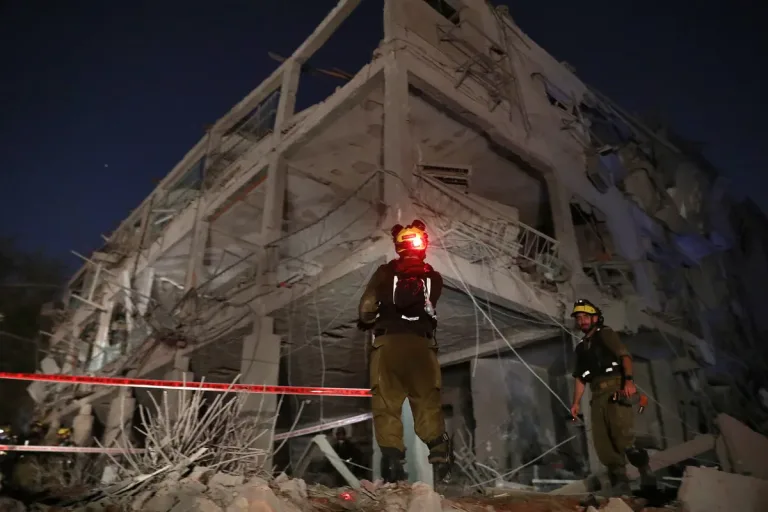
Jerusalem, 28 May, 2026 (TPS-IL) — When Iranian missiles hit Israeli cities in March, rescue teams often arrived at the scene of destroyed buildings knowing nothing about the structural plans or the location of safe rooms. They typically had to wait an hour for a municipal worker to print out the building permit from an archive and send over a physical copy.
But researchers from Israel’s Technion and the University of Haifa set out to eliminate that gap and save lives.
At least roughly 10,000-12,000 Israeli buildings, homes, or structures sustained reported damage in 2026 attacks by Iran and its allies. The barrages killed 28 civilians and injured more than 8,600.
Professor Yael Allweil from the Technion’s Housing Lab research group and Professor Moshe Lavee from the Elijah Lab at the University of Haifa have developed an AI tool that locates the relevant building permits within municipal archives, rapidly analyzes them, and delivers actionable, real-time information to rescue teams’ mobile devices.
“What we did was take this need and, simply on the basis of an app we had developed as a research tool, we connected it to the ability to automatically extract building permits from building files,” Allweil told the Press Service of Israel.
The idea for the project came after receiving a query from a local municipality, she said.
“Using a series of AI tools, the app can read the parts of the information — text and diagrams — analyze the information, and answer questions that need to be known in the field: for example, on which floor is apartment 4, is there a safe room, how can a drone be inserted into the building from a certain point,” Allweil said.
The team is currently beta-testing the system with the municipality of Nahariya, a city in northern Israel often targeted by Hezbollah. Rescue workers and engineers are helping validate the accuracy of the app’s output.
Tal Haimi, Nahariya’s city engineer, told TPS-IL the initiative can save lives.
“We have experienced many crises here in recent years, and our biggest problem is managing information during an emergency,” he explained.
“The application helps us organize all the information, work online, and maintain functional continuity. It will definitely save lives during an emergency.”
The new system, according to Allweil, has been announced now as a call for cooperation.
“We managed to create something very quickly, so why wait? It can do good in the world, and it is a call for more cooperation,” she said.
The tool, once finalized as a product, can also have global potential, Allweil said.
“Emergency situations go far beyond the Israeli situation we are experiencing now. What is good about the information we are looking at is that it is comprehensive and template-based. One AI tool scans the text of the permit, one scans the images, and the output is actionable and GPS-based. It is relevant everywhere.”
She added that there are no privacy issues because the permit is publicly available. “No private information is revealed,” Allweil stressed.
Allweil acknowledged that there is no way around a permit that has missing or incorrect information, but that in the majority of cases, the information is complete.
“And anyway, this tool can provide in less than a minute what takes now at least an hour in the field,” she said.
Meanwhile, the app’s testing phase continues.
“We need to make the leap from researchers to entrepreneurs. We need people who will see the value in this and invest in it so it becomes a product,” Allweil said.